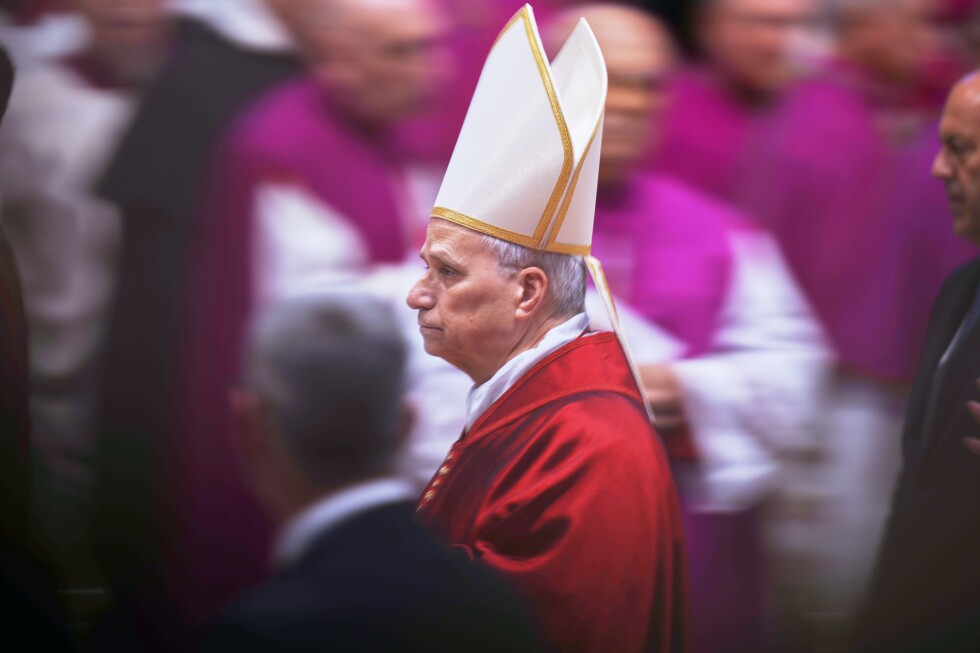
Pope Leo XIV has launched an ambitious, 11-day pastoral tour across four African nations, a demanding itinerary whose scope and complexity echoes the iconic globe-spanning journeys Pope St. John Paul II undertook during his early papacy. Across each stop, the pontiff will center his messages on four core themes: peaceful coexistence between Christian and Muslim communities, the urgent harms of overexploiting Africa’s natural and human resources, systemic corruption, and the global crisis of migration.
The tour kicks off in Algeria, running from April 13 to 15, a stop that carries deeply personal meaning for Pope Leo. The pontiff’s own religious order draws its foundational inspiration from St. Augustine, the 5th-century theological giant who lived, served as bishop, and died in what is today the coastal Algerian city of Annaba, then known as Hippo. Leo will visit the ancient site to pay homage to the saint.
Beyond faith, Algeria’s legacies and modern realities will frame the Pope’s other priorities: a majority Sunni Muslim nation on North Africa’s Mediterranean coast and a former French colony, the country sits at the intersection of interfaith dialogue and migration challenges. Last year, Algeria’s parliament passed a historic law formally branding 132 years of French colonial rule a crime against humanity, calling for restitution of property seized during the occupation to redress centuries of historical harm. During his visit, Pope Leo will honor the memory of migrants who died in shipwrecks while attempting to cross the Mediterranean to Europe, and will make a historic stop at Algiers’ Great Mosque to underscore his call for Christian-Muslim harmony.
From Algeria, the Pope will travel to Cameroon for a three-day visit from April 15 to 18, where peacebuilding will take center stage. On April 16, he will lead a high-profile peace gathering in the northwestern city of Bamenda, featuring firsthand testimony from a Mankon traditional ruler, a Presbyterian moderator, a local imam, and a Catholic nun.
Cameroon’s western regions have been locked in devastating conflict since 2017, when English-speaking separatists launched an insurgency aimed at creating an independent English-speaking state separated from the country’s French-speaking majority. Research from the International Crisis Group estimates the conflict has killed more than 6,000 people and forced over 600,000 residents from their homes. In the country’s north, separate violence linked to Boko Haram militants continues to plague communities, as the extremist insurgency based in neighboring Nigeria has spilled across the border.
Blessed with rich reserves of oil, natural gas, cobalt, bauxite, iron ore, gold, and diamonds, Cameroon’s extractive sector makes up nearly a third of the nation’s total exports, per data from the Extractive Industries Transparency Initiative. But human rights organizations and the Catholic Church have repeatedly warned that almost all revenue from resource extraction flows to foreign corporations and a small domestic elite, with almost no benefit reaching the rural and Indigenous communities that live in immediate proximity to mining and drilling sites. While French and British firms have long controlled the sector, Chinese companies have rapidly expanded their footprint in Cameroon in recent years, particularly in the gold-mining regions of the country’s east.
A 2023 United Nations expert report documented severe human rights abuses and environmental damage from unregulated gold mining in eastern Cameroon, where widespread mercury use poisons waterways and local communities. UNICEF has also found that the gold rush has driven hundreds of children to drop out of school to work in informal, makeshift mines, where they risk their lives for less than a dollar’s worth of ore sold on local black markets.
The third stop on the tour is Angola, where the Pope will stay from April 18 to 21. Roughly 58% of Angola’s 38 million residents identify as Catholic, and Leo will open his visit with prayers at the Sanctuary of Mama Muxima, a revered Marian shrine that ranks among the most important Catholic pilgrimage sites in the country. The original chapel at the site was constructed at the end of the 16th century by Portuguese colonists after they built a fortress at Muxima, which went on to become a key processing point in the transatlantic slave trade: enslaved African people were baptized at the shrine before being forced onto ships bound for the Americas.
Today, Angola ranks as the fourth-largest oil producer on the African continent and among the top 20 global oil producers, according to the International Energy Agency. It is also the world’s third-largest diamond exporter, and holds substantial reserves of gold and critical minerals required for global clean energy technologies. Yet despite its vast natural wealth, 2023 World Bank data shows that more than 30% of Angolans survive on less than $2.15 per day. The country won independence from Portugal in 1975, but immediately descended into a 27-year civil war that only ended in 2002, leaving more than half a million people dead and deep, lasting socioeconomic scars across the nation. Vatican officials confirmed that in Angola, Pope Leo will deliver a message of hope and healing focused specifically on the country’s young people.
The tour will conclude in Equatorial Guinea from April 21 to 23, a small former Spanish colony that was transformed overnight when large offshore oil reserves were discovered in the mid-1990s. Today, oil makes up nearly half of the country’s GDP and more than 90% of its total exports, according to the African Development Bank. But despite this resource windfall, the World Bank’s 2023 report confirms that more than half of the population lives in poverty, with 70% of the nation’s 2 million residents surviving on low incomes.
Equatorial Guinea is an authoritarian petrostate ruled by Teodoro Obiang Nguema Mbasogo, who has held power since 1979, making him the longest-serving sitting head of state in Africa. Obiang and his ruling family face widespread accusations of systemic corruption, human rights abuses, and authoritarian crackdowns: Human Rights Watch and other global rights groups have documented that almost all oil revenue has been siphoned to enrich the Obiang family and close allies, rather than lifting the general population out of poverty. The government also faces repeated accusations of arbitrary harassment, arrest, and intimidation of political opponents, independent journalists, and civilian critics.
Vatican spokesperson Matteo Bruni confirmed that beyond addressing the harms of unregulated resource extraction across the continent, Pope Leo will directly raise issues of systemic corruption and the responsibilities of democratic governance during his tour. This coverage of the papal visit is produced by the Associated Press, which receives funding support for its religion coverage through a collaboration with The Conversation US, via funding from Lilly Endowment Inc. The AP retains full editorial responsibility for all content.