U.S. President Donald Trump has prematurely declared victory in the ongoing conflict with Iran, even as hostilities remain unresolved. While Tehran has suffered major losses—including the death of its supreme leader Ali Khamenei and severe degradation of its conventional military capabilities—many analysts argue that the Islamic Republic has actually emerged stronger by virtue of surviving the full force of the American assault.
As the U.S. pours increasing amounts of military equipment and diplomatic credibility into what it has named Operation Epic Fury, the term “Pyrrhic victory” has come up repeatedly in discussions of the campaign. This phrase has also featured heavily in post-conflict retrospectives of the 2003 Iraq War, postmortems of 2011 U.S. intervention in Libya, and nearly all critical analyses of two decades of Western military intervention across the Middle East. But what does the term actually mean, and does it accurately describe the trajectory of America’s current war in Iran?
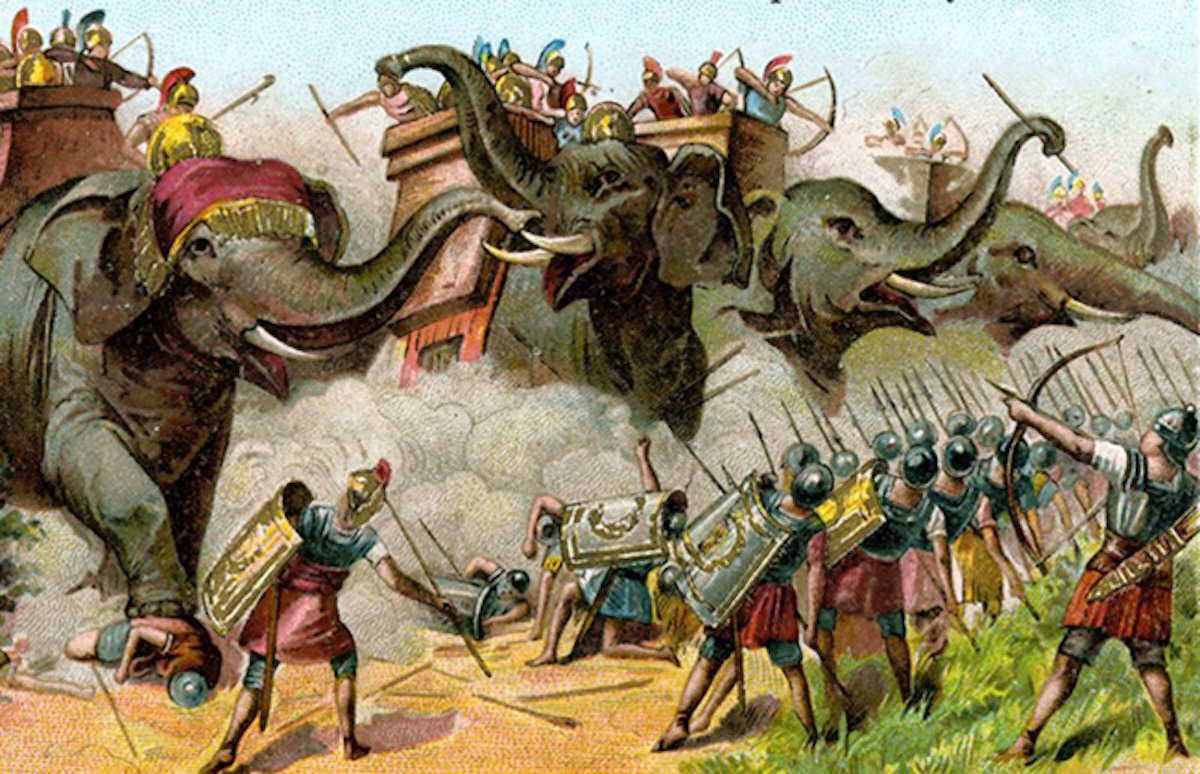
To understand the concept fully, we must trace it back to its ancient origins. Most casual users define a Pyrrhic victory as a win that costs far more than the prize is worth. While that is a close approximation, it omits the core strategic insight that makes the term enduring. In 280 BCE, Pyrrhus, king of the ancient Greek kingdom of Epirus, led his army across the Adriatic into what is now southern Italy to challenge the expanding Roman Republic. He won decisive battlefield victories at Heraclea in 280 BCE, followed by another hard-fought win at Asculum a year later.
But each victory gutted Pyrrhus’s most elite fighting forces. His best troops were raised from his small, distant kingdom, and he could not replace his losses at the same scale that Rome could replenish its ranks. Following the bloodbath at Asculum, Pyrrhus is famously reported to have remarked, “If we are victorious in one more battle with the Romans, we shall be utterly ruined.” The historian Plutarch preserved this line for future generations, and it has outlasted nearly all other documentation of Pyrrhus’s Italian campaign.
The key distinction of a Pyrrhic victory is not simply that it comes at a high cost. A victory remains a meaningful victory if the winner emerges with a stronger overall position relative to their opponent than they held before the fighting began. A victory becomes Pyrrhic when the side that claims the win actually leaves the conflict strategically weaker than it started.
This dynamic has played out repeatedly in 21st-century American military campaigns across the Middle East, starting with the 2003 invasion of Iraq. U.S. and coalition forces dismantled Saddam Hussein’s authoritarian regime in just three weeks, achieving an immediate battlefield success. But the invasion collapsed the entire Iraqi state in the process: the national army was disbanded, state institutions were hollowed out, and domestic security forces vanished entirely. What followed was a years-long insurgency, brutal sectarian civil war, and eventually the rise of the transnational terrorist group the Islamic State.
Beyond the chaos within Iraq’s borders, removing Saddam also eliminated the primary regional counterweight to Iranian power in the Persian Gulf. Though Saddam’s Iraq and revolutionary Iran were bitter rivals, that rivalry effectively contained Tehran’s ability to project influence across the region. Eliminating the Hussein regime cleared the way for Iran to expand its regional footprint to a degree not seen since the 1979 Islamic Revolution. That shift in regional power dynamics created the very context that makes the current U.S. war in Iran possible: the U.S. invaded Iraq to eliminate a perceived threat, and ended up strengthening the very rival it now targets.
The 2011 NATO-led U.S. intervention in Libya initially appeared to be a more clear-cut success. The air campaign was short, and Moammar Gadhafi, the Libyan dictator who had bedeviled U.S. administrations for decades, was killed by opposition fighters within eight months. NATO achieved its stated goals of protecting civilian populations and removing Gadhafi’s regime. But the alliance had no coherent plan for governing post-Gadhafi Libya. After the regime fell, the country fractured into competing militias and rival governments, and loose stockpiles of Gadhafi’s weapons flooded south into the Sahel, fueling ongoing insurgencies and conflicts that continue to destabilize the region today. The intervention also sent a stark message to authoritarian regimes worldwide: complying with international demands to dismantle weapons of mass destruction programs, as Gadhafi had done, does not guarantee security—it may actually make you more vulnerable to regime change. That lesson has only strengthened the resolve of regimes like North Korea and Iran to pursue robust deterrent programs.
In both Iraq and Libya, what the U.S. framed as clear battlefield victories ended up leaving America in a far worse strategic position than before the intervention began, making both textbook examples of Pyrrhic victories. That history raises urgent questions about whether the current conflict with Iran will follow the same pattern.
It is still too early to deliver a definitive final verdict on the outcome of the Iran war, but the early warning signs are already visible. On one hand, Iran has suffered major losses: Khamenei is dead, and the country’s conventional missile and naval forces have sustained severe damage. Washington has declared victory, and by its own narrow metrics, that claim holds some water.
But on the other side of the balance sheet, Iran still maintains effective control over the Strait of Hormuz, the world’s most critical oil chokepoint—and now holds more leverage over global energy markets than it did before the war. The conflict has already driven global oil prices to nearly $100 per barrel, sending shockwaves through the already fragile global economy. Meanwhile, Russia has reaped major economic and strategic benefits from the conflict without firing a single shot, as higher energy prices boost Russian export revenues.
Most notably, the status of Iran’s nuclear program—one of the core stated justifications for the U.S. campaign—now appears less likely to be resolved than before the war began. A regime that has already absorbed the full force of a U.S. military assault has even stronger incentives to pursue a nuclear deterrent to prevent future attacks, not weaker ones.
To understand whether this is a Pyrrhic victory, we have to return to the core definition of the term: a Pyrrhic victory is not just a costly victory, it is a victory that leaves you strategically weaker than you were before the conflict began. Too often, once the fighting stops, analysts and politicians skip past the critical question: what tangible strategic change did this victory actually deliver?
Pyrrhus answered that question after Asculum, and his answer was not a flattering one for his own “victory.” Looking at the current state of play—continued Iranian control of the Strait of Hormuz, volatile global oil markets, a stronger Iranian motivation to pursue nuclear deterrence, and Russia’s unearned gains—it seems increasingly likely that President Trump will soon face the same uncomfortable conclusion that Pyrrhus reached more than 2,300 years ago. This analysis was written by Andrew Latham, a professor of political science at Macalester College, republished with permission from The Conversation under a Creative Commons license.