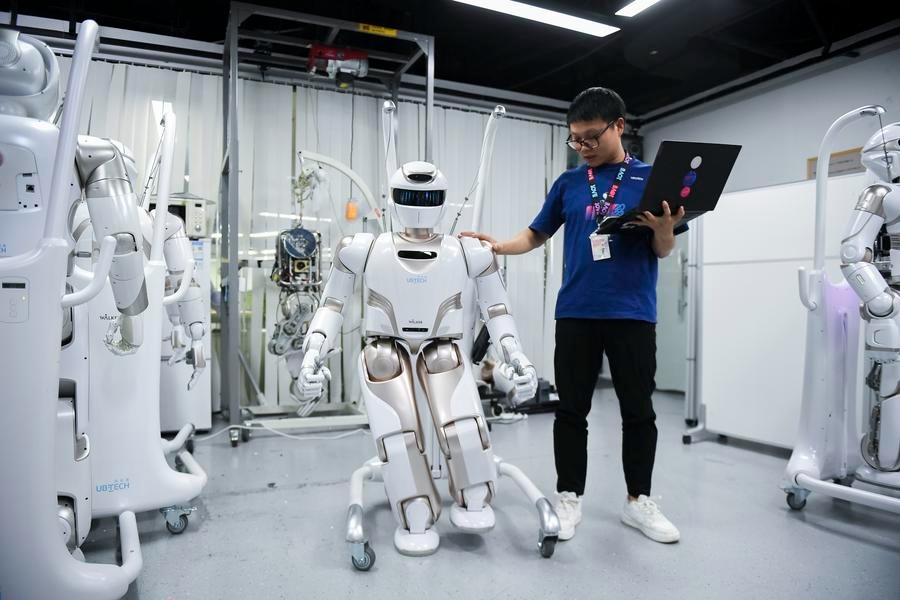
China’s economic strategy has pivoted towards a model that integrates high-quality development with robust security measures, emphasizing technological self-reliance and a strengthened domestic demand base. This approach, termed the ‘economic security growth model,’ was a focal point of discussion at a recent virtual panel hosted by the Peterson Institute for International Economics (PIIE) in Washington, DC. Experts highlighted how this model transcends traditional export- or investment-driven frameworks, instead focusing on strategic pillars such as dual circulation, self-reliant innovation, and mechanisms to counter foreign economic coercion. The dual circulation strategy prioritizes the domestic market while fostering synergy between internal and external markets. Trade data indicates that while direct trade with the US and other advanced economies has plateaued, China’s trade with the rest of the world continues to expand. The second pillar of this model involves a ‘whole-of-nation’ push towards self-reliant innovation, insulating the economy from geopolitical risks. This includes significant fiscal allocations for education, science, and technology, with a notable rise in approvals for science and engineering programs. China’s industrial robot adoption rates far exceed global averages, signaling a clear trajectory towards innovation-led growth. The third pillar focuses on establishing export controls and regulations to address external coercion. China’s advancements in AI exemplify the potential of this approach, with Chinese firms securing six of the top 20 AI models globally, despite US export controls on advanced AI chips. Experts noted that this competition benefits the global economy, as it ensures access to highly capable AI systems. The World Economic Forum and Stanford’s 2025 AI Index have acknowledged China’s narrowing performance gaps in AI, with innovations like the DeepSeek-R1 AI model and Huawei’s Ascend 910C chip gaining recognition. The diffusion of technology, rather than its initial development, is seen as the true determinant of success, with AI spreading faster than any prior technology.