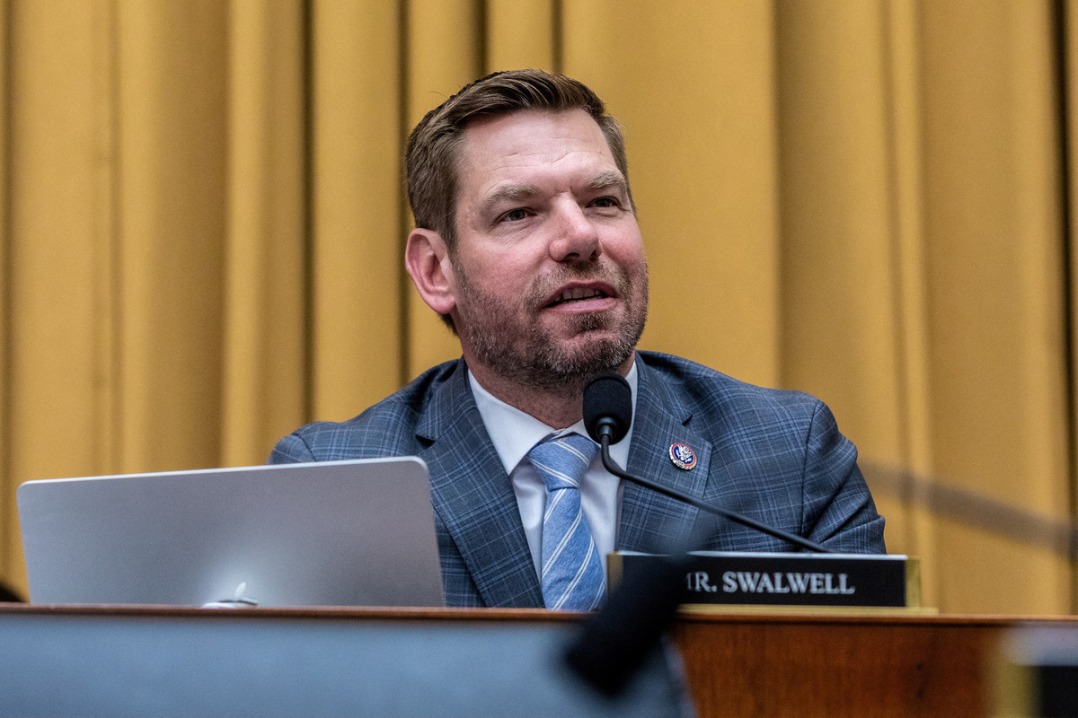
WASHINGTON — In a seismic shakeup that has thrown Capitol Hill into unprecedented chaos and drawn bipartisan condemnation, two sitting U.S. House of Representatives members submitted their resignations Monday, as two additional lawmakers face mounting pressure and the growing threat of rare expulsion votes over a cascade of overlapping personal and ethical scandals.
The first departure came from Democratic Representative Eric Swalwell of California, who announced his resignation in a post on the social platform X Monday morning. Swalwell, who had already dropped out of the 2026 California gubernatorial race, stepped down days after multiple women came forward with public allegations of sexual assault and professional misconduct.
Just hours after Swalwell’s announcement, Republican Representative Tony Gonzales of Texas revealed he would leave office immediately rather than finish his current term. Gonzales’s decision comes after he confirmed he had engaged in an extramarital affair with a former congressional aide who later died by suicide. Top House Republican leadership, including Speaker Mike Johnson, had already privately and publicly pressured Gonzales to abandon his reelection bid, and growing calls for his resignation left him with no path to remain in office.
The resignations have set off a broader reckoning in the chamber, where lawmakers are already preparing disciplinary action against two additional Florida-based House members: Democratic Representative Sheila Cherfilus-McCormick and Republican Representative Cory Mills, who are each facing separate unconnected ethical controversies that have eroded cross-party support for their continued service.
New York Democratic Representative Nydia Velazquez, who has led the cross-party push for accountability, voiced the widespread sentiment of anger among rank-and-file lawmakers in a social media post Monday. “Congress should not tolerate representatives who abuse staff, betray public trust for personal gain, and generally violate their oath of office,” she wrote, adding that all four scandal-tarred lawmakers should step down voluntarily, and face expulsion if they refuse to leave.
Expulsion from the House is one of the harshest disciplinary actions the chamber can impose, requiring a two-thirds majority vote to pass. The threshold is so high that in the 237-year history of the House, Congress has only removed six sitting members via expulsion, reserving the penalty only for the most severe violations of public trust.
Swalwell’s scandal moved at a breakneck pace over the weekend, after major U.S. outlets the San Francisco Chronicle and CNN published detailed reporting outlining allegations from four separate women. One accuser, a former member of Swalwell’s congressional staff, told reporters he sexually assaulted her twice on occasions when she was too intoxicated to give legal consent.
Swalwell has pushed back against the most serious allegations, insisting all claims of sexual assault are completely false. He has, however, apologized publicly for what he describes as “mistakes in judgment” made during his time in office. “I will fight the serious, false allegation made against me. However, I must take responsibility and ownership for the mistakes I did make,” Swalwell said in a statement announcing his resignation.
Even after Swalwell suspended his gubernatorial campaign, the backlash against him continued to build, with lawmakers from both major parties calling for him to leave Congress immediately. A scheduled expulsion resolution from Republican Representative Anna Paulina Luna had been set for a vote Tuesday, and cross-party support for expulsion votes for all four implicated lawmakers has already been confirmed by lawmakers across the ideological spectrum.
The cascading scandals have created an unprecedented moment for the narrow divided House, where a series of vacancies and leadership fights have already slowed legislative work for months. The upcoming expulsion votes, which would be among only a handful in U.S. history, mark one of the most broad-ranging ethical purges in modern congressional history.