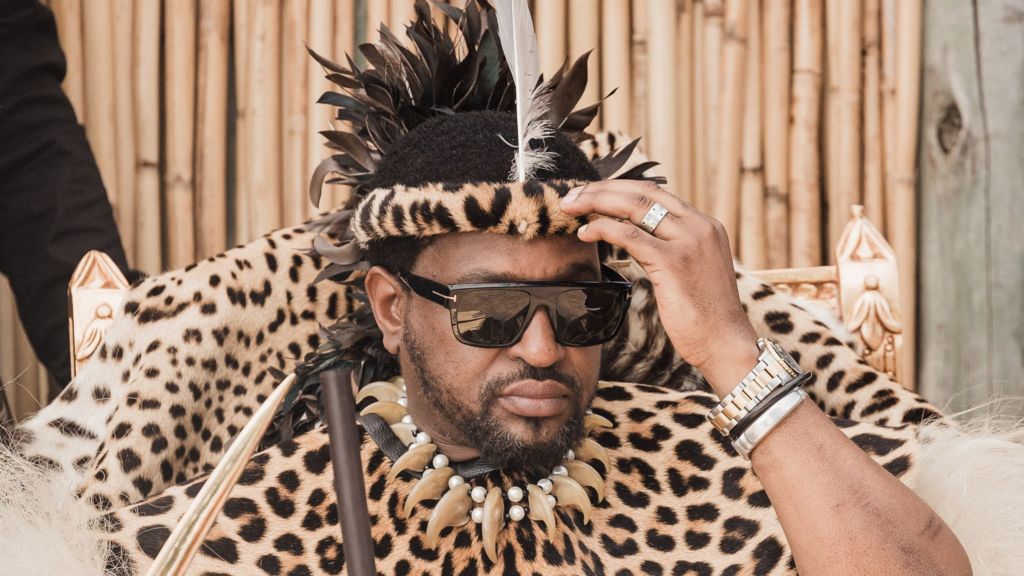
A leaked private video capturing South Africa’s Zulu monarch King Misuzulu kaZwelithini launching a vicious verbal and physical threat tirade against his third wife, Queen Nomzamo Myeni, has ignited fierce public discourse across the country, amplifying long-running conversations about gender-based violence (GBV) in a nation already grappling with one of the world’s highest rates of abuse against women.
The footage, which spread rapidly across South African social media platforms starting Wednesday, shows the king launching a barrage of personal insults against Queen Myeni, whom he married in a public ceremony only last November. In the recording, King Misuzulu accuses the queen of infidelity, berates her for leaving the royal residence without his explicit permission, threatens to carry out a physical assault against her, and explicitly demands she leave the household, adding that he has another partner waiting to take her place. Queen Myeni, who appears to have filmed the confrontation herself, remains silent through most of the outburst, closing the footage with a quiet, damning observation: “This is the life I live, day and night.”
Two days after the video began circulating, an official statement released from the king’s public office acknowledged the incident had caused widespread “pain” and “embarrassment” both within the Zulu royal household and across the broader Zulu ethnic community, and the king offered a “deep” expression of regret for his actions. The statement also sought to contextualize the recording, noting that the footage was historical and did not reflect current dynamics within the royal family.
Beyond the immediate scandal of the abusive confrontation, the leaked footage also included an offhand remark from King Misuzulu claiming he had ascended to the Zulu throne through witchcraft – a revelation that adds new fuel to a long-simmering succession dispute that has divided the royal family since the death of the previous king, Misuzulu’s father Zwelithini. Misuzulu’s 2023 coronation followed a year-long public feud, with multiple senior royal family members arguing he was not the rightful heir and claiming his father’s will naming him successor had been forged.
King Misuzulu holds a strictly ceremonial position within South Africa’s national government, but his cultural influence across the country’s largest ethnic group is immense. As the custodian of centuries-old Zulu traditions that frame polygamous marriage as a core marker of royal authority, he receives an annual multi-million dollar budget from the South African government to support royal household operations. This is not the first royal marriage scandal to surround the king: his wedding to Queen Myeni was delayed for months last year amid a high-profile legal challenge from his first wife, Queen Ntokozo kaMayisela, who attempted to block the union on grounds that it constituted bigamy. Judges ultimately dismissed the suit, finding Ntokozo had previously agreed to allow the king to take additional wives per Zulu traditional custom.
Public reaction to the leaked video has been deeply divided on social media. Critics have condemned the king’s language and threats as unacceptably abusive and incompatible with his position as a respected cultural leader, while a contingent of traditionalist commentators have argued Queen Myeni violated Zulu cultural norms by airing private royal conflict to the public. Still, many prominent South African public figures have voiced understanding for the queen’s choice to record the confrontation. Prominent local journalist Asanda Magaqa wrote on social platform X: “while I would never encourage anyone to film private moments, watching that video, I understand why she felt compelled to record it. No woman deserves to live like that.”
The scandal comes as South Africa continues to grapple with a national crisis of gender-based violence. Just one year ago, the South African government formally classified GBV as a national disaster, acknowledging the scale of the public health and safety crisis facing women across the country. Zulu society, like many communities across South Africa, retains deeply rooted patriarchal norms that often pressure women to comply with male authority and keep private family conflict hidden from public view, a context that has led many gender justice advocates to frame this incident as a stark example of broader systemic issues that allow abuse to continue unchallenged.