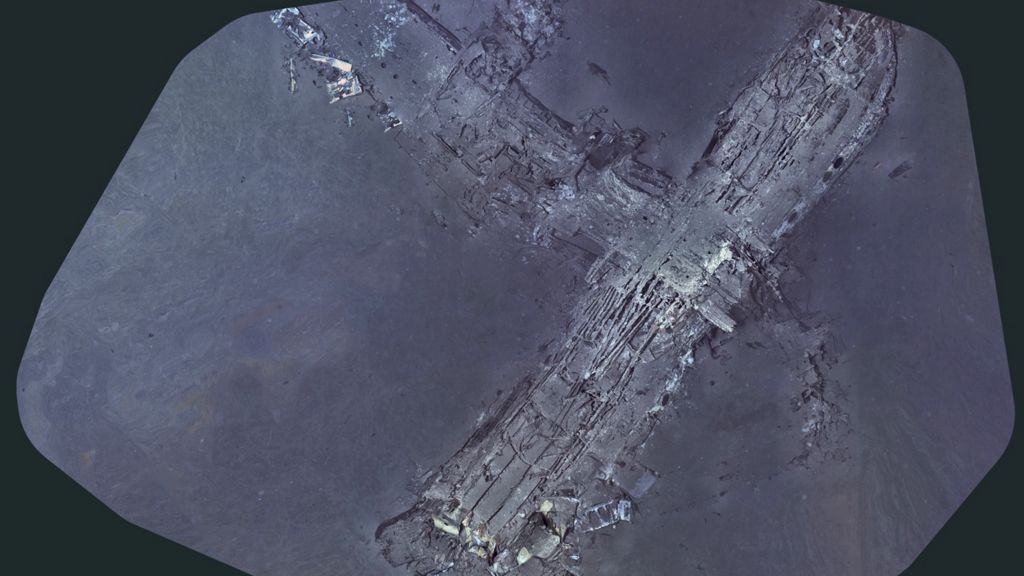
Seventy-four years after a Pan American Airways Douglas DC-4 plunged into the Atlantic Ocean off Puerto Rico, marine explorers have officially confirmed the discovery of the aircraft’s wreckage — a find that pulls a pivotal, largely forgotten event in aviation safety history back into public focus.
On April 11, 1952, the aircraft, nicknamed the Clipper Endeavor, suffered multiple engine failures just minutes after departing for New York, forcing its pilot to execute a risky emergency water landing. Though all passengers and crew survived the initial impact, chaos unfolded as the plane sank rapidly: onboard travelers could not quickly locate life vests and emergency rafts. When the disaster concluded, only 17 of the 69 people onboard survived, leaving 52 dead.
In the decades that followed, this tragedy would reshape global commercial aviation forever. The confusion and loss of life that followed the water landing acted as a critical catalyst for sweeping safety reforms that remain standard across the industry today. Most notably, regulators introduced mandates for pre-flight safety briefings on all commercial flights, requiring cabin crew to walk passengers through exit locations, life vest placement, and emergency procedures before every departure. The disaster also pushed for requirements for better-placed, more accessible flotation equipment on all passenger aircraft.
The expedition that uncovered the wreckage was led by the Air/Sea Heritage Foundation, in partnership with Discovery Channel’s *Expedition Unknown* and a coalition of other exploration and history organizations. The project had been years in the making: Russ Matthews, president of the Air/Sea Heritage Foundation and a maritime historian and explorer, first became fascinated by the story in 2019, after encountering a luggage tag from the doomed flight that had washed up on a Florida shore. Struck that such an impactful event had faded from public memory, Matthews began reconstructing the plane’s final minutes using archived records from the Civil Aeronautics Board, the predecessor to the U.S. Federal Aviation Administration.
A key breakthrough came when researchers uncovered long-buried records from a public hearing held in Puerto Rico after the crash, including a hand-drawn map created by U.S. Air Force pilots who witnessed the 1952 ditching. Cross-referencing that map with contemporary weather data and historical accident reports allowed the team to narrow their search to just 10 square nautical miles of seabed, roughly 610 meters (2,000 feet) below the ocean surface. An initial search attempt in 2024 was called off due to dangerous poor sea conditions, but the team committed to returning before the 75th anniversary of the crash in 2027.
That determination paid off in early June, when an autonomous sonar-equipped drone deployed by the team detected the wreckage during its very first pass over the target search area. The plane had broken into two large sections on the seafloor, but a subsequent high-resolution photographic survey confirmed the wreck’s identity: the iconic Pan Am logo and the plane’s name, Clipper Endeavor, remain clearly visible on the intact fuselage.
“We are all stunned and elated by this discovery, yet also humbled to remember what happened in that place so long ago,” Matthews said in an official statement following the confirmation. Josh Gates, host of *Expedition Unknown*, who was on the expedition’s support vessel when the wreckage first appeared on sonar screens, echoed that mix of excitement and reverence. “Every time you step onboard an airplane today, you are safer because of what happened to Clipper Endeavor and her passengers three-quarters of a century ago,” Gates noted.
Beyond recovering a lost piece of aviation history, exploration teams say the successful discovery of the Clipper Endeavor offers new hope for future searches for other lost ocean plane wrecks — most notably Malaysia Airlines Flight 370, which disappeared in 2014 with 239 people onboard and has never been located despite multiple large-scale search operations in the southern Indian Ocean.
The full story of the expedition and discovery will be featured in a special autumn episode of *Expedition Unknown* on the Discovery Channel.