A recent debate gaffe by incumbent U.S. Senator Darline Graham of South Carolina has drawn fresh public attention to the critical strategic importance of two of the most consequential flashpoints in the Indo-Pacific: Taiwan and the South China Sea. When asked whether the United States holds core national security interests in both regions, Graham drew sharp criticism for her offhand response that national security issues were “not my thing.” The moment carries added weight because Graham is running for a full Senate term, having been appointed to fill the seat left vacant by the death of her brother, Lindsey Graham — a long-serving influential lawmaker widely known for his deep engagement in foreign policy, including multiple official visits to Taiwan.
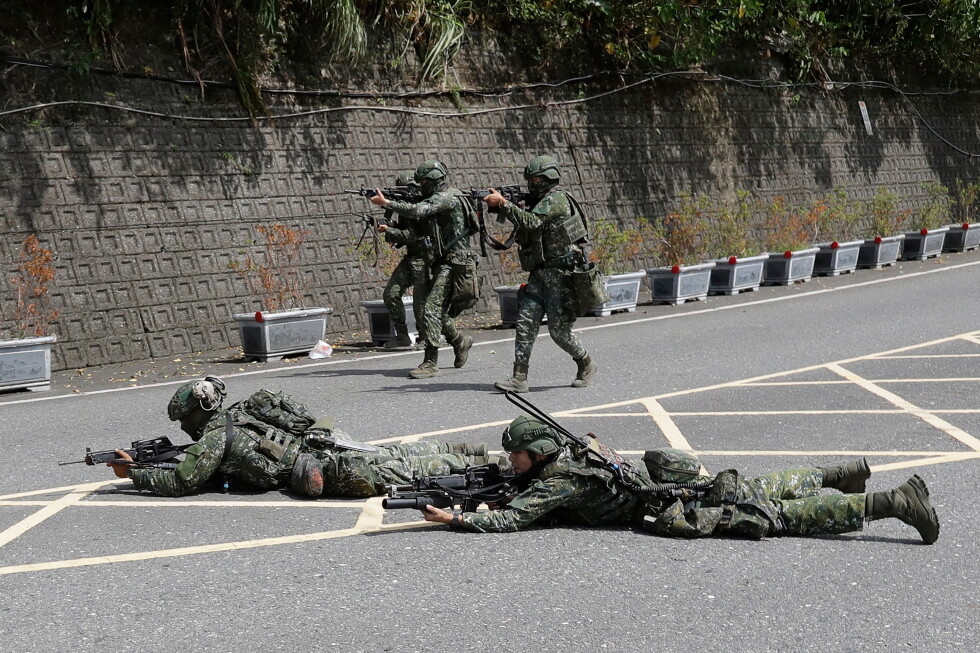
Taiwan and the South China Sea have remained top-billing issues in U.S. foreign policy for decades, and rising tensions with China have kept both at the forefront of global headlines in recent months. For context, Beijing asserts full sovereignty over Taiwan, a self-governing democracy that has operated independently since the 1949 conclusion of the Chinese civil war that split the two territories. Beijing has never ruled out the use of military force to bring Taiwan under its control, and in recent years, Chinese military aircraft, coast guard vessels, and other naval assets have conducted near-daily operations around the island, paired with periodic large-scale military exercises that ratchet up regional pressure. Taiwan, in turn, holds regular defensive drills, including its annual Han Kuang exercises.
The United States does not maintain formal diplomatic relations with Taiwan, but it has longstanding unofficial ties with the island, and U.S. law mandates that the U.S. provide Taiwan with the defensive military equipment needed to protect itself. This framework has made the U.S. Taiwan’s primary informal security backer and largest arms supplier, a dynamic that has consistently been one of the biggest sources of friction between Washington and Beijing. During former U.S. President Donald Trump’s May visit to Beijing, Chinese President Xi Jinping emphasized that Taiwan remains the most sensitive and critical issue in bilateral relations, warning that mismanagement of U.S. engagement with the island could trigger direct confrontation between the two global powers. While Trump did not publicly address the Taiwan issue during his Beijing trip, his remarks on the return flight — framing U.S. arms sales to Taiwan as a “very good negotiating chip” with Beijing — stirred widespread anxiety among Taiwan’s population and policy circles.
Beyond the geopolitical rivalry, the strategic importance of Taiwan extends far beyond regional politics: the island produces over 60% of the world’s semiconductors, and more than 90% of the most advanced cutting-edge chips that power everything from consumer electronics to military defense systems. Any disruption to Taiwan’s semiconductor production would send shockwaves through global supply chains and the entire global economy.
Turning to the South China Sea, a 3.5 million-square-kilometer body of water bordered by China, the Philippines, Vietnam, and multiple other Indo-Pacific nations, the region is one of the world’s most vital maritime trade arteries, with roughly $3.4 trillion in global trade passing through its waters annually. Despite a landmark 2016 international arbitration ruling that legally invalidated Beijing’s expansive territorial claims across most of the South China Sea, China has continued to assert its claims, defying the ruling. On the 10th anniversary of the arbitration in July this year, the United States, the United Kingdom, and 12 other other nations reaffirmed that Beijing’s claims have no legal foundation, a move that prompted Beijing to reiterate it would neither accept nor recognize the arbitration outcome.
Confrontations between claimant parties have grown increasingly frequent in recent years: Chinese coast guard vessels have repeatedly deployed water cannons, military-grade lasers, and dangerous blocking maneuvers against Philippine naval forces and civilian fishermen from other claimant states, leading to at-sea collisions and high-risk aerial encounters that raise the risk of accidental conflict. Just this month, China held large-scale military exercises near Scarborough Shoal, a disputed outpost claimed by both China and the Philippines. In a show of support for its long-time ally Manila, the U.S. and the Philippines launched their annual Balikatan military exercises in April, which included live-fire drills and mock combat scenarios in Philippine provinces directly adjacent to the disputed South China Sea and Taiwan Strait.
Regional security analysts widely emphasize that Taiwan and the South China Sea are deeply interconnected strategically, and shifts in one will rapidly trigger spillover effects in the other. “If China were to blockade or seek to forcibly retake Taiwan, the South China Sea could quickly see spillover effects,” explained Hunter S. Marston, director of the Southeast Asia Program at the Lowy Institute, an Australia-based independent think tank. Marston noted that if China gained full control over Taiwan, or if the U.S. clarified it would not intervene to defend Taiwan in a conflict, Beijing would be able to project its military power — particularly its submarine force — far beyond the first island chain, deep into the South China Sea and the broader Pacific Ocean. A full conflict over Taiwan would also have direct, immediate consequences for Southeast Asia: Marston estimates that nearly 1 million ASEAN citizens would require evacuation from the region, and the movement of U.S. and Chinese military forces through the South China Sea would force regional governments into an untenable position of choosing sides between the two great powers.
For the United States, core national security interests in the region are rooted in preventing Chinese regional hegemony, analysts say. “The primary objective is preventing China from gaining regional hegemony and dominating the Pacific,” Marston noted. “The security of Taiwan and U.S. allies such as the Philippines, as well as defense of the first island chain, are integral to this overarching goal.”
However, the U.S. military’s ability to maintain a consistent, robust presence in the western Pacific has recently been tested by competing security demands elsewhere. The USS George Washington aircraft carrier is scheduled to depart the Pacific to replace the USS Abraham Lincoln in the Middle East, where the Lincoln’s deployment was extended to support U.S. counter-Iran operations. The repositioning will leave the western Pacific temporarily without a U.S. aircraft carrier at a moment of rising tensions with China, as the current Trump administration refocuses its strategic priorities away from the Asia-Pacific toward the Western Hemisphere. The Center for Strategic and International Studies warns that any large-scale conflict in the South China Sea would cause catastrophic disruption to global trade, thanks to the region’s position as a critical commercial corridor connected to the Indian Ocean via the Malacca Strait and to the East China Sea via the Taiwan Strait — two of the most important strategic chokepoints in global maritime trade.