For generations, Canada has been widely regarded as a global underperformer when it comes to defence investment. Just two years ago, recruitment shortfalls grew so severe that a former Canadian defence minister issued a stark warning: the country’s armed forces were caught in an irreversible “death spiral.”
Today, that narrative is shifting dramatically. The Canadian Armed Forces are now expanding at a pace unmatched in 30 years, posting the largest annual intake of new recruits in three decades, a turnaround that could finally reverse the chronic personnel shortages that have hobbled the military for generations. This surge over the past two years has unfolded against a backdrop of rising global geopolitical tension, with major armed conflicts raging across multiple regions and widespread uncertainty reshaping security calculations around the world. It also comes as the Canadian government has committed tens of billions in new military spending after decades of falling short of its mandatory NATO defence spending obligations.
This recruitment boom also aligns with a notable uptick in Canadian nationalist sentiment, a shift triggered after former U.S. President Donald Trump’s provocative comment labeling Canada the “51st state” — a remark widely interpreted as a threat to Canadian sovereignty from its closest and most powerful neighbor. According to Charlotte Duval-Lantoine, a defense researcher at the Canadian Global Affairs Institute, while a so-called “Trump effect” likely contributed to rising enlistment, the spike in military applications actually began in 2022, coinciding directly with Russia’s full-scale invasion of Ukraine.
“When people recognize that the world is no longer as secure as they once believed, and that their own country could face risk, we consistently see more people step forward to join the military,” Duval-Lantoine explained.
Global instability is far from the only factor driving this surge. Canada’s persistently high youth unemployment rate, which hovered near 14% in March this year, paired with new promises of job security and substantial pay raises following Prime Minister Mark Carney’s announcement of the largest military pay increase in a generation, have also drawn more young people to enlist, Duval-Lantoine added. Since taking office 12 months ago, Carney has centered military expansion and modernization as a core priority of his administration, rolling out what he describes as an “ambitious” roadmap to rapidly grow and upgrade the Canadian Armed Forces.
In March of this year, Carney announced that Canada had officially hit the NATO target of devoting 2% of its gross domestic product to defence — a milestone the country had not reached since the late 1980s. This year’s defence spending totals more than C$63 billion ($46 billion), and Carney has also committed Canada to the NATO alliance’s new pledge to raise defence spending to 5% of GDP by 2035. Canada hit the 2% target through a combination of across-the-board salary increases for service members, pledges to purchase new advanced military equipment, upgrades to existing domestic bases, and new infrastructure investments in the Canadian Arctic to strengthen sovereignty claims.
Even with this surge in new recruits, however, defence analysts caution that the Canadian military still lags far behind many of its key NATO allies, and it will take years for new funding to translate into meaningful operational improvements. Richard Shimooka, a senior defence fellow at the Ottawa-based Macdonald-Laurier Institute public policy think tank, noted that the Canadian Armed Forces currently only have the capacity to deploy a few thousand active soldiers at any given time, alongside a very limited fleet of operational fighter jets. For context, the United Kingdom’s military can deploy 10,000 troops on short notice when required, he said.
“The Canadian Armed Forces are starting from a very low point right now, and it will take between five and 10 years before we see a real, tangible improvement in operational capability,” Shimooka said. A core underlying reason for this slow pace of progress, he argued, is Canada’s decades-long overreliance on the United States — its southern neighbor and the world’s dominant military power — for collective defence.
Successive U.S. presidential administrations and senior officials have repeatedly pressured Canada to ramp up defence spending, and critics have long labeled Canada a military “freeloader” that benefits from U.S. security guarantees without contributing its fair share. In 2024, U.S. House of Representatives Speaker Mike Johnson publicly accused Canada of “riding on America’s coattails” when it came to defence. Last year, Trump name-checked Canada as one of NATO’s top “low-payers,” telling reporters: “Canada says, ‘Why should we pay when the United States will protect us for free?’”
Even after hitting the 2% GDP target this year, Canada still ranks among the lowest-spending NATO members when compared to alliance peers, falling behind the U.S., UK and France, according to a 2025 NATO defence report. Still, the sharp rise in new recruits is seen as an early sign that gradual improvement is underway. Canadian Defence Minister David McGuinty says he expects the country to hit its long-term personnel recruitment goals sooner than previously projected.
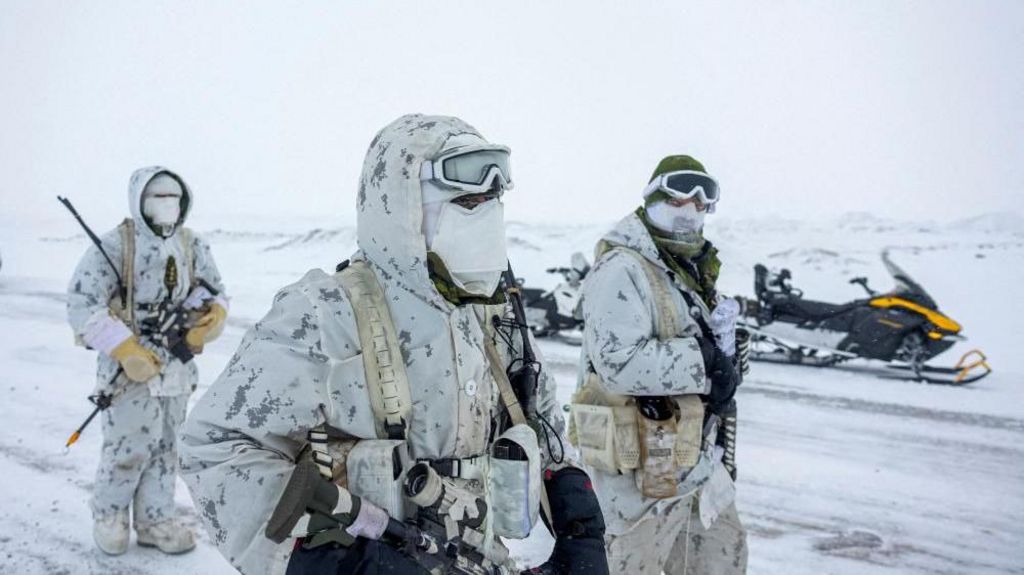
The rate of attrition — the share of active service members leaving the military each year — has also dipped slightly, a major reversal from 2024, when then-Defence Minister Bill Blair warned that chronic attrition had pushed the force into a “death spiral.” Active service members deployed on a recent Arctic sovereignty and security operation in Canada’s northern Nunavut territory told reporters the new funding package is widely welcomed, and in many cases, has been decades in the making.
“We’ve been behind for a couple of decades, but at least we’re finally taking action to fix things now,” said Alden Campbell, a first officer with the Royal Canadian Air Force. Campbell noted that the recent restructuring of military pay has given a major boost to troop morale, as has the government’s promise to deliver long-awaited upgraded equipment. “Hopefully I’ll still be in my career long enough to benefit from these upgrades,” he added.
In late April, the Canadian military confirmed it had enrolled more than 7,000 new active service members in the 2025-2026 fiscal year, the highest annual recruit total in 30 years. That 7,000 figure only accounts for recruits who completed the full enlistment process; total confirmed eligible applications to the Canadian Armed Forces nearly doubled year-over-year as of February, jumping from 21,700 in 2024-2025 to 40,116 this year, according to data shared by Canada’s Department of National Defence. The total number of people who expressed initial interest in enlistment was far higher, reaching nearly 100,000 over the past 12 months, a massive jump from the 36,000 total applications recorded in 2019-2020.
Travis Haines, a lieutenant colonel in the Canadian Armed Forces, told reporters he attributes a large share of the recruitment surge to the military’s recent efforts to cut through outdated red tape. For years, the military faced heavy criticism for its slow, bureaucratic application process that left many eligible applicants waiting months for a response. In recent years, the force has digitized key parts of the application process — including allowing electronic submission of required eligibility documents — to drastically cut processing times. “There has always been strong public interest in joining, it was just nearly impossible to get through the old system,” Haines explained.
Another key policy shift that has expanded the applicant pool is the 2022 change opening enlistment to Canadian permanent residents, not just Canadian citizens. Last year, foreign-born permanent residents made up roughly 20% of all new recruits. Now, Canada is laying the groundwork for a major military expansion, with a long-term target of 85,500 active regular service members and a total mobilization reserve force of up to 300,000. Duval-Lantoine noted that Canada has not pursued a mobilization plan of this scale since 2004, a clear sign the country is adjusting its defence posture in response to the ongoing war in Ukraine, where the role of large-scale military manpower has been a defining feature of the conflict. Like its European NATO allies, Duval-Lantoine said, Canada is “preparing for future conflicts by studying the lessons of the current one.”