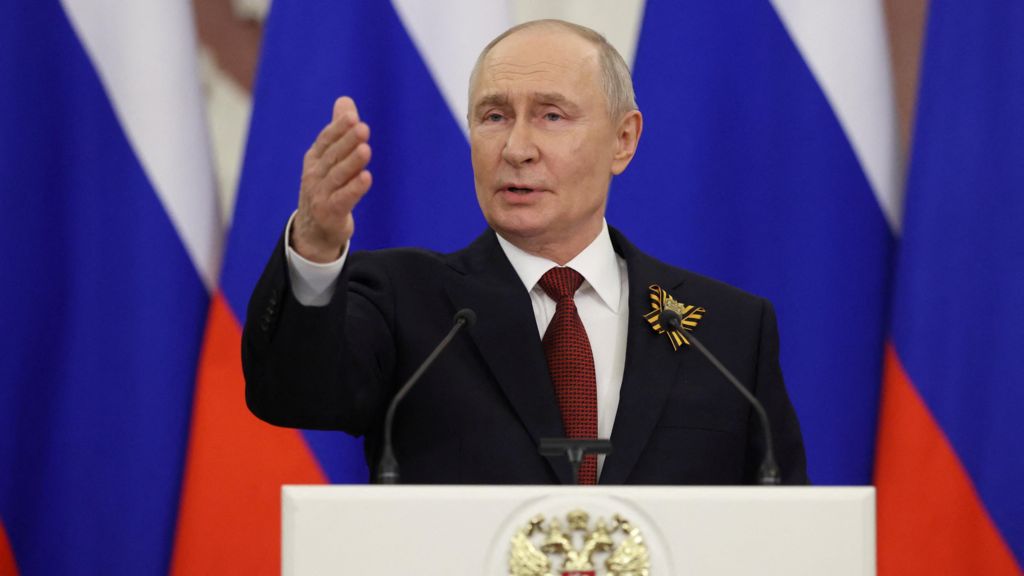
On Russia’s annual World War II Victory Day, Moscow’s Red Square hosted a significantly downsized 2026 parade, marking the first time in nearly 20 years that iconic heavy military hardware such as battle tanks and intercontinental missiles were absent from the traditional display. The scaled-back event was organized in direct response to elevated security fears, with Russian authorities assessing a high risk of Ukrainian drone strikes targeting the central Moscow ceremonial site. That threat was partially mitigated hours before the parade began, when a last-minute ceasefire between Moscow and Kyiv was finalized through brokering efforts by US President Donald Trump, allowing the event to conclude without any security incidents.
Shortly after delivering his formal Victory Parade address, Russian President Vladimir Putin spoke to reporters, offering his most direct public assessment of the ongoing “special military operation” in Ukraine to date: he stated firmly that he believes the conflict is moving toward its conclusion. In his earlier parade speech, Putin had framed Russia’s military action as a morally “just” campaign, characterizing Ukraine as an aggressive faction that receives extensive military backing from the entire NATO alliance. He doubled down on this criticism of Western support for Kyiv during the post-parade press conference, accusing Western powers of deliberately stoking continued confrontation between the two countries, a conflict that he acknowledged remains a serious issue even as it nears resolution.
On the topic of potential diplomatic talks with Ukrainian President Volodymyr Zelenskyy, Putin laid out clear conditions for any face-to-face meeting. The Russian leader noted that while he has heard repeated claims that Zelenskyy is eager for a direct summit, he will only agree to such a meeting after a comprehensive, long-lasting peace deal has been finalized through preliminary negotiations. He added that a meeting in a neutral third country could be arranged as the final step to formally sign the agreed-upon treaty, but refused any preliminary meeting before text is settled.
Putin also commented on future negotiations over European security arrangements, stating that he is open to discussing new regional security frameworks and naming his longstanding personal associate, former German Chancellor Gerhard Schröder, as his preferred negotiating counterpart for those talks. Schröder’s close ties to Putin have long been controversial across Europe, particularly due to his post-chancellorship work for Russian state-owned energy corporations.
As a core component of the newly agreed US-brokered ceasefire, both Russia and Ukraine committed to a large prisoner of war swap, with each side set to release 1,000 detained service members to the other. However, Putin confirmed Saturday that as of his press conference, Russian officials had not yet received any formal communication from Kyiv outlining next steps for the exchange.
Beyond the absence of military hardware, this year’s Victory Parade also featured restricted media access: far fewer journalists were granted entry to cover the event, with most international media organizations denied accreditation entirely. The parade, which the Kremlin has long used to project Russian military power to global audiences, instead featured only marching troops, reflecting the ongoing strains of the nearly two-year conflict with Ukraine.