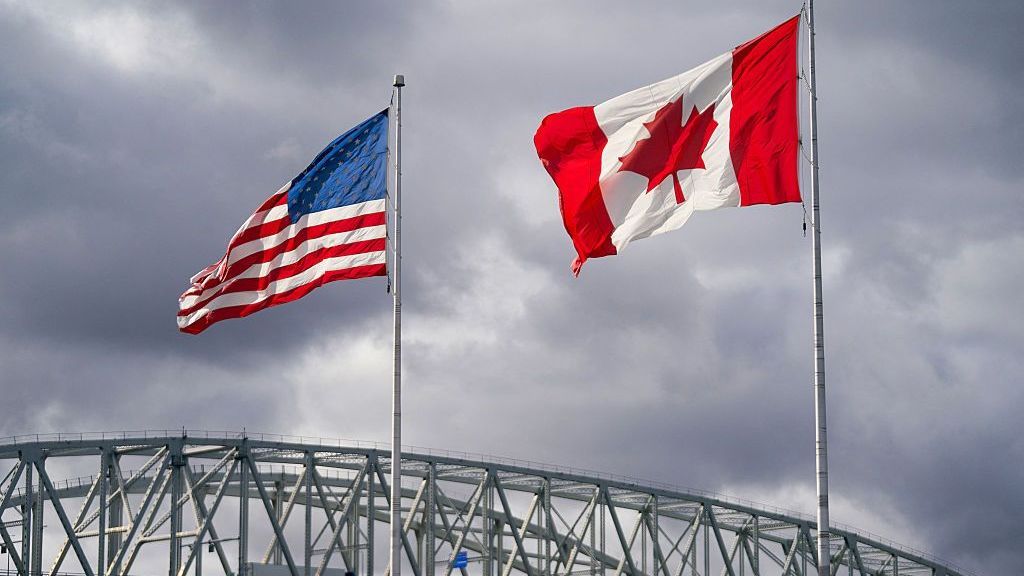
The White House confirmed on Friday that it will roll back a subset of the sweeping 50% tariffs imposed on Canadian imports, framing the move as a measure to safeguard the economic well-being and national security of the American public. The announcement, which is set to take effect on 30 October, will remove a targeted list of Canadian products from the tariff roster, including plywood panels, specialty paper goods, specific industrial machinery, refrigeration components, and custom packing crates, while a separate set of Canadian imports – such as industrial valves, carpets, and assorted waste materials – will be added to the tariff schedule to offset the duty reductions. The partial tariff reprieve was first unveiled by moderate Republican Senator Susan Collins, who is locked in a fiercely competitive re-election battle in Maine as she vies for her sixth Senate term. Collins emphasized that the carve-outs were the result of months of advocacy with senior White House trade officials, and are specifically tailored to support Maine’s signature agricultural sectors, including wild blueberry, potato, apple, and seaweed producers. She noted that many of these operations depend on specialized equipment and packaging supplies that are either not manufactured domestically in the US, or would carry prohibitive cost markups if sourced from alternative domestic suppliers. The tariff adjustment comes in the immediate run-up to the 3 November US midterm elections, where surveys show that cost-of-living pressures and household affordability rank as the top priority for a large share of American voters. Multiple outlets including the Wall Street Journal have reported that the narrow set of exemptions, heavily focused on Canadian agricultural and forestry imports, is structured to provide targeted electoral support to vulnerable Republican candidates in border states whose local economies have been upended by the cross-border trade dispute. The tit-for-tat tariff escalation between the US and Canada ignited after high-level trade negotiations collapsed earlier this summer, sending ripple effects through tightly integrated cross-border supply chains that have sustained communities on both sides of the shared border for decades. Michigan Republican Representative Mike Rogers, who previously defended the tariff policy in campaign advertisements, has also recently called for a full resolution to the trade impasse, as his state’s trade-reliant manufacturing and agricultural sectors have absorbed steep financial losses from the standoff. During public remarks on the same Friday the exemptions were announced, former US President Donald Trump stated that Canadian negotiators were “working very hard” to finalize a broader bilateral trade deal with the US. Canadian Prime Minister Mark Carney responded by noting that Ottawa remains open to a mutually advantageous agreement, but would not rush to sign a subpar deal. He added that Canada would be willing to extend negotiations for months, or even wait for a future US administration, if the terms of a fair, balanced agreement cannot be reached immediately. As of press time, the BBC has not received additional on-the-record comment from the White House, US Department of Commerce, or Office of the US Trade Representative regarding the timeline for full trade deal negotiations.