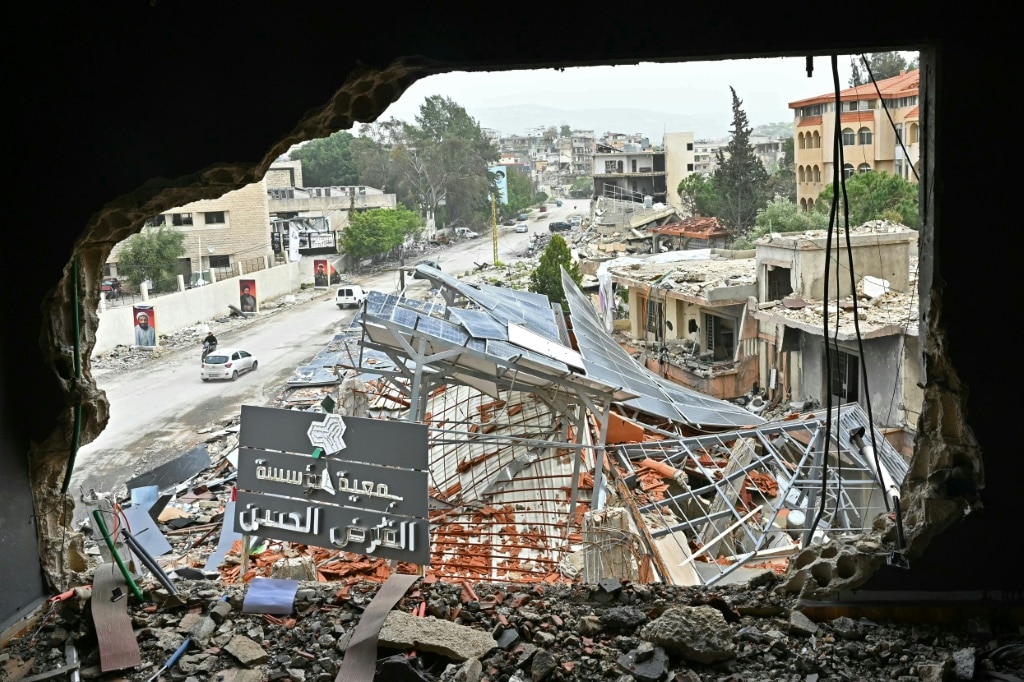
The already volatile landscape of the Middle East has seen a fresh wave of destabilizing developments in recent days, even as a fragile 10-day ceasefire between Israel and Iran-backed Hezbollah holds tenuously along the Israel-Lebanon border.
One of the most striking recent incidents is the deadly ambush that claimed the life of a French peacekeeper deployed with the United Nations Interim Force in Lebanon (UNIFIL) in southern Lebanon, leaving three additional service members wounded. UN Secretary-General Antonio Guterres issued a swift and forceful condemnation of the attack, noting that an initial UNIFIL investigation points to Hezbollah as the perpetrator. France has formally placed blame on the militant group, though Hezbollah has issued a categorical denial of any involvement in the ambush.
Along the border, Lebanon’s military has begun moving to restore critical infrastructure damaged by weeks of cross-border fighting. Officials confirmed Sunday that a key highway connecting the city of Nabatieh to the Khardali region has been fully reopened to traffic, while a second major crossing, the Burj Rahal-Tyre bridge, is now partially operational. This incremental recovery comes as the ceasefire continues to hold in broad terms, though sporadic clashes have persisted. The Israeli military confirmed Saturday that one additional Israeli soldier had been killed in ongoing combat operations in southern Lebanon, marking the second Israeli military fatality since the truce went into effect Friday. To date, AFP’s tally based on official Israeli military data puts the total Israeli army death toll at 15 across six weeks of open conflict with Hezbollah. Hezbollah leader Naim Qassem has emphasized that the ceasefire cannot be a one-sided agreement, warning that his fighters remain on high alert and will respond immediately to any Israeli violation of the truce terms. “Because we do not trust this enemy, the resistance fighters will remain in the field with their hands on the trigger, and they will respond to violations accordingly,” Qassem said in a televised address Saturday. Despite the ceasefire, the Israeli military carried out an airstrike Saturday targeting what it described as a Hezbollah terrorist cell operating near its troops in southern Lebanon. Lebanese state media also reported that Israeli forces conducted demolition operations in multiple border towns, including Bint Jbeil, which saw some of the heaviest fighting before the truce took effect.
Beyond the Lebanese border, the wider regional conflict has triggered major shifts in geopolitics and global energy security. The strategic Strait of Hormuz, through which roughly 20% of the world’s daily oil and liquefied natural gas shipments pass, has been re-closed by Iranian authorities. The closure came just one day after Iran briefly reopened the waterway following the announcement of the Israel-Hezbollah ceasefire, after U.S. President Donald Trump rejected any easing of the American naval blockade of Iranian ports, insisting the restriction would remain in place until a comprehensive peace deal is reached to end the wider regional war. Iran’s leadership called the U.S. position unacceptable and reimposed the closure, a move Trump has labeled “Iranian blackmail.” Iran’s Revolutionary Guards Navy has issued a stark warning to commercial and military shipping, announcing that no vessels may depart anchorages in the Persian Gulf or Sea of Oman, and any ship attempting to approach the Strait of Hormuz will be treated as an enemy collaborator and targeted.
Diplomatic efforts to end the wider conflict between Iran, the U.S. and Israel remain stalled, according to senior Iranian officials. Iranian Parliament Speaker Mohammad Bagher Ghalibaf, a key member of Iran’s negotiation team, said in a televised address Saturday that while incremental progress has been made in bilateral talks with the U.S., major gaps and fundamental disagreements remain to be resolved. “We are still far from the final discussion,” Ghalibaf said. “We made progress in the negotiations, but there are many gaps and some fundamental points remain.” The human cost of the conflict for Iran has also been made public for the first time: Iranian state news agency ISNA quoted the country’s state-run Foundation of Martyrs and Veterans Affairs reporting that 3,468 Iranians have been killed since the start of the war with the U.S. and Israel.
The ongoing conflict has also triggered a major realignment in British foreign policy, according to government insiders. British Prime Minister Keir Starmer’s administration is preparing to introduce new legislation next month aimed at significantly deepening the country’s economic and political ties with the European Union, a shift accelerated by the Iran war and growing strains in the UK’s long-standing “special relationship” with the United States. Sources note that President Trump’s well-documented unpredictability and repeated public insults toward the U.K. have given added momentum to the move, which comes a full decade after British voters narrowly approved the decision to leave the 27-nation bloc.