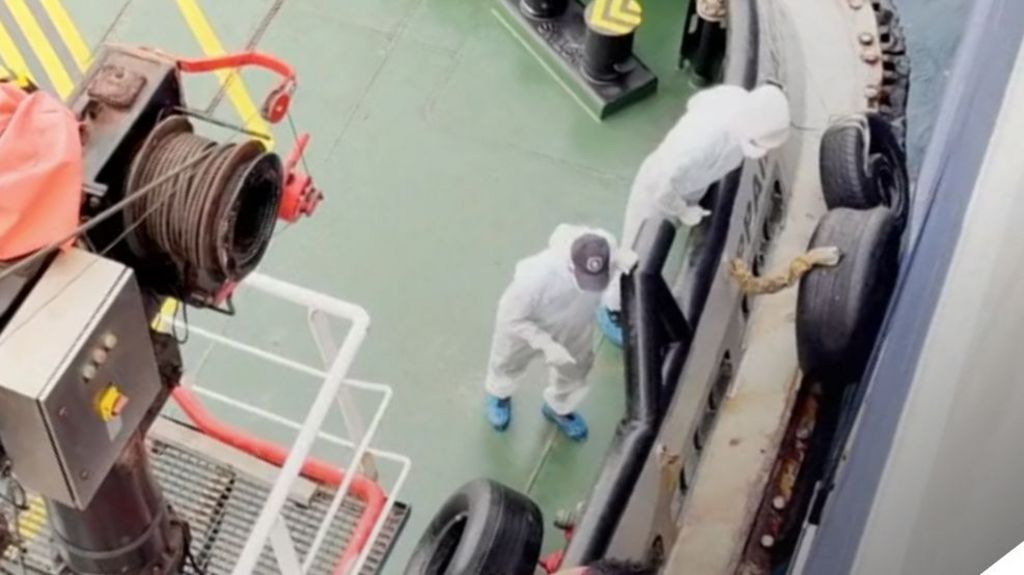
A deadly hantavirus outbreak onboard the Dutch-operated cruise vessel MV Hondius has triggered an international emergency response, with Spanish health authorities confirming the ship will reroute to the Canary Islands for coordinated medical care and passenger repatriation. The outbreak, which has already claimed three lives since the ship departed Argentina on a transatlantic voyage roughly one month ago, has prompted urgent evacuation plans for multiple people needing immediate treatment.
On Tuesday, a medical evacuation aircraft was scheduled to transfer three people from the ship, which was originally docked in Cape Verde, to the Canary Islands. Among those being evacuated are two crew members: one of them is the ship’s British doctor, who requires urgent medical attention. The third evacuee is a close contact of the deceased German national who died earlier this month.
As of the latest update from the World Health Organization (WHO), seven cases of hantavirus have been recorded onboard: two confirmed infections and five suspected cases. One confirmed case is a Dutch woman who is counted among the three fatalities, while the other is a 69-year-old British national who was already evacuated to South Africa for emergency care. The two additional deaths include the Dutch woman’s husband (who was never tested to confirm an infection) and the German national, who passed away on May 2. A Reuters report citing South African health officials confirms the two confirmed cases are linked to the Andes strain of hantavirus, a variant that is documented to spread from person to person among individuals in close contact.
At the time of rerouting, 149 passengers and crew representing 23 nationalities remained onboard the MV Hondius, held under strict precautionary isolation measures, according to the ship’s operator, Oceanwide Expeditions. In addition to the affected British crew member, 22 other British citizens are still onboard the vessel.
Spanish health authorities explained that Cape Verde lacked the specialized public health infrastructure to manage the large-scale outbreak response, leading to the decision to redirect the ship to the Canary Islands, the closest territory with sufficient medical capabilities. “Spain has a moral and legal obligation to assist these people, among whom are several Spanish citizens,” an official government statement noted. The vessel is expected to reach the archipelago within three to four days, with a final port of call yet to be confirmed; Oceanwide Expeditions says the leading options are Gran Canaria or Tenerife.
Once the ship docks, all passengers and crew will undergo comprehensive health screenings, receive any required medical treatment, and then be cleared to travel back to their home countries. Spanish health authorities emphasized that all interactions with people from the MV Hondius will be limited to purpose-built isolation spaces and dedicated medical transports to prevent any potential spread to local communities. “These protocols are designed to avoid all contact with the local population and ensure the full safety of healthcare personnel,” the ministry added.
Public health experts note that hantavirus is most commonly transmitted to humans through contact with infected rodents and their excretions. However, the WHO has confirmed that limited spread may have occurred between close contacts onboard the crowded cruise vessel, though the overall risk to the general public remains low, per the organization’s assessment.