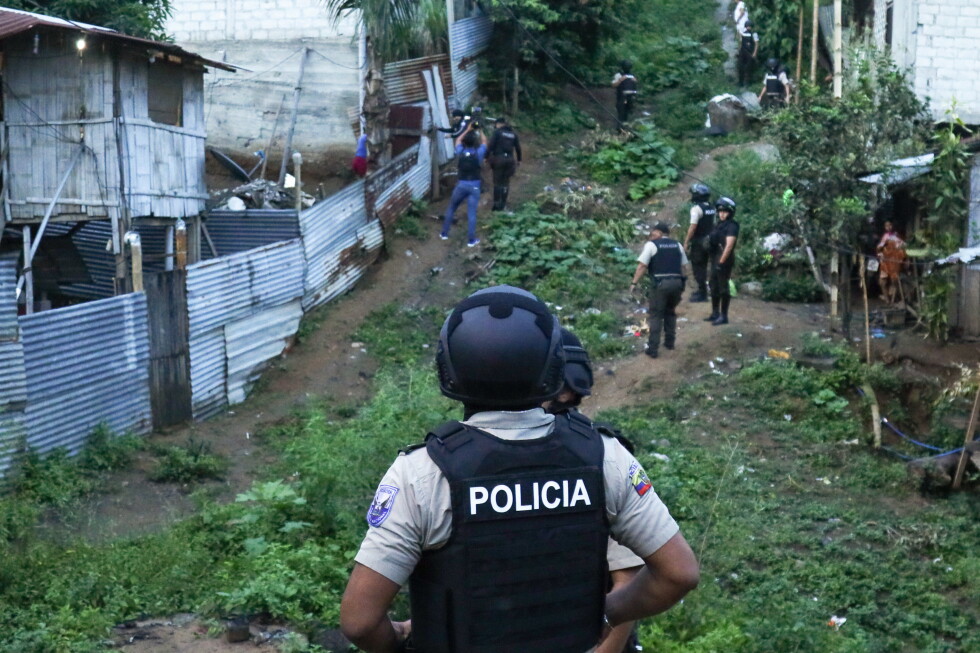
QUITO, ECUADOR – In a major escalation of joint counter-narcotics efforts between the United States and Ecuador, the U.S. Treasury Department announced sanctions Thursday against 15 individuals linked to a sophisticated transnational drug network that moves thousands of kilograms of cocaine from Ecuador to U.S. consumers every month, via Mexican smuggling routes. The new measures come as the Trump administration expands joint anti-trafficking operations across Latin America, a campaign that has already seen intensified strikes against suspected traffickers operating as fishermen in the Caribbean and Pacific, resulting in more than 200 deaths to date.
According to details released by the Treasury Department, the network conceals its illicit activities behind the facade of registered commercial fishing operations. Based near the strategic Ecuadorean port of Manta, the smuggling ring uses locally registered vessels to transfer large cocaine shipments to high-speed “go-fast” power boats, which then carry the contraband north through the Eastern Pacific Ocean toward U.S. territory.
All 15 sanctioned individuals are tied to two major Ecuadorean criminal groups, Los Choneros and Los Lobos – both already formally designated as foreign terrorist organizations by the U.S. government. After the cocaine is moved north from Ecuador, the network partners with two infamous Mexican cartels, the Sinaloa Cartel and Cartel de Jalisco Nueva Generacion (CJNG), which are also listed as U.S. foreign terrorist organizations, to move the drugs across the Mexico-U.S. border for distribution.
Ecuador has faced a spiraling crisis of drug-related violence since 2021, as major international cartels form alliances with local street gangs to fight bloody turf wars for control of smuggling routes and Pacific coastal ports. The country’s geographic position, wedged between Colombia and Peru – the world’s two largest cocaine producing nations – has made it an unavoidable transit hub for cocaine bound for North America and Europe. Last year, the crisis pushed Ecuador’s homicide rate to a 50-year high of 50 murders per 100,000 residents, according to official data from the country’s Ministry of the Interior.
Under the leadership of recently elected President Daniel Noboa, Ecuador has emerged as a key regional partner for the Trump administration’s anti-drug campaign. On the same day the Treasury sanctions were announced, Ecuadorean Defense Minister Gian Carlo Loffredo confirmed that two U.S. warships equipped with interceptor boats and helicopters will begin patrolling Ecuador’s territorial waters to support counter-trafficking operations. Loffredo made the announcement on his personal Instagram account, following a Wednesday meeting in Manta with General Francis Donovan, head of U.S. Southern Command. The defense minister did not share a specific timeline for when the patrols will launch.
Loffredo emphasized that the new collaboration will drastically boost Ecuador’s ability to intercept drug shipments at sea, telling reporters that the cooperation will triple the country’s interdiction capacity in its maritime zones. He added that three U.S. Black Hawk helicopters have already arrived in Manta and are preparing to join operational activities. The Associated Press requested additional details about the joint patrol plan from U.S. Southern Command, but did not receive an immediate response Thursday.