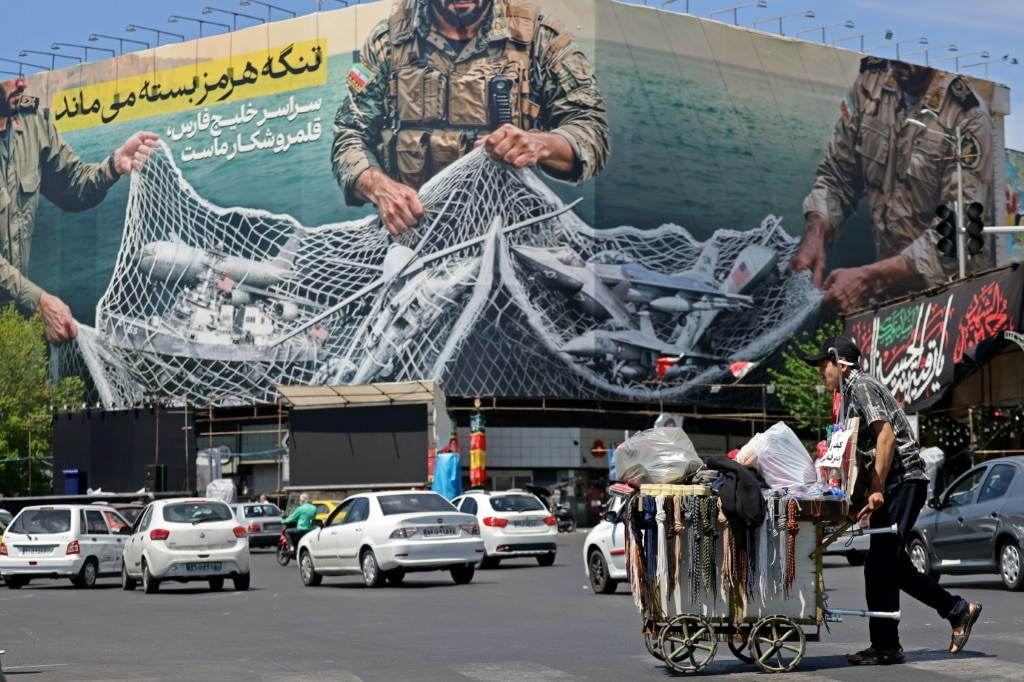
Less than an hour after the breakdown of US-Iran peace negotiations hosted in Islamabad, the United States military has announced it will launch a full blockade of all Iranian ports starting at 1400 GMT Monday, a move that Iran has already labeled an act of piracy and that has sent shockwaves through global energy markets and the Middle East. The collapse of the weekend talks came after US Vice President JD Vance, who led the American delegation alongside special envoy Steve Witkoff and former President Trump’s son-in-law Jared Kushner, left the negotiations with no agreement, capping weeks of hopes that a permanent ceasefire could end a regional war that broke out in late February.
Former President Donald Trump, who first announced the blockade plan on social media, framed the action as a necessary step to fully reopen the strategically vital Strait of Hormuz, a chokepoint that carries nearly a fifth of the world’s daily oil and gas trade. Since the war began, Iran has severely restricted traffic through the strait, only permitting passage for vessels traveling to and from allied nations such as China. Trump added that his administration’s goal is to clear the waterway of mines and open it to all global shipping, while preventing Iran from gaining economic leverage from control over the route.
US Central Command confirmed the blockade parameters in an official statement, noting that the restriction will apply equally to all vessels of any flag seeking to enter or depart Iranian ports along both the Arabian Gulf and Gulf of Oman. The command clarified that US forces will not interfere with commercial traffic transiting the Strait of Hormuz bound for or coming from non-Iranian ports. But major questions remain unanswered about how the US military will practically enforce a full port blockade along Iran’s extensive coastline, a complex operation that risks direct military confrontation.
Iran has issued fierce pushback against the plan. The Iranian military command called the impending blockade a criminal act of piracy, issuing a stark warning that if the security of Iran’s Persian Gulf and Arabian Sea ports is threatened, no ports in those entire bodies of water will remain safe. Iran’s parliament speaker Mohammad Bagher Ghalibaf, who led the Tehran delegation in Islamabad, reaffirmed that Iran will never bow to US threats, while Iranian Navy Chief Shahram Irani dismissed Trump’s blockade announcement as simply “ridiculous”.
The failed talks and impending blockade have upended a fragile two-week ceasefire that paused large-scale fighting last week, bringing a sharp drop in global oil prices and hopes for a long-term peace deal. As of Monday, however, there has been no immediate indication that full-scale war will resume immediately. The conflict, which began after Israel and the US launched joint strikes on Iran, with Iran retaliating against targets in Gulf states and Israel, has already killed thousands of people and thrown the global economy into chaos. The weekend’s breakdown has now wiped out hopes for a swift, permanent resolution.
Global energy markets reacted sharply to the news: after falling steadily following the ceasefire announcement, both benchmark Brent and West Texas Intermediate crude oil prices jumped roughly 8% on Monday, pushing both contracts above the $100 per barrel threshold for the first time since the ceasefire took hold. The escalation has spread a deep sense of unease across the Middle East, where regional states are already grappling with months of volatility. “Things could change at any moment,” said Aishah, a 32-year-old economic consultant based in Doha. “It’s more about taking each day as it comes.”
International reaction to the US plan has been deeply divided. China, a major importer of Iranian crude and a longstanding geopolitical rival of the US, criticized the blockade, noting that the Strait of Hormuz is a critical global energy and trade route, and that maintaining its security, stability and free flow is a shared interest of the entire international community. Beijing called on both sides to avoid reigniting open conflict.
Russia, Iran’s closest major international ally, announced that Foreign Minister Sergei Lavrov will travel to Beijing this week to meet with Chinese Foreign Minister Wang Yi, a meeting widely seen as a consultation on the escalating crisis. Among US NATO allies, who have already faced criticism from Trump for refusing to back more aggressive action against Iran, reaction has been overwhelmingly negative. Spanish Defense Minister Margarita Robles called the planned blockade “makes no sense”, describing it as just another step in a dangerous downward spiral for the region. UK Prime Minister Keir Starmer confirmed in a BBC radio interview that Britain will not join the US blockade, saying the country will not be dragged back into open conflict with Iran.
Pakistan, which stepped in to host the fragile negotiations between the two sides, reiterated after the collapse that it remains committed to continuing dialogue facilitation, and called on both Washington and Tehran to uphold the existing ceasefire. Beyond the port blockade and the Strait of Hormuz, core disagreements over Iran’s nuclear program also derailed the talks. The US delegation walked away frustrated after Iran refused to compromise on its right to operate a civilian nuclear program, which the US says conceals military ambitions. Vance told reporters after the talks that Washington had put forward its “final and best offer” to Tehran, adding only: “We’ll see if the Iranians accept it.” Trump later reaffirmed his longstanding position on social media, writing: “I have always said, right from the beginning, and many years ago, IRAN WILL NEVER HAVE A NUCLEAR WEAPON!”
Scholars of international security say the blockade is far more than a symbolic coercive measure. Nicole Grajewski, an assistant professor at Sciences Po’s Center for International Research, called a US blockade “not a minor coercive signal”, noting that it can reasonably be interpreted as an effective resumption of open hostilities between the two nations.