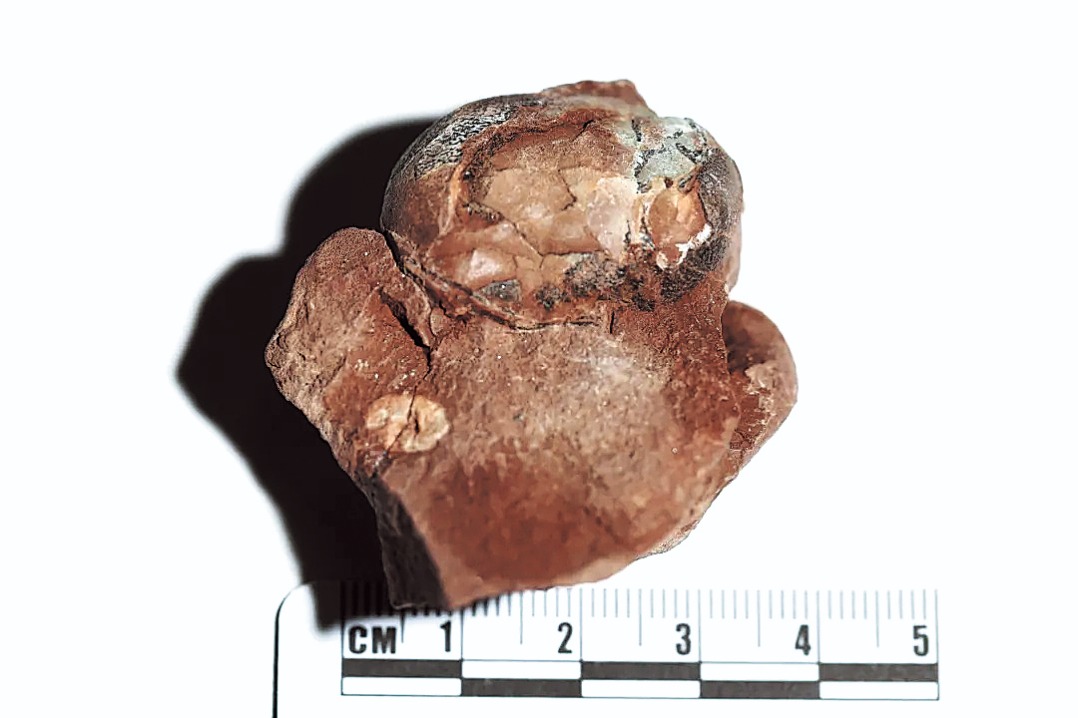
In a groundbreaking paleontological discovery announced Friday by the Jiangxi Provincial Institute of Geological Survey and Exploration, a minuscule fossilized dinosaur egg recovered from East China’s Jiangxi province has earned official Guinness World Records certification as the smallest non-avian dinosaur egg ever documented by science.
Discovered alongside five other eggs in a fossilized nest uncovered in Meilin Township, Ganzhou, back in 2021, the record-breaking specimen measures just 29.93 millimeters at its maximum length — smaller than the average thumbnail of an adult human. The entire fossil nest dates to the Late Cretaceous period, pushing the origins of this find back more than 80 million years.
After years of collaborative study involving researchers from the Jiangxi institute, China University of Geosciences (Wuhan) and multiple other academic institutions, the team formally classified the eggs as belonging to an entirely new genus and species, which they have named *Minioolithus ganzhouensis*.
To uncover key details about the ancient eggs, the research team deployed cutting-edge analytical tools including scanning electron microscopy to examine the fine microstructure of the eggshells. Their analysis confirmed that the eggs were laid by a non-avian theropod, a group of bipedal, mostly carnivorous dinosaurs that includes well-known species such as Tyrannosaurus rex and Velociraptor.
This new measurement shatters the previous world record for the smallest non-avian dinosaur egg. The prior title holder, a fossil recovered in Japan in 2020, measured approximately 45 millimeters in length, making the new Ganzhou specimen nearly 33% smaller than the former record. Researchers note that the discovery of such a tiny fossil egg offers unprecedented new insights into the reproductive biology and diversity of small non-avian theropods that roamed southern China during the final days of the Cretaceous period, filling a critical gap in the global fossil record of dinosaur reproduction.