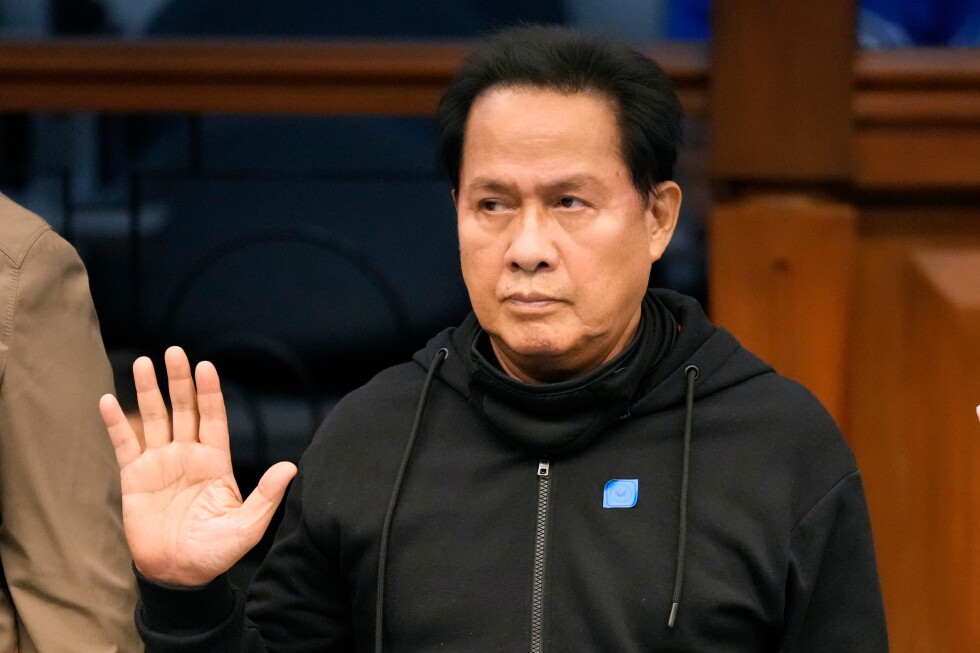
Two senior Philippine government officials have confirmed that the United States has formally submitted an extradition request for 76-year-old Apollo Carreon Quiboloy, a once-powerful Filipino church leader who served as a spiritual adviser to former Philippine President Rodrigo Duterte. Quiboloy, currently held in Philippine custody on domestic human trafficking and child abuse charges, is wanted by U.S. authorities on charges including child sex trafficking and financial fraud that earned him a spot on the FBI’s Ten Most Wanted Fugitives list.
The officials, who spoke on condition of anonymity as they are not authorized to discuss the extradition process publicly, confirmed the U.S. request was transmitted to Manila’s Department of Justice via the Philippine Department of Foreign Affairs back in July 2025. The U.S. Embassy in Manila has not yet issued a public response to requests for comment on the filing from the Associated Press.
Quiboloy is the founder and leader of the Kingdom of Jesus Christ church, which he established in 1985 in Davao City, southern Philippines. The organization claims millions of followers across the Philippines and in overseas communities including the U.S. At the peak of his influence, Quiboloy was widely viewed as a political kingmaker in the country, and held enormous sway as an influential spiritual confidant to Duterte during his 2016 to 2022 presidency. Duterte himself is currently in detention in the Netherlands, facing an International Criminal Court trial on charges of crimes against humanity linked to thousands of deaths during his controversial national anti-drug crackdown.
Known for his provocative public claims, Quiboloy has described himself as the “appointed Son of God” and has asserted he even intervened to stop a major earthquake from striking the southern Philippines — claims that drew widespread skepticism from critics but cemented his loyalty among his devout following.
Domestic legal trouble for Quiboloy began in 2024, when a Philippine court issued an arrest warrant for him and multiple associates on allegations of child abuse, sexual abuse, and human trafficking. The Philippine Senate also ordered his arrest that year after he refused to attend public hearings into the claims. After months in hiding, Quiboloy and four co-accused surrendered to authorities in September 2024, following a large-scale raid by roughly 2,000 police officers on his organization’s 30-hectare Davao compound, which housed a cathedral, sports stadium, aircraft hangar, and private access taxiway connected to Davao International Airport. He has remained in Philippine custody since his surrender, and has repeatedly denied all allegations, claiming they are fabricated political attacks by critics and former members expelled from his church.
Parallel to the domestic Philippine charges, U.S. federal prosecutors first issued an indictment against Quiboloy in 2021. A superseding indictment from a U.S. federal grand jury, unsealed that November, charged Quiboloy and eight other co-defendants with a broad series of offenses: conspiracy, child sex trafficking, sex trafficking obtained through force, fraud, and coercion, marriage fraud, money laundering, cash smuggling, and visa fraud. Prosecutors allege Quiboloy coerced women and underage girls into sexual encounters, threatening victims with eternal damnation if they refused his demands. Following the unsealing of the indictment, Quiboloy was added to the FBI’s Ten Most Wanted Fugitives list.
Under Philippine domestic law, criminal suspects are typically required to complete any ongoing domestic trials and serve all imposed sentences before they can be extradited to another country. However, the 1994 bilateral extradition treaty between the U.S. and the Philippines includes a provision that allows Philippine justice officials to petition a domestic court for a temporary transfer of a suspect to face foreign prosecution before domestic legal proceedings are concluded. The U.S. extradition request will now require approval from two separate Philippine courts to move forward, as Quiboloy’s domestic trial on local charges is already underway.