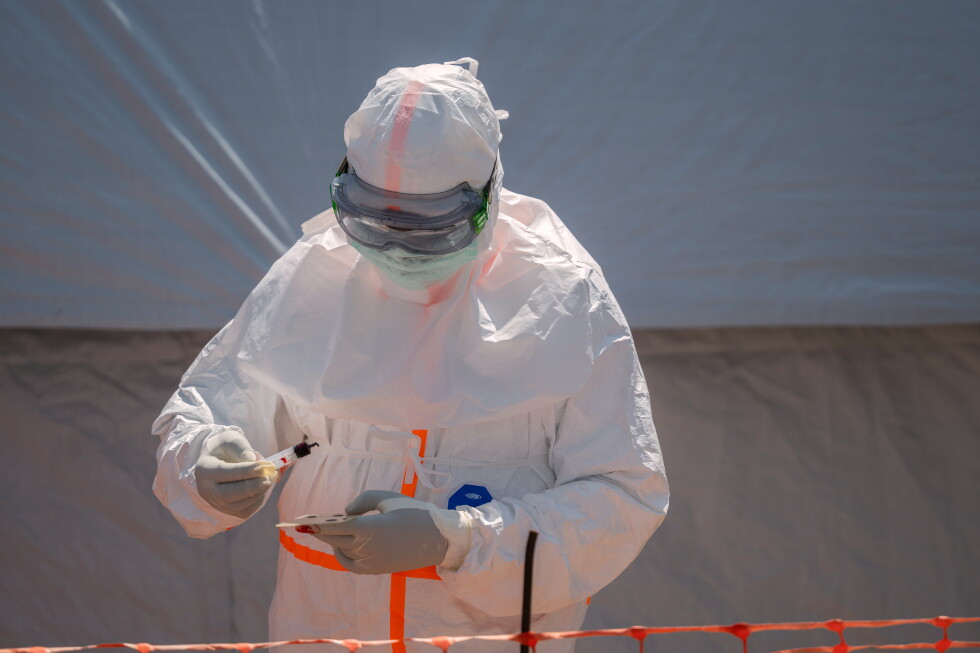
KINSHASA, Democratic Republic of Congo – As Central Africa’s largest nation grapples with an expanding and increasingly dangerous Ebola outbreak, the U.S. Centers for Disease Control and Prevention confirmed Friday that an American citizen employed by an international humanitarian organization operating in the country has contracted the virus.
The CDC announced in a public statement that it has launched a coordinated response alongside the infected worker’s employer, multiple U.S. federal agencies, Congolese national public health officials, and local in-country partners. The primary priorities of the collaboration are to stop secondary spread of the virus and trace every close contact the patient has had since testing positive. No additional personal or clinical details about the case have been released to protect privacy.
The current outbreak has already carved a grim path across the continent, the Africa Centres for Disease Control and Prevention confirmed earlier this week. It is now the fastest-growing Ebola outbreak ever recorded in Africa, with 1,830 confirmed cases reported within Congo’s borders and 648 recorded deaths. The virus has also spilled across national borders, with confirmed cases detected in neighboring Uganda, raising alarms about a wider regional spread.
This is not the first time an American has been infected during the current outbreak. In the opening week of the crisis, a U.S. doctor working in the country tested positive for Ebola and was evacuated to Germany for specialized medical care.
Earlier in the response, the Trump administration had announced a policy to evacuate any U.S. citizens exposed to Ebola while working in the region to a new isolation and treatment facility in Kenya, rather than transporting them back to the United States. That plan has since been put on hold, however, after a Kenyan court issued an order suspending the project.
According to the World Health Organization, Congolese authorities only formally declared the current outbreak on May 15, marking a weeks-long delay in official detection after the virus began spreading silently through communities.
Adding to the complexity of the crisis, this outbreak is caused by the rare Bundibugyo Ebola virus, a strain for which no officially approved vaccine or targeted treatment currently exists. Containment efforts have been further undermined by a series of overlapping challenges: a critical gap in international funding for the response, repeated violent attacks on health facilities operating in the outbreak zone, and a long-running armed conflict in eastern Congo, where the outbreak is centered.
Just last week, the first round of clinical therapeutic trials got underway, after researchers launched a long-awaited research study designed to test potential life-saving treatments for the strain.