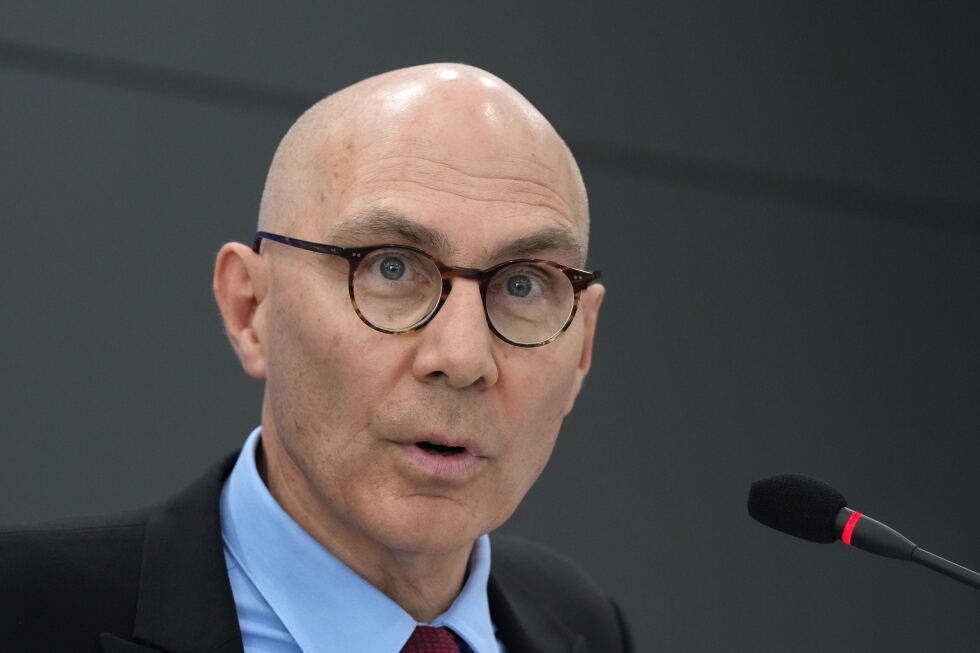
The United Nations General Assembly is set to hold a high-stakes vote Friday on whether to reappoint incumbent U.N. High Commissioner for Human Rights Volker Türk to a second four-year term, with the Austrian lawyer facing escalating pushback from major governments and human rights advocates over his policy stances on the Gaza war and China’s treatment of Uyghur minorities.
The nomination process itself has already sparked controversy. U.N. Secretary-General António Guterres privately put forward Türk’s name for reappointment after closed-door consultations with member states, bypassing any open public debate before scheduling Friday’s vote. The fast-track process has drawn fierce criticism from multiple parties, starting with the U.S. State Department, which has labeled the rushed vote a clear demonstration of the United Nations’ systemic corruption and institutional incompetence.
In an official statement, the State Department accused Türk of ignoring documented atrocities around the world to advance a fringe ideological agenda, adding that Washington would not support rewarding what it called an unqualified political ally of Guterres with a new term. Israel’s Foreign Ministry has echoed that criticism, calling Guterres’ push for Türk’s reappointment the secretary-general’s most recent moral failure. The ministry emphasized that the selection of a new human rights chief should be left to Guterres’ successor, arguing that Türk has a years-long record of anti-Israel bias that demands accountability, not an extended tenure.
Russia has also thrown a wrench into Guterres’ plan, proposing a compromise that would only extend Türk’s term through the end of December — matching the end date of Guterres’ own second five-year term as secretary-general. The Russian U.N. mission noted that no previous high commissioner has completed two full terms since the position was created in 1993, calling Guterres’ push for a full four-year extension unprecedented. A short-term extension would leave the appointment of a permanent new high commissioner to the next U.N. secretary-general, a post currently contested by six candidates. Beyond these major powers, multiple Latin American nations including Nicaragua, Argentina and Paraguay have also raised objections to Türk’s reappointment, while the African regional bloc has stated it has no objections to the nomination.
The role of U.N. High Commissioner for Human Rights has long been defined by its inherent tension: the holder is mandated to publicly call out human rights violations committed by U.N. member states, a requirement that almost guarantees pushback from powerful governments. Türk, a veteran U.N. diplomat who previously worked closely with Guterres at New York headquarters, has not shied away from all criticism — he strongly condemned Russia’s full-scale 2022 invasion of Ukraine, for example. But it is his approach to two of the most divisive human rights issues in global politics that has sparked the current backlash.
On China, Türk has raised public concerns over a range of issues, from the detention of high-profile individuals including artist Gao Zhen, lawyer Yu Wensheng and Hong Kong media magnate Jimmy Lai, to assimilation and counterterrorism policies targeting ethnic minority communities in Xinjiang, Inner Mongolia and Tibet. Critics argue that Türk has failed to adequately follow up on a 2022 report from his predecessor, former Chilean President Michelle Bachelet, which concluded that China’s mass detention of Uyghurs and other Muslim minorities in Xinjiang may constitute crimes against humanity.
Ken Roth, former executive director of Human Rights Watch, has emerged as one of Türk’s most prominent critics, calling the high commissioner a disaster for the role and arguing that his failure to hold China accountable for Uyghur rights abuses is the biggest stain on his tenure. “This is the most severe state persecution of a community in the world today, and Türk has simply ignored it,” Roth said. He rejected the U.N. human rights office’s explanation that Türk combines private diplomatic engagement with Beijing and limited public advocacy, arguing that this approach amounts to sidelining the Uyghur people’s plight while pretending to take action. “The job of high commissioner is to build public pressure through tough, timely, provocative criticism,” Roth noted. “Türk has taken one of the most powerful positions in global human rights and rendered it largely harmless, speaking about abuses in terms so bland they put audiences to sleep.”
The Chinese government has repeatedly denied allegations of mass persecution of Uyghurs, maintaining that its policies in Xinjiang are designed to root out terrorism and religious extremism following years of deadly violence in the region.
On the Gaza conflict, Türk has drawn criticism from both sides for his middle-ground approach. He has openly condemned Israeli military attacks on Gaza during the war against Hamas, which drew anger from Israel and its allies. But he has also declined to join independent U.N. human rights experts who have formally accused Israel of committing genocide against Palestinian civilians in Gaza — a position that has drawn criticism from pro-Palestinian advocates and many Global South nations. Israel has forcefully rejected all genocide allegations.
U.N. officials have defended the nomination process, rejecting claims of a rushed, opaque process. U.N. spokesperson Stephane Dujarric told reporters Friday that Guterres is strictly following the 1993 resolution that established the high commissioner post, which explicitly allows for a second term. “The secretary-general is acting fully within his authority, following established rules, and the process has been transparent,” Dujarric said. “Consultations were held with member states and regional groups prior to scheduling the vote.”
A spokesperson for Türk’s office confirmed that the high commissioner is prepared to serve a full second term if confirmed, noting that the core mandate of the role is to promote and protect human rights across all countries, which requires engagement with every U.N. member state regardless of political differences.