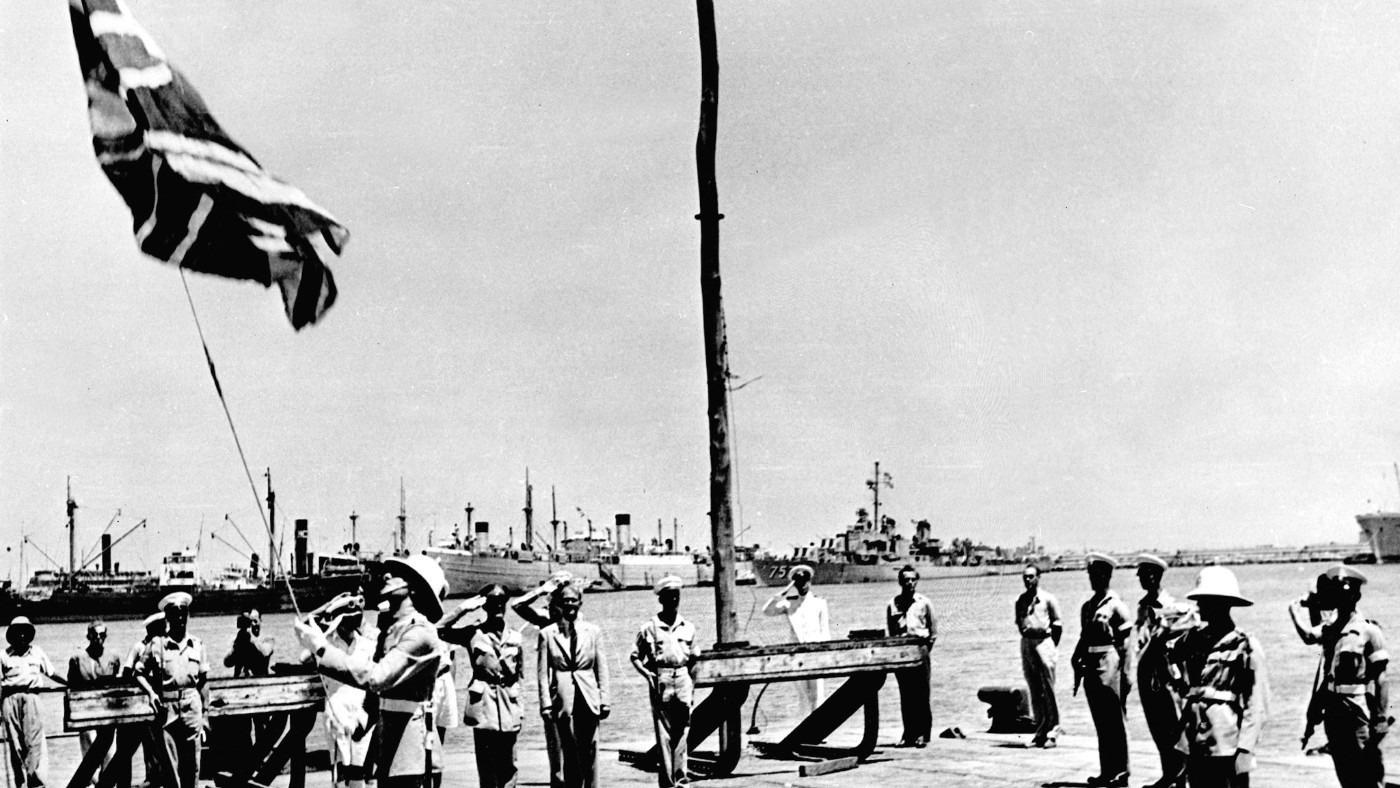
It has been 365 days since a landmark legal petition documenting alleged British war crimes during its colonial occupation of Palestine between 1917 and 1948 was submitted to the UK’s top government officials – and the administration has yet to issue any formal response, leaving activists and backers of the document increasingly frustrated. The Britain Owes Palestine campaign delivered the 400-page, meticulously researched petition to the prime minister, foreign secretary, defence secretary, and attorney general on 7 September 2023, a date that has now marked its one-year anniversary. The timing of this anniversary falls just two weeks before another key milestone: one year since the UK government formally granted diplomatic recognition to the State of Palestine, a move that campaigners say creates even greater urgency for the government to address the petition’s demands.
The petition was not a casual grassroots filing: it was drafted by a team of highly respected legal and historical experts, including leading human rights barristers Ben Emmerson and Danny Friedman, British-Israeli historian Avi Shlaim, international law scholar Professor John Quigley, and University of Nottingham public international law assistant professor Victor Kattan, one of the project’s lead organizers. From its launch, the document has earned widespread cross-party and public support, backed initially by 75 members of the UK Parliament, members of the House of Lords, and prominent cultural figures. Notable early backers included former Labour shadow chancellor John McDonnell, British-Palestinian MP Layla Moran, award-winning writer Robert Macfarlane, and acclaimed actress Juliet Stevenson. In the year since submission, that support has only grown, with an additional 45 cross-party MPs and peers adding their names to an open letter endorsing the petition, alongside public figures like author and comedian Alexei Sayle and Grammy-nominated singer Paloma Faith.
At the core of the petition is a clear demand: that the UK government formally acknowledge and apologize for its unlawful conduct during its decades-long mandate over Palestine. The legal case laid out in the document traces its origins back to 1917, when the British government issued the Balfour Declaration, a policy that pledged British support for a “national home for the Jewish people” in Palestine. The campaign argues this declaration set in motion a chain of events that ultimately led to the 1948 Nakba – the “catastrophe” that displaced an estimated 750,000 Palestinians from their ancestral homes and cleared the way for the establishment of the State of Israel.
The petition’s legal analysis concludes that British actions between 1917 and 1948 violated the international law that was in effect at the time. In a public statement shared with independent news outlet Middle East Eye, the campaign emphasized that the British Empire deliberately denied Arab Palestinian people the right to self-determination, and held that the Balfour Declaration itself and the subsequent British mandate over the region had no basis in international legal authority. Beyond policy violations, the document documents serious atrocities committed by British forces during the mandate period, including war crimes and crimes against humanity: systematic murder, torture, arbitrary detention, and the mass demolition of Palestinian civilian homes.
A key framing of the campaign’s argument connects historical British colonial policy to ongoing conflict in the region today. Campaign organizers reject the narrative that current Israeli practices – including expansion of illegal settlements in the occupied West Bank, mass home demolitions, arbitrary detention, and forced displacement of Palestinian communities in the West Bank and Gaza – represent a departure from the colonial era. Instead, they argue these contemporary injustices are a direct continuation of the legal and political structures Britain put in place during its rule.
For the petitioners, the core end goals remain modest but non-negotiable. “An official apology from the highest levels of the British government and a conversation about appropriate reparations is our main ask,” Kattan explained in an interview ahead of the one-year anniversary. “The petition sets out findings that engage the government’s legal and moral obligations, and it asks for nothing more than the thoughtful consideration that any claim of this scale should receive. The petitioners are fully entitled to a proper and reasoned response.”
In recent months, the UK government has adopted increasingly public stances on the Israeli-Palestinian conflict, with media reports indicating the administration is planning to announce more robust measures against illegal Israeli settlement expansion in the West Bank later this month. Against this backdrop, and ahead of the one-year mark of UK recognition of Palestine, the Britain Owes Palestine campaign is ramping up pressure for action. The group notes that a formal apology would be the foundational baseline for the UK to credibly contribute to future peace efforts and post-conflict reconstruction in the region: it is “the bare minimum if Britain is to play a proper role in peace efforts and reconstruction,” the campaign said.