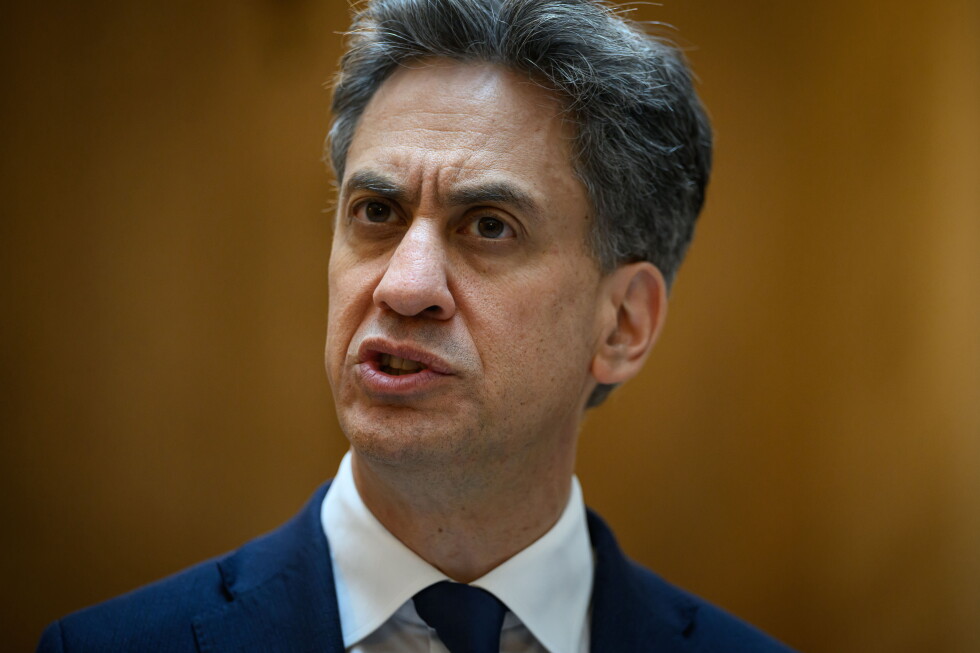
LONDON – In a significant shift of policy toward the Israeli-Palestinian conflict, the United Kingdom government announced Tuesday it will implement a ban on goods produced in Israeli settlements built in the occupied West Bank. The move comes as a direct response to Israel’s ongoing expansion of settlement construction, which British officials say threatens the viability of creating an independent Palestinian state. Details of the new measure will be laid out to the House of Commons later this week by Foreign Secretary Ed Miliband, who confirmed last week he would pursue a full “reset” of the UK’s diplomatic relationship with Israel.
Work and Pensions Secretary Pat McFadden clarified ahead of the official announcement that the ban is not a blanket boycott of all Israeli products, but a targeted measure focused exclusively on settlement expansion activity that violates longstanding international law. Speaking to Times Radio, McFadden emphasized the core principle guiding the UK’s decision: “At the heart of the statement is the idea that the U.K., along with many other countries, do not want to see the possibility of a two-state solution in Israel and Palestine being erased by changes to the facts on the ground.”
The dramatic policy shift comes against a deeply contentious backdrop in the region. Israel’s current government led by Prime Minister Benjamin Netanyahu is widely regarded as the most ultranationalist and religiously conservative administration in the country’s history. Since taking office, it has overseen a sharp surge in new settlement construction across the West Bank, a territory Israel captured during the 1967 Middle East war that the international community has long recognized as the core territory for a future independent Palestinian state. Netanyahu’s government rejects the premise of Palestinian statehood entirely, framing the entire West Bank as the biblical and historical homeland of the Jewish people.
Prime Minister Andy Burnham’s centre-left Labour government has already taken incremental action against settlement expansion, imposing targeted sanctions on violent extremist settlers and unauthorized illegal outposts over the past year. Tuesday’s announcement scales up those measures significantly, extending restrictions to cover all trade in goods – and potentially select services – connected to any Israeli settlement in the West Bank. Burnham has repeatedly raised alarm over Israel’s recent approval of the controversial E1 settlement project, a planned development that would split the geographically contiguous Palestinian West Bank into two disconnected sections. Palestinian leaders and international human rights groups warn that if completed, E1 would eliminate any realistic path to creating a sovereign, unified Palestinian state.
The UK’s decision marks the latest step in the country’s evolving approach to the conflict. As a longstanding close ally of Israel, the UK formally recognized Palestinian statehood last year in a bid to revitalize stalled international negotiations aimed at a two-state resolution.
Domestically, the harder line on Israeli settlements is expected to gain broad support from within the Labour Party, where a large share of voters and lawmakers have pushed for bolder action to hold Israel accountable for its expansion policies and defend Palestinian rights. However, the move carries notable political and diplomatic risks. Some political analysts have warned that the UK’s action could play directly into Netanyahu’s hands, bolstering nationalist support for his government ahead of a tightly contested general election scheduled for October.
Israeli officials have already issued fierce condemnation of the impending ban. Senior cabinet members have threatened reciprocal action: Foreign Minister Gideon Saar warned that “if Britain acts against Israel, Israel will act against Britain.” Itamar Ben-Gvir, Israel’s hard-line public security minister, went a step further, calling on Netanyahu to formally back Argentina’s longstanding territorial claim to the Falkland Islands, a British Overseas Territory in the South Atlantic known as the Islas Malvinas in Argentina.
The announcement has also drawn pushback from the United States. Mike Huckabee, the U.S. ambassador to Israel, labeled the ban “discrimination against the Jewish people” and warned that the UK could face “repercussions or retaliations” from the U.S. if it moves forward with the restrictions. Ahead of the public announcement, Burnham’s office confirmed the British prime minister held a call with U.S. President Donald Trump on Monday to outline the UK’s position, stating Burnham “set out the U.K.’s commitment to working toward peace and security in the region” and reaffirmed the country’s commitment to achieving a two-state solution. No details have been released on how President Trump responded to the announcement.