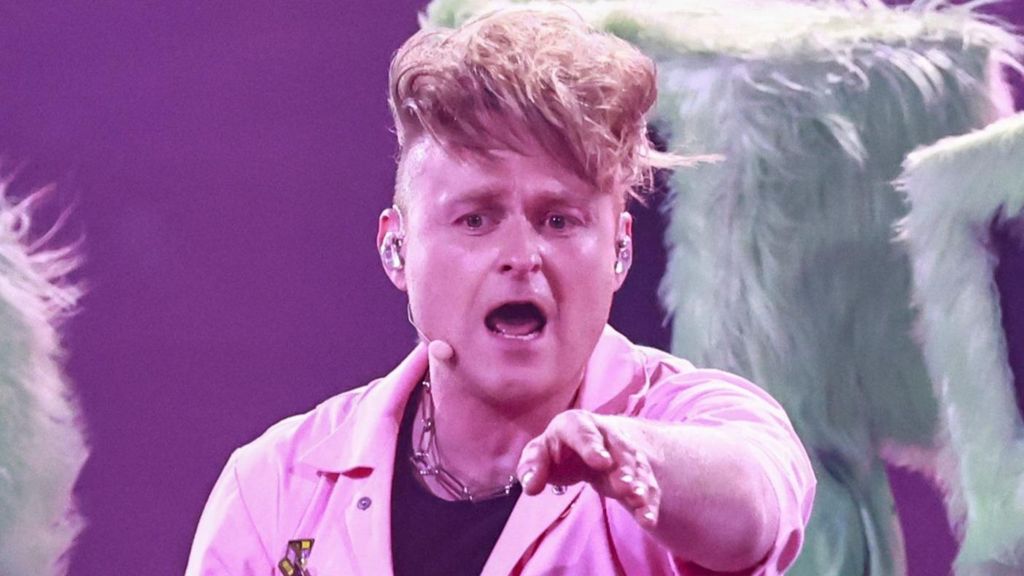
As the 70th Eurovision Song Contest prepares to crown its 2026 winner in Vienna this Saturday, all eyes are turning to the United Kingdom’s unorthodox representative: inventor and cult musician Sam Battle, better known by his stage name Look Mum No Computer. Where many contestants enter the global competition hungry for a win, Battle brings a laid-back, devil-may-care attitude that defies the typical pressure of Eurovision’s spotlight.
With bookmakers placing Battle at 150/1 odds of taking home the trophy, the 37-year-old creative says he is fully prepared for any outcome, leaning into the adage that confidence means being comfortable with losing. “It could go well or completely wrong – I’m just here for the ride,” he says. Even in the worst-case scenario of a zero-point finish, he has already leaned into the joke, joking that he’s got a “Look mum, no points” t-shirt ready to go.
For Battle, Eurovision is far from a make-or-break career milestone. Long before he was tapped to represent the UK, he had built a thriving, eccentric creative career centered on his passion for repurposed audio technology. A cult favorite in experimental electro-pop circles, he is known for building functional synthesisers out of unexpected objects ranging from old bicycles to retro Speak-and-Spell machines. His YouTube channel boasts 700,000 loyal subscribers who tune in to watch his madcap projects: everything from modifying vintage cars to restoring decaying 19th-century church organs, all delivered with the manic, infectious energy that has drawn comparisons to Back to the Future’s eccentric inventor Doc Brown. Off-camera, Battle runs a unique museum in Ramsgate, Kent, dedicated to restoring and exhibiting forgotten vintage audio gear. Just four weeks before the Eurovision grand final, he added a new role to his packed resume: first-time dad to a baby boy named Max.
What many fans don’t know is that Battle’s Eurovision journey started as a random pub joke with a friend. “We were sitting in a pub saying, wouldn’t it be hilarious if we tried to get into Eurovision?” he recalls. The throwaway joke quickly snowballed: his manager emailed the BBC to ask about the application process, and producers, intrigued by Battle’s one-of-a-kind persona, asked him to submit an original track.
Battle agreed to join a songwriting writing camp on one non-negotiable condition: he had to be allowed to bring Kosmo, his custom-built synthesiser and drum machine that requires six separate flight cases to transport. It was a casual moment while moving furniture that ultimately gave birth to his entry: a cheeky, 1980s-inspired pop anthem titled *Eins, Zwei, Drei*. As he shifted a sofa to make space for Kosmo, he counted out “Eins, Zwei, Drei” to coordinate the lift – and the team immediately knew they had their song title. Twelve hours later, the track was finished: a playful, high-energy number about quitting a boring office job to take a spontaneous mini-break in Germany. “We all thought it would never get picked,” Battle says. The very next morning, the BBC called to say they loved the track’s zany, unapologetic charm, and after a final audition to confirm he could perform live, Battle was officially named the UK’s 2026 representative.
During rehearsals in Vienna, Battle’s boundless curiosity for all things mechanical was on full display during a visit to the city’s Museum of Science and Technology, where he wandered through an exhibition of early synthesisers and mechanical instruments like a kid let loose in a candy factory. He impressed museum staff with his deep, encyclopedic knowledge of the obscure gear, pointing out the Mellotron organ that created the iconic texture on The Beatles’ *Strawberry Fields Forever*, and demonstrating the Roland CR-78 drum machine that kicks off Blondie’s *Heart of Glass*. “He’d be a fantastic tour guide – he knows more about these machines than we do,” the museum’s curator said. It took a spontaneous detour to a Eurovision karaoke booth, where Battle ripped through a falsetto version of ABBA’s *Waterloo* and did the full choreography for 2025’s viral hit *Espresso Macchiato*, before the pair could sit down to discuss his upcoming performance.
Battle is the first to admit he’s no polished Eurovision performer: “I’m literally not a dancer. I’ve got two left feet,” he laughs, but says he’s fully embracing the challenge. His performance, choreographed by Fredrik “Benke” Rydman – the creative mind behind 2024 winner Nemo’s winning staging – leans into Battle’s hyperactive, chaotic energy. The set opens with Battle trapped in the monotony of a soul-crushing office job, before he breaks free and transforms the drab set into a flashing, buzzing electronic carnival, with dancers wearing fur-lined television sets as headgear. Battle built most of the stage props himself, including oversized custom synth panels, drilling hundreds of holes in the process. He had to scrap one idea – adding a real car to the set – when he learned the stage’s glass LED floor had a strict 500kg weight limit for all props.
Battle is well aware of the UK’s poor recent track record at Eurovision: outside of Sam Ryder’s surprise second-place finish in 2022, the UK has not placed in the top 10 for more than 15 years, and earned exactly zero points in both 2024 and 2025. The BBC, he says, prepared him for the potential public scrutiny that comes with the role, even putting him through a stress test to make sure he could handle the pressure.
Right now, the only thing keeping him up at night is the fear he’ll trip on stage and embarrass himself. Still, when pressed, he admits there’s a small part of him hoping the audience connects with his unconventional act. “What we’re doing is Marmite – you either love it or hate it – but I think there’s a slot open for our sort of thing,” he says.
But even if the contest doesn’t go his way, Battle has already lined up his next priority: immediately after the grand final wraps up Saturday night, he’s flying straight home to resume his new favorite job: changing nappies for his newborn son Max. For Sam Battle, no matter what the scoreboard says, Eurovision is already a win.