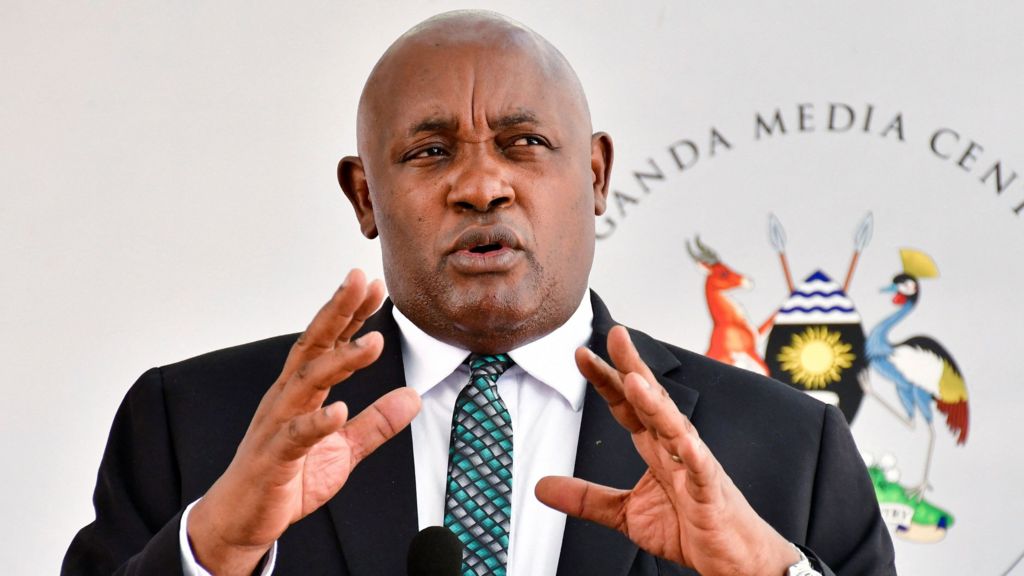
Uganda’s Ministry of Health has rolled out a suite of enhanced public health restrictions aimed at shielding the East African nation from a catastrophic Ebola outbreak, as a deadly ongoing epidemic in the neighbouring Democratic Republic of Congo continues to spread across regional borders.
The new rules, formally announced by Health Minister Chris Baryomunsi during a Sunday press briefing, mandate that all Ugandan citizens returning home from DR Congo complete a full 21-day supervised isolation period at their own personal expense. Additionally, no travellers with a recent travel history to DR Congo will be permitted to transit through Ugandan territory, with only a narrow exception carved out for essential cross-border travellers from DR Congo, who will still be subjected to rigorous, multi-layered public health screening protocols before being granted entry. Officials have also ramped up infectious disease screening operations at Entebbe International Airport, every official land border crossing, and a network of newly established designated road checkpoints across the country.
These tightened safeguards come in the wake of two separate recent Ebola cases in neighbouring Kenya and Nigeria, both involving individuals who transited through Ugandan territory earlier this month. The Kenyan case was a businessman with commercial interests in DR Congo, who tested positive shortly after returning to Nairobi and died only two days after his arrival; his subsequent contacts have led to eight additional confirmed Ebola cases in Kenya, with a second family member of the original patient dying over the past weekend. The Nigerian case is a Ugandan-born spouse of a Swiss diplomat who had travelled to Kampala for a holiday. Regional public health authorities initially stated the Nigerian patient had only transited through Uganda en route from eastern DR Congo, but Ugandan officials confirmed Sunday that they are now collaborating directly with Nigerian health agencies to map her full travel itinerary and identify any potential points of exposure to the virus. Health ministry permanent secretary Diana Atwine also noted that closed-circuit television footage from Entebbe International Airport confirms the two international Ebola patients had no direct physical interaction during their shared day of transit through the facility, eliminating the possibility of cross-transmission between them on Ugandan soil.
Ugandan health officials emphasized that the country has not recorded any local Ebola transmissions this month, and the World Health Organization formally declared Uganda Ebola-free back in August, shortly after a small cluster of 20 cases and two fatalities emerged in the earliest weeks of the DR Congo outbreak. That ongoing DR Congo outbreak, which began in May, is the deadliest Ebola epidemic ever recorded in the country, having already claimed more than 4,500 lives to date, and has spread to multiple nations beyond DR Congo’s borders.
The 60 people who were placed under mandatory monitoring after coming into contact with the Kenyan Ebola patient during his transit through Uganda have all been officially cleared and discharged as of the Sunday announcement. Baryomunsi stressed that the new measures are a proactive precaution, noting that Uganda and DR Congo share extensive, porous borders, with communities on both sides deeply interconnected through cross-border trade, regular travel, and extended family networks. The strain of Ebola driving the current regional outbreak is the rare Bundibugyo variant, for which no licensed vaccine or targeted specific treatment is yet available, though multiple clinical trials are currently in progress. Ebola spreads exclusively via direct contact with the infected bodily fluids such as blood, vomit, or other secretions of a symptomatic patient, making targeted screening and quarantine the most effective frontline defences for at-risk border nations.
Uganda imposes 21-day quarantine on citizens returning from DR Congo