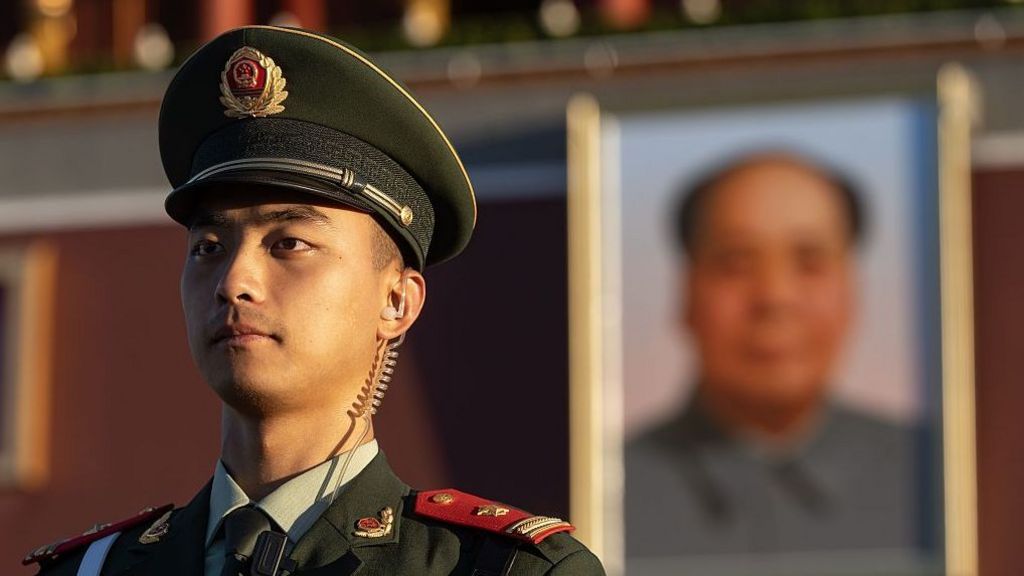
A high-stakes, strictly confidential political gathering is currently unfolding in Beijing, bringing together China’s top Communist Party leadership to set critical internal governance trajectories that will shape the ruling party’s structure and policy direction for years to come. Convened on Monday for a four-day closed-door run, the Fifth Plenum of the current Central Committee has assembled roughly 300 full members of the party’s top ruling body, with state-run media framing the core agenda as advancing stricter disciplinary oversight across all ranks of the 90-million-member organization.
These elite plenums, a longstanding institutional feature of the Chinese Communist Party, are held no less than once per year, with a standard of seven sessions scheduled across each five-year tenure of a newly elected Central Committee. While their deliberations are almost entirely shielded from public view, official summaries of agreed decisions and a full formal policy document are typically released to the public shortly after the sessions conclude, and global political analysts closely monitor their outputs for signals of the leadership’s upcoming policy priorities. The timing of this 2025 plenum carries unique weight: it is being held exactly 12 months ahead of the next national Party Congress, the once-every-five-years major gathering that will formalize the party’s next five-year policy agenda and swear in a newly constituted Central Committee.
For President Xi Jinping, who had constitutional term limits on leadership tenure abolished in 2018 to clear a path for indefinite rule, this plenum serves as a pivotal platform to further solidify his authority in the wake of a sweeping, years-long internal purge of party, state, and military officials. Past plenum sessions have already cemented Xi’s status as the party’s undisputed “core” leader, enshrined “Xi Jinping Thought” as a guiding ideological doctrine on equal footing with the legacy of Mao Zedong, and formally approved the removal of leadership term limits. Observers widely anticipate Xi will be reappointed as the country’s top leader at next year’s Party Congress, and this week’s closed-door deliberations are designed to align all senior delegates behind his strategic vision and vet loyal candidates to fill upcoming senior vacancies.
Even the exact venue of the ongoing session has not been disclosed to the public, though historical records show most prior plenums have been hosted at Beijing’s secured Jingxi Hotel. A September 2025 readout from the 21-member Politburo, the party’s top decision-making body, confirmed the plenum will vote to adopt a formal resolution focused on “persistently advancing comprehensive strict governance of the Party” — a policy framework widely interpreted by analysts as a mechanism to enforce tighter obedience from regional and lower-ranking party officials across the country.
The atmosphere inside the closed meeting room is marked by notable tension, as attendees are acutely aware of the large number of empty seats left by recent purge campaigns. Tens of thousands of senior officials have been removed from their posts in recent years on charges ranging from financial corruption to vague accusations of “moral corruption”, a classification that independent experts note is often deployed to target officials perceived to lack personal loyalty to Xi. A 2025 analysis from the Asia Society Policy Institute found that of the 44 military representatives appointed to the Central Committee in 2022, only two remain in their positions today. The seven-member Central Military Commission, the top body that commands China’s 2 million-strong armed forces, has been reduced to just two active members: Xi Jinping and one remaining loyal senior general, and the ongoing plenum is widely expected to formalize the appointment of new, Xi-loyal senior military officers to fill those vacant posts ahead of next year’s Party Congress.