As European football’s elite clubs gather in Monaco for Thursday’s 2025-26 UEFA Champions League draw, the long-simmering dispute between UEFA and FIFA over a controversial private investment plan for World Cup commercial operations is set to de-escalate, multiple sources confirmed to AFP.
The conflict erupted in late July, when news broke that FIFA president Gianni Infantino’s administration had proposed launching a commercial subsidiary under the FIFA Forward Enterprise (FFE) initiative, which would allow private investors to purchase equity stakes in the entity that operates FIFA’s flagship events, including the men’s and women’s World Cup and the Club World Cup.
The proposal triggered immediate and fierce backlash from UEFA, which controls the lion’s share of global football’s multi-billion-dollar economy through its top club competitions and member association revenues. Led by president Aleksander Ceferin, UEFA slammed the plan in unvarnished terms, calling it a “shady, opaque backroom deal” that threatened the fundamental structure of the global game. The governing body issued a blunt ultimatum: no UEFA national or club teams would take part in any FIFA competition as long as the proposal remained on the table. That hardline stance was widely credited with forcing FIFA to shelve the controversial plan almost immediately.
Now, ahead of Thursday’s draw, sources close to UEFA’s executive committee and member association talks in Monaco told AFP the threatened boycott will “likely” be withdrawn. UEFA had laid out two non-negotiable conditions for backing down from the threat: a full scrapping of the original investment proposal, and a permanent guarantee that no similar attempts to restructure FIFA’s top event commercial operations would be advanced in the future. One senior source confirmed Wednesday that UEFA has now received the required assurances, satisfying both conditions.
The decision to drop the boycott threat also removes a major point of internal friction for UEFA, which has pushed for Infantino to step down over the controversy. A split among member associations over a boycott would have undermined the bloc’s unified front calling for the FIFA president’s departure, a risk that is now eliminated. The timing also removes immediate uncertainty for upcoming FIFA events: the Under-20 Women’s World Cup is set to kick off in Poland next month, and European qualifying for the 2027 Women’s World Cup in Brazil is already underway.
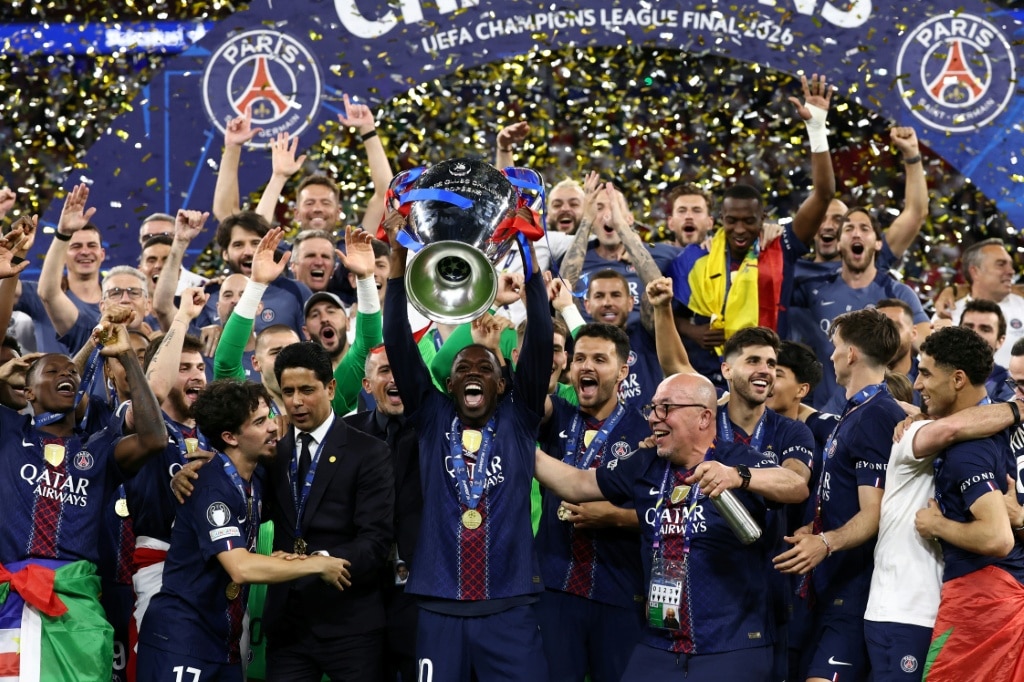
With the governing body dispute moving toward resolution, focus has fully shifted to the draw itself, which will set the stage for the new season of Europe’s most prestigious club competition. Defending champion Paris Saint-Germain enters the draw chasing an unprecedented three-peat in the modern era; the French side retained their title last season after beating Arsenal on penalties in the Budapest final, and only Real Madrid, who won three consecutive Champions League crowns between 2016 and 2018, have achieved the three-peat feat in the last 50 years. PSG manager Luis Enrique reiterated the club’s ambitions earlier this month, saying “We have won the last two, which means we can win a third. It will be very hard, but that is our ambition.”
This season marks only the third iteration of the Champions League’s revamped format, which expanded the competition to 36 teams competing in a single unified league phase, with each side facing eight different opponents before the knockout round. The new format has amplified the growing polarization of European club football, with the wealthiest clubs from the continent’s top four leagues set to dominate participation and capture the bulk of competition prize money. Half of all 36 competing clubs hail from the Premier League, La Liga, Serie A, and the Bundesliga. The English Premier League leads all leagues with five entrants: Arsenal, Manchester City, Manchester United, Liverpool, and Aston Villa. La Liga also has five representatives, including Real Betis, who return to the Champions League group stage proper for the first time in 20 years.
The draw will also feature several historic debuts for underdog clubs who defied expectations to reach the league phase. In Italy, Como, coached by former Arsenal, Barcelona, and Spain midfield star Cesc Fàbregas, will make their first ever Champions League appearance after upending more established Italian sides to qualify. Azerbaijan’s Sabah will also make their debut, having fought through four qualifying rounds starting from the very first preliminary round to earn their spot. Austria’s LASK completes the list of first-time qualifiers, pulling off a stunning late comeback to beat Celtic in the play-off round to secure their place in the 36-team league.
The first matchday of the league phase is scheduled for September 8 to 10, with the league phase wrapping up in late January 2026. This season’s Champions League final will be hosted at Atlético Madrid’s Metropolitano Stadium on June 6, 2026.