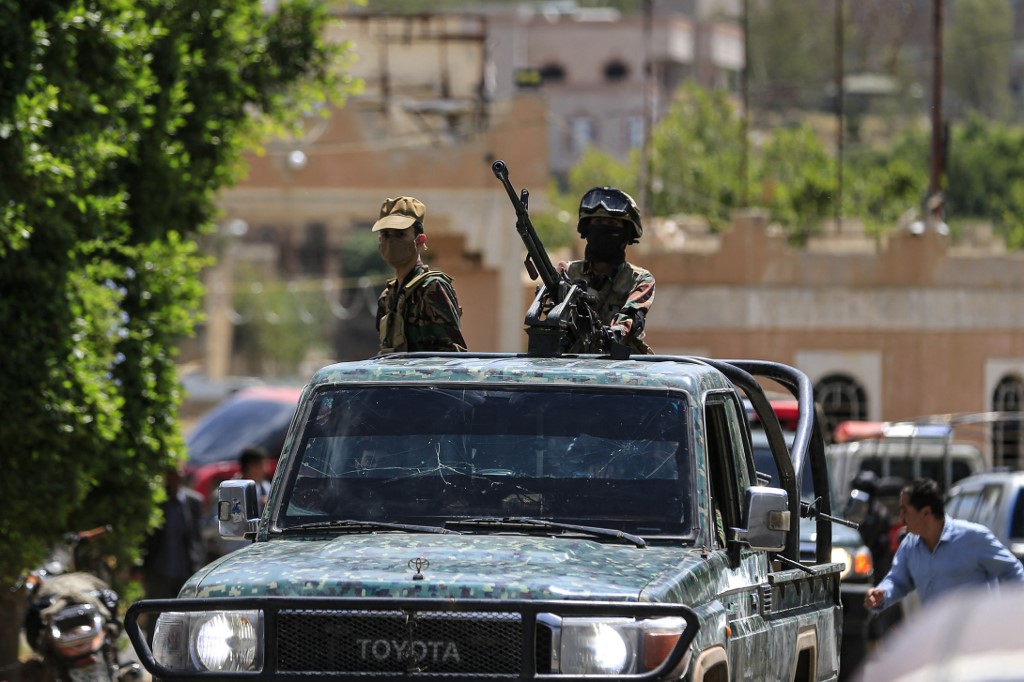
In comments made Saturday, former U.S. President Donald Trump revealed that Yemen’s Houthi movement has privately reached out to the United States, calling for Washington to stay out of its intensifying military conflict with Saudi Arabia. “The Houthis called us, and they let us know that they don’t want to fight with us. They don’t want me to go after them,” Trump stated publicly.
Trump further noted that the Houthi group has allowed the vast majority of commercial vessels to pass unimpeded through regional waters, adding that their hostility is focused solely on a single nation. He also indicated he expects to resolve the ongoing standoff through diplomatic channels.
Trump’s remarks came in the wake of a rapid, large-scale Houthi military advance across Yemen’s Red Sea coastline this week. In a lightning offensive, the Iran-aligned movement captured a broad stretch of territory along the strategic waterway, including key islands and control of the Bab el-Mandeb Strait — a critical global shipping chokepoint that sits between Eritrea, Djibouti, and Yemen. The strait serves as the primary transit route for crude oil shipments leaving Saudi Arabia bound for Asian markets, making its control a critical geopolitical and economic flashpoint.
According to a Friday report from Axios, Saudi Arabia — which backs Yemen’s internationally recognized government — had formally asked the Trump administration twice to launch direct military strikes against Houthi targets as the group advanced on the Red Sea chokepoint. Trump, the outlet confirmed, turned down both requests.
The escalation of tensions extended beyond Yemen this week. On Friday, Saudi Arabia announced it had temporarily halted operations through its key East-West Pipeline after a drone attack launched from Iraqi territory targeted the infrastructure. The kingdom said it would hold off on retaliatory action at the request of the Iraqi government.
In response to the incident, Iraqi authorities launched an official investigation, confirming that security forces had located drone launch platforms in the al-Tib region near the Iraq-Iran border. Following the discovery, the Iraqi government ordered the temporary closure of three border crossings connecting the country to Iran.
When asked about the pipeline attack, Trump said he believes Iran was “probably” responsible for the strike that originated in Iraqi territory, though he offered no concrete evidence to support the claim. The former president also added that he had spoken by phone with Saudi Crown Prince Mohammed bin Salman, whom he referred to as a personal friend.
This week has also seen the Houthis step up cross-border attacks directly targeting Saudi energy infrastructure, launching a large-scale wave of drone and missile strikes against Saudi oil facilities. The expanding scope of the conflict has stoked global market fears of potential disruption to energy supplies, which could push already volatile oil prices even higher.
In the most recent incident Saturday evening, just hours after Saudi authorities issued public warnings of imminent potential attacks, a Houthi projectile wounded two people in a southern Saudi region bordering Yemen.