Fresh rounds of mutual strikes between the United States and Iran have reignited open hostility, with senior leaders from both nations trading sharp, escalatory threats that have thrown fragile ceasefire negotiations into serious doubt.
The latest cycle of violence began on Monday, when an Iranian drone struck a US Army Apache attack helicopter patrolling the Strait of Hormuz, a vital global shipping chokepoint that has remained effectively closed to most commercial traffic since large-scale conflict broke out in late February. Both crew members on board survived the incident and were rescued by an unmanned American sea drone, according to official US accounts. While US officials confirm an Iranian drone carried out the attack, one anonymous senior official told CBS News it remains unclear whether the strike was deliberate. Notably, Iran has not officially claimed responsibility for downing the helicopter, per semi-official Iranian outlet Mehr News Agency.
In response to the helicopter incident, US Central Command (Centcom) launched targeted airstrikes on Tuesday against Iranian military infrastructure near the Strait of Hormuz, hitting Iranian defense systems, ground control stations and radar sites. Centcom framed the operation as a “proportional response” to the attack, but Iran’s Islamic Revolutionary Guard Corps (IRGC) dismissed the strikes as “vicious.” The IRGC confirmed the US strikes hit targets near the cities of Jask, Sirik and Qeshm Island, reporting only minor damage to a telecommunications tower and two water tanks.
Hours after the US strikes, the IRGC launched retaliatory attacks targeting 21 sites at US military bases in the region, including installations in Bahrain and Jordan. Kuwait’s military also confirmed it intercepted an incoming projectile linked to the Iranian retaliatory wave. A senior unnamed US official told Reuters nearly all Iranian missiles and drones launched in the counterattack were intercepted by allied defense systems, with no US casualties reported.
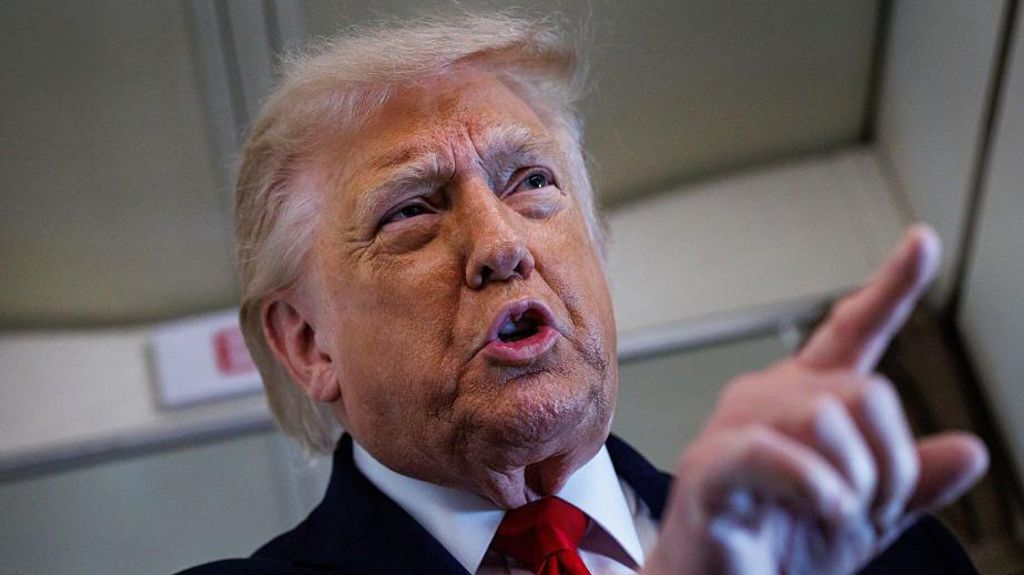
On Wednesday, US President Donald Trump amplified tensions in a series of posts on his Truth Social platform, departing sharply from his remarks just one day earlier, when he told reporters the US and Iran were in the “final throes” of reaching a “very, very good deal.” Trump claimed Iran’s military was a “complete and total mess,” asserting much of its naval and air force capabilities no longer exist and that the country had been “completely defeated.” He accused Tehran of dragging its feet on negotiating a mutually beneficial agreement, warning “now they will have to pay the price!!!” In separate comments to Fox News, Trump clarified the Iranian drone that hit the Apache struck while flying at very low altitude and did not explode on impact.
Iranian officials have pushed back sharply on Trump’s claims and condemned the US for undermining diplomatic progress. Earlier this week, Iranian Foreign Minister Abbas Araghci reiterated that Iran would “leave no attack or threat unanswered,” arguing the US has already suffered “defeats on the battlefield.” On Wednesday, Iranian foreign ministry spokesman Esmaeil Baqai accused the US of sabotaging the diplomatic process through contradictory public messaging, repeated shifts in negotiating positions and ongoing ceasefire violations. He added that Iran now must re-assess its path forward, noting any viable diplomatic process requires a baseline of stability that the US has failed to uphold.
The current conflict traces its origins to February 28, when the United States and Israel launched a sweeping series of strikes on Iran that killed the country’s supreme leader. Iran responded immediately with attacks on Israel and US-aligned states across the Persian Gulf, and fighting escalated rapidly across the Middle East, drawing Lebanon into the conflict in March. In April, the two sides agreed to a two-week ceasefire, and while full-scale large-scale hostilities did not resume, both sides have exchanged intermittent fire. Negotiators have held multiple fraught discussions, including a high-stakes meeting in Pakistan, aimed at forging a lasting peace deal, though the latest escalation has thrown those talks into disarray.