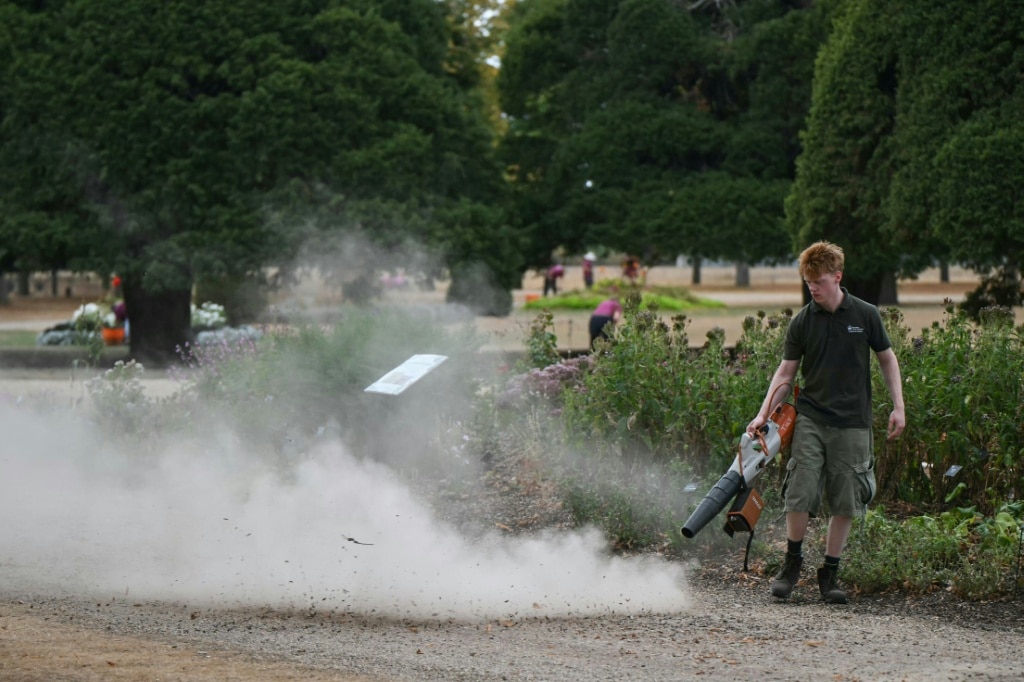
Southwest of London, the 17th-century formal gardens of Hampton Court Palace stretch out under a late summer sky, but the lush green lawns that have welcomed visitors for centuries are now a parched, straw-colored beige — a stark visual marker of how climate change is reshaping one of the United Kingdom’s most cherished cultural landscapes. For Graham Dillamore, Hampton Court’s head gardener who has spent more than two decades tending the grounds of Henry VIII’s former royal residence, this summer’s record-breaking heat and prolonged drought have brought unprecedented uncertainty to the future of these historic spaces.
Designed by some of the most influential landscape architects in British history — including Lancelot “Capability” Brown and William Kent — the sprawling gardens of stately homes like Hampton Court, Blenheim Palace, Chatsworth House, and Chiswick House rank among England’s most popular tourist attractions, drawing millions of visitors annually to experience their iconic blend of curated design and centuries-old natural growth. Today, however, their historic planting schemes and ancient mature trees are facing unprecedented stress from shifting weather patterns amplified by human-caused climate change.
Gardeners who tend these spaces are not overly concerned about the temporary sight of browned lawns; most agree that visitors, who are also navigating domestic water restrictions, understand the broader context. It is the long-term survival of irreplaceable, decades-old tree stock that keeps them up at night. By mid-August this year, many mature trees already showed severe stress signals: leaves turning brown, branches drooping, and whole ecosystems pushed past their tolerance for heat and dryness.
“Some of these trees have actually given up. They’re not going to come back, they’re finished,” Dillamore, who also oversees the gardens at Kensington Palace, told AFP. “We’re losing mature tree stock and that’s tragic in a historic garden.”
Rosie Fyles, head of gardens at west London’s Chiswick House, where William Kent designed the iconic tree-dotted lawns and cedar groves in the 18th century, echoed that concern. Her team manages 1,800 trees, and the species most iconic to the classic English garden landscape — oaks, sycamores, birches, and limes — are suffering the worst damage. “I think there’s only so much stress they can withstand,” she said.
Watering large, mature trees is simply not logistically feasible, gardeners across all sites explain. Even for smaller shrubs that teams can target for irrigation, the lack of water has reached a crisis point. Chiswick House expanded its rainwater harvesting capacity in recent years, but its entire reserve was depleted months ago. “There’s only so much we can intervene and control,” Fyles said, adding that the loss of control over a landscape she has spent years caring for is a humbling, difficult reality to accept. “It’s sobering. It means that we’re having to think about what we plant going forward, what trees will be sustainable going forward in the future climate.”
For Dillamore, the current crisis feels like uncharted territory. “I’ve never felt so uncertain about the future in historic gardens and landscapes as I do now,” he said.
A recent survey of historic garden staff conducted by the National Lottery Heritage Fund found every single respondent reported measurable impacts from climate change — not just summer drought, but also increasingly severe winter storms and excessive rainfall that fosters fungal growth and pest infestations. Drew Bennellick, head of lands, seas and nature policy at the Heritage Fund, says historic gardens are on the absolute front lines of climate change, with shifts happening far faster than many conservationists predicted. “We’ve seen sites that lost 80 percent of their tree cover,” he told reporters.
Modelling from researchers at the Royal Botanic Gardens, Kew — a UNESCO World Heritage Site — paints an even bleaker long-term picture: by 2090, half of Kew’s existing tree population could be at risk of death.
Conservation leaders and garden managers agree that these iconic landscapes must be protected to preserve their cultural and historical value, but they also acknowledge that radical adaptation is unavoidable if they are to survive. “But they’ve also got to change over the next few years — otherwise we’re going to lose them,” Dillamore said, acknowledging that this shift will require “some very, very difficult decisions.”
Already, many sites are testing adaptive changes to planting and management. Some are shifting to drought-tolerant Mediterranean plant species, and increasing the proportion of tough grasses and herbaceous perennials that can survive extended dry periods. At Hampton Court, Dillamore has already launched test beds of heat-resistant perennial plants created by garden designer Ann-Marie Powell. Planted this past April without automatic irrigation, species like the southern U.S.-native Siskiyou Pink and prairie-grown echinaceas have remained vibrant through the record heat, exceeding Dillamore’s expectations.
Many gardens have also adjusted their maintenance practices: Hampton Court and Chiswick have stopped annual digging of flowerbeds and adopted a more lenient approach to weeds, both of which help retain soil moisture and reduce stress to existing plants. Even the Royal Horticultural Society, the UK’s leading gardening charity, announced this month it is considering relocating its heat-stressed hydrangea collection from Surrey to cooler regions of northern England.
For Dillamore, adaptation does not mean erasing the historical identity of these iconic landscapes. “The gardens tell the story of Hampton Court just as much as the palace, so I can’t pack this garden up and move it,” he said. “We’ve got to retain that feel, the spirit of the place” — while making the hard changes needed to keep that spirit alive for future generations.