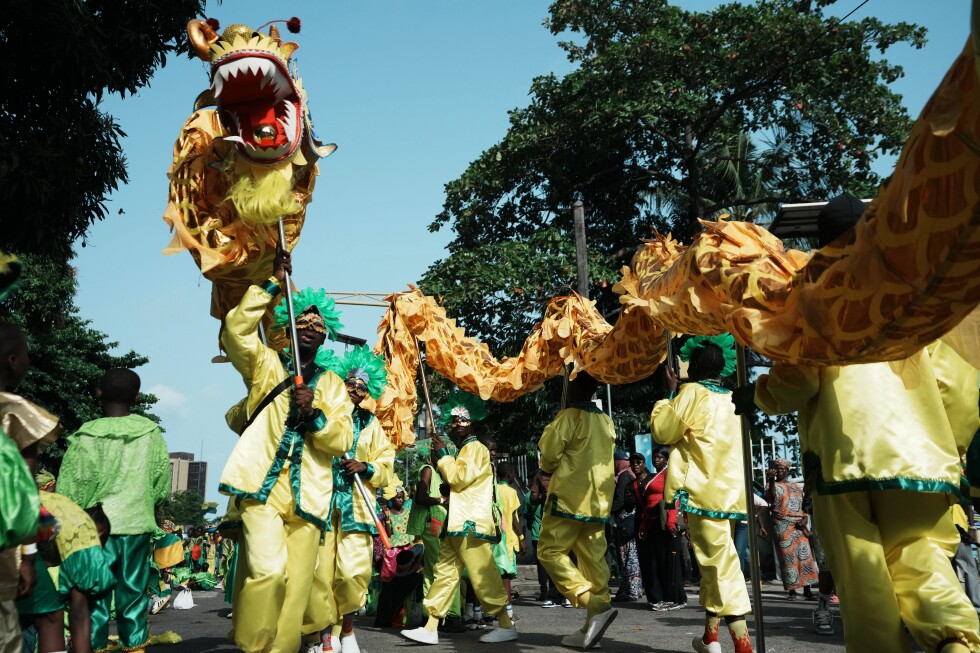
LAGOS, Nigeria — Against the bustling backdrop of Nigeria’s coastal megacity Lagos, thousands of celebrants from across the region packed the streets this year for the long-standing annual Lagos Fanti Carnival, a vivid cultural celebration honoring the unique Afro-Brazilian legacy of the Aguda community—descendants of formerly enslaved people who resettled in West Africa from Brazil in the 19th century.
In recent years, the vibrant gathering has been held during the Easter season, and has grown to become one of West Africa’s most high-profile cultural festivals, drawing comparisons to Brazil’s world-famous Rio Carnival, the largest public celebration on the globe.
The roots of the carnival stretch back to the arrival of the returning formerly enslaved people, the majority of whom made their new homes in Lagos alongside the city’s existing Yoruba community. Rather than abandoning the cultural traditions they adopted during their time in Brazil, these returnees wove Brazilian and Portuguese cultural practices into their daily lives, leaving enduring marks on local music, cuisine, architecture, religious traditions and social customs. Over generations, this blended cultural identity gave rise to the Fanti Carnival that continues to draw crowds today.
For long-time attendees, the carnival is far more than a street party—it is a critical act of historical preservation for Lagos. “If you know the history of Lagos, you will understand how this carnival is important to the city and its history,” shared Ademola Oduyebo, a first-time attendee this year. “It is important that we preserve this for our children.”
This year’s celebration, held under the official theme “A Homecoming of Heritage”, culminated in a grand procession where community groups from across Lagos marched to the iconic Tafawa Balewa Square in the city center. The procession included Aguda descendants of all age groups, reflecting the intergenerational bond of the community’s shared history.
Revelers turned out in eye-catching, culturally rooted attire that nodded to their blended Afro-Brazilian identity: many danced on foot in vibrant patterned costumes, while others paraded through the streets on horseback. Artists and performers from across the continent wore elaborate ensembles adorned with handcrafted beads and flowing feathers, and some participants decorated their bodies with bright, symbolic body paint, all moving to the hypnotic beat of traditional Yoruba rhythms.
Glamour Sandra, a frequent attendee who has also joined Rio Carnival celebrations in Brazil, says the Lagos event holds a special place on her annual calendar. “I love the energy, the artistic splendor that they create,” she said of the Fanti festival.
Unlike large national-scale festivals, the Fanti Carnival remains deeply rooted in local community leadership: community associations representing the original Aguda settlements play a central role in organizing the event every year, ensuring the celebration stays true to its historical and cultural origins.