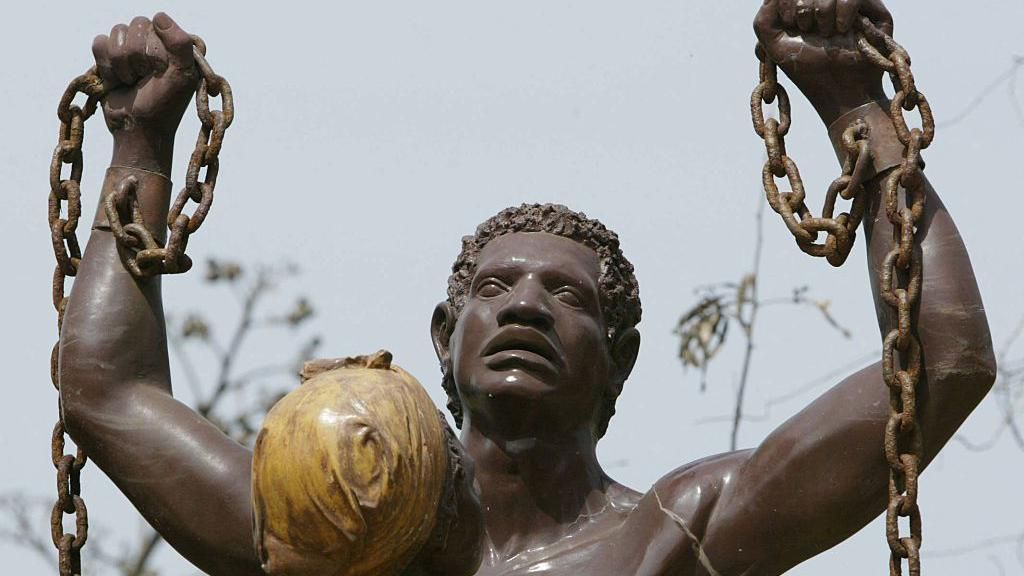
In a landmark decision with profound historical significance, the United Nations General Assembly has overwhelmingly endorsed a resolution characterizing the transatlantic slave trade as “the gravest crime against humanity.” The resolution, which garnered 123 votes in favor with only three nations opposed and 52 abstentions, represents a pivotal moment in international recognition of slavery’s enduring legacy.
UN Secretary-General Antonio Guterres welcomed the adoption, emphasizing that the economic foundations of numerous Western nations were “built on stolen lives and stolen labour.” He described the institution as extending beyond forced labor to encompass “a machinery of mass exploitation and deliberate dehumanization of men, women and children” maintained through barbaric punishments including shackles, flogging, and sexual violence.
The resolution, championed by African and Caribbean nations, carries symbolic rather than legal force but establishes crucial political momentum for ongoing reparations discussions. Almaz Teffera, a senior racism researcher at Human Rights Watch, noted that while the declaration possesses primarily symbolic value, it constitutes “a huge and significant step” that could accelerate progress on compensation debates.
Historical context reveals the staggering scale of the transatlantic slave trade, which forcibly transported approximately 12-15 million Africans to the Americas between the 15th and 19th centuries. An estimated two million perished during the horrific Middle Passage aboard slave ships. European colonial powers including Spain, Portugal, France, and Britain systematically profited from this exploitation.
The contemporary ramifications of centuries of enslavement remain starkly evident. In Brazil, which received nearly 4.9 million enslaved Africans primarily under Portuguese rule, official statistics indicate black citizens are twice as likely to experience poverty compared to white counterparts.
The resolution urges member states to consider formal apologies and contributions to a reparations fund, though opposition remains substantial. The United States, Israel, and Argentina voted against the measure, with Deputy US Ambassador Dan Negrea expressing concern that creating a hierarchy of historical crimes “diminishes the suffering of countless victims.” The United Kingdom and European Union members were among those abstaining.
Reparations advocates emphasize that financial compensation constitutes only one dimension of restorative justice. Dr. Esther Xosei, a prominent British scholar and activist, cautioned that while the UN declaration represents a “good victory,” the “real battle will be fought on the streets” where public understanding of slavery’s legacy remains inadequate.
Historical precedent exists for reparations, notably Germany’s payment of over $80 billion to Jewish victims of the Nazi regime. However, no nation has provided compensation to descendants of enslaved Africans, despite 19th-century payments to slave owners following abolition—Britain allocated the modern equivalent of $21 billion to compensate proprietors after ending slavery in the 1830s.
The CARICOM bloc of 15 Caribbean nations has advanced a comprehensive 10-point plan for reparatory justice, estimating that former colonial powers owe at least $33 trillion. International Court of Justice judge Patrick Robinson has proposed an even higher figure of $107 trillion from 31 nations. These astronomical sums far exceed practical implementation possibilities, with the entire US federal budget for 2025 totaling $7.1 trillion.
Beyond financial considerations, advocates stress the importance of formal apologies, educational reforms, and historical acknowledgment. Verene Shepherd, vice-chair of the CARICOM Reparations Commission, notes that European governments have predominantly issued “statements of regret” rather than full apologies, impeding the healing process for descendants.
As Dr. Celeste Martinez, a specialist in Spanish colonialism, summarizes: “The most important thing to understand is that nobody is trying to change the past, but to address its consequences in the present.” The UN resolution represents a critical step toward acknowledging that slavery’s legacies endure through contemporary racism and inequality, demanding comprehensive reckoning and restorative action.