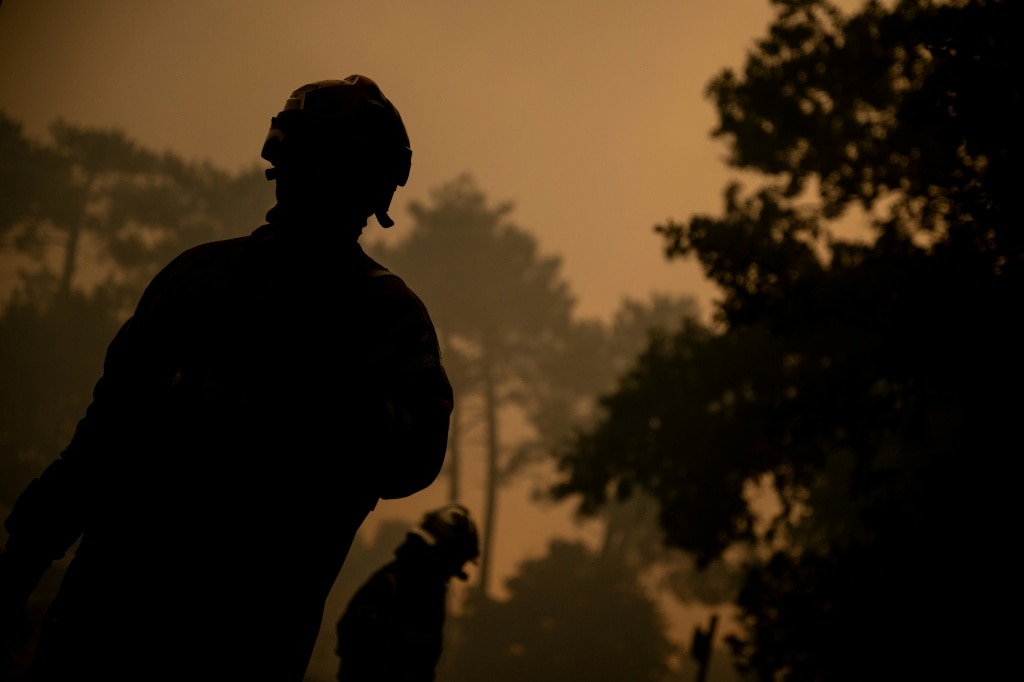
One of France’s most beloved summer retreats, long a quiet favorite of A-list celebrities and wealthy families, has been reduced to a smoky disaster zone, forcing a massive coordinated evacuation of more than 35,000 residents and tourists as an out-of-control wildfire sweeps across the Cap Ferret peninsula.
Known for its windswept Atlantic sand dunes, casual oyster shacks and understated luxury that draws stars like Marion Cotillard and Jean Dujardin away from the glitzy bustle of the French Riviera, Cap Ferret is now a near-empty landscape. Deserted streets, shuttered storefronts and locked vacation homes mark the normally bustling peak summer tourist season, a transformation that long-term residents say is surreal.
The blaze ignited on Wednesday in the nearby village of Saumos, just kilometers from the world-famous Medoc wine region, before spreading rapidly through the dense pine forests that cover the Atlantic coast. By Thursday, it had jumped to the Cap Ferret peninsula, prompting regional authorities to order a full evacuation of the peninsula’s 40,000 seasonal and permanent residents.
Jean Goncalves, a 54-year-old resident of 30 years, fled his home early Friday after watching his neighbor’s wooden home go up in flames. “It’s a disaster, it’s horrible,” he told reporters from AFP, with a cloth tied over his face to block the acrid smoke. At the peninsula’s ferry terminal, local resident Cecile Maumy compared the empty streets to the height of the Covid-19 pandemic lockdowns. “There’s not a soul around. It feels like the Covid period. It’s unbelievable,” she said.
While no fatalities have been reported as of Friday, the fire has already destroyed more than 50 residential structures and an entire seaside campsite. Regional prefect Sophie Brocas labeled the blaze an “XXL wildfire, unpredictable and voracious,” with locals describing the landscape as resembling a war zone.
The mass evacuation unfolded via two routes: most evacuees left by private car along the peninsula’s only connecting road, while hundreds of others were transported out by civilian and government ferries. This sea evacuation plan, drafted after devastating 2022 wildfires in the same region, was activated for the first time this week. Local shopkeeper and elected official David Lafforgue noted that the evacuation itself proceeded calmly, despite the chaos of the situation. “Everything was handled smoothly. Suitcases were ready, and people remained calm,” he said.
But Lafforgue warned of catastrophic long-term impacts for the local tourism-dependent economy. The peak summer tourist season runs from mid-July to mid-August, the most profitable month of the year for local businesses. “Economically, it’s catastrophic. We go from everything to nothing,” he said. “We don’t know whether our seasonal workers will come back or whether our customers will return.”
Many evacuees have been relocated to the larger coastal town of Andernos, where authorities are now preparing for a potential full evacuation of that town as well, as the fire continues to advance. Andernos deputy mayor Jean-Francois Garric explained that the town is already adjusting to the shifting danger. “We are welcoming people from the peninsula who have been evacuated to our reception centres, and now we have been instructed to evacuate those centres as well,” he said.
Ninety-year-old Maria Lalanne, a lifelong Cap Ferret resident with no immediate family who fled to Andernos, spoke of her disorientation after being forced to leave her home quickly. She accidentally left her hearing aids and glasses behind amid the rush to evacuate. “I have heart disease, blood pressure issues, eye problems. I don’t know how long this will last. I don’t know what has happened to my house,” she said.
For visiting tourist Julie Boisvert, who was staying in the nearby village of Le Porge, the evacuation came with only minutes of warning. Gendarmes went door-to-door ordering residents to leave, giving her family just two minutes to depart with their two young children, ages two and five. “We had already packed suitcases just in case, but they gave us only two minutes and carefully checked that nobody was still inside the house,” she said, adding that she had already begun to feel surrounded by advancing flames.
The Cap Ferret fire is not the only major blaze raging in southwestern France this week. Firefighters are also battling a second large wildfire near the town of Biscarrosse, southwest of Bordeaux, which broke out on Thursday and has already forced the evacuation of 18,000 people. Landes prefect Gilles Clavreul noted that the scale of this year’s fire season is unprecedented for the region. “We have never experienced anything like this,” he said.
This year’s wave of intense wildfires follows three record-breaking heatwaves that have hit France since May, part of a global pattern of more frequent and more severe extreme weather events directly tied to human-caused climate change. The heat has already caused thousands of excess deaths across the country, dried up major rivers, and created ideal dry conditions for wildfire ignition and spread.