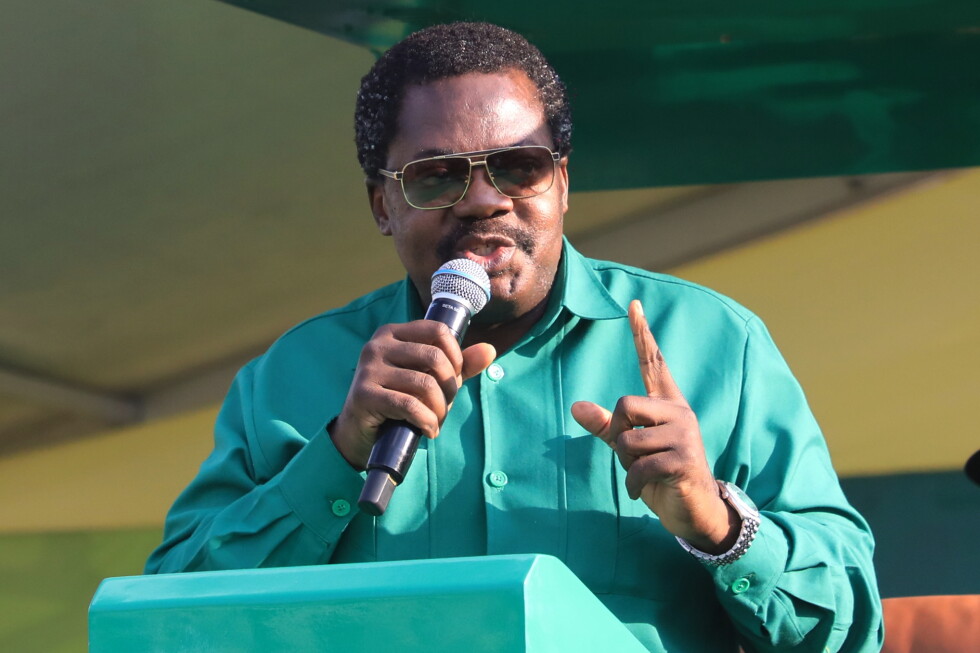
Political tensions have surged in Tanzania following a high-stakes move by the country’s long-ruling Chama cha Mapinduzi (CCM) party, which has formally expelled former Vice President Emmanuel Nchimbi just days after his resignation — a decision that analysts say will put to the test the East African nation’s long-held reputation as a haven of relative regional peace and stability.
CCM Secretary-General Asha-Rose Migiro announced the disciplinary action against Nchimbi Wednesday evening, telling reporters the party voted to punish the outgoing vice president for indiscipline. To fill the upcoming vacancy, the ruling party has nominated Energy Minister Deogratius Ndejembi to serve as deputy to President Samia Suluhu Hassan, with the appointment set to take effect once Nchimbi steps down on September 4.
The current political upheaval is widely viewed as the latest aftershock from the deeply contentious October 2024 presidential election, a poll that saw widespread unrest after key opposition candidates were disqualified from running. In response to resulting protests, security forces were deployed across the country, and national internet access was shut down for multiple days — a step Hassan later publicly apologized for, vowing the measure would never be repeated during her tenure.
The president’s main opposition challenger, Tundu Lissu, remains in prison on treason charges that he and his supporters argue are politically motivated, a point that has drawn sustained international criticism of the Hassan administration.
Nchimbi’s surprise resignation has sent shockwaves through Tanzanian political circles, where the CCM has overseen decades of unbroken rule and broad public support for stable governance. In his brief public statement after stepping down, Nchimbi confirmed his resignation would go into force September 4, and added that he would continue to live as “a good citizen” of Tanzania. But independent political analysts note his departure is no ordinary personnel shift: multiple sources close to internal party discussions say Nchimbi broke with Hassan over her administration’s governance approach, particularly over the brutal government crackdown on opposition protests that took place during and immediately after the October election.
An official post-election public inquiry commissioned to probe the unrest documented at least 518 deaths linked to the election-related violence. Commission chair Mohamed Chande Othman told reporters when the report was released in April that the actual death toll is almost certainly higher, as many families buried victims privately without registering their deaths at morgues. The commission’s final report called for a full independent investigation into security forces’ use of firearms, with multiple witnesses testifying that some victims were shot and killed while inside their own homes, posing no immediate threat to officers.
CCM, Tanzania’s ruling party in various iterations, has held uninterrupted power since the country gained independence from the United Kingdom in 1961. The party is deeply integrated into the Tanzanian state, holding effective control over the country’s entire national security apparatus and maintaining a rigid internal structure that sees leadership transitions occur only every five to 10 years.
Hassan’s own rise to the presidency followed a rare unplanned peaceful transition in 2021, when she stepped up from the vice presidency after sudden death of her predecessor, John Pombe Magufuli, early in his second term. That orderly transfer of power reinforced Tanzania’s standing as a politically stable, peaceful state in a region that has seen repeated political upheaval — a core selling point that has long cemented CCM’s broad popularity, particularly among rural Tanzanian voters.
This report was contributed by Rodney Muhumuza from Kampala, Uganda, and an anonymous Associated Press correspondent in Dar es Salaam, Tanzania, who requested anonymity due to ongoing security risks for journalists working in the country.