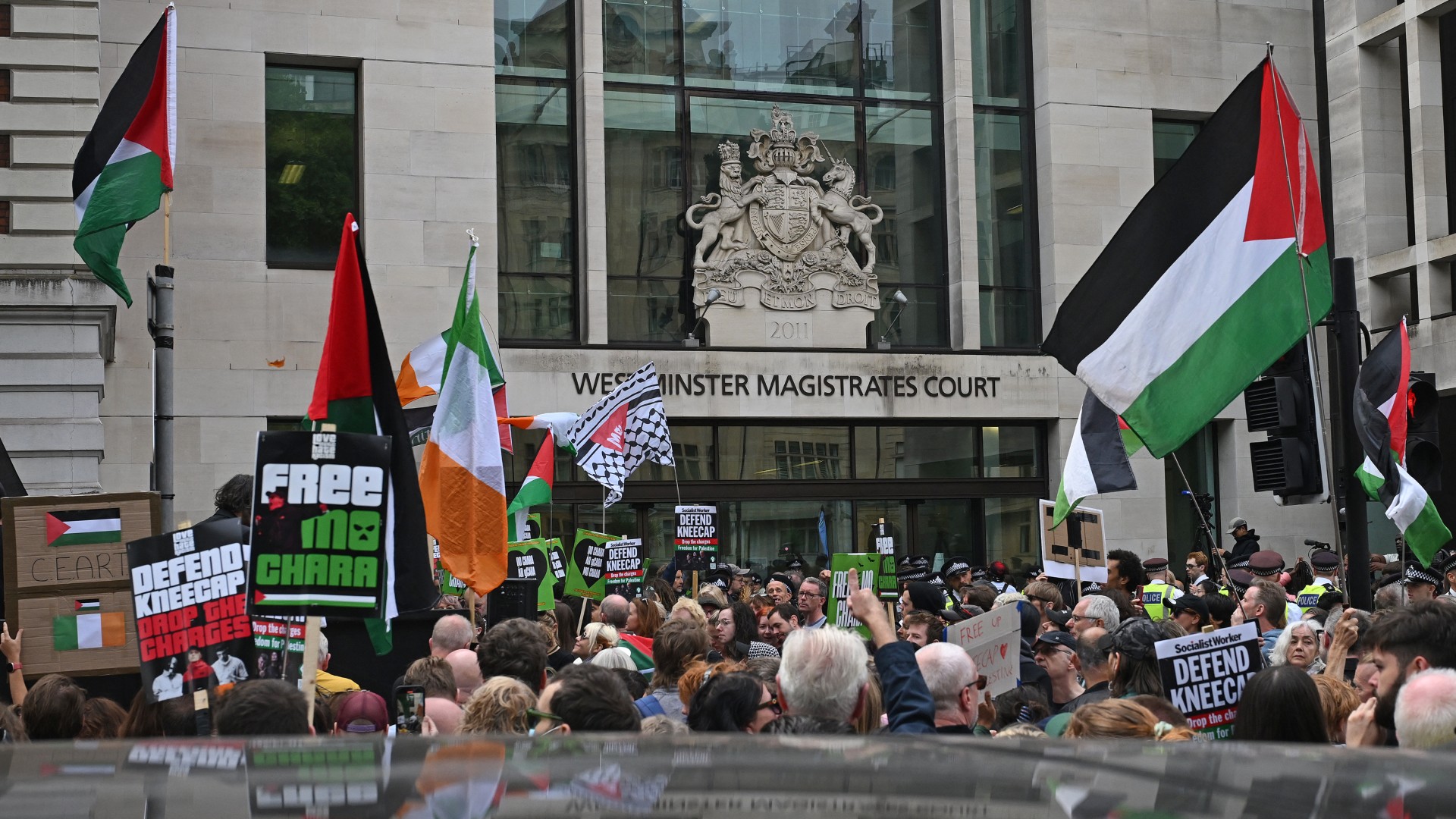
On Tuesday, Ireland’s national parliament passed a historic piece of legislation that bans the import of all goods produced in Israeli settlements located in the occupied Palestinian territories of the West Bank and East Jerusalem.
Officially titled the Israeli Settlements (Prohibition of Importation of Goods) Bill, the new law targets goods originating from Israeli settlements that fall outside of Israel’s 1967 armistice lines, which are not recognized as part of Israel under international law. The legislation explicitly frames its actions as compliance with Ireland’s binding international legal obligations, as outlined in the landmark advisory opinion issued by the International Court of Justice (ICJ) on July 19, 2024.
That ICJ ruling, which was formally upheld by the United Nations General Assembly, determined that Israel’s long-term occupation of Palestinian territories beyond the 1967 borders is unlawful under international law, and requires all UN member states to take active steps to avoid complicity in maintaining the illegal occupation. Aligning with this global mandate, the coalition government that backed the Irish bill says the measure is intended to cut off trade ties that enable the perpetuation of the illegal status quo Israel has established in the Occupied Palestinian Territory.
Ireland has emerged as one of the most vocal critics of Israeli policy toward Palestinians among European nations in recent years. The country formally recognized Palestinian statehood in May 2024, and became the first government in the European Union to officially characterize Israel’s military campaign in Gaza as an act of genocide. This string of pro-Palestine actions has triggered sharp diplomatic backlash from Israel: Israeli Foreign Minister Gideon Saar has already responded to the new import ban by ordering the permanent closure of Israel’s embassy in Dublin.
The import ban vote is only the latest in a series of escalatory steps taken by Dublin against Israel over the past year. Just last month, Ireland imposed entry bans on two far-right Israeli cabinet ministers, Itamar Ben Gvir and Bezalel Smotrich, who had already been sanctioned in June for repeated public incitement to violence against Palestinian communities. Alongside Spain, Ireland has also taken a leading role in pushing the European Union to conduct a full formal review of the 1995 EU-Israel Association Agreement, the foundational trade and cooperation pact that governs bilateral relations between the bloc and Israel. Most recently, Ireland joined Spain at an emergency international summit co-hosted by Colombia and South Africa in July 2025, where attendees coordinated collective concrete measures to hold Israel accountable for its alleged violations of international law.
Public opinion in Ireland reflects the government’s hardening stance, with opinion polls consistently showing among the highest levels of popular support for Palestinians in Europe. Current polling data finds that 86 percent of the Irish public agrees with the assessment that Israel is carrying out genocide in Gaza, while 62 percent of respondents — a clear majority — support the EU imposing harsh economic sanctions on Israel, mirroring the restrictive measures imposed on Russia following its 2022 invasion of Ukraine. The country’s recently elected president, Catherine Connolly, who won an overwhelming landslide victory in the October 2025 presidential election, has long been one of the most prominent Western political voices in support of Palestinian rights. Connolly recently spoke publicly about her pride in her sister, Dr. Margaret Connolly, who was one of six Irish citizens detained by Israeli forces in April while participating in the Global Sumud Flotilla, an effort to deliver humanitarian aid to blockaded Gaza.
Despite this widespread public and political support for Palestinian statehood and accountability for Israel, the new import ban marks a notable shift from Ireland’s prior largely symbolic actions toward concrete policy change. While Ireland is the first EU member state to formally pass this type of settlement goods ban, Spain already implemented its own ban on settlement imports along with a full arms embargo against Israel back in September 2025.
Still, policy analysts have raised questions about the real-world impact of Ireland’s legislation, noting that watered-down compromises made to secure passage may leave the measure with little tangible effect. The bill retains provisions that allow pre-existing trade contracts to continue uninterrupted and includes broad exemptions for certain types of goods, softening the policy’s potential impact.
The push for a ban on Israeli settlement goods first emerged in Irish politics nearly a decade ago, with the original version of the Occupied Territories Bill first introduced in 2018. At that time, the sitting Irish government blocked the bill from ever taking effect. The current centre-right coalition government has approved a heavily revised version of the original proposal that only bans physical goods from settlements, and entirely excludes trade in services — a sector that makes up roughly 70 percent of all bilateral trade between Ireland and Israel.
Diplomatic and economic pressure from the United States political establishment was a key factor driving the decision to weaken the legislation, according to political sources. In October 2025, Democratic Congressman Josh Gottheimer of New Jersey published an open letter to Irish Taoiseach Micheal Martin, warning that passing a full ban on settlement goods would cause significant long-term damage to Ireland’s economic credibility and its commercial partnerships with U.S. businesses.