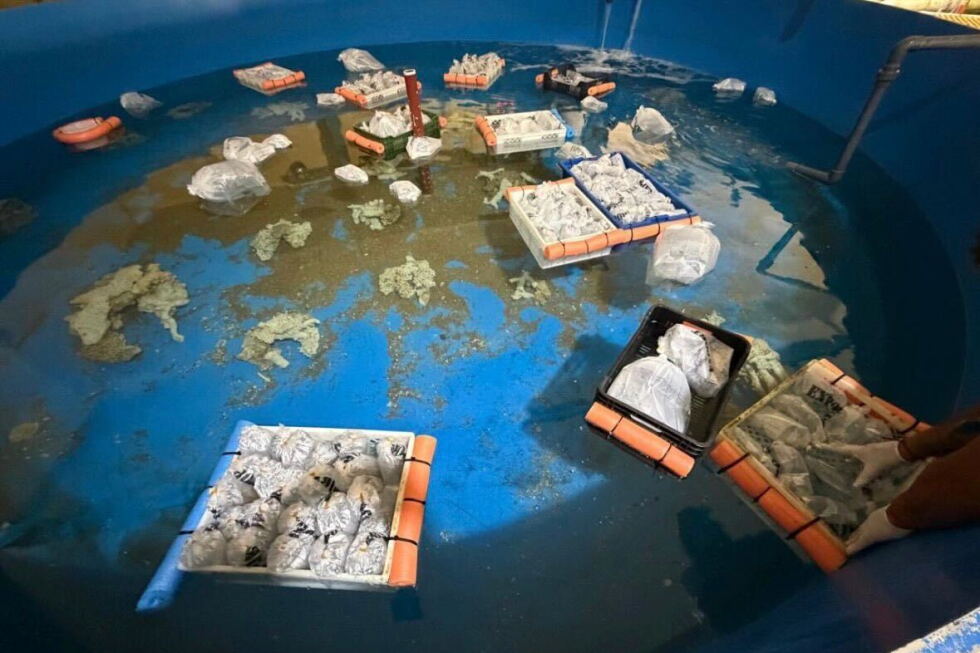
In a major breakthrough against the global illegal wildlife trade, Argentine law enforcement and conservation partners have seized more than 700 trafficked marine animals originating from Kenya, all bound for the lucrative international ornamental aquarium pet industry. The high-profile operation, carried out on April 26 at Ezeiza International Airport outside Buenos Aires, brought together multiple specialized stakeholders: Argentina’s Environmental Control Brigade, federal customs officials, the national agricultural health agency, the International Fund for Animal Welfare (IFAW), and Argentina’s leading marine wildlife rehabilitation organization Fundación Temaikèn.
The intercepted shipment held a diverse array of tropical marine species highly sought after by private aquarium collectors and exotic pet enthusiasts. Among the creatures confiscated were surgeonfish, puffer fish, lionfish, butterflyfish, octopuses, crabs and starfish, all pulled illegally from Kenyan reef ecosystems, according to conservation officials. Tragically, many of the animals did not survive the grueling 120-hour transcontinental transit, while those that remained alive arrived exhibiting extreme stress, physiological shock, and life-threatening dehydration.
As the only facility in Argentina equipped to handle large-scale confiscations of exotic marine wildlife, Fundación Temaikèn immediately launched an emergency rescue operation at its campus in Escobar, a city north of Buenos Aires. A team of veterinarians and wildlife care specialists worked nonstop for more than 28 hours to stabilize the surviving animals, modifying existing enclosures and installing 10 purpose-built new tanks fitted with specialized heating, filtration, and water conditioning systems designed to meet the unique needs of tropical marine species.
“Many of these animals were extracted from reef ecosystems and arrived at the limit of survival, after spending days inside transport bags and boxes before the rescue could be carried out,” explained Cristian Gillet, wildlife director at Fundación Temaikèn, in an official statement. Because each animal was individually packed in hundreds of small plastic bags, rescue teams had to conduct painstaking drip acclimation procedures one animal at a time, gradually adjusting them to the facility’s water conditions to minimize the risk of fatal physiological shock from sudden shifts in temperature and salinity.
Specialists also implemented a strict triage protocol to prioritize treatment for the most critically weakened animals, while separate teams sorted through the shipment to identify all species and separate living specimens from those that did not survive the journey.
Wildlife trafficking analysts note that the global trade in ornamental marine species has grown rapidly in recent years, driven by rising consumer demand for exotic pets and custom home aquariums. Conservation organizations have long warned that this unregulated trade inflicts severe damage on already fragile coral reef ecosystems, where wild populations are often overharvested to meet demand, and it carries an extremely high mortality rate for the animals themselves, who suffer extreme conditions during capture and long-distance transit.
“This is an industrialized crime,” emphasized Christian Plowman of IFAW. “Moving 709 animals comprising 102 species across international cargo routes, packed in bags for 120 hours of transit, is not something done casually. It requires coordination along every link of the chain.”
Plowman added that this seizure marks the third time in 12 months that Argentine authorities have intercepted a large illegal shipment at the same entry point, a pattern that reveals this airport as an established smuggling corridor for wildlife traffickers. “Traffickers identify and exploit corridors that work until enforcement disrupts the model. This interception — and the two before it — should be understood as intelligence, not just seizures. They are telling us something important about where the networks are operating and how,” he said.
As of the latest update, all surviving animals remain under round-the-clock specialized care at Fundación Temaikèn, while Argentine authorities work to determine their long-term fate. Investigators have not yet released information about the individuals or criminal networks behind the shipment, and have not announced any arrests to date. Officials from the Kenya Wildlife Service did not immediately respond to requests for comment from the Associated Press, the original reporting agency for this story.