Tensions between the United States and Cuba have spiked dramatically in recent weeks, as a crippling domestic fuel crisis worsened by longstanding US trade restrictions collides with escalating US pressure on Havana’s communist government and sharp Cuban accusations of Washington plotting military aggression.
The crisis ignited after US news outlet Axios published a report on Sunday citing classified US intelligence claims that Cuba had acquired roughly 300 attack drones, and was weighing potential strikes on US targets in the region—including the US military base at Guantanamo Bay, US naval vessels operating nearby, and Key West in southern Florida. The report also repeated unconfirmed intelligence claims that Iranian military advisors are currently present in Havana, a development that echoes the growing role of Iranian drone technology in conflicts across the Middle East and Ukraine.
In an immediate and forceful response posted to social media, Cuban Foreign Minister Bruno Rodríguez rejected the claims outright, accusing the US of systematically constructing a “fraudulent case” to justify both its ongoing harsh economic war against the Cuban people and potential future military intervention. Rodríguez emphasized that Havana “neither threatens nor desires war” with the US, but confirmed that Cuba is actively preparing defensive measures in response to rising external aggression. He also criticized major US media outlets for complicity in spreading the unsubstantiated claims, calling their coverage coordinated slander aligned with US government messaging.
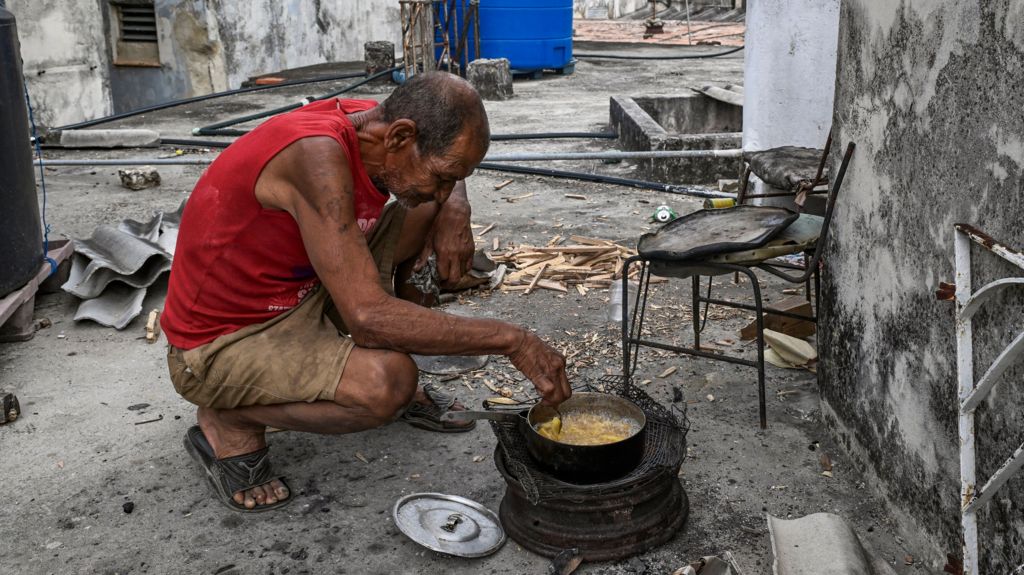
Behind the escalating diplomatic row is a deepening humanitarian crisis inside Cuba, driven largely by an effective US oil blockade that has cut off nearly all of the island’s regular energy supplies. The last permitted Russian oil shipment to Cuba was exhausted earlier this month, and the loss of steady oil deliveries from former Venezuelan ally Nicolás Maduro—whose government fell to a US-backed raid earlier this year—has left the country with acute fuel shortages. Those shortages have triggered widespread rolling blackouts across the island that have disrupted critical services, including hospital operations, water pumping stations, public transportation networks, and municipal waste collection. When combined with already severe shortages of basic food and medicine, the energy crisis has sparked rare public protests against the Cuban government, which has overseen years of gradual infrastructure decline.
For years, Cuba weathered broad Western sanctions with the support of regional allies, most notably Maduro’s Venezuelan government, which previously supplied an estimated 35,000 barrels of oil per day to the island. That support ended after US forces captured Maduro in a raid on Caracas earlier this year, where the former Venezuelan leader is now set to stand trial in New York on federal drug trafficking charges. The Trump administration framed that raid as justified by a prior federal indictment against Maduro, a playbook that Cuban officials fear will be repeated against their own leadership. US media has also reported that the US is preparing a federal indictment against former Cuban leader Raúl Castro, who took power from his brother Fidel Castro—the revolutionary leader who overthrew the US-backed Cuban government in 1959.
The current escalation aligns with the Trump administration’s increasingly aggressive posture toward Latin American left-wing governments, a marked shift from the policies of recent US predecessors. Trump has openly framed his regional policy as a revival of the 1823 Monroe Doctrine, which asserts US primacy over the Western Hemisphere, rebranding the policy the “Donroe Doctrine” and explicitly naming Cuba as the “next” target after Venezuela. Since capturing Maduro, Trump has repeatedly stated he expects to “take Cuba” in the near future.
In recent weeks, US military activity around Cuba has ramped up significantly: the *New York Times* reported Friday that surveillance flights over Cuban airspace have increased, and the US is planning a build-up of military forces in the Caribbean region. Just one day before the Axios report was published, CIA Director John Ratcliffe traveled to Havana for talks with Cuban officials, where he issued a demand that Cuba end its status as “a safe haven for adversaries in the western hemisphere.”
Cuba and the US have held quiet talks for months to resolve longstanding bilateral tensions, but those negotiations have been sidelined by the Trump administration’s escalating pressure campaign. With energy supplies exhausted and US military momentum growing, the island now faces the dual crisis of domestic humanitarian collapse and rising risk of foreign military intervention.