标签: South America

南美洲

  • New trial over Diego Maradona’s death resumes in Argentina against 7 health care professionals

    New trial over Diego Maradona’s death resumes in Argentina against 7 health care professionals

    BUENOS AIRES, Argentina – Nearly 12 months after a high-profile misconduct scandal derailed the first proceeding, the long-awaited negligence trial against seven medical professionals charged in the 2020 death of Argentine soccer icon Diego Maradona officially restarted Tuesday.

    Widely celebrated as one of the most talented soccer players in history, Maradona passed away at 60 from cardiac arrest, while he was recovering from emergency brain surgery to remove a blood clot. His death at his private residence outside Buenos Aires, just two weeks after his hospital discharge, sparked immediate outrage and investigations into the quality of care he received in his final days.

    The seven defendants, which include Maradona’s longtime personal physician Leopoldo Luque, psychiatrist Agustina Cosachov, and psychologist Carlos Díaz, face charges of culpable homicide – an offense comparable to involuntary manslaughter under Argentine law. Prosecutors argue the medical team knowingly acted recklessly and failed to address the life-threatening risks they created for Maradona, and if convicted, each could face prison sentences between 8 and 25 years.

    The case centers on allegations that the group of care providers failed to deliver adequate monitoring and treatment to Maradona in the weeks leading up to his death. A 2021 investigative report compiled by a 20-member independent medical panel accused Maradona’s care team of acting “inappropriately, deficiently and recklessly,” leaving the legend in severe pain without medical assistance for more than 12 hours before his cardiac arrest.

    Maradona had battled severe chronic health complications for decades, many exacerbated by years of substance and alcohol use. He had already survived near-death episodes in both 2000 and 2004, according to court records. Defense attorneys for the defendants reject all criminal allegations, arguing Maradona’s death was the natural outcome of his multiple pre-existing serious conditions, and no unlawful conduct contributed to his passing.

    The original 2024 trial collapsed into a mistrial after presiding judge Julieta Makintach stepped down amid intense public and legal criticism. Makintach faced backlash after footage revealed she had appeared prominently in *Divine Justice*, a documentary covering the Maradona case, raising unresolvable questions about judicial impartiality. In her resignation letter submitted to judicial authorities last June, Makintach wrote: “I present my resignation with serenity, without renouncing the right to exercise my defense in the appropriate arenas.”

    For the resumed trial, hearings are scheduled to take place twice weekly on Tuesdays and Thursdays. Roughly 100 witnesses are expected to give testimony over the coming months, including Maradona’s family members, close associates, independent medical experts, and law enforcement officials. The new three-judge panel overseeing the case – lead by Alberto Gaig, Alberto Ortolani and Pablo Rolón – is expected to issue a final verdict in early June 2025.

    Fernando Burlando, the lead attorney representing Maradona’s two eldest daughters Dalma and Giannina, who are co-plaintiffs in the case, told reporters outside the courtroom ahead of Tuesday’s opening session that his legal team has full confidence in the new judicial panel. “We place enormous trust in them,” Burlando said. “They are judges with extensive experience and backgrounds.”

    Burlando added that Maradona’s daughters have endured extreme emotional fatigue in the nearly five years since their father’s death, still waiting for answers about what led to his passing. “It is very difficult,” he said. “They are Maradona’s daughters, and that alone is not easy, and the fact that they cannot even have a moment of relief to know what happened to their father … although we are convinced of what happened.”

  • Peru faces presidential runoff as election count drags on after ballot delays

    Peru faces presidential runoff as election count drags on after ballot delays

    LIMA, Peru — A historic presidential election in Peru has entered its third day of vote counting, with the Andean nation now confirmed to face a June runoff after no candidate secured the absolute majority required for an outright win. As of Tuesday morning, final identities of the two advancing contenders were still pending official confirmation from electoral bodies, though partial tallies point to a surprise showdown between two right-wing candidates.

    The April general election was thrown into disarray almost immediately after polls opened, when widespread failures in ballot distribution to voting stations across the country and abroad left thousands of registered voters unable to cast their ballots on Sunday. Electoral authorities responded by extending voting into Monday, a last-minute adjustment that affected more than 52,000 Lima-based voters as well as Peruvians registered to vote at two U.S. polling locations in Orlando, Florida and Paterson, New Jersey.

    With 72% of all ballots processed as of Tuesday, updated figures from Peru’s National Office of Electoral Processes place conservative candidate Keiko Fujimori in the lead with 16.92% of voter support. Fujimori, who is making her fourth bid for the presidency, is the daughter of disgraced former Peruvian president Alberto Fujimori, whose legacy continues to divide national public opinion. Trailing in second place at 12.95% is Rafael López Aliaga, an ultra-conservative former mayor of Lima, the country’s capital. If the current standings hold, the two right-wing candidates will compete for the presidency in the June 7 runoff, a turn that highlights the dramatic shift in Peru’s political landscape amid widespread public anger with established institutions.

    Under Peruvian electoral law, a candidate must win more than 50% of the popular vote to claim the presidency outright. The winner of the June runoff will make history as the country’s ninth presidential administration in just 10 years, a statistic that underscores the extreme political instability that has gripped the South American nation in recent years — Peru has already seen three different presidents hold office since October alone.

    Voting is a legal requirement for all Peruvian citizens between the ages of 18 and 70, with non-participation carrying a fine of up to $32, a penalty that has added stress to voters already frustrated by logistical failures. Many Peruvians who waited hours to vote on Monday expressed deep dissatisfaction with the chaotic electoral process. “I’m fed up,” said 56-year-old Iris Valle, who cast her ballot at a Lima public school on Monday, noting she feared losing pay from her employer after missing work to fulfill her mandatory voting obligation.

    The election unfolded against a backdrop of rising violent crime and persistent corruption scandals that have eroded public trust in political leaders. Polling conducted ahead of the vote found that a large majority of Peruvian voters view all 35 candidates — the largest field in the country’s history — as either dishonest, unprepared for the presidency, or both.

    Despite deep political uncertainty and a surge in criminal activity, Peru’s economy has outperformed many expectations, posting annual growth of more than 3% in both 2024 and 2025. The country’s strong performance has been largely driven by its status as one of the world’s top copper exporters, a key commodity for global manufacturing and clean energy transition. While this growth is lower than the 5% to 6% annual expansion Peru recorded during the 2000s commodity boom, it has defied predictions that repeated political turnover would tank economic activity.

    Will Freeman, a Latin American Studies fellow at the Council on Foreign Relations, attributed the country’s steady economic growth to the enduring institutional stability of Peru’s central bank. “Although Peru has had all these presidents, it has had only one central bank president since the mid-2000s, Julio Velarde,” Freeman explained. “He’s been a real source of stability and given investors some confidence that there is an institutional core that remains from one presidency to the next in Peru.”

    Even so, Freeman warned that the country cannot rely on existing institutional stability to sustain long-term growth. Recent policy decisions passed by Peru’s Congress reflect a shift toward more conservative economic populism, he said, and current growth rates still lag far behind the boom years of the 2000s.

    Both leading candidates have centered their campaigns on promises of aggressive anti-crime action, a platform tailored to widespread public anxiety over rising violence. Fujimori has pledged an iron-fisted crackdown on criminal activity, though her political party has backed recent legislative changes that legal experts argue make it far harder to prosecute and convict offenders. The reforms, supported by Fujimori’s bloc in Congress, eliminated preliminary detention for certain offenses and raised the legal bar for law enforcement to seize assets connected to criminal activity. If elected, Fujimori has proposed allowing criminal trial judges to serve anonymously and requiring incarcerated people to work in exchange for food rations.

    Her closest rival López Aliaga has put forward an even harderline agenda, proposing to construct new high-security prisons in Peru’s remote Amazon region, also backing anonymous judge protections, and promising to expel all undocumented foreign residents living in the country.

    Beyond the presidential race, Sunday’s election also marked a historic shift in Peru’s legislative system: for the first time in more than 30 years, voters elected members of a new bicameral Congress, following recent reforms that grant substantial new powers to the newly created upper legislative chamber. The outcome of congressional elections will also shape the next administration’s ability to pass policy, regardless of who wins the presidency in June.

    This report was contributed by Cristina Garcia Cano from Caracas, Venezuela. Associated Press coverage of Latin American and Caribbean affairs can be found at https://apnews.com/hub/latin-america.

  • Can Germany avoid another early World Cup exit in Group E against Curacao, Ivory Coast and Ecuador?

    Can Germany avoid another early World Cup exit in Group E against Curacao, Ivory Coast and Ecuador?

    When the upcoming FIFA World Cup kicks off this June, Group E will bring together one of the sport’s most decorated powerhouses and the smallest nation to ever qualify for the tournament, creating one of the most compelling narrative matchups of the entire group stage. Four-time champion Germany, tournament debutant Curacao, 2024 African Cup of Nations winner Ivory Coast, and South American contender Ecuador will all vie for two knockout stage spots, each carrying their own unique stakes and question marks into the competition.

    Leading the group is Germany, a nation that has defined international soccer success for decades but enters the tournament carrying heavy pressure to end a decade-long underperformance slump. Since lifting the World Cup trophy in 2014, Die Mannschaft has crashed out in the group stage in both the 2018 and 2022 tournaments, making an early exit this time around unthinkable for the historically dominant side. Under new manager Julian Nagelsmann, the team is building its attack around dynamic Liverpool playmaker Florian Wirtz, who has emerged as the creative hub of the side. Nagelsmann also has promising young talent to deploy: 1.98-meter striker Nick Woltemade, whose imposing frame creates constant problems for opposing defenses, and 18-year-old midfielder Lennart Karl, who many analysts tip as a potential breakout star of the entire tournament.

    Still, major question marks hang over Germany ahead of kickoff. A tense 4-3 friendly win over Switzerland in March exposed persistent defensive vulnerabilities, rekindling criticism of Nagelsmann’s controversial decision to bench veteran Real Madrid center back Antonio Rüdiger. The side has not tested itself against top-tier global competition since dropping losses to France and Portugal in 2023, and the team has yet to find a proven, reliable successor to long-time starting goalkeeper Manuel Neuer. One interesting addition to the squad is defender Nathaniel Brown, who was eligible to represent the United States but ultimately elected to play for his country of birth, Germany.

    For Curacao, just reaching the World Cup is a historic milestone that no other small nation has ever achieved. The Caribbean island nation, with a total population of just 156,000, will open its first ever World Cup campaign against the four-time champions, a matchup that ranks as one of the most daunting opening fixtures in modern tournament history. The side faced a major setback in pre-tournament preparations back in February, when veteran Dutch manager Dick Advocaat stepped down from his role to care for his daughter, who faces health issues. The federation moved quickly to replace Advocaat with Fred Rutten, a well-traveled coach with experience at top Dutch clubs including FC Twente, PSV, and Feyenoord, as well as German side Schalke 04. Like many former Dutch Caribbean territories, Curacao’s national squad relies heavily on players born and developed in the Netherlands, giving the side a level of talent that defies its small domestic player pool.

    Ivory Coast returns to the World Cup for the first time in a decade, ending a long drought that followed the retirement of its iconic golden generation led by stars Didier Drogba and Yaya Touré. For years after that core retired, the Elephants struggled to rebuild, failing to qualify for three consecutive World Cup cycles. A stunning turnaround came earlier this year, when a new young generation of Ivorian talent stunned the continent by winning the 2024 African Cup of Nations on home soil, and sealed their World Cup spot by finishing top of their qualifying group. This will mark Ivory Coast’s fourth appearance at the tournament, and the side will be chasing its first ever knockout stage berth, having fallen in the group stage in all three of its previous runs. The team is led by manager Emerse Fae, who took the job midway through AFCON 2024 and steered the side all the way to the trophy, with Manchester United winger Amad Diallo standing out as the new generation’s biggest attacking star.

    Completing the group is Ecuador, a South American side that will pin its hopes of a first knockout stage berth in 20 years on Premier League superstar Moises Caicedo. The powerhouse midfielder made British soccer transfer history in 2023, when he joined Chelsea from Brighton & Hove Albion for a $146 million fee, making him the most expensive British transfer acquisition ever. If Ecuador is to reach the knockout round for just the second time in its history, Caicedo’s form in the center of the park will be the deciding factor. The side overcame early adversity to qualify, finishing second in the South American standings behind defending World Cup champion Argentina even after opening the qualifying campaign with a three-point deduction for a document irregularity stemming from the 2022 qualifying cycle. Veteran forward Enner Valencia led the side’s qualifying effort, scoring six of Ecuador’s 14 total goals to secure the team’s spot in the tournament.

    As all four sides finalize their preparations ahead of the June kickoff, Group E stands out as a microcosm of what makes the World Cup unique: a stage where underdogs can upset the odds, powerhouses fight to reclaim their legacy, and new generations of talent get their chance to shine on soccer’s biggest global stage.

  • Retrial over death of Argentina legend Maradona to begin

    Retrial over death of Argentina legend Maradona to begin

    One of the most iconic and gifted footballers in the history of the sport, Diego Maradona, died at the age of 60 in November 2020 from heart failure, and six years later, a new legal chapter into the investigation of his death is getting underway. On Tuesday, a retrial for seven members of Maradona’s medical circle opened, after the original 2025 trial was abruptly derailed over a courtroom ethics scandal.

    The first trial, held in May 2025, collapsed after it emerged that one of the three presiding judges allegedly permitted unapproved, off-the-record filming inside the courtroom for an upcoming commercial documentary, a violation of judicial protocol that forced the entire proceeding to be scrapped. Ahead of the new trial, Maradona’s supporters gathered outside the San Isidro, Argentina courthouse, holding banners calling for “Justice for God” — a nod to the legend’s widespread nickname as “Diego, the God of Football.”

    At the center of the case are allegations that Maradona’s medical team failed to deliver appropriate, life-saving care after he underwent successful surgery to remove a brain blood clot in early November 2020. Following the procedure, Maradona moved to his private home in Tigre, a Buenos Aires suburb, to recover, where he died weeks later on November 25. Prosecutors have charged all seven defendants with homicide with possible intent, a charge similar to involuntary manslaughter under Argentine law. All seven have repeatedly denied any wrongdoing, but if convicted, they face prison sentences ranging from 8 to 25 years.

    Prosecutors argue the defendants were fully aware of the extreme fragility of Maradona’s health following his brain surgery, yet neglected to take the basic, necessary precautions to monitor and treat his condition, directly contributing to his death. A preliminary autopsy confirmed Maradona’s heart failure triggered acute pulmonary edema, a life-threatening condition where fluid accumulates in the lungs, leading to his death. An independent panel of medical experts commissioned by prosecutors found the at-home care Maradona received was “deficient and reckless,” concluding the football icon would have had a significantly higher chance of survival if he been treated at a proper medical facility with adequate resources.

    The seven defendants standing trial include Maradona’s lead personal physician Leopoldo Luque and his personal psychiatrist Agustina Cosachov. A separate eighth person connected to the case, Maradona’s former nurse Dahiana Gisela Madrid, will face trial in a separate, independent proceeding at a later date. Over the course of the retrial, roughly 100 witnesses are scheduled to give testimony before the new panel of judges, including several of Maradona’s daughters. Court officials expect the proceedings to run through July.

    Maradona’s death in 2020 sparked an outpouring of grief across Argentina and the global football community. Then-Argentine President Alberto Fernández declared three days of national mourning, releasing a statement that read, “Thank you for having existed, Diego. We’re going to miss you all our lives.”

    Born to a working-class family in Buenos Aires, Maradona launched his professional career with Argentinos Juniors before rising to global stardom. He went on to represent Argentina at four consecutive FIFA World Cups, scoring 34 international goals, including the controversial “Hand of God” goal against England during Argentina’s 1986 World Cup championship run — one of the most famous moments in football history. Off the pitch, Maradona struggled for decades with substance use disorders, including a well-documented cocaine addiction that led to a 15-month competition ban in 1991 after he tested positive for the drug. He retired from professional play in 1997, on his 37th birthday, during his second tenure with Argentine club giants Boca Juniors.

    Following his retirement, Maradona moved into coaching. He took the helm of the Argentine men’s national team in 2008, leading the side through the 2010 World Cup, where they were eliminated by Germany in the quarterfinals. He later went on to manage club sides in the United Arab Emirates and Mexico, and was serving as head coach of Argentine top-flight club Gimnasia y Esgrima when he died in 2020. Today, he remains universally regarded as one of the most talented and culturally impactful footballers to ever play the game.

  • Police officers among seven arrested over deadly Haiti stampede

    Police officers among seven arrested over deadly Haiti stampede

    A devastating crowd crush at one of Haiti’s most iconic cultural landmarks has left 25 people dead, triggering national mourning and a sweeping official investigation that has resulted in seven arrests, including senior local security and heritage officials, Haiti’s national police confirmed this week.

    The fatal incident unfolded Saturday during an unsanctioned gathering at the Laferrière Citadel, a UNESCO World Heritage Site perched in northern Haiti that stands as the country’s most prominent symbol of post-independence sovereignty. Initial casualty estimates put the death toll at 30, but authorities have since revised the figure downward to 25.

    Of the seven people taken into custody, five are active local police officers and two are staff members of the National Institute for the Preservation of Heritage (ISPAN), the government body tasked with managing and protecting Haiti’s major cultural and historical landmarks. All seven remain in detention as investigators piece together the sequence of events that led to the crush, police said.

    Haitian Prime Minister Alix Didier Fils-Aimé confirmed the disaster on Saturday, noting that the stampede occurred during a youth-focused gathering that drew hundreds of attendees to the mountain-top fortress. In response to the tragedy, the government has declared three days of national mourning scheduled to begin Tuesday.

    Local officials have raised serious questions about how the unapproved event went forward. Milot Mayor Wesner Joseph told local radio outlet Magik9 on Monday that his municipal administration received no prior notification of any planned activity at the citadel that day. After the incident, investigators learned the gathering had been organized by a local disc jockey who promoted the event to the public via the TikTok social media platform.

    Additional details surrounding the crush have emerged from site officials. Jean-Hérold Pérard, a civil engineer who previously led ISPAN and still works at the Citadel, told the Haitian Times that security personnel closed off one of the site’s only two public entrances so that entry fees could be collected from attendees. As a heavy rain shower moved through the area, crowds already gathered outside the single open entrance began pushing to get inside the fortress for shelter.

    Pérard also alleged that unknown individuals fired gunshots into the air and deployed tear gas into the crowd, exacerbating the panic. “People were pushing each other in a frantic bid to escape, and many victims died from asphyxiation, especially after the tear gas was released,” he explained.

    The Laferrière Citadel, sometimes called Citadelle Henry, holds enormous historical significance for Haiti. Constructed in the years immediately after Haiti won its independence from France in 1804, the massive mountain fortress was built under the direction of revolutionary leader Henri Christophe. It took more than 10 years to complete, and was designed as a defensive stronghold to protect the newly independent nation from foreign invasion. Today, it remains one of Haiti’s top tourist attractions and a core part of the country’s national identity.

    This deadly disaster unfolds against a backdrop of profound instability in Haiti, where rampant gang-related violence has already plunged the country into a humanitarian crisis that has killed thousands of people and displaced hundreds of thousands more since the start of 2024.

  • Former Brazilian intelligence chief was arrested by ICE, senator says

    Former Brazilian intelligence chief was arrested by ICE, senator says

    A high-profile development in the aftermath of Brazil’s 2023 attempted coup has crossed international borders, as former Brazilian intelligence chief and ex-lawmaker Alexandre Ramagem has been taken into custody by U.S. Immigrations and Customs Enforcement, a Brazilian senator confirmed this Monday. Ramagem was already convicted over his role in the anti-government uprising staged by supporters of former Brazilian president Jair Bolsonaro, receiving a 16-year prison sentence back in September. He fled Brazil shortly before he was scheduled to begin serving his sentence, leaving Brazilian authorities searching for him across international jurisdictions.

    Brazilian federal police confirmed earlier this Monday that a fugitive convicted by the country’s top supreme court on the same three charges tied to the coup attempt had been arrested in Orlando, Florida, though the agency stopped short of naming Ramagem publicly. ICE’s online detainee registry has since listed Ramagem as being in agency custody as of Monday, though the facility where he is being held and the specific grounds for his detention have not been disclosed to the public.

    Senator Jorge Seif, an ally of the former Bolsonaro administration, announced via his social media platforms that he has formally filed a request with the U.S. Embassy in Brasilia pushing for Ramagem to be granted political asylum in the United States. Seif argued that Ramagem is the target of political retribution, rather than being subject to legitimate criminal prosecution, and claimed that he should therefore not remain in ICE custody. Seif added that the submitted document lays out what his team frames as justifications for granting asylum to both Ramagem and his family.

    “The political persecution against President Bolsonaro, his sons and his allies is now hitting an elected lawmaker in foreign soil,” Seif said in his public statement.

    Ramagem’s conviction over the coup plot led to his removal from Brazil’s Congress in December, just three months after his September sentencing, following institutional procedures to strip convicted public officials of their elected seats. As of Monday evening, neither ICE officials nor Ramagem’s personal legal counsel have responded to requests for comment from The Associated Press on the custody situation and asylum request.

  • Colombia approves plan to cull dozens of wild hippos

    Colombia approves plan to cull dozens of wild hippos

    On a Monday announcement from Bogotá, Colombian federal environmental authorities greenlit a controversial plan to cull dozens of invasive wild hippos that have overrun fertile, humid river valleys in the nation’s central region. The large non-native mammals have increasingly encroached on human settlements, while pushing native wildlife out of their natural habitats, prompting officials to approve the cull after more than a decade of failed non-lethal population management.

    Colombian Environment Minister Irene Vélez explained that all alternative population control strategies—including surgical sterilization of individual hippos and relocation of the animals to domestic and international zoos—have proven exorbitantly costly and ineffective at curbing the species’ rapid population growth. Up to 80 hippos will be targeted under the approved cull order, though Vélez did not disclose a timeline for when the culling operations will begin. “If we don’t take this step, we will never get this population under control,” Vélez stated, emphasizing the move is a necessary intervention to protect Colombia’s unique native ecosystems.

    This wild hippo population is unprecedented: Colombia remains the only country outside of Africa with a sustainable wild hippo colony. The animals trace their roots directly to the private menagerie of infamous Medellín Cartel drug kingpin Pablo Escobar, who imported four hippos to his sprawling Hacienda Nápoles ranch in the Magdalena River Valley during the 1980s. After Escobar was killed in a 1993 police raid, the Colombian government seized most of his assets, including the ranch. While most of his exotic zoo animals were relocated to facilities across the country, the large hippos were left to roam the surrounding river ecosystems due to the logistical difficulty and cost of capturing and moving them.

    From that founding population of four, the hippo colony has exploded in size. A 2022 study from Colombia’s National University pegged the current wild population at roughly 170 individuals, and the animals have expanded their range more than 100 kilometers north of their original territory at Hacienda Nápoles. Environmental officials warn the animals pose a clear danger to local residents, who increasingly encounter the territorial, fast-moving mammals on rural farms and along riverbanks. Ecologists also note that hippos outcompete native aquatic species, including vulnerable Colombian river manatees, for limited food and habitat resources.

    Despite the ecological and public safety risks, the hippos have become an unexpected economic boon for the region. Hacienda Nápoles, now a government-operated theme park featuring water attractions, a zoo housing other African species, and historical exhibits related to Escobar, counts the hippos as one of its top draws. Local villagers outside the park have also built small businesses around the animals, offering guided hippo-watching tours and selling hippo-themed handicrafts and souvenirs to visiting tourists.

    The decision to cull the hippos has drawn fierce pushback from Colombian animal welfare advocates, who have opposed lethal population control proposals for years. Activists argue the hippos have as much right to live in the region, and add that sanctioning a lethal cull sets a harmful precedent for a country still emerging from decades of violent internal conflict.

    For 12 years, across three successive Colombian presidential administrations, the government prioritized non-lethal sterilization programs to slow the hippo population’s growth. But those efforts never expanded beyond a small pilot scale: capturing the powerful, dangerous animals and performing invasive sterilization surgery carries extreme risk and carries a price tag that has been unsustainable for long-term population management. Relocating the entire colony back to Africa is also off the table: the small founding gene pool of the Colombian population and concerns that the animals could carry non-native diseases make a transcontinental relocation unfeasible, leaving officials with few remaining options.

  • Peru election drags into second day after ballot delivery fiasco

    Peru election drags into second day after ballot delivery fiasco

    Peru’s 2026 general election has hit widespread logistical and technical disruptions that have delayed the final release of official results, leaving more than 50,000 eligible voters locked out of casting ballots on the originally scheduled election day, Sunday.

    More than 27 million Peruvians were called to the polls across the country and overseas to elect a new president and fill seats in both chambers of the newly restructured Congress, with mandatory voting required for all citizens between the ages of 18 and 70. But procedural failures upended voting operations in dozens of locations: multiple polling stations opened far behind schedule, while others never opened at all. Disruptions were not limited to Peru’s domestic voting sites; problems were also reported at overseas polling locations in Orlando, Florida and Paterson, New Jersey. In response to the chaos, Peru’s National Electoral Board has granted a one-day extension, allowing disenfranchised voters to cast their ballots on Monday. Current interim President José María Balcázar attributed the failures to a private logistics contractor that failed to deliver voting materials to polling sites before the opening of polls, leaving thousands without the ability to participate.

    With roughly half of all cast ballots counted in preliminary tallies, conservative candidate Keiko Fujimori holds a narrow lead over Rafael López Aliaga, the right-wing former mayor of Peru’s capital city Lima. The race for the second spot in the upcoming run-off remains extremely tight, however, and exit polls indicate the contest is still wide open: left-wing candidate and former tourism minister Roberto Sánchez remains in striking position to overtake one of the two front-runners and secure a place in the June 7 run-off. No candidate is on track to clear the 50% of the popular vote threshold required to win the presidency outright, making the June run-off between the top two finishers all but guaranteed.

    The election comes at a moment of unprecedented political upheaval for Peru. Over the past 10 years, the country has seen six presidents forced out of office via resignation, impeachment, or ouster amid sprawling corruption scandals. The last president to complete a full four-year term was Ollanta Humala, who left office in 2016. Balcázar, the 83-year-old interim incumbent, only took office in February following the latest leadership shake-up, and he will step down once the election process concludes. The next president will face the immediate challenge of rebuilding public trust in government, after years of chaos left most Peruvian voters deeply skeptical that political leaders prioritize the public good over personal gain.

    Beyond the presidential race, the outcome of the congressional contest will carry major long-term implications for Peruvian politics. This election marks the re-establishment of the Peruvian Senate, a 60-seat upper chamber that cannot be dissolved by the sitting president, meaning it will hold significant independent legislative power.

    Fujimori, the daughter of late autocratic former President Alberto Fujimori, who was convicted of crimes against humanity during his time in office, is making her fourth bid for the presidency, having lost in the final run-off in the three previous election cycles. She maintains high name recognition across the country, and her legacy tied to her father draws both strong support from loyalist voters and intense opposition from critics of her father’s authoritarian rule. On election day, Fujimori publicly reaffirmed her connection to her father by visiting his grave, a move that underscored her unwavering allegiance to his legacy. Both Fujimori and López Aliaga have campaigned on hardline “iron fist” platforms to address rising crime and corruption, two top priorities for voters heading into the election. Extortion has become a particularly urgent crisis, with public transport workers regularly targeted by criminal gangs demanding protection money. As counting continued, Fujimori framed the race as a ideological battle, saying “the enemy is the left”, signaling her goal of blocking any left-wing candidate from advancing to the June run-off.

  • World Cup 2026: Who’s in, where to watch, betting odds, schedules and more

    World Cup 2026: Who’s in, where to watch, betting odds, schedules and more

    As the first 48-team FIFA World Cup in history draws near, football fans across the globe are gearing up for the biggest edition of the beautiful game’s flagship event, set to unfold across 16 host cities spanning the United States, Canada, and Mexico from June 11 to July 19, 2026. This expanded tournament will feature a total of 104 matches, doubling down on the action that defined past 32-team World Cups and opening the door for more nations to compete on soccer’s biggest global stage.

    The three co-host nations, the U.S., Canada, and Mexico, have all earned automatic qualification to the tournament, joining defending 2022 champion Argentina in the field. Four underdog nations — Cape Verde, Curacao, Jordan, and Uzbekistan — will celebrate their World Cup debuts this year, marking a historic milestone for their football programs and communities.

    ### New Tournament Format for Expanded Field
    To accommodate the expanded 48-team lineup, FIFA has rolled out a revamped competition structure. All participating teams are guaranteed three group-stage matches, with teams split into 12 four-team groups. After round-robin play concludes, the top two teams from each group will advance to the knockout round, joined by the eight best-performing third-place teams from across all groups. Teams that finish fourth in their groups are eliminated immediately.

    After the group stage, 32 remaining teams will enter a traditional single-elimination bracket, with only one small exception: the two teams that fall in the semifinal round will still compete for third place in a dedicated match held the day before the 2026 World Cup final.

    ### Venue and Match Schedule Breakdown
    The tournament will roll out in a sequential progression across the three host nations, with venues allocated by knockout round:
    – **Group Stage (June 11–June 27):** Matches will be held across 16 cities: Atlanta, Foxborough (MA), Arlington (TX), Guadalajara (Mexico), Houston, Kansas City, Inglewood (CA), Mexico City, Miami Gardens (FL), Monterrey (Mexico), East Rutherford (NJ), Philadelphia, Santa Clara (CA), Seattle, Toronto, and Vancouver.
    – **Round of 32 (June 28–July 3):** 12 host cities will host matches: Foxborough, East Rutherford, Inglewood, Toronto, Santa Clara, Seattle, Houston, Arlington, Mexico City, Atlanta, Miami Gardens, Vancouver, and Kansas City.
    – **Round of 16 (July 4–July 7):** Matches will take place in Vancouver, Atlanta, Mexico City, East Rutherford, Seattle, Arlington, Houston, and Philadelphia.
    – **Quarterfinals (July 9–July 11):** Four venues have been selected: Foxborough, Inglewood, Miami Gardens, and Kansas City.
    – **Semifinals (July 14–15):** Atlanta and Arlington will host the two final semifinal matches.
    – **Third-place match (July 18):** The bronze medal match will be held in Miami Gardens.
    – **2026 World Cup Final (July 19):** The decisive final match will kick off in East Rutherford, New Jersey.

    ### Full Group Standings and Host Nation Schedule
    The official group draw sorted all 48 qualified teams into 12 groups, seeded by their current FIFA men’s world rankings:
    – Group A: Mexico (15), South Korea (25), Czechia (41), South Africa (60)
    – Group B: Switzerland (19), Canada (30), Qatar (55), Bosnia and Herzegovina (65)
    – Group C: Brazil (6), Morocco (8), Scotland (43), Haiti (83)
    – Group D: United States (16), Turkey (22), Australia (27), Paraguay (40)
    – Group E: Germany (10), Ecuador (23), Ivory Coast (34), Curacao (82)
    – Group F: Netherlands (7), Japan (18), Sweden (38), Tunisia (44)
    – Group G: Belgium (9), Iran (21), Egypt (29), New Zealand (85)
    – Group H: Spain (2), Uruguay (17), Saudi Arabia (61), Cape Verde (69)
    – Group I: France (1), Senegal (14), Norway (31), Iraq (57)
    – Group J: Argentina (3), Algeria (28), Austria (24), Jordan (63)
    – Group K: Portugal (5), Colombia (13), Congo (46), Uzbekistan (50)
    – Group L: England (4), Croatia (11), Panama (33), Ghana (74)

    For co-host the United States, all three of its group-stage matches will be held on home soil: opening against Paraguay in Inglewood, California on June 12, followed by a match against Australia in Seattle on June 19, and closing group play against Turkey back in Inglewood on June 25. If the U.S. wins Group D, it will play its Round of 32 match in Santa Clara, California on July 1; a second-place group finish would see the team play in Arlington, Texas on July 3, and the team can also advance as one of the top eight third-place teams regardless of its final group standing.

    ### Key Storylines Heading Into Kickoff
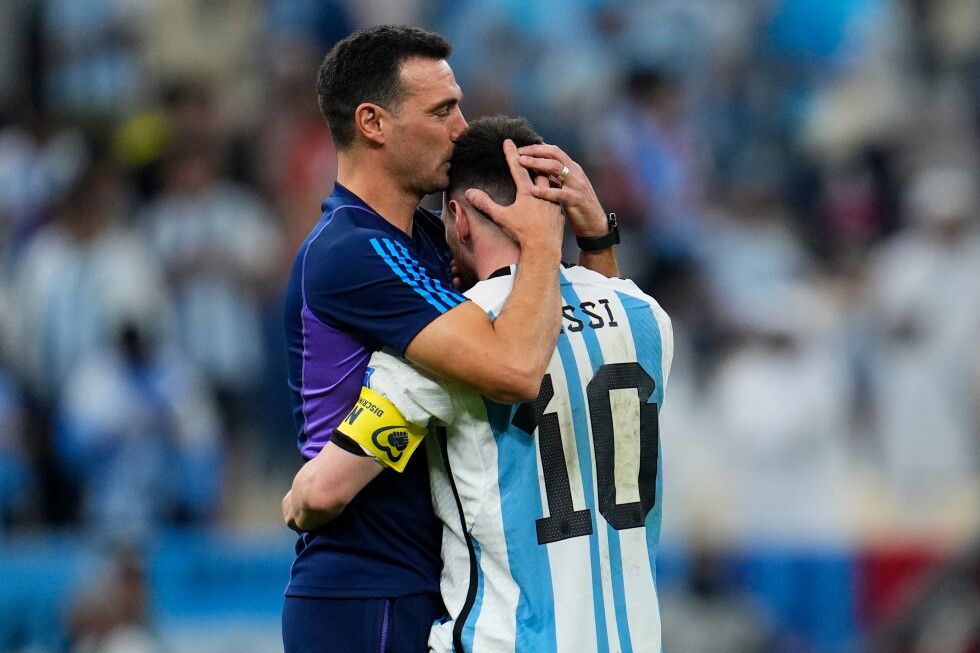
    One of the biggest lingering questions heading into the tournament is whether Argentine captain Lionel Messi, widely regarded as the greatest men’s footballer of all time, will take the pitch. The 2022 tournament champion, who led Inter Miami to an MLS Cup title in 2025 and earned back-to-back MLS MVP honors, has not formally confirmed his participation. Argentine head coach Lionel Scaloni noted in March that the final call rests entirely with Messi, adding, “I believe that he has to be there, for the sake of football. But it’s not me who decides. It’s up to him.” While there has been no public indication Messi plans to skip the tournament, he has stated he will only compete if he is fully fit.

    This World Cup also comes at a time of unprecedented parity in men’s international football. The last six consecutive World Cups have all crowned different champions: Argentina (2022), France (2018), Germany (2014), Spain (2010), Italy (2006), and Brazil (2002) — a stretch of alternating champions that has never occurred in the tournament’s 100-year history. Argentina will enter the 2026 tournament with a chance to make history: no nation has won back-to-back World Cups since Brazil’s 1958 and 1962 victories, and only Italy (1934, 1938) and Brazil have ever achieved the feat.

    ### How to Watch and Pre-Tournament Betting Odds
    For U.S. viewers, Fox Sports holds the exclusive English-language broadcast rights to the 2026 World Cup: 70 matches will air on the main Fox broadcast network, 34 will air on cable channel FS1, and every match will stream live on Fox One and the Fox Sports app. Spanish-language coverage will be available via NBCUniversal’s Telemundo and Universo, with additional streaming options available on Peacock, FuboTV, Hulu, YouTubeTV, and DirecTV Stream.

    As of pre-tournament rankings, BetMGM Sportsbook lists Spain as the slight favorite to win the title at +450 odds, followed closely by France (+550), England (+650), co-favorites Brazil and Argentina (+800 each), and Portugal (+1000). Host nation the U.S. holds +4000 odds to claim its first World Cup title since 1994. The longest odds belong to debutants Haiti and Curacao, both sitting at +250000 — a bet that would pay out $250,000 for every $100 staked should either side claim the historic trophy.

  • Peru election results delayed after thousands get a one-day voting extension

    Peru election results delayed after thousands get a one-day voting extension

    LIMA, Peru — Widespread logistical failures that blocked thousands of voters from casting ballots on Sunday have forced Peru’s electoral officials to extend voting into Monday, pushing the final outcome of the country’s highly contested presidential election past the original scheduled announcement date. The chaotic opening day of voting, which saw countless citizens both within Peru and overseas locked out of polling stations, left millions waiting in uncertainty as the nation navigates one of its most fragmented political moments in modern history.

    Electoral authorities confirmed that just over 52,000 eligible voters will get a second chance to cast their ballots on Monday. This extension applies to voters registered in Lima, Peru’s densely populated capital, as well as two overseas polling locations: Orlando, Florida, and Paterson, New Jersey. Officials initially put the number of eligible voters for the extended voting period at 63,300 before revising the figure downward to correct an earlier miscount.

    Peru enforces mandatory voting for all citizens between the ages of 18 and 70, with a fine of up to $32 imposed on those who fail to participate without a valid excuse.

    Sunday’s vote caps a turbulent decade for Peruvian politics: 35 candidates are competing to claim the presidency, a role that has already changed hands eight times in 10 years. The crowded field includes a former cabinet minister, a popular comedian, and the heir to a well-established political dynasty, reflecting deep divisions within the country’s electorate.

    The election is being held against a backdrop of soaring violent crime and persistent institutional corruption, which has spawned overwhelming public discontent. Most Peruvian voters already view the full slate of candidates as untrustworthy and ill-prepared to tackle the country’s most pressing crises. In response to widespread public anxiety over public safety, many candidates have put forward hardline policy proposals, including plans to construct massive new maximum-security megaprisons, restrict food access for incarcerated people, and reinstate the death penalty for severe criminal offenses.

    For many ordinary voters, public safety remains the top priority, even as frustration with political brokenness runs deep. Heidy Justiniano, a 33-year-old nurse waiting in line to vote at a Lima public school, told reporters she had still not settled on a candidate by the time she reached the polling station. “There’s so much crime, so many robberies on every corner; a bus driver was killed just recently,” Justiniano said. “What matters most to us right now is safety, the lives of every person. Politicians don’t always keep their promises. This time, we have to choose our president wisely so that he can improve Peru.”

    In total, more than 27 million Peruvians are registered to vote in the election, with roughly 1.2 million of those registered at overseas polling stations, primarily in the United States and Argentina.

    Under Peruvian electoral law, a candidate must win an outright majority of more than 50% of the vote to claim the presidency without a runoff. Given the fragmented electorate and the unprecedented size of the candidate field — the largest in Peruvian history — political analysts almost universally predict that a second-round runoff election will be held in June.

    In addition to selecting a new president, voters are also casting ballots to fill seats in a newly reconfigured bicameral Congress, a change mandated by recent legislative reforms. This marks the first time in more than three decades that Peruvians will directly elect members to a full two-chamber legislature, with the reforms concentrating substantial new governing power in the newly established upper chamber.