Nearly two weeks after launching a national probe into a fatal hantavirus outbreak that killed three passengers on an Antarctic cruise that departed from Argentina’s iconic “end of the world” destination, scientific teams are on the ground in Ushuaia, conducting the first systematic field testing for the pathogen in the region’s rodent population. The outbreak, which unfolded on the MV Hondius last month, not only claimed three lives and left multiple other passengers ill, it also triggered an urgent global contact tracing effort as authorities worked to contain potential spread to travelers who returned to their home countries around the world.
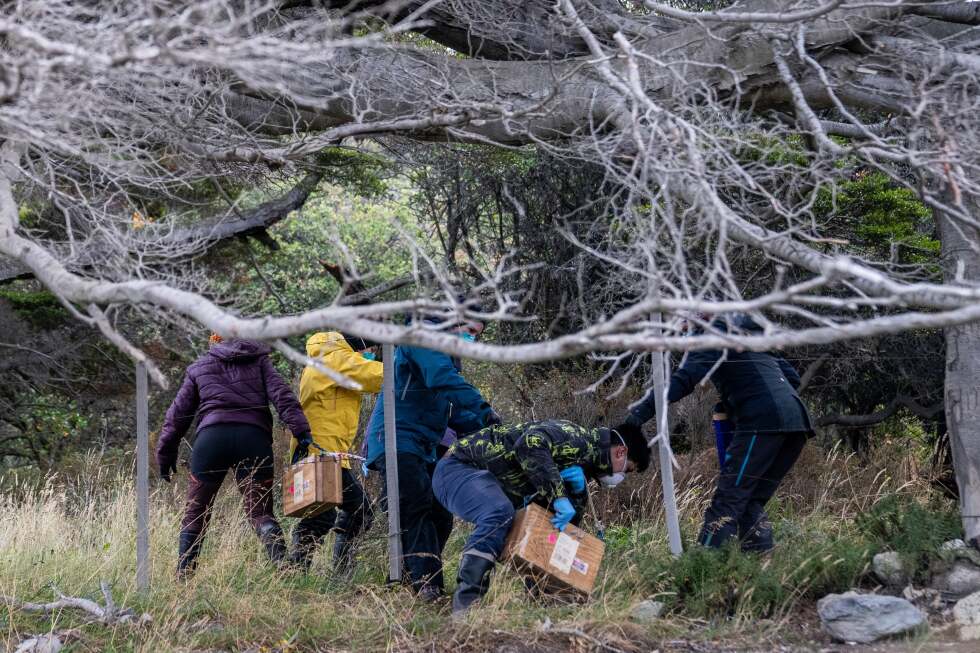
On Tuesday, the research team, brought in from Argentina’s national Malbrán Institute — the country’s leading infectious disease research agency — entered the forests surrounding Ushuaia, the southernmost city on the globe located on the Tierra del Fuego archipelago. Decked out in protective blue gloves and surgical masks, the scientists checked 150 box traps set overnight, collecting euthanized rodents in sealed black plastic bags. The specimens were transported via pickup truck to a temporary on-site laboratory, where researchers will draw initial blood samples before moving the collection to the institute’s main testing facility in Buenos Aires. Local authorities confirmed the trapping protocol will repeat for three consecutive days to collect a robust sample size, and comprehensive testing for hantavirus could take up to 30 days to complete. Researchers on the ground declined to comment on ongoing work, and national officials have not released additional details on investigation timelines beyond initial confirmation.
Martín Alfaro, spokesperson for Tierra del Fuego’s local department of health, confirmed the team captured the expected volume of specimens during the first day of field work. This trapping mission marks an expansion of the original investigation, which has centered on identifying where the first known case of the outbreak — a Dutch birdwatching couple who boarded the cruise on April 1 — contracted the virus. The couple, who completed a months-long road trip across Chile and northern Argentina before finishing their journey with several days of trekking and birdwatching in Ushuaia, both died from the infection, eliminating key witness testimony that would help investigators retrace their exposure path.
From the start of the investigation, a sharp disagreement has persisted between national and local health authorities over the origin of the outbreak. National officials initially hypothesized the couple was exposed at a Ushuaia landfill, a claim local authorities have categorically rejected. Critically, hantavirus has never been officially recorded in the Tierra del Fuego archipelago, and the primary carrier of Andes hantavirus — the common colilargo, or long-tailed pygmy rice rat, which is endemic to northern Patagonia — has never been documented this far south, as the Strait of Magellan was long thought to act as a natural barrier, and the region’s colder climate was considered uninhabitable for the species. A subspecies of the rodent does live in the forests surrounding Ushuaia, however, and until this investigation, no formal research has ever been conducted to test whether this local subspecies carries or can transmit hantavirus.
Northern Patagonian provincial health officials, who regularly record hantavirus cases carried by the common colilargo, have confirmed the Dutch couple never visited their endemic region during the exposure window before boarding the ship. This contradiction has pushed the investigation into uncharted territory, with researchers now tasked not just with solving the outbreak’s origin, but answering a larger public health question: does hantavirus exist in Tierra del Fuego at all, amid shifting ecological conditions driven by global warming?
The team is currently targeting two high-density areas for the local rodent subspecies: Ushuaia’s nearby national park and the forested hillsides that overlook the city’s popular main pebble beach. For the tourism-dependent province, this research carries long-term public health benefits regardless of its findings on the cruise outbreak. “The province has never done this kind of testing before,” Alfaro noted. “It’s important that we rule out the possibility of transmission occurring here.”
Public health data across Argentina has already documented a steady rise in hantavirus cases across the country in recent years, a trend that infectious disease researchers link to the expanding range of the colilargo rat. Ecologists say climate shifts and growing human encroachment into wild habitats have allowed the rodent to move further south than ever recorded before, bringing the pathogen it carries into new, previously unexposed regions. Andes hantavirus, the strain circulating in southern South America, spreads most commonly when humans inhale air contaminated by rodent feces and urine, though rare cases of person-to-person transmission have also been recorded.