标签: South America

南美洲

  • A transgender teen’s case in Ecuador opens path for others seeking legal recognition

    A transgender teen’s case in Ecuador opens path for others seeking legal recognition

    For Lorena Bonilla, the name she chose for her 17-year-old transgender daughter carries deep meaning: in Spanish, Amada translates to “beloved,” a reflection of the unconditional love that turned a family’s private fight for inclusion into a landmark victory for LGBTQ+ rights across Ecuador.

    Amada’s years-long legal battle, alongside a second case decided in early 2026 by Ecuador’s Constitutional Court, has formally opened a pathway for transgender adolescents across the country to update their legal name and gender marker on official government records. This breakthrough comes two years after transgender adults in Ecuador secured the same right, following decades of grassroots advocacy that culminated in a 2024 national reform.

    The court’s rulings have been widely celebrated by LGBTQ+ rights organizers across Latin America, a region where conservative and religious right movements have rapidly gained political influence in recent years. But activists and researchers warn that the legal victory does not erase the deep social and institutional barriers that transgender Ecuadorians still navigate daily.

    “In Ecuador, powerful political, religious, and social groups still frame gender recognition for young trans people as an inherent threat to society,” explained Cristian González Cabrera, a LGBTQ+ rights researcher at Human Rights Watch. “This hostile rhetoric translates directly to institutional pushback: long processing delays, unjustified application denials, and open discrimination from state officials.”

    Bonilla and her family experienced this systemic hostility firsthand nearly a decade ago. When Amada was 9 years old in 2018, school authorities turned her away from enrollment, arguing her birth certificate did not match her gender identity. “We applied to 14 different schools, and not a single one would admit her,” Bonilla recalled. “That’s when we knew we had to fight to change her name on official documents.”

    An initial lower court ruling sided with the family and granted Amada the right to update her identity documents, but the national civil registry appealed the decision. A higher court ultimately reversed the ruling, ordering that Amada’s passport and national ID retain her birth name and assigned sex at birth. For the Bonilla family, that decision felt like a devastating step backward.

    Across Ecuador, progress in LGBTQ+ rights has historically been driven by judicial rulings rather than legislative or executive action, a pattern that mirrors other Andean nations including Colombia and Peru. “The legislative and executive branches are designed to represent majority opinion, and LGBTQ+ people are constantly sidelined and ignored,” said Christian Paula, president of the Pakta Foundation, a legal advocacy group that supports trans people in gender recognition cases. “Turning to the courts for these wins exposes the deep lack of openness and sensitivity to trans issues within Ecuador’s governing institutions.”

    Three of the most significant advances for LGBTQ+ rights in Ecuador have come via court orders: the decriminalization of homosexuality in 1997, a 2009 ruling that allowed the first trans woman to change her legal name, and the 2019 legalization of same-sex marriage. Each of these decisions has sparked fierce backlash from conservative and religious groups, a trend that repeated after the 2026 adolescent gender recognition rulings.

    In a post on X following the Constitutional Court’s decision, André Santos, president of one of Ecuador’s most prominent conservative organizations, accused the court of overstepping its constitutional authority. Santos has also repeatedly opposed school policies that allow trans students to use uniforms and restrooms aligned with their gender identity. Ecuador’s national conference of Catholic bishops echoed the criticism, releasing a statement claiming that allowing adolescents to pursue gender recognition “poses serious risks to their overall physical and psychological development.”

    Ecuador’s current president, Daniel Noboa, has not aligned himself with the most harshly anti-trans rhetoric adopted by other conservative leaders across Latin America, but his administration has shown little to no public support for LGBTQ+ rights. As a candidate, Noboa ran on a platform that explicitly pledged to “defend the traditional family,” and since taking office, his policy agenda has been overwhelmingly focused on rising violent crime and national economic instability, pushing gender equity and LGBTQ+ issues entirely off the executive agenda.

    Diane Rodríguez, a trans lawyer and president of Guayaquil-based LGBTQ+ advocacy group Silueta X, says the real concern lies within Noboa’s cabinet. She points to current Education Minister Gilda Alcívar, who has repeatedly rejected the inclusion of what she labels “gender ideology” in public school curricula. This anti-gender climate shapes daily life for trans Ecuadorians, Rodríguez says, including her own experience as a parent. Rodríguez is raising a 4-year-old daughter with her partner, a trans man, and the pair faced significant barriers enrolling their child in local schools. “We had trouble getting her signed up because people see me and assume that just because I’m trans, I’m going to ‘convert’ their children,” Rodríguez said.

    Silueta X publishes an annual report tracking killings of LGBTQ+ people across Ecuador, a dataset that reveals a disturbing upward trend in anti-trans violence. The organization’s first report in 2013 documented just two murders of LGBTQ+ Ecuadorians, but that number has risen steadily every year. The 2025 report recorded 30 killings, 21 of which were trans women.

    For the Bonilla family, the path to advocacy began long before the Constitutional Court’s ruling. Amada first told her parents she was a girl when she was just 3 years old, asking for a princess-themed birthday party. Raised in conservative Catholic households, Bonilla and her husband Mauricio Caviedes initially assumed Amada was confused, and dressed her as a prince for the party. It took several years for the couple to unlearn the harmful narratives they had absorbed, including pushing back against psychologists who claimed Amada had developmental issues or that the couple were poor parents.

    “People say the most ruthless things, and they have no idea what families like ours go through every single day,” Caviedes said. “I hope that comprehensive education about trans issues will one day change that, so people can understand who we really are.”

    As the family learned more about the trans community and fought Amada’s legal battle, their private struggle grew into a public movement. Bonilla and Caviedes became full-time activists, bringing their children to protests and rights conferences, advocating for same-sex marriage and other LGBTQ+ causes, and founding a support organization for families with trans children. At its launch, the group counted 25 member families with trans children of varying ages, the oldest of whom was just 12. “That was the only way we could fight the state,” Bonilla explained.

    The family relocated to Canada during the COVID-19 pandemic, and Bonilla says she deeply values the welcoming environment their new home has provided for Amada. But she has no plans to stop advocating for trans rights in her home country. Today, Amada is an honors student who dreams of becoming a pediatric nurse, shaped by years of watching her parents support trans community members fighting to access non-discriminatory health care. Though Amada has never chosen to speak publicly on camera, her landmark case has created a lasting legacy for trans youth across Ecuador.

    “People still stereotype trans people, assuming our destiny is to be sex workers or to live our whole lives in hiding,” Bonilla said. “But we want every parent to know that one day their trans child can grow up to be whatever they want to be.”

  • A Venezuelan doctor in ICE custody misses husband’s asylum interview after being detained at airport

    A Venezuelan doctor in ICE custody misses husband’s asylum interview after being detained at airport

    A years-long wait for a critical asylum interview ended in chaos and detention this week, after a Venezuelan-born physician serving a medically underserved South Texas community was taken into immigration custody at McAllen International Airport, keeping her from the appointment she and her husband had prepared for over 10 years.

    On Thursday, Milenko Faria, the asylum seeker husband, appeared alone at the U.S. Citizenship and Immigration Services (USCIS) office outside Los Angeles. Meanwhile, his wife 33-year-old Dr. Rubeliz Bolivar, who had been set to join him, began her sixth day behind bars in a Texas immigration detention center. The couple’s 5-year-old American-born daughter was also detained alongside Bolivar when Border Patrol agents arrested her last Saturday, as she prepared to board a flight to California to reunite with Faria for the joint interview.

    Bolivar is not the only Venezuelan medical provider to be swept up in recent immigration enforcement in South Texas. Just one week prior, another Venezuelan doctor, Dr. Ezequiel Veliz, was detained at a local checkpoint on April 6; an immigration judge ultimately ordered his release just this Wednesday, according to his defense attorney Victor Badell.

    Since starting her emergency room residency at a McAllen hospital in June 2025, Bolivar has worked in a region federally classified as medically undersigned, filling a critical gap in local healthcare access for the border community of roughly 150,000 residents. Faria, who has worked as an information systems technician at a California employer since 2019, described his wife as deeply committed to her patients and the community they serve.

    “We have never broken any U.S. law. We followed every regulatory step required to pursue permanent residency, completely by the book,” Faria told The Associated Press in a phone interview, adding that Bolivar first entered the U.S. on a valid tourist visa in 2016, shortly after graduating from medical school in her native Venezuela.

    Before her initial authorized stay expired, Bolivar was added to the asylum application Faria had already filed. The couple has also pursued employment-based green cards through a skilled worker petition sponsored by Faria’s California employer. For years, they were protected from deportation under Temporary Protected Status (TPS), a federal program that shields eligible migrants from designated crisis-hit countries from removal. But the Trump administration moved to terminate TPS protections for Venezuela, along with Haiti, Syria, Afghanistan, Nicaragua and other nations, a policy that is currently being challenged in federal court.

    The Department of Homeland Security (DHS) has defended the arrest, asserting that Bolivar lacked legal status. DHS spokesperson Lauren Bis stated that Bolivar “overstayed her visa since 2017, nearly a decade, and had no legal status.” But Faria and local immigration advocates push back on that claim, noting that Bolivar carried a valid Real ID-compliant Texas driver’s license and active work authorization valid through 2030 at the time of her arrest, and was in the process of adjusting her immigration status to obtain permanent residency.

    South Texas immigration attorney Jodi Goodwin said a noticeable shift in enforcement policy targeting people with pending USCIS applications emerged around the fall of 2025. “It just became a very apparent trend where anyone that had some kind of application pending with USCIS, whether it was an adjustment of status or asylum, anything like that, they were going to be arrested,” Goodwin explained.

    Before her residency, Bolivar lived with Faria in Santa Maria, California. She relocated to South Texas last summer to take up her residency position, and Faria traveled to visit his wife and daughter every two months. The trip to California for the asylum interview marked Bolivar’s first domestic travel since moving to Texas.

    When Bolivar arrived at McAllen’s airport, she was taken into custody by Customs and Border Protection officers before passing through security screening, even after presenting her valid identification and work authorization. After confirming her Venezuelan nationality, officers demanded proof of legal permanent residency — a status the couple was actively seeking through the asylum interview she was on her way to attend — and detained her on the spot, Faria recounted, adding that he received text messages from his wife in real time as her arrest unfolded.

    Their 5-year-old citizen daughter was held alongside Bolivar for 19 hours before being released to her grandfather, and has since been reunited with Faria in California. Bolivar was transferred to U.S. Immigration and Customs Enforcement custody Sunday and is currently being held at the El Valle Detention Facility in Texas. Faria said his wife has repeatedly asked officials for an explanation of her detention but has not received any formal response to date.

  • The informant earned millions working for the DEA. He paid no taxes.

    The informant earned millions working for the DEA. He paid no taxes.

    A decades-long confidential informant for the U.S. Drug Enforcement Administration who partied across the globe with rogue agency agents has escaped prison time after pleading guilty to failing to pay income taxes on nearly $4 million earned through his undercover work.

    Andres Zapata, 48, received a sentence of time served during a Wednesday hearing in Austin, Texas, according to two anonymous sources with knowledge of the ongoing investigation who spoke to the Associated Press. The sentence was granted in exchange for Zapata’s ongoing cooperation with a 10-year federal inquiry that has already linked multiple DEA agents to professional misconduct.

    Zapata, a Colombian national, was extradited to the United States from his home country last year. He had long worked closely with José Irizarry, a former DEA agent currently serving a 12-year prison sentence. Irizarry was convicted of siphoning millions of dollars from money laundering operations to pay for lavish international travel, high-end sports cars, and excessive, party-focused trips that violated agency policy.

    Court documents confirm that between 2015 and 2020 alone, the DEA paid Zapata — a professional money launderer working as a confidential informant — $3.8 million for his services. He entered a guilty plea to a single count of income tax non-reporting last July. While DEA rules require all informants to report their informant payments to the Internal Revenue Service, prosecutions for this violation are extremely uncommon.

    Neither the U.S. Justice Department’s criminal division, which handled the prosecution, nor the DEA offered immediate public comment on the sentencing outcome.

    Zapata’s defense attorney, Don Bailey, argued during the sentencing that prosecuting a cooperating informant for this offense was highly irregular. Bailey noted that unlike standard contractors, informants do not receive standard tax reporting forms such as 1099s or W-9s, leaving many uncertain of their tax obligations. “You don’t know what you owe. You sign a piece of paper for money. You don’t get receipts,” Bailey explained in court, adding that Zapata had put his life at risk to help U.S. law enforcement disrupt violent drug cartel operations and had no intent to violate tax law.

    During the hearing, Zapata told U.S. District Judge David Ezra that he was eager to close this chapter of his life, having already spent more than a year in a high-security prison outside his hometown of Medellín while awaiting extradition. “I’ve learned my lesson,” Zapata stated, per a transcript of the proceeding.

    Judge Ezra, who praised Zapata for his consistent, substantial cooperation with federal investigators, sentenced him to credit for time already served while in Colombian custody. He also ordered Zapata to pay $1.2 million in restitution to cover the tax revenue lost to the U.S. government, and denied the AP’s request to unseal the full sentencing records.

    Internal DEA records reviewed by the AP show the agency first recruited Zapata as an informant back in 1998. At the time, he was working as a vacuum salesman, and his recruitment came after his brother-in-law was arrested on drug trafficking charges. Over the following 20-plus years, Zapata rose to become one of the DEA’s most active informants, organizing covert cash collections and supporting investigations stretching from Peru to Los Angeles. In total, he earned more than $4.6 million in payments from the agency over his career.

    Beyond providing investigative tips, Zapata accompanied rogue agents and even some prosecutors from Miami on international trips that Irizarry later called a “world debauchery tour” — events that flagrantly violated DEA rules prohibiting inappropriate close relationships between agents and informants.

    A private WhatsApp chat used by the agents to document their three-continent trips details Zapata’s role in arranging for sex workers and bailing members of what Irizarry called “Team America” out of trouble. In one 2018 incident, Zapata was in Madrid drinking with a DEA agent who was briefly detained on allegations of sexual assault against a local woman.

    Irizarry has told investigators that Zapata regularly kicked back a portion of his informant payments to corrupt agents. He recalled one incident where Zapata arrived at his Colombian apartment with a bag holding $40,000 in cash — money Irizarry used to purchase a Tiffany engagement ring for his wife.

    Court allegations also name Zapata as a middleman for illegal payments Irizarry admitted receiving from Diego Marin, known as Colombia’s “Contraband Czar,” who was himself once a DEA informant. Marin was arrested in Spain earlier this year as part of a large Colombian bribery probe. Video obtained by the AP shows Zapata and Marin partying with DEA agents at a Madrid restaurant together.

    Reporting for this story was contributed by Mustian from Natchitoches, Louisiana.

  • 2 candidates with starkly different visions for Peru vie for a runoff spot

    2 candidates with starkly different visions for Peru vie for a runoff spot

    LIMA, Peru – Peru’s 2025 presidential first-round vote has plunged into prolonged uncertainty, with election officials facing weeks of vote counting and legal challenges to determine which two candidates will advance to the June 7 runoff election. As of Thursday’s updated results, the race for the second and third qualifying spots remains so tight that a final outcome could take more than a month to formalize, echoing but far outstripping the delays seen in the country’s 2021 presidential contest.

    Early tallies have all but confirmed that former presidential candidate Keiko Fujimori, the conservative standard-bearer and daughter of disgraced ex-president Alberto Fujimori, will claim first place in the 35-candidate field held in Sunday’s vote. With 93% of all ballots processed, Fujimori holds a steady lead with 17.06% of the vote – a comfortable advantage over her rivals, but far short of the 50%+1 threshold required to win the presidency outright and skip a runoff.

    Trailing Fujimori are two politically opposite contenders locked in a historic close race for the second runoff slot. In the most recent count, nationalist congressman Roberto Sánchez – a former cabinet minister under imprisoned ex-president Pedro Castillo – holds 11.97% of the vote, putting him just 0.06 percentage points, or fewer than 8,000 votes, ahead of third-place Rafael López Aliaga, the ultraconservative former mayor of Peru’s capital city Lima.

    The two candidates could not differ more sharply in their policy platforms. Sánchez, who is rarely seen without his signature wide-brimmed peasant hat, has campaigned on a platform of sweeping left-wing economic overhaul, including a massive expansion of public sector spending, a complete restructuring of Peru’s national tax system, and partial nationalization of the country’s lucrative natural resource sector. López Aliaga, by contrast, has built his campaign on a hardline right-wing security agenda: he has proposed constructing new maximum-security prisons in Peru’s remote Amazon region, granting anonymous identity protection to sitting judges, and mass expulsion of undocumented immigrants residing in the country. He has also drawn international attention for his promise to reinstate the death penalty in Peru.

    The razor-thin margin between the two contenders is further complicated by thousands of unprocessed and disputed ballots. Roughly 1,600 uncounted tally sheets remain to be processed from remote rural villages and polling stations for Peruvians living abroad. In addition, more than 5,000 completed tally sheets have been formally challenged by political campaigns over alleged irregularities or mathematical errors, triggering a mandatory appeals process overseen by Peru’s specialized electoral courts.

    Álvaro Henzler, president of Transparencia, Peru’s leading independent democracy watchdog that deployed 4,000 election observers across the country to monitor the vote, explained that the appeals process is standard, but its outcome is far more consequential this cycle than in past elections. “In Peru, a share of tally sheets are always challenged due to potential counting errors, and when that happens, they are sent to 60 special electoral boards for review,” Henzler noted.

    A comparison to the 2021 election illustrates how unusual this level of suspense is. Three years ago, Peru’s electoral tribunal took 37 days to formalize first-round results after the April vote, even though the gap between the second and third place candidates started at more than 238,000 votes, eliminating any real doubt about the final ranking. “In this case, since the race is so tight, the contested tally sheets could end up altering the final standings; that is why it is taking so much longer,” Henzler added.

    Peru’s turbulent recent political history sets high stakes for the final outcome. The winner of the June runoff will become the country’s ninth president in just 10 years, taking office from interim president José María Balcázar, who was appointed in February following the ousting of the previous interim leader over corruption allegations just four months into his term.

    For Fujimori, this election marks her fourth attempt to win the presidency, and she has centered her campaign on promises to crack down on Peru’s rising violent crime rates. Still, her platform has faced scrutiny from legal experts, who point to laws supported by Fujimori’s political bloc in recent years that have made it far harder to prosecute organized crime: the laws eliminated the option of preliminary detention for certain offenses and raised the legal threshold for law enforcement to seize assets connected to criminal activity.

    AP’s full coverage of Latin American and Caribbean politics can be found at https://apnews.com/hub/latin-america

  • Brazil’s former spy chief released from ICE detention

    Brazil’s former spy chief released from ICE detention

    In a development that has already stirred cross-border diplomatic friction, Alexandre Ramagem, the fugitive former head of Brazil’s intelligence agency Abin and a close confidant of jailed ex-Brazilian President Jair Bolsonaro, has been freed from custody by U.S. Immigration and Customs Enforcement (ICE). Ramagem, 53, was taken into ICE custody earlier this week in Orlando, Florida, but his name has been removed from the agency’s public detainee roster, a change first confirmed by BBC News Brasil. ICE initially confirmed the Monday detention but has offered no public explanation for the arrest, nor any official comment on Ramagem’s release, which Brazilian media outlets reported occurred Wednesday.

    Ramagem’s release came after Brazilian judicial authorities had formally requested his extradition from the U.S. back in December 2025, following his 16-year prison sentence for his leading role in a failed 2022 military coup plot to keep Bolsonaro in power after his electoral loss to current President Luiz Inácio Lula da Silva. The convicted former spy chief fled Brazil for the United States in September 2025, days before he was scheduled to begin serving his sentence, and had been labeled a fugitive by Brazilian law enforcement.

    Eduardo Bolsonaro, the ex-president’s son who currently resides in the U.S., confirmed Ramagem’s freedom in a social media post Thursday, saying the former spy chief was “out and home.” In the post, Eduardo Bolsonaro publicly thanked U.S. President Donald Trump and Secretary of State Marco Rubio for what he called their “sensitivity” in handling Ramagem’s case, calling the convicted coup plotter “a true national hero” who refuses to surrender amid what the Bolsonaro camp frames as political persecution. Echoing Ramagem’s previously reported request for U.S. protection, Eduardo Bolsonaro added that the ex-intelligence chief deserves asylum “in the land of liberty.”

    Ramagem was one of seven co-defendants convicted alongside Jair Bolsonaro for the 2022 coup attempt. He also faces an ongoing separate investigation on allegations that he abused his position as Abin director to conduct illegal surveillance on political opponents of Bolsonaro, charges he has repeatedly denied.

    Before news of Ramagem’s release broke, Brazilian President Lula reaffirmed that the fugitive must be sent back to Brazil to complete his prison sentence. For his part, Trump has repeatedly voiced support for the jailed ex-president, calling the 2022 coup trial a “witch hunt” and saying Bolsonaro’s own 27-year prison sentence was “very surprising” when it was handed down.

  • Lionel Messi accused of breaching $7 million contract by sitting out a Florida soccer friendly

    Lionel Messi accused of breaching $7 million contract by sitting out a Florida soccer friendly

    One of the most decorated soccer players in history, Lionel Messi, is facing a major legal battle after a South Florida-based events company filed a lawsuit alleging fraud and breach of contract connected to a canceled appearance at a 2023 international friendly. According to public court filings from Miami-Dade Circuit Court, the suit was brought last month by Vid Music Group, naming both the global soccer star and the Argentine Football Association (AFA) as defendants. The promoter claims the pair violated the terms of a $7 million agreement when Messi skipped one of the two scheduled exhibition matches last October, a development that cost the company millions in lost revenue. Neither Messi nor representatives from the AFA have issued an immediate public response to requests for comment on the allegations as of press time.

    Widely regarded as one of the greatest athletes to ever play the sport, Messi commands a massive premium on ticket prices for matches where he is expected to appear, whether he is suiting up for his Major League Soccer club Inter Miami CF or the reigning World Cup-winning Argentine men’s national team. The core of the legal dispute stems from an exclusive deal Vid signed with the AFA last summer, which granted the company full rights to organize, host, and market two October 2023 friendlies between Argentina and national sides Venezuela and Puerto Rico. In exchange for these rights, Vid retained all revenue generated from ticket sales, broadcast rights, and sponsorship deals. Per the terms outlined in the suit, the agreement explicitly required Messi to play a minimum of 30 minutes in each fixture, with an injury being the only acceptable exception to the clause.

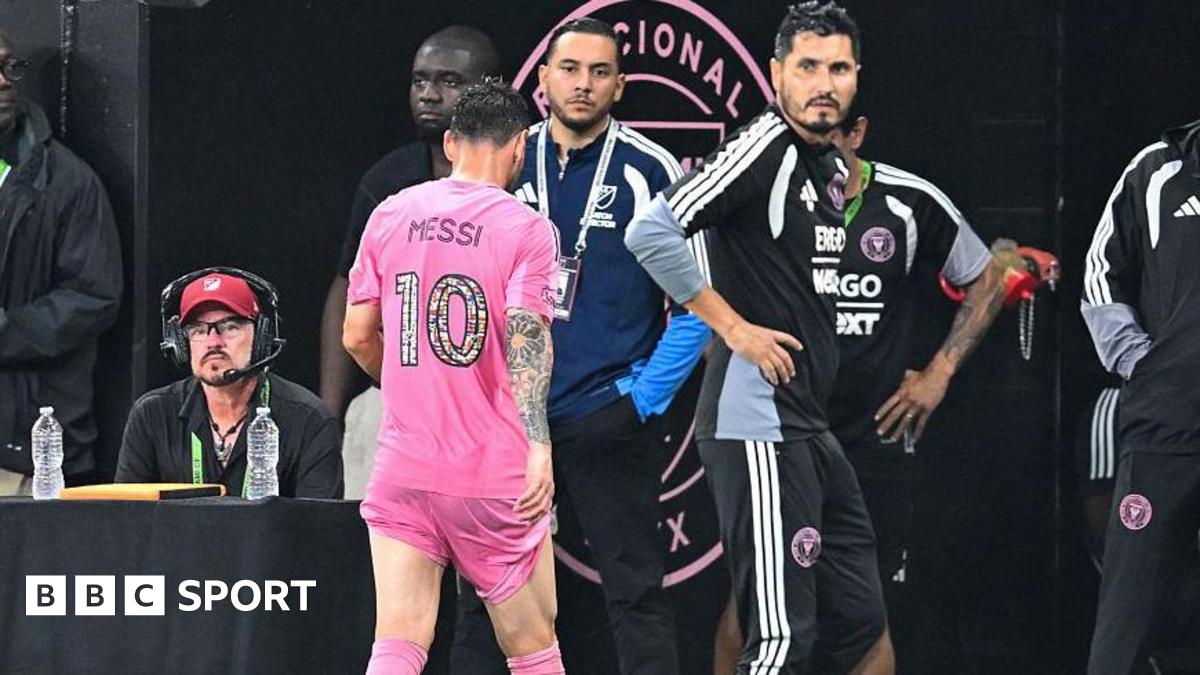
    Court documents detail that rather than taking the pitch for the October 10 match against Venezuela at Hard Rock Stadium in South Florida, the 36-year-old attacker watched the 1-0 Argentine victory from a private suite inside the venue. Just one day after the Venezuela friendly, Messi took the field for Inter Miami, scoring two goals in the club’s 4-0 routing of Atlanta United in a crucial MLS regular season fixture. The result secured home-field advantage for Inter Miami in the first round of the 2023 MLS playoffs, a high-stakes outcome for the Florida-based club that made Messi’s absence from the international friendly all the more damaging for the promoter, per the suit.

    Messi did ultimately appear for Argentina in the second scheduled friendly against Puerto Rico on October 14, though the match itself was marked by organizational setbacks that further cut into Vid’s projected revenue. The fixture was originally slated to be hosted in Chicago, but organizers were forced to relocate it to a smaller venue in Fort Lauderdale, Florida after weak ticket sales. The low demand was tied to widespread public concern over ongoing, high-profile immigration raids by U.S. Immigration and Customs Enforcement agents in the Chicago area that had resulted in more than 1,000 arrests. Even after the move and a steep cut to ticket prices, dropping them as low as $25 per seat, the Fort Lauderdale venue failed to sell out. The AFA has publicly attributed the poor ticket sales for the Puerto Rico match to the immigration crackdown in the original host city.

    Vid has not publicly outlined a specific dollar amount for the damages it is seeking in the legal action, but the company confirms that it lost millions in total revenue from two connected issues: Messi’s no-show at the Venezuela friendly and the weak ticket sales for the relocated Puerto Rico match. The lawsuit comes amid a high-profile era for Messi in U.S. soccer, after his 2023 move to Inter Miami transformed the profile of MLS globally and drew record audiences to the league.

  • Brazil’s Lula defends Pope Leo in message to Catholics after Trump’s criticism

    Brazil’s Lula defends Pope Leo in message to Catholics after Trump’s criticism

    A sharp public dispute between Pope Leo XIV and United States President Donald Trump has drawn international political backing for the pontiff from Brazil’s leftist head of state, Luiz Inácio Lula da Silva. Speaking Wednesday in a pre-recorded video address to the national conference of Brazilian bishops, Lula publicly voiced his full solidarity with the first U.S.-born pope, calling for Leo to be defended against aggressive criticism from influential global actors.

    The 80-year-old Brazilian president, who is currently campaigning for a new term in national elections scheduled for October, framed the conflict as part of a long-running historical pattern. “Throughout mankind’s history, advocates for peace and for the oppressed have been attacked by powerful people who think they are deities to be adored,” Lula stated in his remarks. He added, “It’s better to have a heart full of love than the power of weapons and money.”

    The crossfire between the two world figures ignited after Pope Leo delivered sharp public pushback against the ongoing war in Iran. Specifically, the pontiff condemned Trump’s open threat to annihilate Iranian civilization as “truly unacceptable,” and stated that God does not grant blessing to leaders who order military bombing campaigns against civilian populations.

    In response, Trump has escalated his verbal attacks against the pope in recent days, repeatedly claiming that Leo takes unduly soft stances on domestic crime, is ideologically aligned with left-wing global movements, and even asserted that his own political influence helped the pontiff secure his position. Earlier on the same day Lula issued his statement, Pope Leo addressed the conflict during an official visit to Cameroon, reaffirming his core position. He emphasized that “the message the world needs to hear today” is centered on non-violence and diplomatic negotiation rather than military confrontation.

  • Allies of disgraced former presidents lead in Peru presidential election

    Allies of disgraced former presidents lead in Peru presidential election

    Four days of ongoing ballot counting in Peru’s 2024 presidential first-round election has cemented two candidates as the clear front-runners poised to advance to the June runoff, as widespread logistical failures disrupted voting processes for thousands of voters at home and abroad.

    Keiko Fujimori, a conservative Peruvian politician making her fourth bid for the country’s highest office and the daughter of disgraced former president Alberto Fujimori, held the top spot in official counts released Tuesday, with 16.95% of the vote after 90% of all ballots were processed. Close behind her, nationalist congressman and former cabinet minister Roberto Sánchez claimed 11.99% of the vote, putting him just barely ahead of third-place contender Rafael López Aliaga, an ultraconservative and former mayor of Lima who captured 11.94% of counted ballots.

    The election has been plagued by organizational breakdowns that disenfranchised thousands of eligible voters both within Peru and among the Peruvian diaspora in the United States. The disruptions began when ballot boxes failed to reach polling locations on schedule for the original voting day, forcing election officials to extend voting into an extra day on Monday. The extension, announced Sunday evening just as official counting got underway, allowed more than 52,000 Lima-based residents to cast their ballots, as well as Peruvian voters registered in two U.S. locations: Orlando, Florida, and Paterson, New Jersey.

    Under Peruvian electoral rules, a candidate must secure an absolute majority of more than 50% of the vote to win the presidency outright in the first round. Since no candidate is on track to hit that threshold, the top two finishers from the first round will advance to a head-to-head runoff election scheduled for June 7.

    The eventual winner will take office as Peru’s ninth president in just a decade, stepping into a role that has seen rapid turnover amid ongoing political instability. The current interim president, José María Balcázar, was appointed to the position in February, following the ousting of his predecessor — an interim leader removed from office over corruption allegations just four months after taking power.

    Fujimori, who has run unsuccessfully for the presidency three times previously, has centered her campaign on pledges to crack down on rising violent crime across Peru. However, her policy record has drawn scrutiny: in recent years, her party backed legislative changes that legal experts argue have significantly weakened the country’s ability to prosecute criminal suspects. The reforms eliminated the option of preliminary detention for certain offenses and raised the legal bar for law enforcement to seize assets tied to criminal activity. If elected, Fujimori has proposed new measures including anonymous judges for criminal cases and a requirement that incarcerated people work to earn meals in prison.

    Sánchez, who previously served as foreign trade minister under ousted former president Pedro Castillo, has positioned himself as a nationalist, populist alternative. He frequently wears a wide-brimmed traditional Andean peasant hat on the campaign trail — a gift from his political mentor and ally Castillo, who remains in prison on charges tied to his 2022 attempt to dissolve Congress. If elected president, Sánchez has pledged to use executive pardon power to secure Castillo’s release.

    The slow progress of this year’s ballot counting echoes the 2021 Peruvian presidential election, when official final results were not completed until five full days after polls closed, reflecting long-standing structural challenges in Peru’s electoral administration.

  • US eases sanctions on state-run Venezuelan banks

    US eases sanctions on state-run Venezuelan banks

    Nearly three and a half years after sweeping sanctions were first imposed on Venezuela’s top financial institutions, the Trump administration has rolled back key restrictions in a move that signals warming ties between Washington and the South American nation’s interim government led by President Delcy Rodríguez.

    This policy shift comes just over three months after U.S. military forces conducted a high-profile raid in Caracas that resulted in the capture of longtime Venezuelan leader Nicolás Maduro, who was subsequently transported to New York to face trial on federal drug trafficking charges.

    According to an official announcement released Tuesday by the U.S. Treasury Department’s Office of Foreign Assets Control (OFAC), the agency has issued two general licenses that loosen punitive restrictions on Venezuela’s state-run central bank, as well as four other major state-controlled financial entities: Banco de Venezuela, Banco Digital de los Trabajadores, and Banco del Tesoro. Signed by OFAC Director Bradley T. Smith, the authorization permits U.S. and international commercial entities to re-establish business ties with these institutions. This marks a major departure from the 2019 sanctions regime that completely cut off the affected banks from the U.S. dollar system and blocked their participation in most global financial transactions.

    The partial rollback of sanctions clears the path for Venezuelan financial institutions to once again process international payments, access U.S. dollar liquidity, and formally re-enter the global financial network. Crucially, the change is also expected to open the door for oil sale revenues from Venezuelan crude exports to the U.S. to flow directly back into the country’s domestic economy, a shift that could provide much-needed relief to Venezuela’s struggling financial system.

    Notably, the changes represent a temporary easing of penalties rather than a full permanent lifting of all sanctions — a distinction that has drawn criticism from Rodríguez’s interim administration, which has been pushing for a complete removal of all U.S. trade and financial restrictions. During a recent meeting in Caracas with visiting U.S. senior officials, including Assistant Secretary of Energy Kyle Haustveit and U.S. Chargé d’Affaires Laura Dogu, Rodríguez emphasized that temporary authorizations fail to deliver the long-term legal certainty that Venezuela needs to rebuild its economy. “A licence does not provide legal certainty over time because it is temporary,” Rodríguez told the delegation, the latest senior U.S. officials to travel to Venezuela since Maduro’s ouster.

    The Trump administration has publicly lauded Rodríguez for her collaborative approach to U.S.-Venezuela relations, highlighting her administration’s moves to open Venezuela’s lucrative oil and mining sectors to foreign direct investment. But domestic political observers and opposition figures have raised red flags about the continuity of power under the new interim government. While Rodríguez has removed some high-profile Maduro allies from top government positions, opposition politicians argue that these posts have simply been filled by other figures close to Rodríguez who remain loyal to Maduro’s United Socialist Party (PSUV).

    Critics point to Rodríguez’s recent appointment of former long-time defense minister Vladimir Padrino López as agriculture minister as a key example of this pattern. Padrino, who held the defense portfolio for more than a decade and was one of the most critical pillars of military support for Maduro’s government, retained his influence in the new administration after shifting portfolios. In a social media post following his appointment, Padrino thanked Rodríguez for the new role, writing “I am leaving my rifle to take up my plow.”

    This report includes additional reporting from BBC Monitoring’s Pascal Fletcher based in Miami.

  • Brazil’s former spy chief detained by ICE agents in US

    Brazil’s former spy chief detained by ICE agents in US

    In a significant development in Brazil’s high-profile anti-coup investigation, Alexandre Ramagem — the former head of Brazil’s national intelligence agency Abin and a close ally of incarcerated ex-President Jair Bolsonaro — has been taken into custody by U.S. Immigration and Customs Enforcement (ICE) agents in Orlando, Florida. The detention marks a major milestone in cross-border law enforcement cooperation after Ramagem spent months as a fugitive following his conviction on coup plotting charges.

    Ramagem was among eight people, including Bolsonaro himself, found guilty in a Brazilian Supreme Court trial of orchestrating a plan to stage a military coup to overturn the results of the 2022 Brazilian presidential election, which Bolsonaro lost to current President Luiz Inácio Lula da Silva. Handed a 16-year prison sentence, Ramagem never appeared to hear the guilty verdict: he fled Brazil by car to neighboring Guyana shortly before the ruling was issued, then flew to the United States to evade custody.

    ICE confirmed Monday that Ramagem is currently in their custody, but has declined to share additional details on the circumstances of his arrest. Brazilian federal police confirmed only that a Brazilian national convicted of coup conspiracy by the Supreme Court had been detained in Orlando, crediting the arrest to coordinated international police collaboration between Brazilian federal authorities and U.S. law enforcement. Multiple regional law enforcement sources familiar with the case tell BBC News Brasil that Brazilian officials expect Ramagem will be deported back to Brazil following a hearing before an American immigration judge.

    Ramagem’s legal team has already signaled it will fight extradition, arguing that the conviction against him is politically motivated. Legal analysts expect his attorneys will formally apply for political asylum in the U.S. if that application has not already been submitted.

    Beyond his coup conviction, Ramagem, who led Abin from 2019 to 2022 during Bolsonaro’s presidency, is also facing separate investigation for allegedly misusing his intelligence agency post to conduct illegal surveillance on political opponents of the former president — allegations Ramagem has repeatedly denied.

    After Ramagem fled Brazil, Brazilian judicial authorities officially labeled him a fugitive and formally requested his extradition from the U.S. through diplomatic channels back in December 2025. In a pre-detention interview with a pro-Bolsonaro journalist, Ramagem defended his decision to flee, claiming he would have been wrongfully imprisoned in Brazil and that he felt secure on U.S. soil. He also claimed he had been welcomed by U.S. authorities upon arrival, saying, ‘What I can tell you is that the American authorities received me very well, and that’s exactly what they said: “It’s very good to have a friend safe here with us.”‘

    The case has already drawn cross-border political attention, with former U.S. President Donald Trump dismissing the entire investigation that led to the convictions of Bolsonaro, Ramagem and their co-conspirators as a politically motivated ‘witch hunt’. When Bolsonaro was sentenced to 27 years in prison for his role in the plot, Trump called the sentence ‘very surprising’. Shortly after the verdict was issued, the Trump administration imposed economic sanctions on Supreme Court Justice Alexandre de Moraes, who led the investigation, but later reversed the sanctions, citing that the restrictions were ‘inconsistent with US foreign policy interests’.