BOGOTA, Colombia — As Colombians prepare to head to the polls for the June 21 presidential runoff, the nation stands at a crossroads that will ripple far beyond its borders, with outcomes that will reshape the future of the Amazon rainforest, the country’s energy trajectory, and the rights of Indigenous communities that have stewarded the forest for centuries. The two candidates on the ballot represent diametrically opposed visions for the nation, forged in the policy legacy of current leftist President Gustavo Petro and shaped by an unexpected endorsement from former U.S. President Donald Trump.
On one side is Sen. Iván Cepeda, a close ideological ally of Petro who analysts broadly agree would carry forward the outgoing administration’s landmark climate and social priorities. Cepeda has centered his campaign on upholding Indigenous territorial rights, expanding aggressive Amazon conservation efforts, and accelerating Colombia’s transition away from fossil fuel dependence — a policy shift that has positioned Petro’s government as one of the world’s most outspoken leaders on global climate action.
Under Petro, Colombia banned new oil and gas exploration contracts, ruled out any expansion of fracking — a controversial extraction method linked to widespread environmental harm — and made history earlier this year by hosting the first-ever global summit dedicated to the worldwide transition away from coal, oil and gas. Cepeda has repeatedly affirmed his commitment to building on this work, steering the country toward expanded renewable energy production and blocking new development of fossil fuel reserves in ecologically sensitive Amazon regions.
Facing Cepeda is conservative lawyer Abelardo de la Espriella, who earned a high-profile endorsement from Trump ahead of the runoff. De la Espriella has built his campaign platform around promises to boost public security and accelerate economic growth, with a core policy pledge to expand Colombia’s profitable extractive industries, including opening new areas to fracking and full development of the nation’s untapped underground fossil fuel and mineral reserves. Trump has praised de la Espriella’s hardline law enforcement stances, framing the candidate’s victory as critical to healthy U.S.-Colombia relations — a relationship that has been strained under Petro, who has clashed repeatedly with Trump over migration policy, climate action and security cooperation. Earlier this year, the two leaders traded public insults on social media after Petro barred U.S. deportation flights carrying Colombian migrants from landing in the country, prompting Trump to threaten sweeping tariffs and visa restrictions before a last-minute compromise was reached.
While both candidates have paid lip service to valuing Amazon conservation, experts say the race boils down to a clear binary: one path prioritizes protecting the rainforest’s intact ecosystems, while the other prioritizes productive resource exploitation. “On issues of climate, this is a choice between prioritizing green energy and reinvigoration of fossil fuels,” explained Elizabeth Dickinson, deputy director for Latin America at the International Crisis Group, a nonpartisan global think tank.
Colombia is home to more than a third of the Amazon rainforest, the world’s largest tropical forest and a critical global buffer against worsening climate change. In recent decades, the forest has come under growing pressure from accelerating deforestation, illegal gold mining, drug trafficking activity, and the gradual impacts of a warming planet. Under Petro, the administration has worked to curb these threats by expanding Indigenous participation in environmental governance and strengthening coordinated conservation action across Amazon basin nations, turning Colombia into a global voice for rainforest protection.
Still, supporters of expanded extractive development argue that Colombia remains heavily reliant on oil and gas revenues to fund public services and drive economic growth, warning that a rapid wind-down of fossil fuel production would create unsustainable strain on national public finances and slow job creation. This fundamental tension between longstanding economic dependence on extractive industries and urgent global demands for environmental action will define the agenda of whichever candidate takes office.
The race’s competing visions also extend to public security, a top voter concern amid growing criminal activity in the Amazon. In recent years, illegal gold mining, coca cultivation for the cocaine trade, and unregulated deforestation have expanded rapidly across large swathes of the rainforest, with much of this activity controlled by transnational armed criminal groups that have turned environmental destruction into a highly lucrative business model. “The greatest threat to conservation of the Amazon ecosystem is the expansion of organized crime,” Dickinson noted. “The challenge for both of these candidates will be to hold back that criminal expansion into these industries.”
To address this crisis, Cepeda has pledged to continue Petro’s flagship “Total Peace” policy, which seeks to reduce violence through negotiated dialogues with guerrilla groups, drug trafficking organizations, and other armed actors. Supporters of the approach argue it offers the most sustainable path to reducing bloodshed, but critics counter that some criminal groups have used the negotiation process to consolidate territorial control and expand their illegal operations. Even under Petro, violence against environmental defenders has remained at crisis levels: Colombia consistently ranks as one of the deadliest countries in the world for climate and land activists, despite the administration’s pro-conservation agenda.
De la Espriella, by contrast, has promised a hardline security response centered on increased military deployment and reasserting full state authority over contested Amazon territories. But human rights advocates warn that aggressive militarization would disproportionately harm Indigenous communities, whose lands have long been caught between armed groups and state forces. “The history of militarization of Indigenous peoples throughout the Amazon, but especially Colombia, has been devastating,” said Gimena Sánchez, Andes director at the Washington Office on Latin America, a human rights-focused nonprofit.
For Indigenous and local communities that call the Colombian Amazon home, the race’s stakes could not be higher. Many community leaders emphasize that effective environmental protection cannot be separated from meaningful social investment in the territories where more than one million people live. Alex Rufino, a member of the Ticuna Indigenous people based in the Amazonian city of Leticia, argues that national policy discussions often overlook the daily challenges facing forest residents, including widespread lack of access to quality education, healthcare, adequate housing and formal employment.
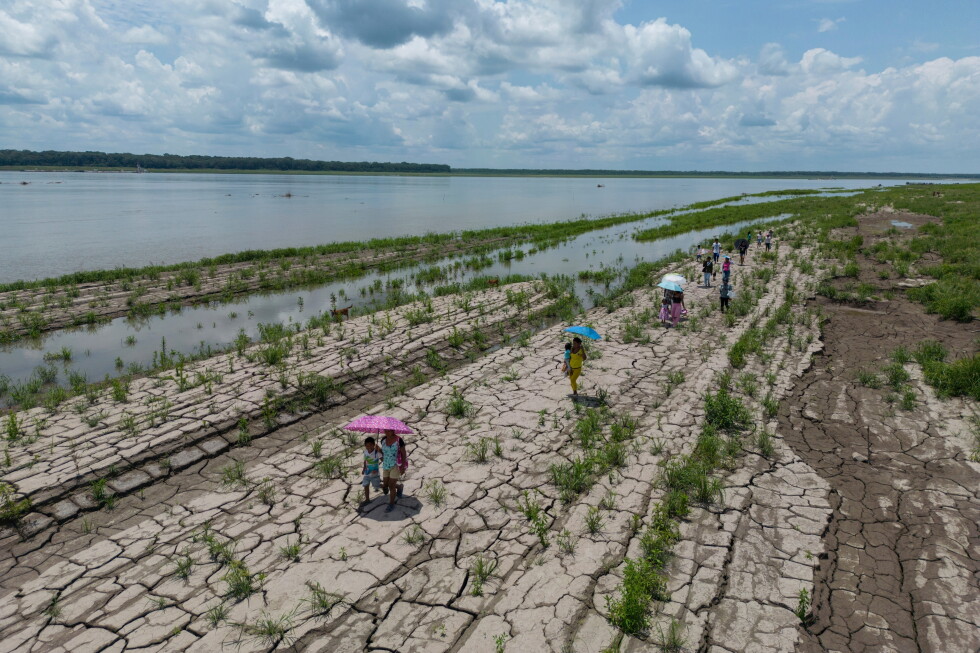
These unmet social needs, Rufino explained, drive many of the activities that fuel deforestation and environmental destruction: without viable economic alternatives, many local residents turn to coca cultivation, illegal mining, and other activities tied to criminal groups that destroy the forest. Stronger social investment, he said, would give residents viable alternatives to these destructive economies. The impacts of climate change and environmental destruction are already impossible to ignore in the region: recent years have seen severe droughts that dropped Amazon river levels to historic lows, killing thousands of fish and endangered pink river dolphins, while illegal mining has left widespread mercury contamination that has been detected in fish consumed by local communities, creating long-term health risks for residents.
As policymakers in Bogota debate energy policy, security strategy and economic growth, Amazon community leaders say the next Colombian administration must prioritize centering the voices of the people who have protected the forest for generations. For Rufino, that means recognizing the Amazon is not merely a reserve of natural resources to be extracted, but a living home to Indigenous and local communities that have been its most effective stewards for centuries. “The dialogue should focus on speaking from the Amazon and with the Amazon,” he said. “With the people. With young people. With women. With elders.”
The Associated Press’ climate and environmental coverage receives financial support from multiple private foundations. AP is solely responsible for all content.