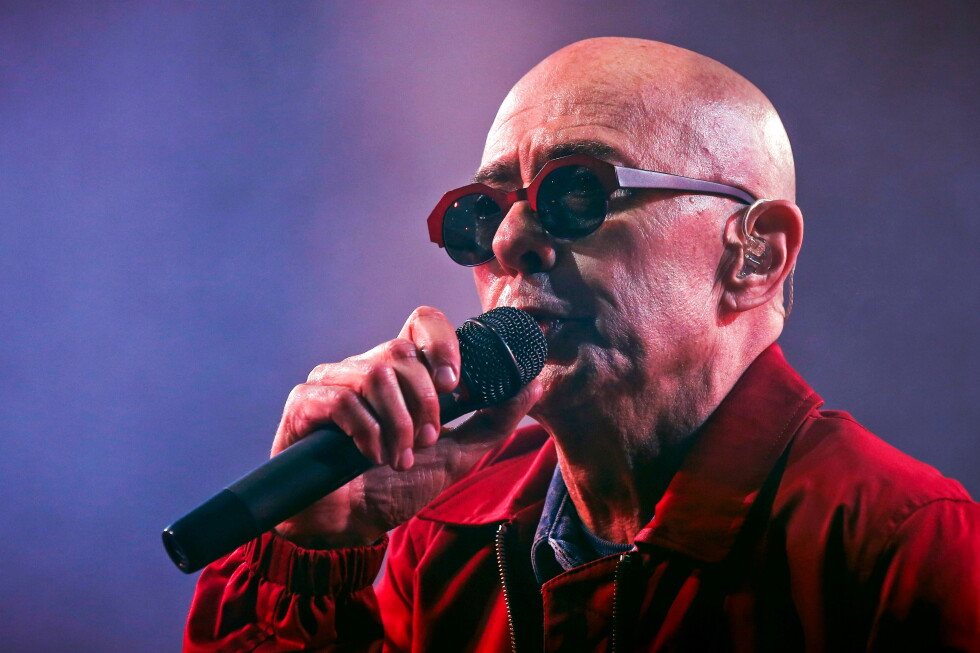
BUENOS AIRES, Argentina — Argentine music and counterculture icon Carlos Alberto Solari, the iconic singer-songwriter widely known by his stage nickname “El Indio” and frontman of the nation’s legendary rock group Patricio Rey y sus Redonditos de Ricota, passed away on Friday at the age of 77.
Local law enforcement officials confirmed that Solari, who had lived with a Parkinson’s disease diagnosis for more than 10 years, was found unresponsive near an indoor pool at his residential property in Ituzaingó, a small town located roughly 18 miles west of the Argentine capital. Authorities have not yet released an official cause of death.
Solari’s family shared confirmation of his passing via social media, announcing plans for a public funeral service to give fans across the country an opportunity to pay their final respects to the rock legend. Within minutes of news of his death breaking, hundreds of admirers began gathering outside his home, many bringing flowers to lay at the gate and wearing vintage band T-shirts emblazoned with Solari’s famous nickname. In a public statement shared after his death, the family wrote, “We will mourn as we deserve, listen to his songs, and above all, look out for one another, just as he taught us to do.”
As the lead vocalist and creative driving force behind Patricio Rey y sus Redonditos de Ricota — better known to generations of fans simply as “Los Redondos” — Solari grew into one of Argentina’s most defining countercultural icons. For young Argentines coming of age during the country’s fragile transition from a violent military dictatorship to a new democratic system in the 1980s — an era marked by unprecedented new freedoms alongside crippling economic instability and hyperinflation — Solari’s music became a soundtrack for a generation of disaffected young people.
During the 1990s, when Argentina’s government under then-President Carlos Saul Menem pushed sweeping free-market policies that sparked a wave of unregulated consumerism across the country, Solari’s gritty classic rock anthems, upbeat danceable tracks and layered, cryptic lyrics gave voice to widespread frustration with capitalist excess and growing foreign cultural and economic influence. Over the band’s active years, Los Redondos released 10 full-length studio albums, and the group famously rejected deals with major record labels throughout their career to protect full creative independence over their work.
After the band split in 2001, Solari launched a successful solo career that spanned two decades. He released five additional studio albums under his own name, blending his signature classic rock sound with new electronic influences, and continued to draw crowds of hundreds of thousands of fans to massive stadium and park shows across Argentina.
In 2016, during a headline performance at a massive sold-out concert, Solari publicly revealed his Parkinson’s diagnosis to fans. “Mr. Parkinson is nipping at my heels. But here I am,” he told the crowd, which erupted in a long standing ovation in support of the singer. He eventually retired from touring not long after, and spoke openly in subsequent interviews about the severe, debilitating impacts of his degenerative condition.
In the days following the news of his death, tributes have poured in from across Argentina’s political, cultural, and sports sectors. The Argentine Soccer Association noted in a statement that Solari’s music “became a popular rallying cry” that “echoed in the stands” of stadiums across the soccer-mad nation. The Grandmothers of Plaza de Mayo, the prominent human rights group that works to locate relatives killed or disappeared during the 1976-1983 military dictatorship, said Solari “inspired society as a whole to doubt, to question and to think critically.” Even former Argentine President Cristina Fernández de Kirchner, who is currently serving a corruption conviction under house arrest, shared one of Solari’s most famous lyrics on social media — a verse popularized as a call for courageous living that reads “Just living costs you your life.”
Solari is survived by his wife, Virginia Mones Ruiz, and their 25-year-old son, Bruno.