标签: South America

南美洲

  • Rubio testifies in former congressman’s Venezuela lobbying trial

    Rubio testifies in former congressman’s Venezuela lobbying trial

    In an extraordinary courtroom appearance, U.S. Secretary of State Marco Rubio provided testimony Tuesday regarding his dealings with former Florida Congressman David Rivera, who faces serious charges of clandestine lobbying for Venezuela’s government. The federal trial, unfolding under tight security in Miami, centers on allegations that Rivera and an associate orchestrated a $50 million influence operation for Nicolás Maduro’s administration without proper registration as foreign agents.

    Rubio recounted his longstanding personal relationship with Rivera, detailing how the two politicians developed close ties during their overlapping service in Florida’s legislature and later in Washington. The Secretary described a pivotal July 2017 meeting where Rivera presented an unconventional proposal involving Venezuelan media magnate Raul Gorrin to facilitate Maduro’s departure from power.

    Despite expressing skepticism about the plan’s viability, Rubio acknowledged he pursued the opportunity on the remote chance it might yield diplomatic progress. Drawing on terminology supplied by Rivera, the then-senator delivered a carefully worded Senate address signaling Washington’s willingness to avoid retaliation against Venezuelan officials who might oppose Maduro.

    Prosecutors allege the defendants established elaborate communication protocols, including a coded chat group using Spanish-language cryptonyms such as ‘Little Cuban’ for Rubio and ‘The Lady in Red’ for Venezuela’s current acting president Delcy Rodríguez. The government contends the operation aimed to normalize U.S.-Venezuela relations during the Trump administration—an objective that has gained renewed relevance following recent political shifts in Caracas.

    Rivera’s defense team maintains their client’s consulting work focused exclusively on commercial matters involving Venezuela’s state oil company and was legally exempt from foreign agent registration requirements. They sharply distinguish this work from what they characterize as Rivera’s separate efforts to support Venezuelan opposition groups.

  • Search for four missing soldiers after Colombia plane crash kills 66

    Search for four missing soldiers after Colombia plane crash kills 66

    A catastrophic military aviation disaster has struck Colombia, resulting in a devastating loss of life and triggering a national conversation about military modernization. A Hercules C-130 transport aircraft crashed shortly after takeoff from Puerto Leguízamo in the southern Putumayo province, near the border with Peru, claiming the lives of 66 members of the Colombian security forces.

    The aircraft, carrying a total of 128 personnel, was en route to Puerto Asís when it plummeted from the sky. Immediate response came from local residents who rushed to the fiery wreckage, heroically extracting dozens of injured survivors and transporting them to medical facilities on motorbikes—a testament to community resilience in the remote region.

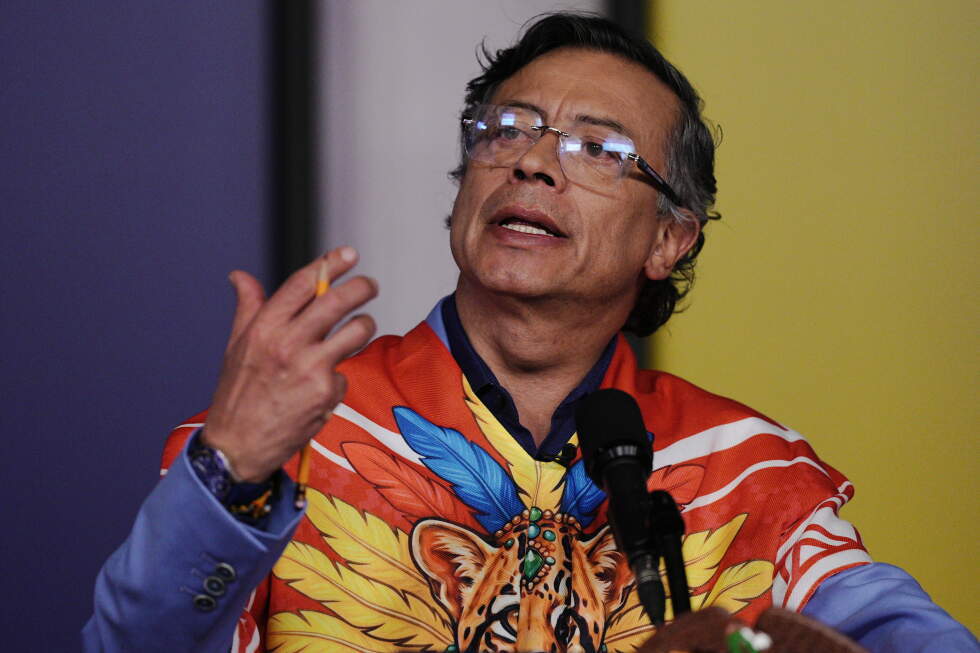
    Colombian President Gustavo Petro ignited a political firestorm by implicitly attributing the tragedy to outdated military equipment. Through social media channels, the president condemned what he termed “bureaucratic problems” obstructing his administration’s efforts to modernize the nation’s armed forces. In a sharply worded statement, Petro referenced the aircraft as “this piece of scrap metal” purchased in 2020 and demanded accountability, vowing to eliminate further delays that jeopardize military personnel safety.

    Disturbing mobile footage circulating online captures the aircraft’s rapid descent followed by explosive eruptions at the crash site. Defense officials confirmed the detonations resulted from ammunition aboard the transport plane igniting in the subsequent fire. Authorities have preliminary ruled out attacks by armed groups active in the region, instead focusing on mechanical or human factors as the likely cause.

    The human toll reflects profound institutional loss: 58 army personnel, six air force members, and two police officers perished in the accident, according to Commander General Hugo Alejandro López’s latest assessment. Rescue operations continue for four individuals still missing.

    This tragedy marks the second catastrophic incident involving a Hercules C-130 within months. On February 27, a Bolivian military counterpart crashed while transporting banknotes, killing 24 people when it overshot a runway and collided with highway traffic near El Alto airport.

    An official investigation is underway to determine the precise causation factors behind Colombia’s deadliest military aviation disaster in recent history.

  • Cuba’s mothers-to-be prepare to give birth in a country plunged into darkness

    Cuba’s mothers-to-be prepare to give birth in a country plunged into darkness

    In the darkened wards of Havana’s Ramón González Coro maternity hospital, a profound humanitarian crisis unfolds as pregnant women confront the compounding challenges of nationwide blackouts and a crippling economic blockade. The Trump administration’s near-total fuel embargo, imposed three months ago following the removal of Venezuelan leader Nicolás Maduro, has plunged Cuba into an energy catastrophe with dire consequences for maternal healthcare.

    Among the 32,800 pregnant women currently documented in Cuba, 26-year-old Mauren Echevarría Peña represents a fortunate minority receiving adequate medical attention. Despite battling gestational diabetes and chronic hypertension under constant supervision, she faces imminent delivery amid unpredictable power failures. ‘They’ve done everything possible for me at the hospital,’ Mauren acknowledges, expressing gratitude for medical staff working tirelessly without reliable electricity. Yet she openly fears giving birth during another blackout, despite hospital generators that struggle without sufficient fuel.

    In stark contrast, seven-months-pregnant Indira Martínez embodies the reality for most Cuban expectant mothers. In her Havana suburb home, empty refrigerators and non-functional electric stoves force dependence on a makeshift charcoal grill. ‘You must cook whatever is available when power briefly returns,’ explains the former IT technician turned hairstylist, noting her nutritional intake fails to meet pregnancy requirements. Having survived chikungunya virus during her first trimester, Indira now confronts deeper anxieties about her daughter’s future. ‘How am I going to tell her she has no prospects in life? Because she won’t have any,’ she states with devastating clarity, citing deteriorated education systems and nonexistent economic opportunities.

    International solidarity movements have delivered humanitarian aid including powdered milk for pregnant mothers, but many recipients report never receiving these supplies. The situation exacerbates Cuba’s demographic crisis characterized by an ageing population, low birth rates, and significant outward migration. Even before the fuel blockade, young Cubans increasingly hesitated to start families on the island. Now, as blackouts persist and economic prospects dim, babies like Mauren’s son and Indira’s daughter Ainoa enter the world during arguably the most challenging period in modern Cuban history.

  • Colombian Air Force plane crashes with scores of soldiers on board

    Colombian Air Force plane crashes with scores of soldiers on board

    A Colombian Air Force Hercules transport aircraft crashed shortly after takeoff from Puerto Leguízamo in Putumayo province, triggering a massive emergency response near the country’s southern border with Peru. The military aircraft, designed for troop transportation, went down in a rural area while carrying an estimated 80-100 soldiers from Colombia’s security forces.

    Defense Minister Pedro Sánchez confirmed the tragic accident occurred during takeoff procedures, describing the incident as profoundly devastating for the nation. While exact casualty figures remain unconfirmed, emergency teams have successfully extracted 57 survivors from the wreckage site according to military sources cited by Reuters.

    Local media footage captured dramatic scenes of smoke billowing from the crash location as military vehicles converged on the area. Civilians joined rescue efforts, using motorcycles to transport injured personnel to medical facilities in a race against time.

    President Gustavo Petro expressed his hopes for minimal fatalities in what he termed a ‘horrendous accident that should not have occurred.’ In a comprehensive social media statement, the president pointed to systemic bureaucratic obstacles that have delayed his administration’s plans to modernize military equipment and aircraft. ‘I will allow no further delays,’ Petro declared, ‘the lives of our young people are at stake,’ though he stopped short of identifying specific causes for the crash.

    The incident represents one of Colombia’s most significant military aviation disasters in recent years, occurring in a remote jungle region that complicates rescue and investigation efforts. Aviation safety experts and military investigators are expected to examine multiple factors including mechanical conditions, operational procedures, and environmental circumstances surrounding the tragic event.

  • Military plane crashes in southwestern Colombia, defense minister says

    Military plane crashes in southwestern Colombia, defense minister says

    A Colombian Air Force Hercules C-130 transport aircraft crashed moments after departure from Puerto Leguizamo in the southwestern Putumayo province on Monday, resulting in an unspecified number of casualties according to defense officials. The remote Amazonian region, which borders both Peru and Ecuador, became the site of what Defense Minister Pedro Sánchez described as a “profoundly painful tragic accident” for the nation.

    Visual evidence from local media outlets depicted a dense plume of black smoke ascending from the crash site in an open field, with military personnel rapidly mobilizing toward the scene in trucks. Minister Sánchez, communicating via social media platform X, confirmed the deployment of emergency response teams to the location while noting that the precise cause of the mishap remains under investigation.

    The defense official declined to specify the exact number of personnel aboard the military transport aircraft at the time of the incident. The Hercules C-130 model involved in the crash typically accommodates configurations carrying up to 120 individuals, though operational loads vary significantly based on mission parameters.

    Colombian President Gustavo Petro responded to the tragedy by expressing hope that there would be no fatal casualties in what he characterized as an accident that “should have not occurred.” The president subsequently leveraged the incident to amplify his ongoing campaign to modernize Colombia’s military equipment, citing persistent “bureaucratic difficulties” that have hampered modernization efforts. Petro further suggested potential accountability measures, stating that civilian or military administrative officials failing to meet operational challenges should be removed from their positions.

    The crash represents one of the most significant military aviation incidents in recent Colombian history, occurring in a strategically important border region known for its challenging operational environment and limited infrastructure.

  • 50 years after Argentina’s bloody coup, families still search for and bury the disappeared

    50 years after Argentina’s bloody coup, families still search for and bury the disappeared

    In a solemn ceremony in Argentina’s Tucumán province, relatives of Eduardo Ramos and Alicia Cerrotta finally laid their remains to rest, closing a half-century search for truth. The couple—a 21-year-old journalist-poet and 27-year-old psychologist—were among the thousands forcibly disappeared during the nation’s brutal military dictatorship that began with the 1976 coup.

    The military junta led by Jorge Rafael Videla systematically eliminated perceived dissidents through abduction, torture, and clandestine executions. Victims were frequently disposed of via ‘death flights’ (dumping sedated prisoners into rivers) or in mass graves like the Pozo de Vargas—a 40-meter-deep well where Eduardo and Alicia’s remains were eventually discovered among 149 other victims.

    Their identification in 2011 launched a painstaking forensic process by the Argentine Forensic Anthropology Team, which has identified 121 sets of remains from the site through bone fragment analysis. The Ramos family waited additional years for more complete skeletal reconstruction before burial.

    This search for justice has faced persistent obstacles: military denial, societal silence, and recently, budget cuts to human rights programs under President Javier Milei’s austerity measures. His administration downgraded the Human Rights Secretariat and dismissed archival research teams, further complicating efforts to locate the estimated 30,000 disappeared.

    As families continue seeking closure, the mausoleum in Tafi Viejo cemetery stands partially empty—a physical testament to Argentina’s unfinished reckoning with state terrorism and the enduring quest for truth.

  • Rubio to testify in trial of former roommate accused of secretly lobbying for Venezuela

    Rubio to testify in trial of former roommate accused of secretly lobbying for Venezuela

    MIAMI — The federal trial of ex-Congressman David Rivera commenced Monday, centering on allegations he covertly lobbied for Venezuela’s socialist government during the Trump administration. Prosecutors assert Rivera leveraged his Republican connections to influence U.S. policy toward Venezuela while secretly receiving millions from Caracas.

    The case offers unprecedented insight into how Miami’s political landscape shapes U.S.-Latin American relations. Secretary of State Marco Rubio, scheduled to testify Tuesday, represents a central figure in the proceedings due to his longstanding friendship with Rivera, including their time as roommates in Florida.

    According to court documents, Rivera allegedly secured a $50 million lobbying contract through Venezuela’s state oil company PDVSA, facilitated by then-Foreign Minister Delcy Rodríguez. Prosecutors claim he employed an elaborate scheme involving encrypted chats with code names—referring to President Nicolás Maduro as ‘bus driver’ and millions of dollars as ‘melons’—to conceal his activities.

    The indictment charges Rivera with money laundering and operating as an unregistered foreign agent. His defense maintains his consulting work focused on Venezuela’s U.S. energy interests and was separate from diplomatic efforts. However, civil plaintiffs allege the contract primarily served as cover for illegal lobbying, with funds diverted to maintain a luxury yacht belonging to Venezuelan media tycoon Raúl Gorrín.

    The trial highlights unusual diplomatic backchannels, including Rivera’s attempts to arrange meetings between Venezuelan officials and Exxon Mobil through Texas Republican Pete Sessions. Despite failed normalization efforts in 2017, the case emerges as current U.S.-Venezuela relations show tentative signs of improvement under different circumstances.

  • Chileans mark World Water Day by protesting President Kast’s rollback of environmental rules

    Chileans mark World Water Day by protesting President Kast’s rollback of environmental rules

    SANTIAGO, Chile — Massive demonstrations erupted across Chile on Sunday as thousands of citizens mobilized to observe World Water Day, responding to President José Antonio Kast’s controversial decision to revoke dozens of environmental protection measures established by his predecessor. The arch-conservative leader, who assumed office earlier this month, has triggered widespread environmental concerns with his administration’s rollback of 43 conservation decrees originally implemented under left-wing former President Gabriel Boric.

    The nationwide protests, organized under the evocative banner “Don’t ‘Kast-igate’ Nature,” saw participation surge beyond expectations across 15 Chilean cities. Environmental coalitions, including the Movement for the Defense and Access to Water, Land and the Environment, coordinated the demonstrations highlighting what they characterize as an unprecedented assault on environmental protections.

    Cristóbal Rodríguez, national spokesperson for the organizing movement, revealed that approximately 1.4 million Chileans currently lack access to potable water—a crisis exacerbated by the new administration’s policies. Rodríguez condemned Kast’s approach as “an environmental chainsaw operation” that favors corporate interests over ecological preservation.

    The rescinded regulations encompassed vital protections for endangered species including Darwin’s frog and Humboldt penguins, established national park boundaries, implemented decontamination strategies for Lake Villarrica, and enforced emissions controls on thermoelectric plants. These comprehensive measures represented years of environmental policy development.

    President Kast defended his decisions to journalists, stating, “We want to generate the best possible public policy around full employment, always respecting the environment.” His administration maintains that economic deregulation and technical criteria should supersede what he terms “environmental ideologies.”

    Kast’s political ascendancy marks Chile’s most significant rightward shift since the nation restored democracy in 1990 following Augusto Pinochet’s 17-year military dictatorship—a regime the president openly supported during his youth. Environmental advocates warn that this ideological heritage now threatens Chile’s natural heritage, commodifying nature at unprecedented levels.

  • BBC in Cuba as island plunged into darkness

    BBC in Cuba as island plunged into darkness

    Cuba is confronting a severe nationwide energy crisis following the complete collapse of its national electrical grid. The catastrophic failure has left more than 10 million residents across the island nation grappling with extensive power outages, creating one of the most significant blackouts in recent history.

    The grid’s breakdown has plunged major cities and rural communities into darkness, severely disrupting daily life, business operations, and essential services. This incident represents the latest and most severe manifestation of Cuba’s ongoing struggle with its aging energy infrastructure, which has suffered from chronic underinvestment and maintenance challenges exacerbated by economic constraints.

    International observers, including BBC News correspondents on the ground, are documenting the widespread impact of the power failure as authorities work to implement emergency response measures. The blackout highlights the vulnerability of Cuba’s energy systems at a time when the nation is already facing considerable economic pressures and resource limitations.

    The recurrence of such massive power failures signals systemic issues within Cuba’s energy sector that extend beyond temporary technical malfunctions. The current crisis underscores the urgent need for substantial infrastructure modernization to prevent similar collapses in the future, as citizens continue to endure the practical challenges and safety concerns associated with prolonged electricity shortages.

  • National blackout hits Cuba for second time in a week

    National blackout hits Cuba for second time in a week

    Cuba is grappling with a severe nationwide power outage that has left over 10 million residents and businesses without electricity, marking the second total collapse of the national grid within a single week. The Caribbean nation’s energy ministry confirmed a “total disconnection of the National Electrical System” through an official social media statement, adding that restoration protocols had been immediately initiated.

    The state grid operator UNE has begun gradual power restoration, prioritizing essential facilities including hospitals and water distribution systems. This crisis represents the third major blackout this month, exacerbating existing challenges caused by an aging electrical infrastructure and chronic fuel shortages. The current energy emergency is directly linked to a U.S. fuel blockade that has severely restricted Cuba’s access to foreign oil imports necessary for power generation.

    In response to the deteriorating conditions, rare public demonstrations have emerged across the island. Residents of central Havana engaged in pot-banging protests on Monday, while in the town of Morón, protesters attacked and set fire to the local Communist Party headquarters. Such unauthorized gatherings carry significant legal risks in Cuba, where dissent is typically met with severe penalties.

    International socialist organizations have mobilized support efforts, with the “Nuestra America” aid convoy departing from Mexico carrying solar panels, basic food supplies, and medical provisions. Rough sea conditions temporarily delayed the flotilla’s arrival in Havana, though it was expected to reach port Monday.

    The crisis has intensified geopolitical tensions between Havana and Washington. Former U.S. President Donald Trump has repeatedly suggested potential intervention in Cuban affairs, including remarks about a “friendly takeover” of the island nation. Trump has reportedly conditioned the lifting of the fuel embargo on the removal of Cuban President Miguel Díaz-Canel, a key regional ally of Venezuela.

    President Díaz-Canel has responded by announcing a “preparation plan to raise our people’s readiness for defense” against potential U.S. military aggression. Despite these tensions, both governments have engaged in preliminary bilateral discussions aimed at resolving the crisis, though progress remains unclear. Cuban officials have firmly stated that their political system and leadership are “not subject to negotiation with the United States.”