标签: South America

南美洲

  • Judge told Maduro ‘plundered’ Venezuelan wealth in court battle over legal fees

    Judge told Maduro ‘plundered’ Venezuelan wealth in court battle over legal fees

    In a significant courtroom development, a US federal judge demonstrated considerable sympathy toward arguments presented by former Venezuelan leader Nicolás Maduro and his wife Cilia Flores regarding their right to utilize Venezuelan government funds for legal defense. The hearing, held Thursday before 92-year-old Judge Alvin Hellerstein, centered on whether US sanctions should prevent the accused couple from accessing state resources for their legal representation.

    Defense attorneys petitioned for dismissal of the narco-terrorism case entirely, asserting that the US government’s denial of fund access through sanctions violations constituted a fundamental breach of their clients’ rights. Prosecutors countered that Maduro had systematically ‘plundered’ Venezuela’s national wealth and should not be permitted to employ those same resources for his defense, citing national security and foreign policy concerns.

    Judge Hellerstein, while acknowledging the paramount importance of the right to defense, declined to dismiss the overall case based solely on the funding dispute. He did, however, indicate he would issue a subsequent ruling on the financial access question, recognizing the constitutional dimensions of the argument.

    The legal proceedings represent the second court appearance for Maduro and Flores since their dramatic capture by US forces during a nighttime raid on their Caracas compound on January 3. The couple faces extensive charges including narco-terrorism conspiracy, cocaine importation conspiracy, and weapons violations detailed in a comprehensive 25-page indictment dating back to 1999.

    The funding controversy stems from the Office of Foreign Assets Control initially granting then revoking a special license that would have permitted Venezuelan government payments for the defense team. Prosecutors maintain the defendants possess sufficient personal resources to retain private attorneys, while the defense argues sanctions have effectively frozen all accessible assets.

    Meanwhile, Venezuela has undergone significant political transformation since Maduro’s arrest, with former Vice President Delcy Rodríguez assuming power and the country reportedly resuming diplomatic relations with the United States. Outside the courthouse, pro- and anti-Maduro protesters clashed briefly, reflecting the deep divisions within Venezuelan society.

    The case continues without a set trial date as Maduro and Flores remain detained at Brooklyn’s Metropolitan Detention Center without having applied for bail.

  • In one of country’s poorest states, Venezuelans hope for post-Maduro boom

    In one of country’s poorest states, Venezuelans hope for post-Maduro boom

    In the sweltering heat of Guaca, a Venezuelan fishing town, residents cluster around rusted propane canisters—the first gas delivery since December. This scene encapsulates the daily struggles in Sucre, one of Venezuela’s most impoverished states, where basic necessities like cooking fuel, running water, and gasoline remain scarce despite the country’s vast oil reserves.

    The recent arrest of Nicolás Maduro in January and subsequent restoration of U.S. relations with interim leader Delcy Rodríguez has sparked discussions of foreign investment in Caracas. However, in remote Sucre—hundreds of kilometers from the capital—these developments feel distant. For ordinary Venezuelans, the pressing question is whether promised American oil investments will translate into tangible improvements in their lives.

    In Cumaná, Sucre’s capital, residents have endured two weeks without running water. While state officials blame a pipeline damaged in last month’s earthquake, locals maintain that water shortages have persisted for years due to chronic underinvestment. Some resort to collecting water from polluted streams, highlighting the infrastructure collapse.

    The fishing industry—Sucre’s economic backbone—exemplifies the economic devastation. Fisherman Pablo Marín explains the cruel economics: “In Ecuador, catching 100kg of fish earns $500 enough to cover fuel with money left over. Here, you must catch another 100kg just to break even.” Hyperinflation has rendered the bolivar nearly worthless, forcing businesses to dollarize while wages remain in local currency.

    Yurmari Martínez, a local fisherwoman, recalls Sucre being “a place with potential” two decades ago when processing plants and diverse industries thrived. Today, fuel shortages, nationalizations, and decaying infrastructure have hollowed out the economy. This degradation has even eroded educational aspirations—Martínez’s 23-year-old son abandoned university, convinced that “no qualification can lead anywhere” in contemporary Venezuela.

    Amidst this despair, Shell’s recently approved “Dragon” natural gas project—located between Venezuela and Trinidad and Tobago—represents a glimmer of hope. U.S. Secretary of the Interior Doug Burgum’s visit earlier this month culminated in signed development agreements. While the gas will be processed in Trinidad for export, Shell claims Venezuelans will benefit.

    However, experts urge tempered expectations. Christopher Sabatini of Chatham House warns that such projects typically create limited local jobs and short-term cash injections without generating broader development. “Companies come in, extract the resources, oftentimes with foreign equipment and engineers, then ship it,” he notes, emphasizing that lasting benefits require effective government revenue reinvestment.

    The U.S. now oversees much of Venezuela’s oil revenue—an “unprecedented” situation according to Sabatini—raising questions about fund allocation. Even with proper management, Sabatini stresses that rebuilding infrastructure, electricity, and housing “can’t be turned around simply in months.”

    Omar Zambrano, chief economist at Anova Policy Research, cites 1990s evidence showing oil investment reduced poverty and improved education when the industry welcomed private companies. But after “25 years of degradation of the country’s institutional, productive, and social fabric” under Hugo Chávez and Maduro, conditions for successful implementation are far less favorable.

    This degradation manifests starkly in Güiria, three hours east of Guaca along potholed roads with no mobile service. Here, the U.S.’s aggressive anti-narcotics campaign—which claims to target “narco-terrorists”—has left dozens dead in boat strikes. Locals insist many victims were not cartel members but poverty-driven individuals seeking survival.

    Diannys, a mother of five whose husband died in an October strike, acknowledges the moral complexity: “People take the wrong path out of necessity… risking their lives to give their family a better future.” An anonymous resident who lost his brother echoes this sentiment, revealing his brother—a fisherman and farmer—was recruited by traffickers offering $10,000 for a sea journey. “I earn $10 weekly, enough for three meals,” he explains, contextualizing the temptation.

    As Venezuela navigates its political transition two months after Maduro’s ousting, Sucre’s residents remain cautiously skeptical. While foreign investment promises economic revival, years of broken promises and institutional decay have forged resilient pragmatism. The path forward requires not just extracting resources but rebuilding the very fabric of Venezuelan society—a task far more complex than signing oil deals.

  • Nicolás Maduro’s lawyer argues against US blocking funding for drug trafficking case defense

    Nicolás Maduro’s lawyer argues against US blocking funding for drug trafficking case defense

    In a significant courtroom confrontation, former Venezuelan President Nicolás Maduro and his wife Cilia Flores appeared before a New York federal court Thursday, challenging the fundamental premise of their drug trafficking indictments through an unusual geopolitical argument regarding legal financing.

    The hearing centered on whether Maduro should be permitted to utilize Venezuelan government funds for his defense—a request prosecutors vehemently opposed on national security grounds. Defense attorney Barry Pollack presented a novel constitutional argument, asserting that blocking access to government funds violated Maduro’s rights while simultaneously creating an unnecessary burden on public defense resources.

    “This represents an unprecedented judicial scenario,” stated Prosecutor Kyle Wirshba, framing the matter as critical to maintaining U.S. sanctions authority for national security objectives. The prosecution maintains that while personal funds remain accessible, Venezuelan state assets under sanctioned control cannot finance the defense.

    The couple, appearing in jail uniforms with translation headphones, face extensive charges including narco-terrorism, kidnapping, and murder conspiracies allegedly connected to their purported drug trafficking operations. Potential sentences could extend to life imprisonment if convictions are secured.

    Outside the courthouse, polarized demonstrations reflected the case’s geopolitical dimensions. Pro-Maduro activists demanded his release citing sovereignty violations, while opposition protesters celebrated his prosecution. Meanwhile in Caracas, hundreds gathered in solidarity with the former leader.

    The funding dispute reveals complex diplomatic undercurrents. Despite recent normalization of US-Venezuela relations and eased oil sanctions, the Treasury Department’s Office of Foreign Assets Control reversed its initial approval for legal fee payments within hours in January, creating the current impasse.

    Judge Alvin Hellerstein has not yet established a trial timeline, though proceedings may advance following these preliminary hearings. The case continues to unfold amid Venezuela’s ongoing political transformation under acting President Delcy Rodríguez, who has systematically replaced Maduro loyalists while maintaining the socialist government’s basic structure.

  • Strike on alleged drug boat kills 4 in the Caribbean Sea, US military says

    Strike on alleged drug boat kills 4 in the Caribbean Sea, US military says

    The U.S. military has confirmed conducting a lethal strike operation in the Caribbean Sea on Wednesday, resulting in four fatalities aboard a vessel suspected of narcotics smuggling. This action represents the latest escalation in the Trump administration’s intensified campaign against alleged drug trafficking networks throughout Latin America.

    According to U.S. Southern Command, the targeted vessel was operating along established smuggling corridors. The military released aerial footage depicting a moving boat suddenly consumed by a massive explosion. Notably, officials did not immediately present physical evidence confirming the presence of illicit drugs aboard the struck vessel.

    This incident raises the documented death toll from such maritime operations to at least 163 individuals since September, when the administration initiated its aggressive targeting of what it characterizes as ‘narcoterrorist’ elements. President Trump has publicly framed these operations as part of an ‘armed conflict’ against cartels, justifying the measures as necessary to combat drug influx and prevent American overdose deaths.

    The campaign continues unabated despite shifting military priorities toward Middle Eastern tensions with Iran. Concurrently, criticism mounts regarding both the legal foundations and practical efficacy of these strikes. Experts note that fentanyl—the primary driver of overdose fatalities—predominantly enters the United States through land routes from Mexico, not maritime channels, raising questions about the strategic focus of these operations.

  • Colombia investigates military plane crash that killed 69 as doctors identify victims

    Colombia investigates military plane crash that killed 69 as doctors identify victims

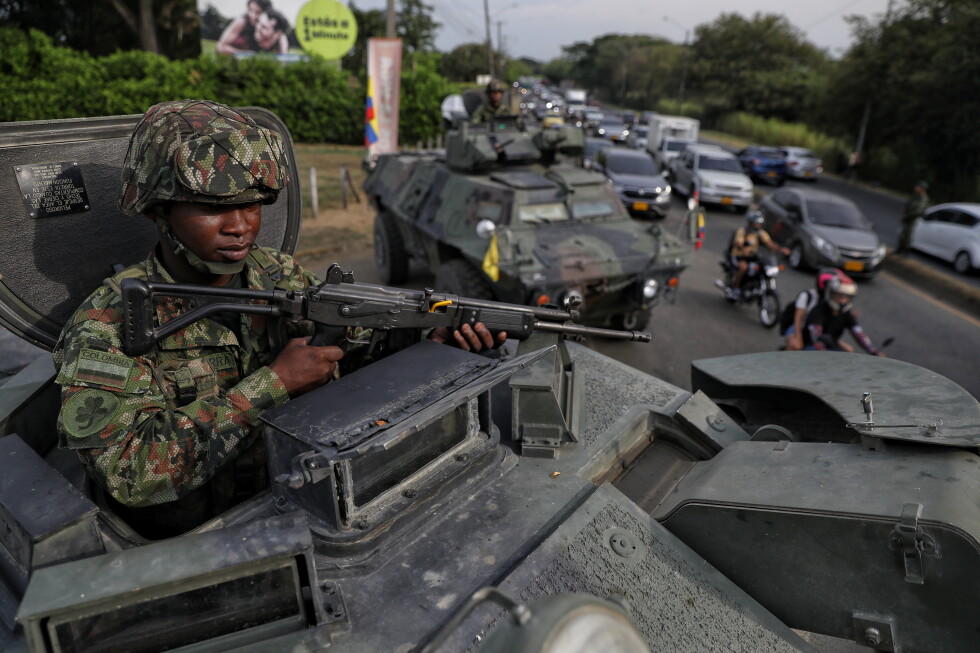
    Colombian forensic teams are undertaking the painstaking process of identifying the remains of 69 security force members killed in a devastating military aircraft crash in the country’s southwestern region. The Hercules C-130 transport plane, donated by the United States in 2020, crashed just moments after takeoff from Puerto Leguízamo Airport at approximately 9:40 a.m. local time on Monday.

    The aircraft, with tail number FAC 1016, went down approximately 1.8 kilometers (1.1 miles) from the runway, erupting in flames and sending black smoke billowing into the sky. Local civilians were first to respond to the disaster, with some using motorcycles to transport injured personnel to medical facilities before emergency services arrived.

    Among the grieving families is Alfridis Julio, who anxiously awaits confirmation about his 19-year-old son, Kaleth Julio Severiche, who was traveling home on leave when the tragedy occurred. ‘My head is spinning. I don’t know what to do but wait,’ Julio expressed to reporters outside the forensic institute in Bogotá, where all victims’ bodies have been transported for formal identification.

    The Colombian Defense Ministry has confirmed the fatalities include 67 armed forces members and two national police officers, resolving earlier conflicting reports about the death toll. The aircraft had undergone comprehensive maintenance in 2023, including engine inspections and component replacements, according to military records.

    The Colombian Air Force has launched a full investigation into the catastrophe, with aviation experts expected to analyze data from the aircraft’s two onboard recorders containing critical flight information and cockpit voice recordings. No timeline has been established for the investigation’s conclusion.

  • Venezuela’s Delcy Rodríguez pitches newly opened oil sector to investors at Miami summit

    Venezuela’s Delcy Rodríguez pitches newly opened oil sector to investors at Miami summit

    Venezuela’s acting President Delcy Rodríguez presented a compelling case for foreign investment in the nation’s oil sector during a Saudi-sponsored investment conference in Miami on Wednesday. Addressing international stakeholders remotely from Caracas, Rodríguez outlined transformative changes to Venezuela’s energy policies designed to attract private capital following the dramatic political shift that saw former leader Nicolás Maduro extradited to the United States.

    Rodríguez projected an optimistic economic forecast, anticipating double-digit growth through 2026, while emphasizing newly established legal protections for international investors. “We are implementing crucial reforms to create a productive environment that will diversify Venezuela’s economic engines,” she stated in her Spanish-language presentation.

    The acting president detailed specific incentives, including negotiable royalty reductions, income tax benefits, and enhanced profit-sharing arrangements. She highlighted that 64% of oil production costs now present negotiable terms for potential partners, creating substantial profit opportunities for major investors.

    Venezuela’s outreach marks a significant departure from previous policies under Maduro, whose administration faced crippling U.S. sanctions that limited oil production to approximately 400,000 barrels daily in 2020—a drastic decline from the 3.5 million barrels produced in 1999. The 2019 sanctions against state-owned PDVSA forced Venezuela to sell its oil at approximately 40% below market value, primarily to Chinese buyers while accepting alternative payment methods including Russian rubles and cryptocurrency.

    The current production stands near one million barrels daily, with Rodríguez emphasizing Venezuela’s competitive low extraction costs and new regulatory framework. Sweeping reforms enacted since January include ending PDVSA’s monopoly, permitting private control over production and sales, and implementing independent arbitration mechanisms for dispute resolution—addressing longstanding concerns about judicial impartiality in Venezuela.

    These changes have already prompted policy adjustments from the U.S. Treasury Department, which recently authorized PDVSA to directly sell Venezuelan oil to American companies and global markets, signaling a potential normalization of energy trade relations after years of restrictions.

  • Brazil’s Bolsonaro gets temporary house arrest for ill-health

    Brazil’s Bolsonaro gets temporary house arrest for ill-health

    Brazil’s Supreme Court Justice Alexandre de Moraes has authorized the transfer of imprisoned former President Jair Bolsonaro to house arrest for a 90-day period, citing deteriorating health conditions. The 71-year-old leader, currently serving a 27-year sentence for leading a conspiracy to maintain power, was hospitalized two weeks ago with pneumonia requiring intensive care treatment.

    Medical evaluations indicate Bolsonaro’s recurrent health complications originate primarily from a 2018 knife attack that continues to cause ongoing medical issues. His legal team successfully argued that humanitarian considerations warranted temporary relocation from his prison cell to home confinement under strict monitoring conditions.

    The court mandate requires Bolsonaro to wear an ankle monitor throughout the house arrest period and imposes severe communication restrictions. The former president is prohibited from using telephones or social media platforms, and visitation rights are limited exclusively to family members, legal representatives, and medical professionals during specified time windows.

    This decision reverses previous denials of similar requests and follows an incident in November when Bolsonaro attempted to remove his electronic monitor using a soldering iron—behavior he attributed to medication-induced paranoia. Justice Moraes, who originally presided over Bolsonaro’s conviction case, determined the former president posed a flight risk during earlier proceedings but now acknowledges the severity of his medical condition.

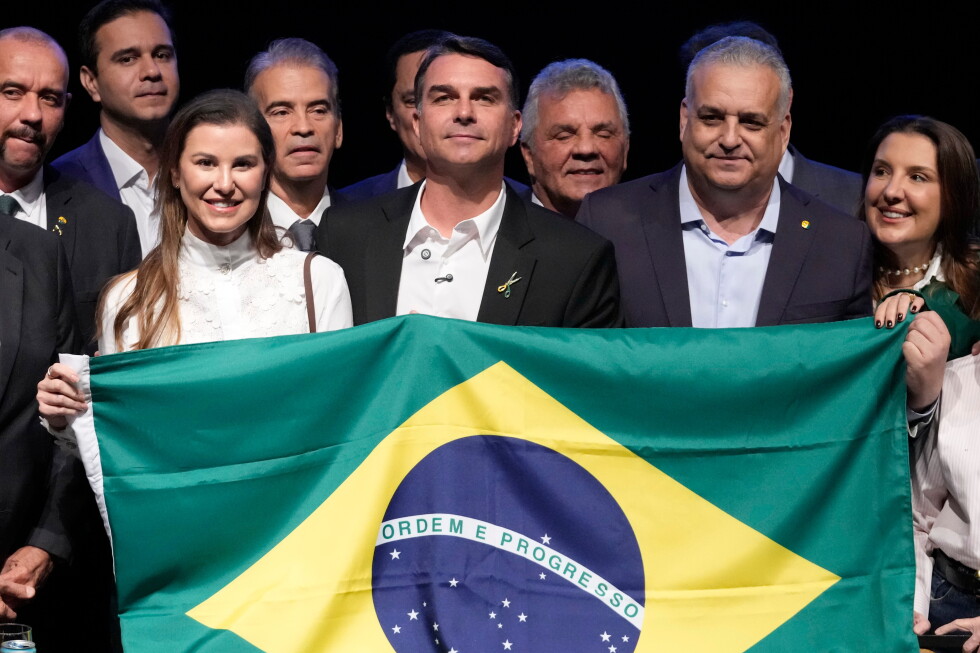
    The house arrest arrangement will be reevaluated upon completion of the 90-day period, with potential return to prison facilities if health improvements warrant such action. Meanwhile, Bolsonaro continues influencing Brazilian politics from confinement, endorsing his son Flávio Bolsonaro’s presidential campaign despite his own disqualification from public office. Recent polling indicates the younger Bolsonaro has gained significant traction, potentially challenging incumbent President Luiz Inácio Lula da Silva in a prospective runoff election.

  • Colombia issues arrest warrants for rebel group members for Miguel Uribe killing

    Colombia issues arrest warrants for rebel group members for Miguel Uribe killing

    Colombian authorities have formally issued arrest warrants for seven members of the Segunda Marquetalia rebel group in connection with the assassination of conservative presidential hopeful Miguel Uribe. Attorney General Luz Adriana Camargo revealed on Tuesday that the 2025 killing was orchestrated as a “structured criminal operation” involving an urban gang hired by the rebel faction.

    The investigation identifies Kendry Téllez, a former Revolutionary Armed Forces of Colombia (FARC) combatant now with Segunda Marquetalia, as the primary architect of the assassination plot. Notably, prosecutors have also charged Luciano Marín (commonly known as Iván Márquez), the former FARC commander who abandoned the 2016 peace agreement to establish Segunda Marquetalia in 2018, with coordinating the killing operation.

    The assassination occurred on June 7, 2025, during a campaign rally in Bogotá when a teenage assailant, allegedly recruited by a local criminal gang, shot Uribe multiple times in the head. Despite immediate medical attention, the presidential candidate succumbed to his injuries two months later.

    This development represents a significant setback for President Gustavo Petro’s administration, which had engaged in peace negotiations with Segunda Marquetalia until talks collapsed in late 2024 due to internal divisions within the rebel group. The attorney general’s office has announced a $1.3 million reward for information leading to Marín’s capture, with additional bounties offered for the other six suspects.

    The assassination marks the first killing of a presidential candidate in Colombia in thirty years, occurring amid ongoing violence between drug traffickers and rebel groups vying for control of territories vacated by FARC following the 2016 peace accord. With presidential elections scheduled for May, this case highlights the persistent security challenges facing the South American nation.

  • Thousands march in Argentina to mark 50 years since bloody coup

    Thousands march in Argentina to mark 50 years since bloody coup

    BUENOS AIRES, Argentina — Tens of thousands of Argentinians flooded the streets of Buenos Aires on Tuesday, commemorating the fiftieth anniversary of the 1976 military coup that established one of Latin America’s most brutal authoritarian regimes. The massive demonstration, organized under the banner “Memory, Truth and Justice,” brought together human rights organizations, labor unions, student associations, and various social movements in a powerful display of collective remembrance.

    Human rights documentation indicates approximately 30,000 individuals were forcibly disappeared during the dictatorship’s systematic campaign against perceived dissidents, left-wing guerrillas, labor activists, and students. Official government estimates, however, place the number closer to 8,000. Multiple investigations and truth commissions have attributed the overwhelming majority of state-sponsored violence during this period to security forces under military command.

    The commemorative events revealed a profound national divide in historical interpretation. President Javier Milei’s administration presented an alternative perspective, advocating for the inclusion of victims from guerrilla attacks in memorial activities. The ultraliberal leader shared a statement from Russian political activist Garry Kasparov characterizing communism as fundamentally contrary to human nature and dependent on totalitarian repression.

    In alignment with this stance, the presidency released a memorial video titled “Day of Remembrance for Justice and the Full Truth,” featuring testimonies from both a woman who was illegally adopted as an infant during the dictatorship and later recovered her identity, and the son of an Argentine colonel kidnapped by guerrilla forces.

    Among the demonstrating organizations was the Grandmothers of Plaza de Mayo, established in 1977 to locate an estimated 500 children born in captivity and illegally adopted by military families or associates. To date, approximately 140 of these individuals have been identified and reunited with their biological families.

    Since democracy’s restoration in 1983, the state has pursued judicial accountability for perpetrators but demonstrated limited commitment to locating victims’ remains. These efforts face additional challenges under the current administration, which has implemented austerity measures downgrading the Human Rights Secretariat to a sub-secretariat, reducing its budget, and terminating staff. Specialized teams analyzing archival materials were dismissed amid accusations of political bias and what the government termed persecution of former military personnel.

  • Colombian president questions use of secondhand planes by nation’s military following deadly crash

    Colombian president questions use of secondhand planes by nation’s military following deadly crash

    BOGOTA, Colombia — A tragic military aircraft crash that claimed the lives of at least 66 Colombian soldiers has ignited a fierce political confrontation over the condition of the nation’s armed forces equipment. The Hercules CJ-130 transport plane, donated by the United States in 2020, crashed moments after departing from Puerto Leguizamo Airport in Putumayo province, which features an exceptionally short runway of just 1.2 kilometers.

    Colombian President Gustavo Petro launched a vehement critique against the use of secondhand military equipment, specifically targeting the donated U.S. aircraft. Through his official X account, Petro characterized such donations as ‘crappy gifts’ that ultimately incur higher costs than purchasing new equipment. ‘An army cannot defend its own people with crappy gifts,’ the president stated. ‘They give away whatever is useless to them.’

    The incident has intensified Petro’s longstanding campaign to modernize Colombia’s military assets, which he claims has faced significant bureaucratic obstacles. The president suggested that officials failing to address these modernization needs should be held accountable and removed from their positions.

    Aviation expert Erich Saumeth emphasized that the investigation must determine the precise cause of the four-engine aircraft’s failure shortly after takeoff, noting that the plane underwent a comprehensive overhaul in 2023 including engine inspections and component replacements.

    Former President Iván Duque, who approved the original donation agreement, responded by urging Petro to maintain composure and focus on a rigorous investigation. Duque specifically highlighted the need to examine whether the plane’s weight exceeded the runway’s capacity limitations.

    The tragedy has exposed deeper tensions regarding Colombia’s defense budgeting, with critics noting reduced military flight hours and delayed contract executions under the current administration.