标签: South America

南美洲

  • Brazil’s Lula slams ‘interference’ in previously colonized countries, without naming Trump

    Brazil’s Lula slams ‘interference’ in previously colonized countries, without naming Trump

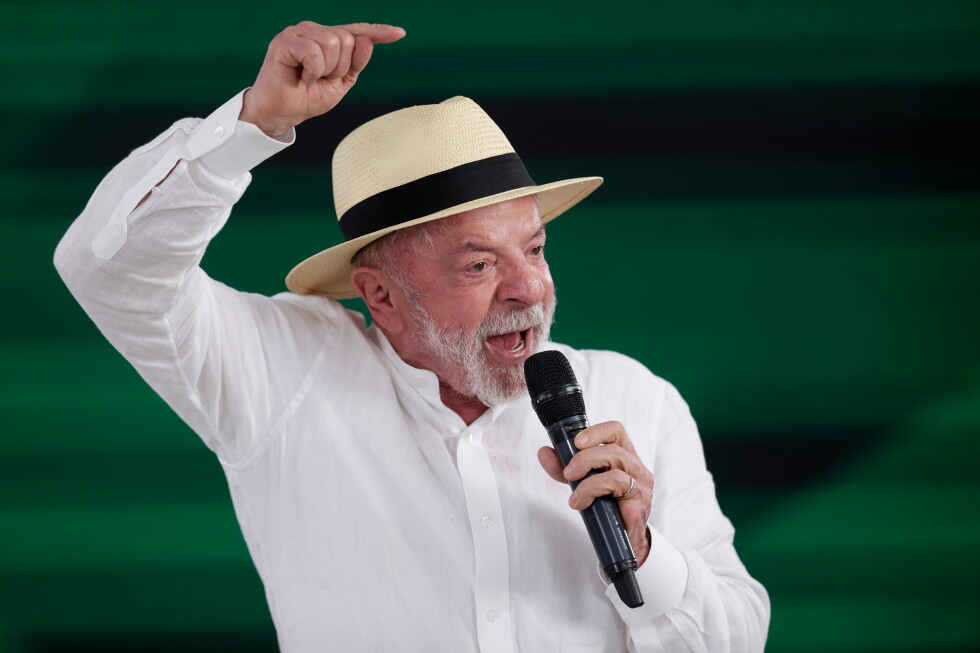
    At a major international gathering in Colombia on Saturday, Brazilian President Luiz Inácio Lula da Silva delivered a scathing critique of what he characterized as resurgent colonial practices targeting developing nations. Speaking before delegates from Africa and the Community of Latin American and Caribbean States (CELAC), the left-wing leader pointed to specific actions against Venezuela and Cuba as evidence of contemporary imperialism.

    Lula challenged the democratic legitimacy of interventions in sovereign states, stating: ‘It’s not possible for someone to think that they own other countries. What are they doing with Cuba now? What did they do with Venezuela? Is that democratic?’ His remarks, though not explicitly naming the United States, clearly referenced Washington’s historical influence in the region.

    The Brazilian president expanded his criticism to include recent military actions, drawing parallels between the U.S. and Israel’s February 28 offensive against Iran and the previously discredited justification for the Iraq War. ‘Iran has been invaded under the pretext that Iran was building a nuclear bomb,’ Lula noted. ‘Where are Saddam Hussein’s chemical weapons? Where are they? Who found them?’

    Lula asserted that developing nations continue to face resource exploitation, declaring that after historical plundering of gold, silver, diamonds and minerals, powerful nations now seek control over critical minerals and rare earth deposits. ‘They want to colonize us again,’ he warned.

    The summit also featured strong condemnation of the United Nations’ failure to prevent global conflicts. Lula described the UN as experiencing ‘total and absolute failure,’ particularly referencing situations in Gaza, Ukraine and Iran. He joined Colombian President Gustavo Petro in calling for urgent reform of the Security Council, whose veto-wielding permanent members (the United States, Russia, China, Britain and France) have consistently hampered effective action.

    Petro, designated a ‘priority target’ by the U.S. Drug Enforcement Administration, echoed Lula’s assessment, stating the UN ‘is acting in impotence, and that is not what it was created for.’ He emphasized the simultaneous need for effective international institutions to address climate change while warning that diminishing tools for collective action ‘leads only to barbarism.’

    The relatively limited attendance of Latin American and Caribbean leaders at the Colombia summit highlighted the continent’s deep political divisions amid these ongoing geopolitical tensions.

  • Ekitike injured early in Liverpool’s match at Brighton in Premier League

    Ekitike injured early in Liverpool’s match at Brighton in Premier League

    BRIGHTON, England — Liverpool’s attacking options were dealt a severe blow mere minutes into their Premier League encounter with Brighton & Hove Albion on Saturday, as French striker Hugo Ekitike was forced to exit the pitch with a left leg injury. The unfortunate incident occurred during the third minute of play when Ekitike became entangled in a robust challenge with Brighton’s veteran midfielder James Milner. Despite receiving immediate medical attention on the sidelines and attempting to continue, the 21-year-old forward found himself unable to run off the discomfort. His premature departure in the eighth minute prompted manager Jürgen Klopp to introduce Curtis Jones as an early substitute. This setback compounds Liverpool’s existing personnel concerns, with key players Mohamed Salah and first-choice goalkeeper Alisson Becker already sidelined due to injuries. The timing proves particularly inconvenient for Ekitike, who had recently earned a call-up to the French national team squad for upcoming international friendlies against Brazil and Colombia in the United States.

  • Brazil’s finance minister Haddad resigns to launch a high-stakes bid for Sao Paulo governor

    Brazil’s finance minister Haddad resigns to launch a high-stakes bid for Sao Paulo governor

    In a significant political development, Brazilian Finance Minister Fernando Haddad has formally resigned from his cabinet position, according to an official announcement published in Brazil’s federal gazette on Friday. The resignation clears the path for Haddad’s anticipated gubernatorial campaign in São Paulo state, where he is expected to challenge incumbent Governor Tarcísio de Freitas, a prominent ally of former far-right President Jair Bolsonaro.

    President Luiz Inácio Lula da Silva, the 80-year-old leftist leader who views Haddad as his potential political successor, has appointed Dario Durigan, previously the finance ministry’s executive secretary, as Haddad’s replacement. The leadership transition occurs amid Brazil’s complex political landscape, with recent polls indicating a tight presidential race between Lula and Bolsonaro’s eldest son, Flávio Bolsonaro, in a hypothetical runoff scenario.

    Haddad, who previously lost to Jair Bolsonaro in the 2018 presidential runoff, declared his gubernatorial ambitions during a public event in São Bernardo do Campo. ‘I don’t run in elections to bargain, I run to win,’ Haddad stated. ‘Political victory is always possible: you just have to present yourself with integrity and a strong plan.’

    Political analysts note that while Haddad faces an uphill battle against the poll-leading de Freitas, the gubernatorial campaign offers substantial national visibility. Professor Paulo Henrique Cassimiro of Rio de Janeiro State University explained that ‘even if he loses, running brings a very large amount of political capital, raises the person’s profile and makes the candidate’s name more widely known.’ The Workers’ Party reportedly views Haddad as crucial to Lula’s political succession plans.

    Haddad’s tenure as finance minister was marked by significant fiscal achievements, including groundbreaking reforms to Brazil’s goods and services taxation system—a decades-long legislative effort—and popular income tax restructuring. However, his term also faced challenges, most notably the internet meme phenomenon dubbing him ‘Taxad’ following controversy over tariffs imposed on international online purchases.

    The new finance minister, Durigan, immediately confronts economic headwinds including managing the impacts of Middle East conflicts on Brazil’s economy. Recent government measures include temporary diesel tax relief to address global energy price surges, offset by a 12% crude export tax. Economist Carla Beni of the Getulio Vargas Foundation noted that ‘a very intense war like the one we’re seeing in the Middle East is something quite complex for Durigan to manage.’

    President Lula has characterized Brazil’s current political situation as ‘very grave,’ warning that without mobilizing ‘the best people we have in each city and each state,’ democracy risked being returned ‘to the fascists.’ The political maneuvering occurs against the backdrop of Bolsonaro’s 27-year prison sentence for attempted coup activities following his electoral defeat.

  • DEA names Colombian president ‘priority target’ as US prosecutors probe ties to drug traffickers

    DEA names Colombian president ‘priority target’ as US prosecutors probe ties to drug traffickers

    The U.S. Drug Enforcement Administration has classified Colombian President Gustavo Petro as a “priority target” in ongoing investigations into alleged connections with international narcotics networks, according to internal documents and sources familiar with the matter obtained by The Associated Press.

    DEA records indicate President Petro has emerged in multiple investigations since 2022, with evidence primarily gathered through confidential informant testimonies. The investigations examine potential dealings with Mexico’s Sinaloa cartel and allegations that Petro’s “total peace” initiative may have been leveraged to benefit prominent traffickers who reportedly contributed to his presidential campaign. Additional records suggest possible exploitation of law enforcement channels to facilitate cocaine and fentanyl smuggling through Colombian ports.

    The “priority target” designation represents the DEA’s highest classification level, reserved for individuals believed to exert “significant impact” on global drug trafficking operations.

    President Petro has vehemently denied all allegations, asserting through social media platform X that U.S. judicial proceedings would ultimately discredit what he characterizes as politically motivated accusations from Colombia’s far-right factions. The Colombian Embassy in Washington dismissed the reports as “unverified” and lacking “legal or factual basis.”

    Federal prosecutors in Brooklyn and Manhattan have recently intensified their inquiry, questioning incarcerated drug traffickers about alleged bribery schemes involving Petro’s representatives. Investigators are examining whether presidential associates solicited payments in exchange for protection from extradition to the United States.

    The investigation remains in preliminary stages, with no determination yet regarding potential criminal charges. U.S. officials confirmed the White House has not participated in the investigative process.

    This development occurs amidst complex U.S.-Colombia relations. President Petro, a former rebel leader, has frequently criticized Trump administration policies regarding Israel, Caribbean anti-drug operations, and migration tactics. Despite previous tensions that resulted in Petro’s U.S. visa revocation and temporary trade tariffs, the two leaders recently displayed improved relations following a February White House meeting where Trump described Petro as “terrific.”

    The scrutiny extends to Petro’s family members, with his son Nicolás facing ongoing campaign finance charges related to alleged drug trafficker contributions, and his brother Juan Fernando implicated in secret negotiations with imprisoned traffickers regarding extradition protection.

    Colombia’s political landscape has historically been intertwined with narcotics influence, from Pablo Escobar’s congressional election in the 1980s to the Cali cartel’s infiltration of presidential campaigns in the 1990s. Petro’s former guerrilla organization, the 19th of April Movement, has faced longstanding suspicions of cartel financing, though Petro himself was not involved in the group’s deadly 1985 Supreme Court siege.

  • Car stolen with two-month-old baby inside

    Car stolen with two-month-old baby inside

    A swift and coordinated response by São Paulo’s Military Police, aided by courageous civilian intervention, led to the safe recovery of a two-month-old infant and the arrest of a suspected car thief on Thursday. The incident unfolded outside a children’s activity center where the mother had momentarily left her son in the parked vehicle while assisting her seven-year-old daughter.

    Closed-circuit television footage captured the critical moments as the mother stood directly in front of her vehicle. Within seconds, an unidentified male entered the driver’s seat and accelerated away with the infant still secured inside. The mother immediately alerted authorities, triggering an extensive police search operation across the neighborhood.

    Approximately 2.7 kilometers from the original location, police units identified the stolen vehicle on a congested thoroughfare. According to official reports, the suspect attempted to evade capture upon noticing police presence but was hampered by heavy traffic conditions. Abandoning the vehicle with the child unharmed inside, the suspect then attempted to flee on foot.

    His escape was thwarted by a combination of slippery pavement from morning rainfall and intervention by multiple bystanders who physically restrained him until police arrived. Social media documentation showed several citizens, including the distraught mother and her daughter, pursuing the vehicle immediately after the theft occurred.

    Both the infant and suspect were transported to medical facilities for evaluation. The child was confirmed unharmed and reunited with his family, while the suspect received treatment for minor injuries sustained during his apprehension before being transferred to police custody. The vehicle was subsequently returned to its owner.

    Emotional testimony from the mother, Maria Samara, revealed her habitual practice of briefly exiting the vehicle to assist her daughter with a heavy school bag. “I do this every day. But today, unfortunately, there was someone who shouldn’t have been there at that moment,” she recounted to local media, expressing profound gratitude toward both civilian responders and police personnel for their rapid intervention.

  • Venezuelan leader replaces senior military commanders

    Venezuelan leader replaces senior military commanders

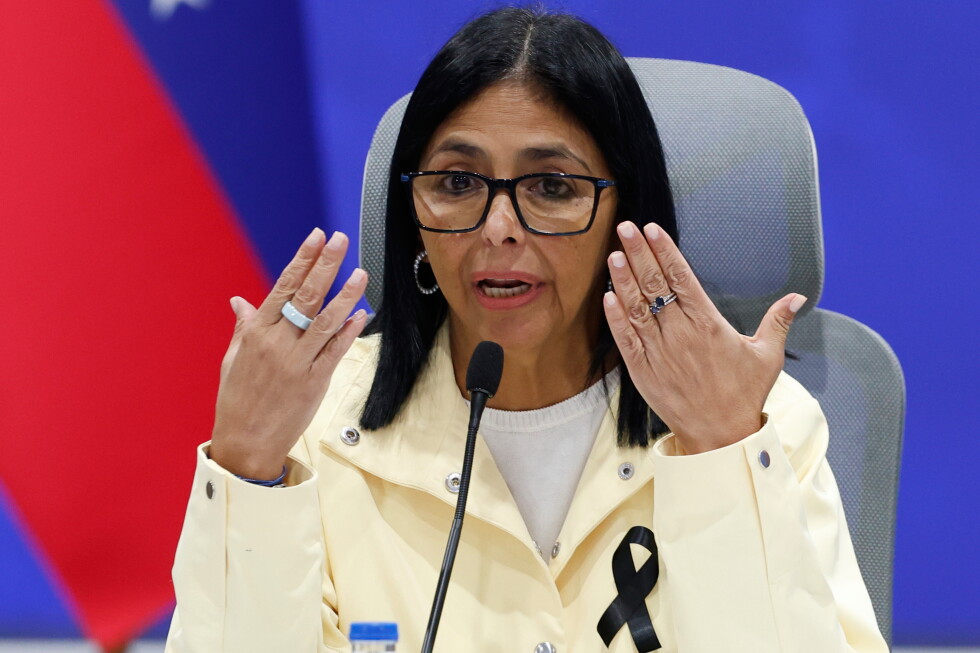
    Venezuela’s interim administration under Delcy Rodríguez has executed a comprehensive restructuring of the nation’s military command, signaling a significant departure from the previous government’s policies. The reshuffle comes precisely one day following Rodríguez’s appointment of Gustavo González López as Defense Minister, replacing longtime Nicolás Maduro loyalist Vladimir Padrino López.

    Rodríguez characterized the sweeping changes as essential for safeguarding Venezuela’s ‘sovereignty, peace, stability and territorial integrity.’ The reorganization introduces a completely new leadership team across all military branches: Dilio Alejandro Agüero Montes assumes command of the navy, Royman Antonio Hernández Briceño leads the air force, and Rubén Darío Belzares Escobar takes charge of the army.

    This strategic realignment follows the dramatic capture of former President Maduro by U.S. forces in January and reflects Rodríguez’s ongoing efforts to establish closer cooperation with Washington. The two nations recently restored diplomatic relations in early March after years of tension.

    The appointment of González López has drawn sharp criticism from human rights organizations. Provea, a Venezuelan human rights watchdog, condemned the move as a ‘recycling of impunity,’ while Human Rights Watch’s Americas director Juanita Goebertus noted the appointment ‘means keeping the repressive structure intact and rewarding someone who should be investigated for very serious human rights violations.’

    González López’s background includes two terms leading Venezuela’s intelligence service (Sebin) under Maduro between 2014-2018 and 2019-2024. In 2015, the Obama administration sanctioned him for alleged human rights abuses, citing his ‘prominent role in the repressive actions against the civil population during the protests in Venezuela.’

    Despite these concerns, Rodríguez expressed full confidence in her new defense minister, welcoming him and the newly appointed military commanders at the presidential palace on Thursday.

  • Mexican teen dies while being held in US immigration custody

    Mexican teen dies while being held in US immigration custody

    A 19-year-old Mexican national has died while detained at a US Immigration and Customs Enforcement (ICE) facility in Florida, marking the youngest fatality in immigration custody since the reinstatement of Trump administration policies. Royer Perez-Jimenez was discovered unresponsive in his cell at Glades County Detention Center on March 16th at approximately 2:34 AM local time.

    Despite immediate resuscitation attempts by prison staff, Perez-Jimenez was pronounced dead in what ICE officials preliminarily described as a presumed suicide. The agency emphasized that the official cause of death remains under active investigation. According to detention records, the deceased had been arrested in January on charges of impersonation fraud and misdemeanor resisting arrest, having entered the United States illegally at an unspecified date.

    ICE maintains that during initial intake procedures, Perez-Jimenez denied any behavioral health concerns and provided negative responses to all suicide screening questions. This incident has triggered diplomatic repercussions, with the Mexican government formally demanding a comprehensive investigation into the circumstances surrounding the death, characterizing such fatalities as ‘unacceptable.’

    The tragedy occurs against the backdrop of intensified immigration enforcement, with advocacy group Detention Watch Network reporting over 42 migrant deaths in custody since January 2025. This figure notably exceeds the 24 custody-related deaths recorded throughout the entire previous four-year presidential term. Recent enforcement operations have additionally resulted in multiple migrant fatalities and the controversial shooting deaths of two US citizens during a Minnesota raid.

  • Colombia’s budding tech scene needs a cash boost

    Colombia’s budding tech scene needs a cash boost

    Bogota’s streets serve as a dynamic showcase of Colombia’s technological transformation, where Rappi’s distinctive orange-bagged delivery bikes have become ubiquitous symbols of innovation. Hailed as the nation’s most triumphant tech startup, this delivery platform has achieved unicorn status with a valuation surpassing $5 billion while attracting more than 35 million active monthly users.

    Rappi’s extraordinary growth signals Colombia’s remarkable economic evolution, particularly following the landmark 2016 Peace Accord that helped transform the country’s international standing. Beyond attracting global tourists, Colombia has emerged as a magnet for immigrants from the United States, Canada, and the United Kingdom, with cities like Medellín and Bogotá becoming preferred destinations.

    The nation has established itself as a significant business hub with a rapidly expanding startup landscape. According to a recent KPMG analysis, Colombia now hosts approximately 2,100 startups, representing a 24% year-over-year increase. Maria Peñaranda, KPMG Colombia’s manager of emerging giants and innovation, confirms that “the country now occupies the second position among Latin America’s most promising startup ecosystems, trailing only Brazil.”

    Approximately 80% of Colombian startups remain in early developmental stages, demonstrating remarkable dynamism in new enterprise creation. Peñaranda emphasizes that “long-term success stories like Rappi continue influencing the ecosystem as catalysts for talent recycling and investor confidence.” She cites additional examples including global payments processor Yuno and renewable energy firm Erco Energy, both of which have evolved into established companies generating over $10 million in revenues while expanding across international markets.

    Among Colombia’s emerging success stories is Foodology, a virtual restaurant enterprise operating through strategically located dark kitchens. Since its 2019 Bogota founding, the company has secured over $60 million in funding, employs more than 800 staff members, and maintains full profitability. Co-founder and CEO Daniela Izquierdo explains her vision: “I sought to develop methods for Colombia to access exceptional cuisine through faster, more innovative channels.”

    The company operates thousands of digital storefronts managed by sophisticated software systems that coordinate inventory and maintain consistent menu offerings across approximately 400 different locations. Foodology has begun licensing this proprietary technology while expanding operations into Mexico and Peru, reflecting a common pattern among Colombian startups that quickly seek international growth due to domestic market limitations.

    Despite these success stories, Colombia’s startup landscape faces substantial investment challenges. The initial enthusiasm generated by SoftBank’s 2019 Latin America innovation fund has diminished, according to Daniel Vásquez, managing partner at US-based Actions Capital. He notes that “the majority of those investments haven’t produced successful outcomes for various reasons,” causing many investors to withdraw from the region.

    Izquierdo confirms this trend: “Latin America experienced tremendous growth between 2021 and 2022, but recent years have proven difficult. The US stock market decline triggered a global venture capital slowdown, and emerging markets typically suffer first during such contractions.”

    With limited domestic investment options, Colombian entrepreneurs must seek international funding sources. Vásquez observes that promising companies sometimes fail because “they exhaust resources before securing subsequent funding rounds necessary for achieving profitability.” He emphasizes that sustainable growth requires increased local institutional and family investments in technology, noting that “when venture capitalists observe limited local technology investment, they interpret this as indicating restricted opportunities.”

    Some companies have nonetheless thrived despite these challenges. Habi, a Bogotá-based property technology company co-founded by Brynne McNulty Rojas and Sebastián Noguera, achieved unicorn status following a $200 million funding round. The platform specializes in used home transactions while offering complementary services including financing, property listings, and mortgage brokerage.

    McNulty Rojas acknowledges benefiting from improved regional investment conditions compared to previous decades, though she expresses desire for greater local investor participation. Despite financial obstacles, she strongly recommends Colombia for entrepreneurship, citing abundant talent and market potential that have made her business journey exceptionally rewarding.

  • New study challenges a site that’s key to how humans got to the Americas

    New study challenges a site that’s key to how humans got to the Americas

    A groundbreaking archaeological study has ignited intense scholarly debate by challenging the established timeline of human settlement in the Americas. For over four decades, Chile’s Monte Verde site has stood as the most significant evidence of early human presence in the Western Hemisphere, with previous research dating artifacts and footprints to approximately 14,500 years ago.

    Published in the prestigious journal Science, the controversial new research presents a radically different interpretation of the site’s geology. Through extensive sediment sampling and analysis along the Chinchihuapi Creek adjacent to Monte Verde, researchers identified a volcanic ash layer dating back approximately 11,000 years. This geological marker suggests that any materials found above this stratum—including the famous wooden tools and structural remains—must be younger than previously believed.

    Lead researcher Claudio Latorre of Chile’s Pontifical Catholic University stated, ‘Our comprehensive reinterpretation of the site’s geology concludes that Monte Verde cannot be older than 8,200 years.’ The research team proposes that landscape transformations, including stream erosion that mixed geological layers, may have caused earlier dating inaccuracies.

    The scientific community has responded with significant skepticism. Several prominent archaeologists, including those involved in the original excavations, have raised substantial objections to the methodology and conclusions. Michael Waters of Texas A&M University commented that the study ‘provides, at best, a working hypothesis not supported by the presented data.’

    Critics highlight that the new analysis examined areas surrounding rather than directly within the protected archaeological site, where geology may differ substantially. They further note the absence of evidence that the volcanic ash layer uniformly covered the entire landscape. Most importantly, opponents question how the study accounts for directly dated artifacts from the site—including a crafted mastodon tusk tool and fire-hardened digging implements—that consistently yield dates around 14,500 years old.

    Tom Dillehay of Vanderbilt University, who led the initial Monte Verde excavations, emphasized that the new interpretation ‘disregards a vast body of well-dated cultural evidence.’

    The dating of Monte Verde carries profound implications for understanding human migration patterns. The site’s original dating helped overturn the long-standing ‘Clovis first’ theory of human arrival in the Americas. A revised timeline could reopen fundamental questions about migration routes—whether early humans traveled through ice-free corridors, along coastal waterways, or via combined land-and-sea routes.

    As the scientific debate continues, researchers acknowledge that further independent analyses of early settlement sites will be essential for resolving these fundamental questions about human history in the Americas.

  • Asylum claim denied for the family of the boy in a bunny hat detained with his father, lawyer says

    Asylum claim denied for the family of the boy in a bunny hat detained with his father, lawyer says

    MINNEAPOLIS — In a pivotal immigration case that has captured national attention, a United States immigration judge has rejected the asylum petition filed by the family of Liam Conejo Ramos, the five-year-old child whose photograph in a bunny hat and Spider-Man backpack became symbolic of recent immigration enforcement actions in Minneapolis. Immigration Judge John Burns issued a deportation order directing the family’s return to Ecuador, according to their legal representation.

    The child and his father, Adrian Conejo Arias, were apprehended by federal immigration officers in a Minneapolis suburb on January 20. Following their detention, they were transferred to a Texas detention facility where they remained for ten days until a judicial order secured their release.

    Legal counsel for the family has immediately filed an appeal against the judge’s determination. Danielle Molliver, the family’s attorney, expressed profound disappointment with the ruling, characterizing it as ‘misguided.’ She affirmed their commitment to pursuing all available legal avenues to challenge the decision, though she acknowledged that the appellate process could extend over several years.

    Meanwhile, Liam has resumed attendance at his suburban Minneapolis school. However, both he and his father continue to experience significant psychological distress stemming from their detention experience, with their attorney noting they remain ‘scared’ about potential outcomes.

    The initial arrests occurred during a large-scale immigration operation that deployed thousands of federal officers across the Minneapolis region. These operations triggered sustained public protests and were marked by the fatal shooting of two American citizens by federal agents.

    Controversy emerged when community members and school officials alleged that immigration officers utilized Liam as ‘bait’ by instructing him to knock on his residence’s door to prompt his mother’s appearance outside. The Department of Homeland Security has vehemently denied these allegations, labeling them an ‘abject lie.’ Government officials maintain that the child’s father attempted to flee on foot, leaving the boy unattended in a vehicle parked in their driveway—an assertion the father disputes.

    The central legal dispute concerns Adrian Conejo Arias’s immigration status. Federal authorities contend he entered the United States illegally in December 2024, while the family’s legal team asserts he entered lawfully while seeking asylum, which they argue permits his continued presence in the country during the adjudication process.