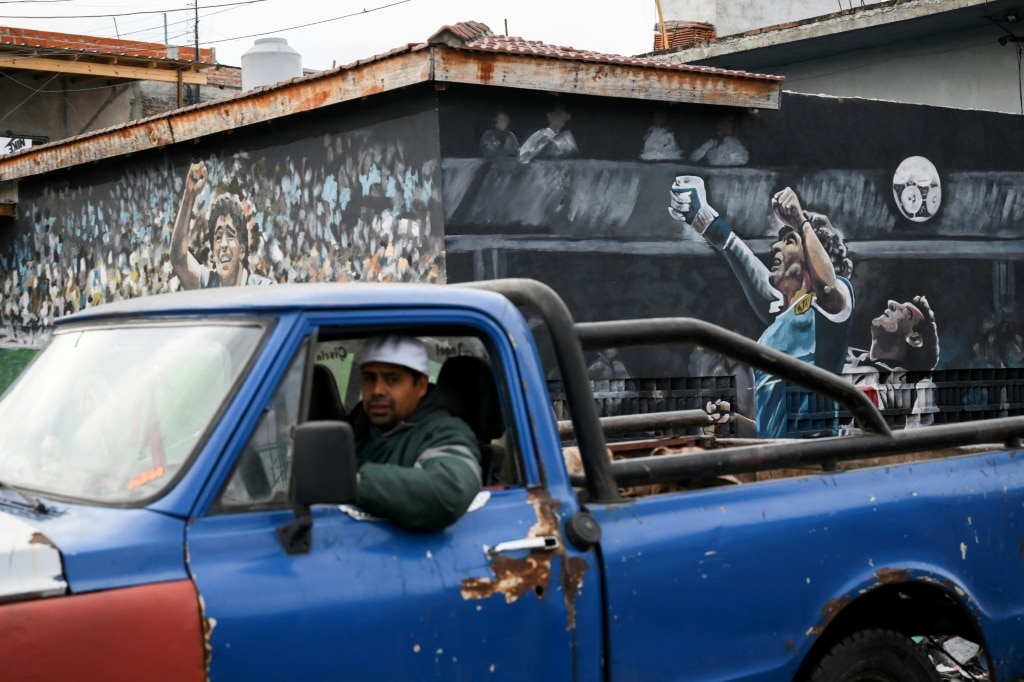
When Argentina takes on England in the 2026 World Cup semi-final in Atlanta, Georgia, the fixture carries far more meaning than 90 minutes of soccer for millions of Argentines. From the 1982 Falklands War to Diego Maradona’s legendary controversial 1986 World Cup moments, decades of shared history have turned this rivalry into something that extends far beyond the white lines of the pitch.
The core of this layered history lies in the dispute over the South Atlantic archipelago Argentina calls the Malvinas, a territory claimed by Argentina but controlled by the United Kingdom since the 19th century. The 1982 war over the islands left 649 Argentines and 255 Britons dead, ending in a British victory that still stings for many in Argentina. Today, the claim to the Malvinas is enshrined in Argentina’s constitution, taught in every national school textbook, and woven into daily life through murals, tattoos, and place names honoring the disputed territory. In a deeply politically divided country, the national football team and the Malvinas claim remain two of the only unifying issues that bridge left-right divides.
This historical weight is captured in Argentina’s 2026 World Cup anthem *La Cuarta Estrella*, which puts the Malvinas at the top of its rallying cries: “For Malvinas, for Diego, for Leo’s last, Argentina, I want to see you double world champions.” The anticipation has gripped the nation, with ordinary fans saying the excitement has crowded out all other thoughts. Thirty-three-year-old teacher Ezequiel Murmis told AFP, “I’m going crazy, I haven’t slept, I can’t think of anything else,” after attending a screening of *El Partido*, a new documentary revisiting Argentina’s iconic 1986 World Cup quarter-final win over England.
That 1986 match remains one of the most famous in football history. Maradona’s opening goal, punched into the net with his hand and later dubbed the “Hand of God,” became a symbol of Argentine defiance just four years after the Falklands War defeat. Minutes later, Maradona scored what is still widely called the “Goal of the Century,” a stunning solo run that weaved through a bewildered England defense, cementing his legacy as a national hero before his death in 2020.
Not all Argentines tie the current match to the decades-old conflict, however. Ernesto Alonso, a veteran of the 1982 Falklands War, argued that Maradona already gave Argentina the symbolic victory it craved in 1986. “Of course we’re all excited and want to win but we cannot shift the responsibility for the Malvinas issue onto the national team,” he explained.
Andres Burgo, author of the original book that became *El Partido*, noted that 2026 is a far cry from 1986, when fresh war wounds made restoring national honor the overwhelming priority for the team. “That game was tainted by political pressure,” Burgo explained. “This year’s semi-final has less symbolic importance and more sporting significance.” Even so, the documentary has drawn packed audiences across Argentina, a clear sign the old tensions still run deep. Leaving a Buenos Aires screening, 33-year-old insurance agent Tomas Barbeito, wearing an Argentina national team jersey, admitted he felt “very anxious” ahead of the match: “It’s like we want to avenge something we shouldn’t have to avenge.”
Despite the decades of rivalry, many Argentine fans acknowledge a deep respect for English football culture. After Argentina’s recent win over Switzerland, the entire team could be seen jumping in celebration to the traditional Argentine chant: “He who doesn’t jump is English!” That fiery, confrontational passion that defines Argentine fan culture has few parallels — and England is one of them. Both nations are famous for their all-consuming love of the game, and both have seen that passion spill over into crowd violence at times.
Burgo pointed out that beyond the rivalry, Argentines recognize a kindred spirit in English football. “There are countries that don’t have a passion for football, like the United States; countries that have passion but not a distinct football culture. England has both, passion and culture, and I think Argentine fans recognize and respect that,” he said. Barbeito echoed that contradictory but warm sentiment: “But the truth is, I like the English and how they live and breathe football.”
As kickoff approaches in Atlanta, the clash brings together sporting ambition and decades of shared history, for a match that means as much off the pitch as it does on it.