标签: Oceania

大洋洲

  • Liberals going back to basics with ‘Stand with Small’ business pledge

    Liberals going back to basics with ‘Stand with Small’ business pledge

    Australia’s Liberal-National Coalition is launching a bold, pro-small-business policy agenda centered on a landmark Small Business Act, set to be announced Wednesday by Shadow Treasurer Tim Wilson at Canberra’s National Press Club. The proposal, a core pillar of the Coalition’s push to refocus on grassroots economic priorities, aims to resolve longstanding fragmented regulations and amplifies the voices of small and independent business owners that opposition leaders argue have been sidelined by the current Labor government.

    At the heart of the policy is the creation of a single, standardized legal definition of a small business across all Commonwealth legislation, replacing the inconsistent, overlapping definitions that currently create unnecessary administrative burden for operators. The Act also mandates two key new protections: a formal “right to be paid”, which will enshrine legal maximum payment terms for small businesses working with both government agencies and large corporate clients, addressing the pervasive problem of late payments that cripples cash flow for thousands of small operations nationwide.

    Additional provisions embedded in the proposed legislation require that every new federal regulation be accompanied by a dedicated small business regulatory impact statement, creating a formal feedback pathway for small business owners to contribute to policy design before it becomes law. This consultation requirement will extend to all major federal regulators, including the Reserve Bank of Australia, Australian Securities and Investments Commission, Australian Taxation Office, and Fair Work Commission, ensuring small business perspectives are incorporated into key regulatory and monetary decisions that impact their operations. The policy also expands mandatory government procurement quotas, requiring a larger share of federal government contracts to be awarded exclusively to small businesses.

    Wilson will use his address to accuse the Albanese-led Labor government of waging an implicit war on Australia’s entrepreneurs and self-starting small business owners, a critique that comes amid ongoing pushback from small business groups over recent changes to capital gains tax discounts. In prepared remarks, Wilson will emphasize that the Coalition is positioning itself as the definitive political ally for small and independent operators, noting that for decades, Australian economic regulation has been shaped by deep-pocketed lobbyists with access to the highest levels of government, while small business voices were locked out of the process.

    “For too long Australia’s laws have been designed around the influence of those that can hire lobbyists to walk the Prime Minister’s corridor,” Wilson will say. “In generations past, young Australians got ahead by buying property. Young Australians know that to get ahead you need to invest, and build a small business, side hustle, equity or start-up.”

    Wilson will also frame the policy as a response to a fundamentally outdated economic framework, arguing that 12 months of widespread conversations with small business operators across the country have convinced him incremental, marginal tweaks to Australia’s 20th-century regulatory system are no longer enough to solve small business struggles.

    The new Small Business Act announcement builds on earlier pro-small-business commitments the Coalition unveiled earlier this month in Opposition Leader Angus Taylor’s budget reply speech. Those prior pledges include an instant $50,000 asset write-off for businesses with annual turnover below $1 million, and a policy to index the two lowest personal income tax brackets to inflation to curb bracket creep.

    Ahead of Wilson’s National Press Club address, Taylor doubled down on the Coalition’s critique, arguing the current Albanese government is ideologically opposed to small business and actively seeks to replace independent operations with expanded big government. “What they’re planning to do now is going to do exactly that, replace small business with big government,” Taylor said. “Only this government could be so arrogant and so could so badly misunderstand this country as to think that that’s a good idea.”

  • ‘Need to be there’: Blues stick solid as Origin champions seek 26-year first

    ‘Need to be there’: Blues stick solid as Origin champions seek 26-year first

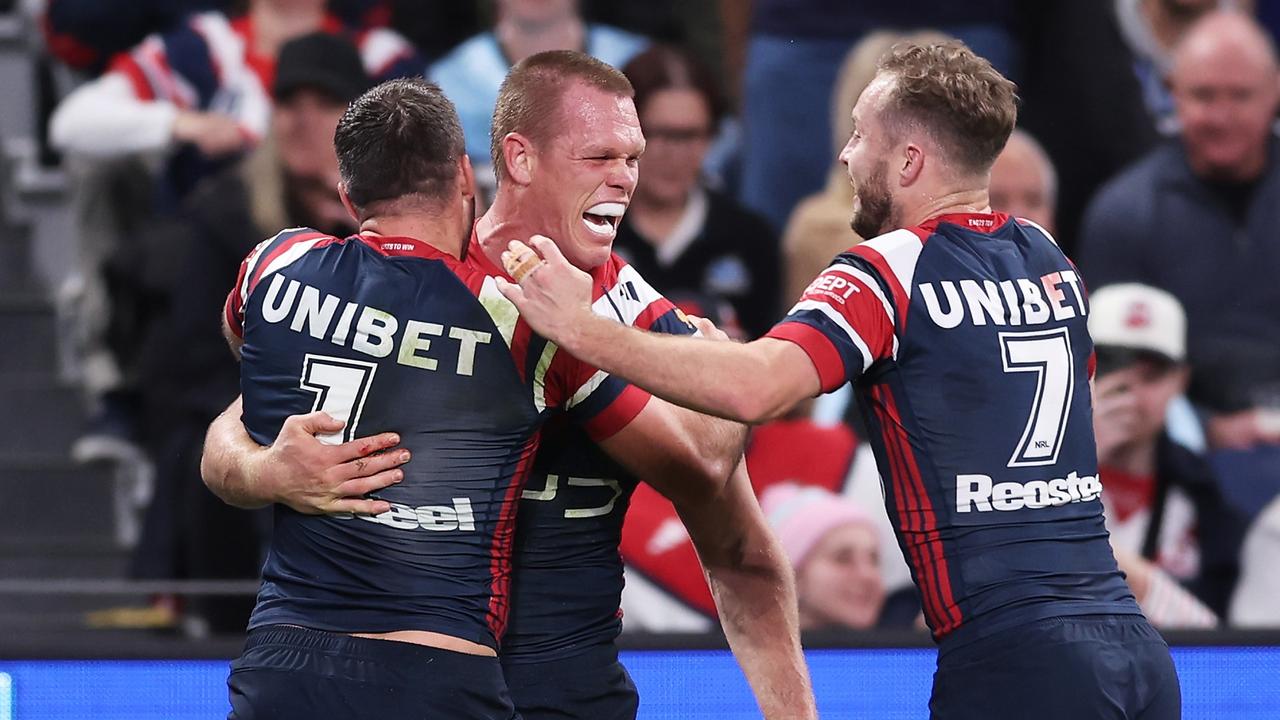
    With the women’s State of Origin trophy already secured, New South Wales (NSW) Blues head coach John Strange faced a pivotal decision: hand valuable debut opportunities to rising young talents, or stick with the group that delivered the series win to chase an unprecedented milestone. In a call shaped by hard lessons from last year’s campaign, Strange has opted to keep his entire 20-player matchday squad intact for next week’s decisive third clash, as the Blues chase the first 3-0 clean sweep for a NSW side in 26 years.

    NSW locked in the series title earlier this month with a heart-stopping 14-10 come-from-behind win over Queensland at Brisbane’s Suncorp Stadium, wrapping up the overall trophy with one match still left to play. Instead of shaking up his lineup to give fringe prospects a taste of senior representative football, Strange said the painful memory of last year’s dead rubber defeat was the driving force behind his loyalty to the group that got the Blues across the line in Brisbane.

    Strange publicly confirmed the unchanged squad during a YouTube livestream on Wednesday morning, confirming the third game, scheduled for next Thursday, will be held on Queensland’s home turf on the Gold Coast. “The reason for that is that I feel like the girls that were selected for both games have done an awesome job,” Strange told reporters and fans during the stream. “We want to make sure they have the opportunity to go up there and win the third game. So it’s about respecting the players that have worn the jersey and deserve to wear the jersey, so there was no thought of changing the team this year. It was a case of going with the girls that need to be there.”

    The upcoming fixture will mark a personal milestone for veteran Blues forward Kezie Apps, who will earn her 20th state cap for NSW when she runs out next week.

    Strange’s decision is rooted in a humbling experience 12 months prior. In 2023, the Blues also claimed the first two matches of the series to secure the Origin trophy early, only to drop a tight third-match dead rubber in Newcastle to Queensland. That defeat, which came despite the Blues winning the first two contests by a combined 20 points, left a lasting impression on the entire program, and Strange is determined to avoid a repeat of that outcome this year.

    “We were in a similar situation last year after two games, and we went up to game three in Newcastle and didn’t get the job done,” he said. “Queensland were outstanding in that game and very desperate and wanted to make sure they got a win, so we fully understand that’s the attitude that they’re going to bring this time around.”

    Reflecting on last year’s misstep, Strange said the squad entered the third game with a celebratory mindset rather than the competitive intensity that carried them to the first two wins. That shift in focus ultimately cost them. “I felt like going into camp for game three last year that there was a lot of excitement from all the players, and so they should have been excited because they’d wrapped the series up,” he explained. “But we probably didn’t go in with the same intensity in game three that we did in games one and two, so that was a really good learning experience for all of us involved. If we were in the same position again that we would go in with a different mindset because we know Queensland don’t want to get beaten 3-0. We know the desperation they’re going to have, and we’re going to make sure we match that desperation and play good footy.”

    The full NSW squad will enter camp this Thursday before travelling to Kingscliff on Saturday to ramp up their final preparations for the history-making clash. The full unchanged 20-player squad is as follows: Abbi Church, Jaime Chapman, Jess Sergis, Isabelle Kelly, Jayme Fressard, Jocelyn Kelleher, Jesse Southwell, Millie Elliott, Olivia Higgins, Ellie Johnston, Kezie Apps, Yasmin Meakes, Olivia Kernick, Keeley Nizza, Kennedy Cherrington, Rima Butler, Teagan Berry, Quincy Dodd, Corban Baxter, and Hannah Southwell.

  • Iran ‘very confident’ about World Cup protocols: federation vice-president

    Iran ‘very confident’ about World Cup protocols: federation vice-president

    As the Iranian men’s national football team makes its final preparations for the 2026 FIFA World Cup co-hosted by the United States, a top Iranian football official has voiced strong confidence in the governance and security protocols laid out by global football’s governing body, even as lingering uncertainty over U.S. entry visas casts a faint shadow over the team’s preparations.

    The Iranian squad touched down in Turkey on Monday to wrap up their pre-tournament training camp, a multi-week stay that will serve as their final tune-up before traveling to North America for the world’s biggest sporting event. This World Cup carries unusual geopolitical weight for Iran: the United States, one of the three co-hosts of this year’s tournament, has been engaged in active military conflict against Iran alongside Israel since late February, a confrontation that has ignited widespread instability across the Middle East.

    Mehdi Mohammad Nabi, vice-president of the Iranian Football Federation and director of the national team program, shared his assessment with reporters on the sidelines of the team’s Turkish training session on Tuesday. Nabi insisted that all logistics for Iran’s participation would follow the formal rules and frameworks set by FIFA. “Everything will proceed properly according to the protocols and what FIFA has stipulated,” he said.

    Nabi noted that U.S. organizers have already established dedicated working groups to handle tournament logistics, including a specialized security committee that coordinates closely with FIFA to manage safety for all participating delegations. Drawing on Iran’s history of competing in multiple previous World Cup tournaments, Nabi said the federation has full familiarity with how these security and operational systems function at the global event. “In past years we’ve experienced all of this and we’re fully informed about how these security committees operate at every World Cup we’ve participated in. In this regard, we’re very confident and we have a clear plan,” he added.

    One key unresolved issue remains: entry visas for the Iranian squad and staff. Iranian officials confirmed earlier that none of the delegation have yet received their U.S. travel authorization, and the team is planning to submit visa applications through the Canadian embassy in Turkey, where they are currently based. Nabi acknowledged that there is no guarantee all members of the delegation will be granted entry.

    However, he pointed to binding FIFA rules that place responsibility on host nations to accommodate qualified teams. “One of the rules that applies to the host country is that they must provide guarantees, according to FIFA’s statutes and the regulations of the competition. One of their commitments is the visas: they have to grant the necessary visa facilities to all the teams that have qualified for the World Cup,” Nabi explained. He added that FIFA has already taken steps to ensure the United States fulfills its obligations to facilitate entry for Iranian team personnel.

    Iran has been drawn into Group G for the 2026 tournament, with a scheduled opening match against New Zealand on June 15 in Los Angeles. The team will face Belgium in the same city next, before wrapping up their group stage play against Egypt in Seattle. Throughout the tournament, the Iranian delegation will be based in Tucson, Arizona, for their training and accommodation.

  • From graduation boos to voter unease: AI anxiety grows in the US

    From graduation boos to voter unease: AI anxiety grows in the US

    Across the United States, a growing backlash against artificial intelligence is reshaping public discourse, political positions, and community attitudes, once-strong early enthusiasm for the transformative technology giving way to widespread unease. The shifting sentiment plays out in every corner of public life: pro-AI speakers are met with jeers at college graduation ceremonies, local political candidates supporting AI infrastructure are ousted at the polls, and even a traditionally AI-friendly White House has softened its unbridled support for unregulated development.

    This rising anxiety did not emerge out of nowhere. It stems from concrete economic pressures and unaddressed fears: persistent inflation has stretched household budgets, while a wave of AI-driven layoffs across the tech sector has reinforced fears of widespread job displacement. For young people, many of whom have taken on crippling student loan debt to earn college degrees, the worry that AI will render their hard-won qualifications obsolete has turned tentative concern into active hostility.

    That hostility played out publicly on two separate graduation stages in recent months. When former Google CEO Eric Schmidt took the stage at the University of Arizona to deliver the 2026 commencement address, he urged graduates to embrace AI, arguing the technology would reshape every corner of modern life from education to healthcare to professional work. Instead of the polite applause expected of such occasions, Schmidt was met with loud, sustained boos from the assembled graduates. Scott Borchetta, CEO of Big Machine Records, faced the same reaction when he told graduates at Middle Tennessee State University to adapt to AI as a useful tool. When he joked that graduates could “hear me now or pay me later,” the crowd responded with resounding boos.

    Public opinion polling bears out this widespread discontent. Cited by news outlet Semafor, recent polling shows 70 percent of Americans believe AI development is moving too quickly, more than half hold negative views of the technology, and just 18 percent of young people report feeling hopeful about AI’s future impact.

    The pushback is not limited to college quads. The rapid expansion of AI has spurred a nationwide buildout of energy-intensive data centers, and this infrastructure has become one of the most contentious flashpoints in local politics. Data centers draw massive amounts of electricity, drive up local utility rates, and put strain on regional water supplies, turning community opposition into a potent political force. In recent months, local officials who have backed AI data center projects have repeatedly lost elections at the hands of angry voters. The discontent has even spilled over into violence.

    In April 2026, as the high-profile civil trial between Elon Musk and Sam Altman opened in Oakland, California, protesters set up inflatable punching bags emblazoned with the images of the two AI industry leaders outside the federal courthouse. Last month, a young man threw a Molotov cocktail at Altman’s personal home in Northern California. Just days before that incident, an Indiana city council member who supported a local data center project found his front door struck by gunfire; a note left at the scene read simply “No Data Centers.”

    Christabel Randolph, acting executive director of the Washington D.C.-based Center for AI and Digital Policy, notes that opposition to local data centers now outpaces even opposition to nuclear power plants. A May 2026 Gallup poll found that 71 percent of Americans oppose hosting an AI data center in their community, compared to just 53 percent who oppose hosting a nuclear power plant. “Americans are really, really angry and upset about AI data centers because of the noise, the pollution, the impact on their electricity bills, on water supplies,” Randolph told Agence France-Presse. She added that AI anxiety is set to become a defining issue in the upcoming November midterm elections, and could even shape the 2028 presidential race. “That existential fear is a very animating anxiety,” she said. “People are thinking about what their future is going to look like.”

    Even the Trump White House, which initially positioned itself as a staunch backer of unregulated rapid AI development, has shifted its stance. After returning to office in 2025, President Donald Trump rolled back strict AI safety rules put in place during the Biden administration, arguing that overregulation would hurt U.S. competitiveness against China. But in recent months, the administration has reversed course: it now calls for pre-release safety vetting of advanced AI models, has urged Congress to pass nationwide AI regulations, and has held discussions with Chinese officials about establishing global AI guardrails. When asked about AI risks on Fox News’ *Mornings with Maria* last month, Trump acknowledged the mixed picture: “There are a lot of good things, but we have to be careful with it.”

  • Taiwan author wins International Booker for ‘slyly sophisticated’ novel

    Taiwan author wins International Booker for ‘slyly sophisticated’ novel

    In a landmark moment for global translated literature, Taiwanese author Yang Shuang-zi and translator Lin King have claimed the 2024 International Booker Prize at a ceremony held at London’s iconic Tate Modern gallery, bringing home the 10th anniversary of the award for their bold postcolonial novel *Taiwan Travelogue*. This win marks two firsts for the prize: it is the first work translated from Mandarin Chinese to take home the honor, and Yang, the 40-year-old multi-talented creator who also pens manga and video game scripts, becomes the first Taiwanese author ever to win the award. Set against the backdrop of 1930s Taiwan under Japanese colonial rule, the novel constructs a clever metafictional narrative: it is framed as a newly rediscovered Japanese travel memoir written by the fictional author Aoyama Chizuko, translated into English for contemporary readers. The plot follows Chizuko across the colonial territory, tracing her food-focused journeys through the island’s landscapes and the quiet, intimate romantic bond that grows between her and her Taiwanese interpreter, Chizuru. Speaking on the win, prize jury chair Natasha Brown praised the work for its deceptive depth and layered storytelling. “This is a book that surprises and isn’t perhaps what it seems like on the surface,” Brown noted, adding that the novel “pulls off an incredible double feat: it succeeds as both a tender romance and an incisive postcolonial novel. It’s a captivating, slyly sophisticated novel.” This year, *Taiwan Travelogue* beat out five other celebrated shortlisted works from around the globe to claim the prize. The shortlist included a story of a suburban witch from French novelist Marie NDiaye, a dystopian tale of a brutal prison colony from Brazilian author Ana Paula Maia, a quiet Tehran-set story from German writer Shida Bazyar, Bulgarian poet Rene Karabash’s *She Who Remains*, and *The Director* from German-Austrian author Daniel Kehlmann — the only male nominee on this year’s shortlist. Established to elevate fiction originally written in languages other than English and introduce new global voices to English-speaking audiences, the International Booker Prize has a proven track record of catapulting winning authors to international acclaim and driving major increases in their visibility and book sales. Several past International Booker winners, including Han Kang, Annie Ernaux, and Olga Tokarczuk, have gone on to win the Nobel Prize in Literature in the years following their Booker win. *Taiwan Travelogue* marks the first of Yang’s works to be translated into English, a project completed by Taiwanese-American translator Lin King. The pair will split the £50,000 (approximately $67,000) prize purse evenly between them. The novel was first published in Mandarin in 2020, and quickly earned recognition within Taiwan when it won the Golden Tripod Award, the island’s highest literary honor. In a lighthearted reflection on the novel’s core themes, Yang joked about the impact of writing the food- and travel-focused story: “The novel’s central themes of travel and food changed my life in two obvious ways: my savings went down; my weight went up.”

  • Acting US attorney general defends fund for prosecuted Trump allies

    Acting US attorney general defends fund for prosecuted Trump allies

    A fierce partisan debate erupted on Capitol Hill this week as Acting U.S. Attorney General Todd Blanche defended the newly established $1.8 billion “Anti-Weaponization Fund”, a initiative designed to compensate individuals who claim they were wrongfully prosecuted during the Biden administration. The fund, created as part of a settlement ending former President Donald Trump’s lawsuit against the Internal Revenue Service over a 2023 tax return leak, has drawn sharp condemnation from congressional Democrats who frame it as an unprecedented misuse of taxpayer dollars to benefit the sitting president’s political allies.

    During hours of testimony before the Senate Appropriations Committee, Blanche, Trump’s former personal defense attorney who took over the top Justice Department role, faced repeated questioning from Democratic lawmakers over the fund’s structure and purpose. Washington Senator Patty Murray called the initiative outright corruption, arguing it amounted to the sitting president draining public treasury for personal political gain, labeling it a corrupt “slush fund” reserved for Trump’s loyalists.

    Blanche pushed back aggressively against these claims, stressing that Trump himself would be ineligible to receive compensation from the fund and rejecting assertions that only Republican allies of the president would qualify. He noted that even individuals like Hunter Biden, the former president’s son convicted of gun and tax crimes during his father’s tenure, would be eligible to apply for compensation if they believe they were targeted by politically motivated prosecutions. When pressed repeatedly about whether rioters convicted for their roles in the January 6, 2021, Capitol attack could receive payouts, Blanche refused to rule out eligibility, stating that any U.S. citizen who believes they were a victim of politically weaponized law enforcement would be allowed to apply.

    Blanche will personally appoint the five commissioners tasked with overseeing the fund, a detail that drew further criticism from lawmakers who highlighted his long-standing professional ties to Trump. Rhode Island Senator Jack Reed drew a comparison between Blanche and a mafia political adviser, calling him the “president’s consigliere,” while Maryland Senator Chris Van Hollen argued Blanche was continuing to act as Trump’s personal attorney rather than an independent government official. Blanche defended the fund’s necessity, framing it as a corrective measure for what he described as four years of abusive law enforcement practices under former Biden Attorney General Merrick Garland.

    The fund was established Monday as part of a legal settlement with Trump, who dropped his $10 billion damages lawsuit against the IRS over the leak of his tax returns. A former IRS contractor pleaded guilty in 2023 to leaking Trump’s returns and those of other wealthy individuals to media outlets, and was sentenced to five years in prison for the crime. As part of the new settlement addendum released by Blanche Tuesday, the IRS is formally barred from pursuing back tax claims against Trump, his immediate family members, or any of his corporate entities.

    This move aligns with a broader pattern of action Trump has taken since starting his second term in office: he has moved swiftly to punish perceived political opponents, purge disloyal government officials, issue mass pardons to political allies—including hundreds of January 6 defendants on his first day back in office—target law firms that worked on cases against him, and pull federal funding from universities he accuses of political bias. The two criminal cases against Trump handled by special counsel Jack Smith, one over efforts to overturn the 2020 presidential election and a second over improper handling of classified documents, were both dropped after Trump won the 2024 election, with Blanche having served as his lead defense attorney in both matters.

  • Shock and bafflement at San Diego mosque where three were killed

    Shock and bafflement at San Diego mosque where three were killed

    The tight-knit Muslim community of San Diego is reeling from an unthinkable act of violence Monday, when two radicalized teenage gunmen stormed the Islamic Center of San Diego, killing three people before turning their weapons on themselves. The attack, which law enforcement has officially classified as an Islamophobic hate crime, has left neighbors and community members grappling with shock, grief, and a sudden loss of the sense of safety they long felt in their suburban neighborhood.

    Ramzy Awad, son of victim Nader Awad, sat blankly outside the mosque complex Tuesday, still unable to process the events that claimed his father’s life. “Everyone’s really shocked. It’s hard to believe this is real. We’re just all still figuring it out,” he told reporters from Agence France-Presse. Today, Awad and the two other slain men — security guard Amin Abdullah and community member Mansour Kaziha — are being widely celebrated as heroes whose quick, brave actions prevented a far deadlier massacre.

    San Diego Police Chief Scott Wahl explained at a Tuesday press briefing that the two attackers, identified as 17-year-old Cain Clark and 18-year-old Caleb Vazquez, arrived at the center heavily armed with the intent to kill as many people as possible. At the time of the breach, as many as 140 children were in classrooms just 15 feet from the entry point where the gunmen entered. Abdullah, the on-site security guard, immediately engaged the attackers, fired on them, and radioed for backup, delaying and disrupting their plan to push deeper into the building.

    After Abdullah initial confrontation, Awad and Kaziha drew the gunmen back out into the mosque’s parking lot, sacrificing their own lives to keep the attackers away from the crowded interior. All three men died at the scene. The teens’ bodies were later found in a vehicle a short distance from the mosque, and investigators have confirmed they died of self-inflicted gunshot wounds. Searches of the attackers’ homes turned up a cache of weapons, ammunition, tactical gear, and electronic devices, alongside extremist writings that laid out a radical worldview rooted in racial and religious hatred.

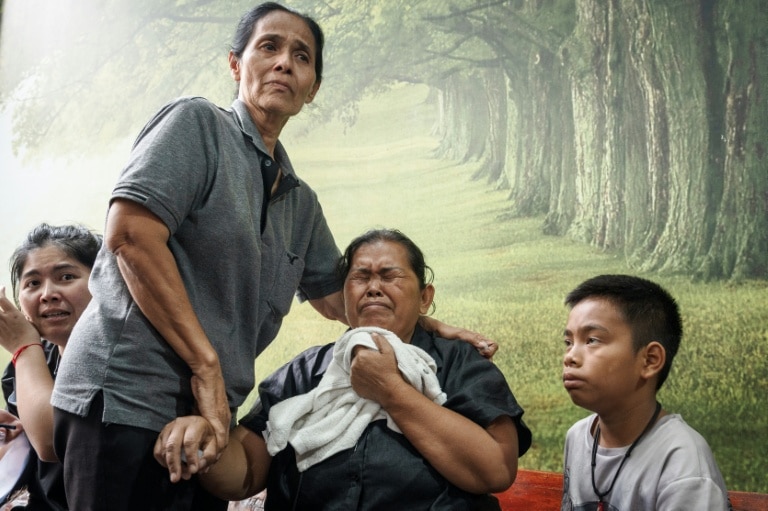
    On Tuesday, community members and mourners gathered outside the mosque to lay flowers, their faces marked by confusion and grief. Many could only manage a few words before breaking into tears or falling silent. The Islamic Center of San Diego, one of the largest Muslim worship sites in a city of 1.4 million, has long been a hub for a diverse community of worshippers hailing from the Middle East, Asia, Africa, and Europe. Its minaret rises above palm-lined streets dotted with quiet suburban homes, and the center has long functioned as a core part of the local multicultural fabric — it even serves as a polling station during elections, and its imam regularly holds interfaith prayer events alongside a nearby Protestant church’s leadership.

    Neighbors like Katelynn Fisk, who was out walking her dog near the center Tuesday, expressed their shock and support for the community. “This Muslim community, they’re really good people, you know. They never treat anybody like they’re different, even if they don’t follow their beliefs,” Fisk said. For decades, the center has felt like a refuge for local Muslims, but the attack has shattered that long-held sense of safety. “We used to feel safe here. I don’t understand why we were targeted,” said 31-year-old teaching assistant Imani Khatib, breaking down in tears outside the security booth where Abdullah gave his life.

    Mosque imam Taha Hassane confirmed that without the three men’s sacrifice, the attackers would have had unimpeded access to all of the center’s classrooms. “We’re so proud of him… I see messages about him, literally from all over the world, talking about his heroism,” Hassane said of Abdullah. The imam explained that like many Muslim places of worship across the United States, the center has faced sporadic incidents of Islamophobia for decades, with tensions spiking after the 9/11 attacks and rising again more recently amid ongoing conflicts in Gaza and Iran. “We received some mails and emails and phone messages, blaming us for everything going wrong in the world. But having shooters, I mean, it never came to our mind,” he said.

    Hassane attributed the deadly attack to a broader national rise in white supremacy, saying that rhetoric from elected officials and segments of the media has dehumanized Muslims, Black people, Latinos, and other marginalized groups, creating a culture that enables extremist violence. “When young people who are brainwashed, they hear this rhetoric from the media, from the elected officials. This gives them the excuse, the green light to go and commit a crime,” he added.

  • AFL 2026: St Kilda coach Ross Lyon on Jack Higgins and Nasiah Wanganeen-Milera injury concerns

    AFL 2026: St Kilda coach Ross Lyon on Jack Higgins and Nasiah Wanganeen-Milera injury concerns

    The St Kilda Saints have suffered another major injury set to their attacking lineup just days before a high-stakes away clash against the red-hot Fremantle Dockers in Perth, with three-time club leading goalkicker Jack Higgins ruled out of the fixture due to a swollen knee injury.

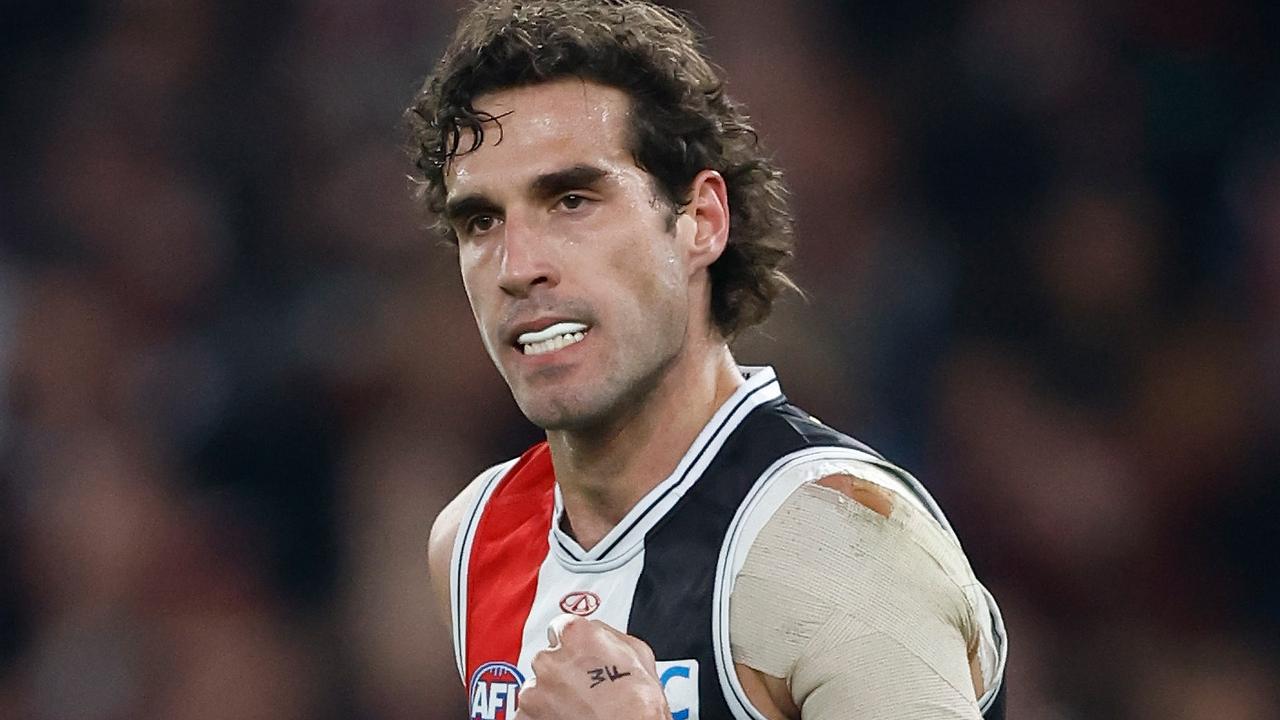
    Higgins picked up the inflammatory knee issue during last weekend’s victory against Richmond, and the club confirmed he would not make the cross-country trip west to face a Fremantle side that has been climbing the AFL ladder in recent weeks. His absence adds to a growing injury crisis for the Saints, who already have key players including Nasiah Wanganeen-Milera, Max King, Mitch Owens and Liam Owen sidelined with different long and short-term injuries.

    Speaking to reporters on Thursday, St Kilda head coach Ross Lyon confirmed the decision to hold Higgins out of the match, noting the knee had flared up unexpectedly after the Richmond win. “(Higgins) won’t play, it’s sort of just flared up a bit, it’s just a bit swollen in the knee… he won’t play,” Lyon said.

    For the club’s other high-profile injured star, Wanganeen-Milera, Lyon confirmed the club is taking a cautious approach to his calf injury, despite the player saying he feels fit enough to return. Wanganeen-Milera is currently listed as a two-week outs, and Lyon said the club would not risk rushing him back to avoid long-term chronic injury, pointing to a string of high-profile examples across the league where early returns from calf injuries derailed entire careers.

    “As far as I know, he’s on track, pretty bubbly, he’d like to be playing, he says, ‘I feel a million dollars’,” Lyon said. “But sports science takes over and calves, you know, there’s been players if you get a chronic calf you’re gone. Like Dan Hannebery, Harley Bennell and Eric Mackenzie here, there’s probably a few others around the league. You’ve got to be cautious with them, which we will be.”

    Heading into the Perth clash, St Kilda will look to replicate a dominant win they recorded against Fremantle last year at Marvel Stadium, when they ran out 10-goal winners thanks to a crushing midfield performance led by Jack Macrae. That day, the Saints won the clearance count 50-22 and dominated contested possessions 151-103 in one of their most complete performances of the 2023 season.

    Lyon said that midfield battle will once again be the defining factor of this weekend’s clash, particularly when it comes to containing Fremantle’s star dynamic ruckman Luke Jackson, who Lyon labeled a “unicorn” for his unique mix of size and skill. Fremantle’s midfield also features star talents including two-time MVP contenders Andy Brayshaw and Caleb Serong, plus dangerous forward-midfielder Shai Bolton, making the Dockers one of the most well-rounded lineups in the competition this season.

    “Our stoppage work is pretty good and clearly Rowan (Marshall) and TDK (Tom De Koning) as a combination are important to that,” Lyon said. “But we come up against the unicorn, right? You look at their midfield, they’re very good either end and well-led by their captain when he’s there. If you want to be the best, then you’ve got to beat the best… it’s an opportunity.”

  • Virgin Australia relaunches holiday packages as research shows strong demand for bundled travel

    Virgin Australia relaunches holiday packages as research shows strong demand for bundled travel

    Five years after pausing its packaged travel offering amid the global travel collapse triggered by the COVID-19 pandemic, Australian carrier Virgin Australia has announced its return to the bundled holiday booking market, launching a revamped service to meet booming post-pandemic consumer demand for seamless travel planning.

    Dubbed Virgin Australia Holidays, the new offering is built in partnership with global travel marketplace Hopper, and lets customers book both flights and accommodation in a single transaction, with a curated selection of domestic and international travel options to choose from. This relaunch revives a brand that first launched back in 2003, before being pulled from the market in 2020 when border closures and public health restrictions sent global travel demand plummeting.

    The move comes as Australia’s travel sector experiences unprecedented post-pandemic growth, with Australians taking holidays at record rates and transforming expectations around how trips should be booked and organized. New joint research from Virgin Australia and research firm YouGov underscores this shifting consumer landscape: half of all surveyed Australians reported a clear preference for simpler, more time-efficient trip planning tools, while three-quarters of respondents said they would be more likely to book a travel package through their preferred airline if the offering included competitive pricing.

    Libby Minogue, chief marketing officer at Virgin Australia, framed the relaunch as a strategic expansion of the airline’s core offering beyond standalone air travel. “Virgin Australia Holidays marks an important step in expanding our offering beyond flights and into a more complete travel experience,” Minogue said. “With more Australians seeking value and convenience, we’re bringing together flights, accommodation and Velocity benefits in one seamless booking experience, delivering greater value at a time when cost of living remains front of mind.”

    To kick off the new service, Virgin Australia is offering limited-time introductory promotional packages for travel between July 15, 2026, and March 16, 2027, with deals available across popular destinations including Bali and Cairns. The promotional window closes at 11:59 pm AEST on May 27. Introductory pricing starts at $745 per person for a Bali package, which includes return economy flights from Gold Coast to Denpasar and four nights of accommodation for two travelers. For Cairns, packages start at $820 per person, including return flights from Brisbane and four nights of accommodation.

    The service also includes additional perks for Virgin Australia’s Velocity Frequent Flyer members: customers with eligible package bookings can earn and redeem Velocity points, as well as accumulate Status Credits for their memberships.

    Industry data confirms that the relaunch aligns with broader travel trends across Australia. Outbound travel hit 11.6 million trips in 2024, with continued growth recorded through the first months of 2025. While forecasters expect this rapid post-pandemic growth to gradually stabilize through the second half of the 2020s as demand normalizes, projections show outbound travel will hit 14.9 million annual trips by 2030. Ongoing strong demand for short-haul leisure destinations including Japan, China, Vietnam and Thailand is expected to shape future travel patterns across the country. Major Australian airports are already reporting record-breaking activity, with Sydney Airport noting its strongest ever first quarter for international travel in 2026.

  • Melbourne’s Chapel St among those to go through new 30km/h speed limit trial

    Melbourne’s Chapel St among those to go through new 30km/h speed limit trial

    In a major push to cut road fatalities and improve shared street safety for all users, the Allan Government of Victoria, Australia, has allocated more than $860,000 in new grants to local councils to roll out 30-kilometer-per-hour speed limit trials across high-traffic and community-focused streets, including one of Melbourne’s most famous thoroughfares, Chapel Street.

    As the latest round of investments under the state’s $28.7 million Safe Local Roads and Streets Program, the funding supports 100 new safety projects, bringing the total number of active initiatives under the program to more than 430. The largest single grant in this round, totaling $344,000, has gone to Merri-Bek Council to support its local speed reduction plans. Stonnington Council has received $331,000 to implement the 30km/h limit on Chapel Street, as well as nearby Ewart Street and Osborne Avenue, with an additional $64,000 allocated to expand the 30km/h trial across Melbourne’s inner southeast.

    Further south, Bass Coast Council has secured $122,000 to establish new 30km/h zones across four popular coastal communities: Surf Beach, Smiths Beach, Sunset Strip and Silverleaves. The government has also approved a speed reduction proposal from Geelong Council for Portarlington Street in the regional city of Geelong.

    Beyond speed limit adjustments, the program funds a range of other evidence-based road safety upgrades, including the installation of new speed bumps and targeted improvements to bicycle infrastructure across the state. All projects are led by local councils, with state government grants covering implementation costs, aligned with Victoria’s broader long-term Road Safety Strategy.

    Road Safety Minister Ros Spence emphasized that the partnership between the state and local governments is focused on delivering tangible, on-the-ground improvements to roads that Victorians rely on daily. “These projects will make local streets safer for drivers, pedestrians and cyclists right across the state,” Spence said.

    The state’s Road Safety Strategy sets two ambitious public safety targets: cutting the number of annual road deaths in half by 2030, and eliminating all road fatalities entirely by 2050. Officials note that reduced speed limits in dense, high-foot-traffic areas have been shown to dramatically lower the risk of severe injury and death in the event of a collision, making the trials a core component of the strategy’s early implementation.