A rapidly escalating confrontation between the United States and Iran entered its third consecutive night of military strikes this week, triggering ripple effects across the Middle East that have disrupted global energy markets and spurred urgent international calls for restraint. The sharp escalation follows a fresh outbreak of hostilities that ended a brief month-long ceasefire between the two powers, bringing the strategic Strait of Hormuz — through which roughly 20% of global oil supplies pass daily — to the center of a growing global crisis.
In the latest round of cross-regional attacks, Jordan’s military confirmed Tuesday that it intercepted and destroyed four Iranian missiles that entered its airspace, as Iran launched retaliatory strikes against US regional allies in response to American bombardments. Meanwhile, loud explosions rocked the Bahraini capital Manama early Tuesday, according to an Agence France-Presse reporter on the ground, marking the third set of blasts since dawn after air raid sirens sounded across the city.
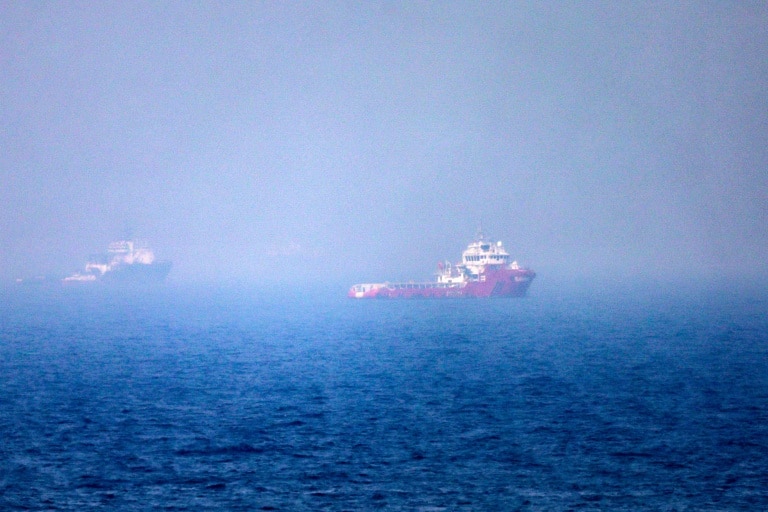
The United Arab Emirates, a key US ally in the Persian Gulf, accused Iran of launching missile attacks on two commercial vessels transiting the Strait of Hormuz Tuesday, leaving one crew member dead and eight others injured. The attack marks the latest in a string of strikes on commercial shipping linked to Iran that have raised alarms about global maritime security. Separately, the UK Maritime Trade Operations agency reported a separate missile strike on an outbound tanker near the Omani fishing port of Limah, with authorities launching an investigation into the incident.
The escalating conflict has already roiled global energy markets, with benchmark crude prices jumping sharply Tuesday following the announcement of new US strikes. West Texas Intermediate crude, the key US benchmark, rose 2.5% to settle at $80.15 per barrel, while Brent North Sea Crude — the global benchmark — climbed to $85.37 a barrel, matching the same percentage gain. The price surge underscores the market’s sensitivity to disruptions in the Strait of Hormuz, one of the world’s most critical chokepoints for global energy trade.
As tensions mount, the international community has moved quickly to push for de-escalation. China issued a formal statement Tuesday calling on both Washington and Tehran to immediately take steps to restore safe and unimpeded passage through the strait. “Restoring normal and safe passage through the strait as soon as possible is a shared aspiration of the international community,” Chinese foreign ministry spokesperson Lin Jian told reporters, adding that Beijing would continue “unremitting efforts” to bring the crisis under control and lower tensions.
On the US side, President Donald Trump has ordered a sharp escalation of economic pressure, with US Central Command confirming it would reimpose a full naval blockade of all Iranian ports starting at 20:00 GMT Tuesday. The blockade was previously eased after Washington and Tehran reached an interim ceasefire agreement in June, but Trump pledged to reimpose the full restrictions after the latest outbreak of fighting. In a post to his Truth Social platform Monday, Trump announced the US would “take over” security operations for the Strait of Hormuz, and require all transiting ships to pay a fee equal to 20% of the value of their cargo to cover US operational costs. “The United States will be reimbursed… for any and all costs necessary to do the job of providing safety and security” through the waterway, he wrote.
Iran has rejected Trump’s plan outright, with its top military command warning that it will not tolerate any US interference in the management of the strait. In a published video statement Monday, a spokesperson for Iran’s Khatam Al-Anbiya military command said Tehran “under no circumstances will allow… the United States to interfere in the management” of the strategic waterway. The spokesperson also issued a stark warning to neighboring Gulf states, saying any cooperation with the US plan would be considered “an act of war” against Iran.
On the ground, US strikes on Monday left two people dead in Iran’s southwestern Khuzestan province, an oil-rich region bordering Kuwait and Iraq, according to Iranian state news agencies Fars and Tasnim. The reports cited a local provincial official confirming two fatalities and three additional injuries. Iran’s Mehr news agency also reported widespread explosions near the key port city of Bandar Abbas and the nearby island of Qeshm, a major Iranian naval and commercial hub. US Central Command later confirmed it had deployed one-way attack sea drones for the first time to carry out the strike on the Iranian port, marking a new phase in US military tactics against Iranian targets.