标签: Oceania

大洋洲

  • Ibrahim Benbrika, son of terror leader, pleads guilty to robbery and assault of man ‘lured’ to park

    Ibrahim Benbrika, son of terror leader, pleads guilty to robbery and assault of man ‘lured’ to park

    In a sudden development at Melbourne Magistrates’ Court on Tuesday, Ibrahim Benbrika – the 26-year-old son of notorious convicted Australian terrorist leader Abdul Nacer Benbrika – entered guilty pleas alongside two co-accused to charges of robbery, common assault, and illegal controlled weapon possession, wrapping up a hearing that had been scheduled to span two days.

    Benbrika’s co-offenders, 24-year-old Michel El-Chikhani and 24-year-old Oways Afaneh, also confirmed their guilty pleas in court before magistrate James FitzGerald. Prosecutor Michael Roper laid out the details of the Crown’s carefully compiled case against the three men, outlining how the elaborate scheme unfolded from September 2024 onward.

    According to Roper’s account, the 43-year-old victim, who had no prior connection to any of the three defendants, initiated conversations on Facebook with a profile operating under the name “Holly”. Over the course of several months, the pair exchanged messages discussing an agreement for sex in exchange for money, eventually arranging a meeting at an isolated Melbourne nature reserve around 11 p.m. on January 24 this year.

    When the victim arrived at the pre-arranged site, he was not met by “Holly”. Instead, Benbrika, El-Chikhani and Afaneh emerged, clad entirely in black and wearing balaclavas to conceal their identities. The trio immediately knocked the victim to the ground, delivering repeated punches and kicks while demanding his mobile phone and cash. Court documents and evidence presented during the hearing detailed particularly threatening moments: Benbrika was captured on video pressing a sheathed knife against the victim’s head, while El-Chikhani held a sharp hunting knife directly to the man’s throat at one point during the attack.

    After subduing the victim, Benbrika dragged him in a headlock back to his own vehicle. There, El-Chikhani used the victim’s own phone to complete an unauthorized bank transfer of $250 to the group. In addition to the stolen cash, the trio also took two of the victim’s mobile phones, his official identity documents, and a portable battery pack before fleeing the scene. The victim managed to flag down a passing motorist for help and was subsequently transported to a local hospital for treatment of his injuries.

    Roper emphasized the premeditated nature of the attack, telling the court: “This was a planned luring of a victim to a place that they’re alone at night. They are confronted by three armed men and terrorised.” Digital evidence recovered from the defendants’ phones corroborated the prosecution’s account: investigators found Snapchat clips recording segments of the assault stored on both Afaneh and Benbrika’s devices. Another video, recovered from the devices, captures the three men sitting around a kitchen table after the attack discussing their actions, with one referencing the idea of “catching pedophiles”.

    Defense lawyer Veronika Drago, representing Benbrika, told the court that this offhand comment provides critical context for the entire incident, a detail she says was omitted from the prosecution’s initial summary. Drago explained that the “Holly” Facebook profile listed the account holder as an underage minor, leading the three men to frame their actions as a vigilante attempt to apprehend a child predator. “These are three young and very foolish men,” Drago told the court, adding that the ongoing notoriety of Benbrika’s father has cast a shadow over every aspect of her client’s life, from persistent bullying during his school years to his current placement in a protective custody unit while awaiting sentencing.

    Abdul Nacer Benbrika, Ibrahim’s father, is one of Australia’s most high-profile convicted terrorists. He was sentenced to 15 years in prison in 2009 for leading a domestic terror cell plotting attacks both within Australia and abroad. He completed his original custodial sentence in November 2020, but remained in detention under continuing detention orders until his release in December 2023, after serving 18 years total behind bars.

    Despite pushback from the prosecution, magistrate FitzGerald ruled that the case would remain within the jurisdiction of the Magistrates’ Court, rather than being elevated to the higher County Court for a plea hearing. FitzGerald noted that there was insufficient evidence before the court to confirm whether the trio had planned the attack over three months, or only became aware of the planned rendezvous shortly before the meeting. Still, he acknowledged the severity of the offense, calling it a “very aggressive attack on a person in the middle of the night” that must have been terrifying for the victim. All three defendants are scheduled to return to court on Wednesday for a scheduled pre-sentence hearing.

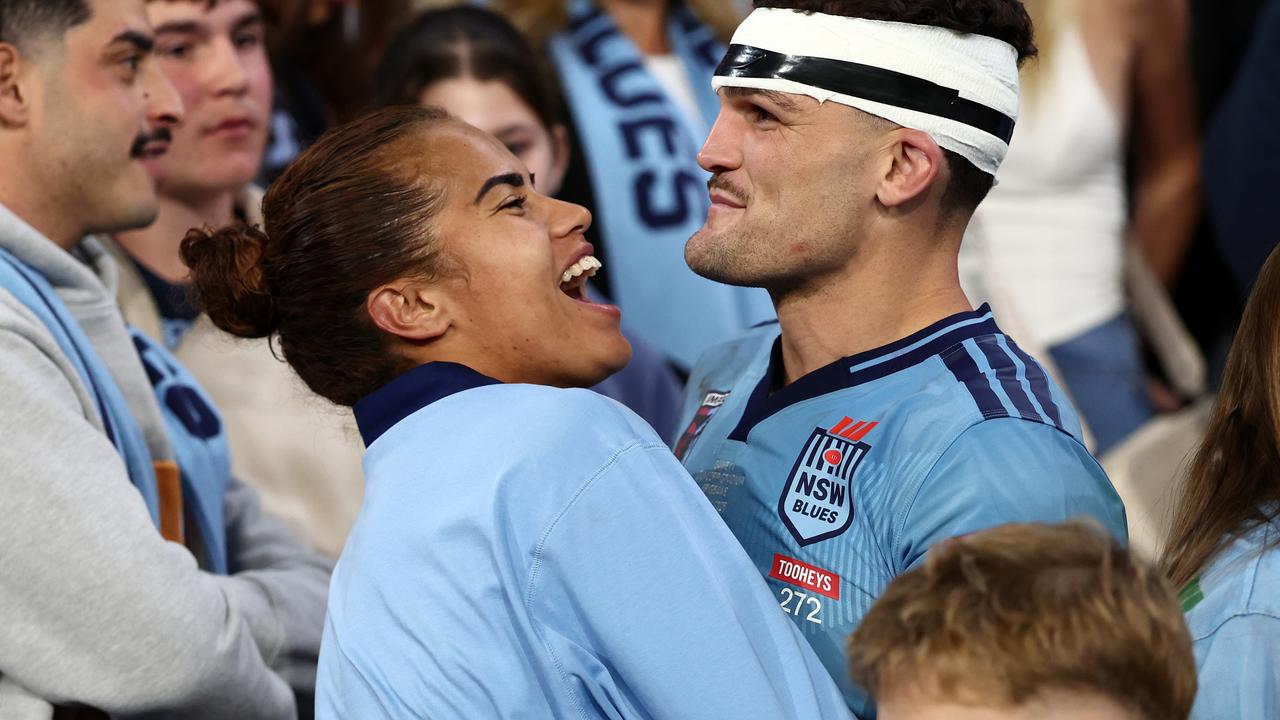
  • Round 13 team lists: Sharks lose Hynes for Manly blockbuster as Blues hopefuls return from injury in time for game two

    Round 13 team lists: Sharks lose Hynes for Manly blockbuster as Blues hopefuls return from injury in time for game two

    Just 48 hours after the opening match of the 2026 State of Origin series, NRL clubs have locked in their Round 13 lineups, delivering a mixed bag of injury updates that have reshaped upcoming fixtures across the league. While most clubs are taking a cautious approach to their representative Origin players, naming them to extended benches for fitness assessments later in the week, multiple teams have landed welcome boosts with key stars cleared to return from long injury layoffs.

    Cronulla Sharks have suffered an early setback ahead of their Friday night clash against the in-form Manly Sea Eagles, with star halfback and former Blues playmaker Nicho Hynes ruled out entirely. Scans conducted earlier this week confirmed a minor calf strain sustained during training, and the club confirmed further testing will be required to confirm the length of his stint on the sidelines. In Hynes’ absence, rookie Niwhai Puru has been named in the coveted number 7 jersey, pairing with Braydon Trindall in the halves for the Sharks. For Manly, the Sea Eagles have kept their own Blues representatives — Haumole Olakau’atu and Tolu Koula — on an extended bench, aligning with the league-wide cautious approach to monitoring Origin players post-series opener.

    The biggest boost of the round goes to the Brisbane Broncos, who have secured the return of superstar prop Payne Haas, who has made a full recovery from a knee injury. The NSW Blues mainstay is now on track to rejoin the state’s pack for the second Origin game, and will take the field for Brisbane this weekend against the St George Illawarra Dragons. Fellow Bronco Brendan Piakura has also earned a spot in the starting back row, with all of the club’s Origin representatives named to back up this weekend. The Dragons, for their part, have welcomed experienced hooker Jacob Liddle back to the squad, naming him on the bench for the Sunday clash.

    Wests Tigers have also earned a significant boost to their lineup ahead of their match against the Canterbury Bulldogs, with multiple key players cleared to return: representative fullback Jahream Bula, hooker Api Koroisau, and promising young centre Heamasi Makasini. Makasini will partner with winger Sunia Turuva in the centres for the Tigers, while Canterbury has retained Jacob Kiraz in the starting fullback role. Regular starting fullback Connor Tracey will join captain Stephen Crichton on the Bulldogs’ extended bench for this round.

    The Parramatta Eels are facing mixed injury fortunes ahead of Round 13: star halfback Mitch Moses remains sidelined with the hamstring strain that already ruled him out of the Origin series opener, but the club has welcomed dynamic fullback Isaiah Iongi back from an extended injury layoff. Long-time Eels prop and club great Junior Paulo recently underwent an arthroscopic procedure to treat a chronic right knee injury he had been playing through for the preceding three weeks, and is expected to make his return to the side in Round 21.

    Sydney Roosters captain James Tedesco has been named in the starting fullback spot for the club’s away trip to face Melbourne Storm, with utility Cody Ramsey primed to shift into the role if the Blues star is rested for the round. The Storm will be without back-rower Shawn Blore, who was ruled out after suffering a head knock in training.

    For NSW Blues and Penrith Panthers fans, there is excellent news ahead of Sunday’s top-billed clash against the New Zealand Warriors: star back-rower Liam Martin has been officially cleared to return from injury. All of Penrith’s Origin representatives have been named to an extended bench and will undergo final fitness assessments later in the week. For the Warriors, incoming Dragons playmaker Luke Metcalf has been named in the reserves as he pushes for a return to the active playing lineup. The official NRL shared full details of all Round 13 team lists via social media on May 26, 2026.

  • Heat dome over Europe scorches UK, Ireland, France and Spain

    Heat dome over Europe scorches UK, Ireland, France and Spain

    An unseasonal, record-shattering heat dome has settled over Western Europe, bringing sweltering temperatures far above average May norms and triggering public health warnings across the United Kingdom, Ireland, France, Spain and Italy this week. The event, which follows decades of climate research linking rising global temperatures to more frequent extreme heat events, has already forced work restrictions, disrupted public activities, and renewed urgent calls for infrastructure adaptation to a warming climate.

    Meteorologists trace the extreme heat to a mass of warm air originating from northern Africa that has become trapped under a stable high-pressure system over Western Europe — a weather pattern commonly referred to as a heat dome. This system, which typically brings such extreme heat only in the peak of summer months of July and August, has pushed temperatures 15 to 18 degrees above typical mid-spring averages across most of the affected region.

    On Monday, the first full day of the heat surge, multiple countries logged all-time May temperature records. The UK’s Met Office confirmed that a high of 34.8C was recorded at London’s Kew Gardens, smashing the previous national May record by a full 2 degrees Celsius. “This heat would be exceptional in the UK even in mid-summer, let alone May,” the agency said in a post on social media platform X. In Ireland, two weather stations in the southwest and south of the country — Killarney and Clonmel, respectively — tied a new national May record of 28.8C. Meteo-France also confirmed that Monday was the hottest May day recorded in the country since national temperature tracking began.

    Local impacts of the unexpected heat have already been severe. In the French capital of Paris, a 10-kilometer running race over the weekend left one participant dead and 10 others hospitalized in critical condition. At the ongoing Roland-Garros tennis open in Paris, spectators fainted and struggled with the sweltering conditions on open courts. A grass fire broke out near Edinburgh’s iconic Arthur’s Seat, sending thick plumes of smoke across the Scottish capital, where temperatures hit an unseasonal 25C. Beaches in southwestern France have filled with heat-seeking visitors weeks earlier than the typical summer tourist season, while farmers across the region reported that crop harvests are progressing far ahead of schedule due to the early heat.

    In response to the dangerous conditions, authorities have implemented emergency restrictions. Italy’s Lazio region, which is home to the capital Rome, approved early implementation of seasonal rules banning outdoor work in direct sunlight between 12:30 pm and 4:00 pm, putting the rule in effect more than two weeks earlier than the 2022 start date. The restrictions apply to construction sites, agricultural work, and logistics operations, and will remain in place through mid-September. Spanish meteorological agency Aemet warned that extraordinarily high temperatures would persist across most of the country (excluding the offshore Canary Islands) through the end of the week, with widespread tropical nights — when temperatures remain above 20C overnight — forecast for southwestern Spain starting Wednesday, and peak temperatures between 36C and 38C from Wednesday through Friday. French Prime Minister Sebastien Lecornu has called an emergency meeting with top cabinet ministers Thursday to coordinate the national government’s heatwave response preparations.

    Climate scientists and weather experts have repeatedly emphasized that this extreme early heat event is directly tied to human-caused climate change, noting that Europe is warming faster than the global average, making extreme heat events more frequent, more severe, and more likely to occur outside the traditional summer peak. “This is a good indication of climate change in action,” UK Met Office meteorologist Greg Dewhurst told reporters from Agence France-Presse, adding that such out-of-season extreme heat events are likely to become the new normal in coming years.

    Last week, leading UK climate advisers issued a stark warning to the national government, noting that much of the country’s core public infrastructure — including schools, hospitals, and transport networks — was designed for a climate that no longer exists, and urged urgent upgrades to adapt to rising average temperatures and more frequent extreme heat events. The UK already made global headlines in 2022 when it recorded its first ever temperature above 40C, a milestone that many climate scientists said was a clear warning sign of accelerating climate change impacts.

    For many residents and visitors across Western Europe, the unexpected early heat has been a jarring experience. “The weather here, it’s like a mini version of hell. It’s boiling. It’s like really hot,” 10-year-old visitor Liza Nizki told reporters in London, where average May temperatures typically hover between 17C and 18C. Long-term London resident Lindy Brand-Daloze, a 66-year-old Australian who has lived in the UK for 12 years, framed the extreme heat as a new reality the public must adapt to. “It’s warm, but it’s climate change, isn’t it? So you know, we have probably got to get used to this.” Forecasters with the UK Met Office do expect temperatures to cool off later this week as the heat dome shifts eastward, but experts warn more extreme early heat events can be expected in coming years as global temperatures continue to rise.

  • ‘Life of the party’: Billy Slater hopes time in Maroons camp can help Jai Arrow after devastating MND diagnosis

    ‘Life of the party’: Billy Slater hopes time in Maroons camp can help Jai Arrow after devastating MND diagnosis

    In a moving show of team solidarity just days after Jai Arrow’s forced retirement from professional rugby league following a devastating motor neurone disease (MND) diagnosis, Queensland Maroons head coach Billy Slater has opened up about the decision to welcome the veteran forward into the team’s pre-series camp ahead of the State of Origin opener in Sydney.

    Arrow, a 12-game veteran for the Maroons and respected NRL forward with the South Sydney Rabbitohs, announced his medical retirement last week, shocking the Australian rugby league community. Slater, who shared the field with Arrow during the 2018 Origin series, made it a priority to bring the popular forward into the Maroons’ team environment ahead of the first match, with Arrow joining the entire squad for a team dinner in Parramatta on Monday night.

    “Jai is one of those guys that thrives around his mates, his teammates, and the footy environment. He’s always been the life of the party, and that didn’t change last night,” Slater told reporters. “To see Jai laughing and joking with the boys, it made for such a special environment. We just knew it was really important to have Jai here for Jai. This was also a chance to honor his incredible career. We all understand the journey he’s starting now, and it’s going to be incredibly tough. Every Queenslander, every member of the rugby league community, is right behind him.”

    Slater also paused to pay tribute to Australian AFL legend Neale Daniher, who passed away on Monday after a years-long public battle with MND. Daniher, named 2025 Australian of the Year, raised millions of dollars for critical MND research during his fight, leaving a lasting legacy for those impacted by the disease. Acknowledging the difficult road ahead for Arrow, Slater said the forward’s presence in camp had already left a profound mark on the entire Maroons squad, even though the decision to invite him was rooted purely in support, not inspiration.

    “The thing I admire most about Jai is how reliable he is. He’s a tough, hardworking player, but more than that, he’s a reliable mate and a reliable teammate — that’s what I love about him,” Slater said. “When he gave his interview with Danika Mason, I was so struck by the fact that even now, he wants to inspire other people going through tough times. When someone faces this kind of adversity and still thinks about what they can give to others, that’s an incredible legacy to leave.”

    While Arrow’s speech has started to decline due to the progression of MND, Slater said the forward retained his signature sense of humor and love for Queensland rugby league. “He’s still the same Jai. The boys love having him here, and he’ll remain with the group through game night. He’ll ride on the team bus to the stadium and be right there with the squad on match day,” Slater confirmed.

    Beyond the emotional team news, Slater addressed on-field preparations, downplaying injury concerns around Queensland captain Cameron Munster, who sat out Sunday’s training session. “He just had a bit of muscle tightness. He’s totally fine,” Slater joked. “As players get a little older toward the end of their careers, you need to adjust training loads to make sure you’re at your best on game day. We made the call to give him the session off to freshen up, he’ll train this afternoon, and he’s 100% good to go tomorrow night.”

    Munster will partner rookie half Sam Walker, who makes his State of Origin debut in front of a projected 80,000 fans at the Sydney ground. Both Slater and Munster have encouraged the young playmaker to lean into his unique playing style instead of trying to emulate past Queensland halves.

    “He’s such a one-of-a-kind player, and I’ve been so impressed by his skill level spending this week with him,” Slater said. “We all know how creative he is, and that impression has only gotten stronger this week. He’s a level-headed, quiet kid, and he’s handled his first Origin week really well. I can’t wait to see him get out there and show what he can do — that’s our whole goal for him this game.”

    The entire rugby league community has rallied around Arrow since his diagnosis was announced, with messages of support pouring in from clubs, players and fans across the country ahead of the opening Origin match.

  • Starbucks Korea reveals series of mishaps leading to ‘Tank Day’ campaign

    Starbucks Korea reveals series of mishaps leading to ‘Tank Day’ campaign

    In a highly anticipated public press conference held in Seoul this Tuesday, the South Korean licensee of Starbucks, Shinsegae Group, laid bare a cascade of systemic errors and oversights that led to the widely condemned ‘Tank Day’ promotional campaign, a misstep that has roiled the country and caused severe reputational and financial damage to the coffee giant’s local operations.

    The controversial campaign, which launched a line of insulated ‘tank tumbler’ cups under the ‘Tank Day’ branding, was deliberately scheduled to launch on May 18 — the annual national anniversary of the 1980 Gwangju Pro-Democracy Uprising, where hundreds of unarmed civilians were killed in a violent military crackdown ordered by the then-ruling government. Official records confirm 165 civilians were killed during the crackdown, 65 remain unaccounted for, and 376 more died from injuries sustained in the uprising, though many South Koreans maintain the actual death toll is far higher.

    The promotional name and timing immediately triggered widespread public fury across South Korea, as observers drew a direct parallel between the ‘tank’ branding and the military tanks deployed to crush the pro-democracy movement. What followed was a sharp drop in consumer sales, a nationwide call for a public boycott, and the immediate dismissal of Starbucks Korea’s chief executive, Son Jung-hyun.

    During Tuesday’s press briefing, Shinsegae executive Jeon Sang-jin presented the findings of the company’s internal investigation, which uncovered a pattern of reckless prioritization of speed over due diligence that extended from the campaign’s planning through its approval process. Jeon revealed that the marketing team relied entirely on artificial intelligence to generate campaign concepts, and the team members claimed the May 18 anniversary never registered as a problematic date during the ideation phase. ‘Those involved denied any intentional wrongdoing,’ Jeon stated, adding that the team only recognized the harm of the campaign after widespread public backlash erupted.

    The investigation also uncovered extreme negligence during the approval stage: of the seven senior officials required to sign off on the campaign, multiple approved the proposal as a routine administrative task without even opening the email attachment containing the campaign design and full details. Additionally, the mandatory legal team review that had been standard for all previous marketing campaigns was completely skipped for this promotion.

    Three of the five marketing team members working on the campaign have refused to surrender their mobile devices for independent forensic investigation, citing personal privacy rights, leaving open questions about whether the team intentionally moved forward with the AI-generated concept despite any implicit red flags. The internal probe confirmed the company has failed to build sufficient social and historical sensitivity across its teams, a systemic shortcoming that goes far beyond individual employee error.

    South Korean President Lee Jae Myung has already publicly condemned the campaign as ‘inhumane and disgraceful’, and local law enforcement has launched a separate criminal investigation. If investigators find evidence that the campaign was intentionally created to mock or trivialize the Gwangju Uprising, those responsible could face criminal charges in addition to termination from the company.

    Shinsegae Group Chairman Chung Yong-jin opened the press conference with a deep public bow, issuing a direct apology to the bereaved families of Gwangju uprising victims and accepting full accountability for the incident. ‘I will make no excuses. I take full responsibility for this matter,’ Chung said, before declining to take questions from assembled reporters.

  • Sonny Rollins, last jazz ‘colossus,’ dead at 95

    Sonny Rollins, last jazz ‘colossus,’ dead at 95

    The world of jazz has lost its last iconic giant from the genre’s golden age. Sonny Rollins, the trailblazing American tenor saxophonist universally known as the ‘Saxophone Colossus’, passed away at his home in Woodstock, New York, on Monday at the age of 95. The announcement of his death was shared in a heartfelt post on his official social media accounts, which confirmed the news of his peaceful passing.

    A creative visionary who constantly reinvented his art across seven decades, Rollins transformed jazz into a medium for both social commentary and spiritual exploration. His bold, resonant saxophone lines gave voice to the aspirations of Black Americans during the civil rights movement, channeled collective national grief in the wake of the September 11 attacks, and reflected the mystical insights he gained during years of spiritual retreats in Asia. Born in Harlem to parents who migrated from the U.S. Virgin Islands, Rollins rose to join the ranks of the most influential saxophonists in jazz history, alongside legends including Charlie Parker, Coleman Hawkins, and John Coltrane — with whom he shared an affectionate yet complex artistic relationship.

    Unlike many of his contemporaries from jazz’s post-WWII golden era, Rollins lived a remarkably long, disciplined life, continuing to refine and remaster his work well into his 80s, even as chronic respiratory issues gradually limited his public performances. When asked in a 2016 interview with Agence France-Presse about the secret to his longevity, Rollins attributed it to two things: his lifelong practice of yoga, which helped him stay focused and avoid the substance abuse that cut short the lives of many fellow artists, and his unquenchable thirst for creative growth. “I’m still alive because I’m still learning,” he famously said in that interview.

    Rollins’ signature sound was distinct among major saxophonists of his generation: a biting, heavy delivery that often challenged listeners rather than soothing them, paired with an intricate, holistic approach to composition that framed music as a lifelong search for universal truth. His iconic nickname originated from his breakthrough 1956 album *Saxophone Colossus*, a record that redefined the hard bop genre, bringing raw, new power to the tenor sax while stripping jazz of unnecessary structural constraints. One of the album’s most enduring tracks, “St. Thomas”, wove in the Caribbean calypso rhythms Rollins had heard growing up, a nod to his Virgin Islands heritage that remains his most recognizable composition.

    One of the most legendary stories of Rollins’ career came in the early 1960s, when overwhelmed by the pressure of his rising fame, he stepped away from the spotlight to practice daily on New York City’s Williamsburg Bridge, which connects Brooklyn to Manhattan’s Lower East Side. For three years, he played for nearly every waking hour, even through the cold of winter, turning the busy bridge into his private rehearsal space. This self-imposed public sabbatical yielded one of his most acclaimed albums, 1962’s *The Bridge*, and in recent years, proposals have circulated to rename the Williamsburg Bridge in his honor. Rollins also crossed over to mainstream audiences outside of jazz, making a notable guest appearance on The Rolling Stones’ 1981 hit album *Tattoo You*.

    By his mid-20s, Rollins had already shared stages and recording studios with nearly every jazz legend of the era, including Parker, Miles Davis, and Thelonious Monk, with whom he was particularly close early in his career. He famously cut the classic 1957 album *Brilliant Corners* alongside the pioneering pianist. While many framed Rollins’ relationship with Coltrane as a rivalry — the two both pushed jazz into new creative territory and shared a fascination with Indian spirituality — Rollins offered a warm reflection on their connection later in life. Where Coltrane was known for his graceful, gentle texture, Rollins brought a firmer, more tangible command of musical dynamics, approaching composition with the intentional craft of a classical composer. The pair only recorded together once, on the title track of Rollins’ 1956 album *Tenor Madness*. Looking back on his early career, Rollins acknowledged he had been overly brash with his idols: “I look back on my relationship with Coltrane, and my relationship with Monk — a lot of stupid things I did with those people that I would not have done if I was more mature,” he said, calling Coltrane “a beautiful, beautiful human being.” Rollins was predeceased by his wife and manager of nearly 40 years, Lucille, who died in 2004.

    Following his 1956 breakthrough, Rollins continued to innovate on 1957’s *Way Out West*, where he introduced his signature “strolling” technique: unaccompanied sax solos that flow over only bass and drums, forgoing the traditional piano chords that anchored most jazz ensembles of the era. Rollins often described his improvisational style as rooted in intuition rather than conscious planning. “When I play and I improvise, I don’t think, because music comes from the subconscious, someplace else,” he told news outlet The Root. “I’m just a human, so when I play my horn, I get into a state where the music plays me. I’m just standing up there and fingering my horn and blowing.”

    His commitment to yoga extended far beyond physical health; the breathing techniques and mental discipline it afforded him deepened his fluency on the sax. A decade after his Williamsburg Bridge sabbatical, Rollins stepped away again in 1966, this time to study Zen meditation in Japan before moving to an ashram on the outskirts of Mumbai, India, where he arrived with nothing but a suitcase and his saxophone. Under the guidance of spiritual teacher Swami Chinmayananda, he spent his days studying and discussing sacred Vedic texts, performing rarely, before bringing his spiritual learnings into his music with works like *Patanjali*, named for the ancient founder of yoga. “Jazz artists were trying to find a way to express life through our improvisations. The music has got to mean something,” he later told National Public Radio.

    Beyond his artistic innovations, Rollins was unafraid to use his platform to advance social justice. His 1958 work *Freedom Suite* was an explicit artistic statement in support of the rising civil rights movement. While the 20-minute instrumental piece spoke to artistic freedom on its surface, Rollins made its political purpose unmistakeable in the album’s liner notes — a strikingly bold stance for a Black artist of the era. “America is deeply rooted in Negro culture: its colloquialisms; its humor; its music,” he wrote. “How ironic that the Negro, who more than any other people can claim America’s culture as his own, is being persecuted and repressed; that the Negro, who has exemplified the humanities in his very existence, is being rewarded with inhumanity.” The album was so controversial that a later reissue was released under an alternate title, and Rollins faced pushback when performing the piece in the Jim Crow South. He doubled down on his advocacy for Black pride with *Airegin*, a fast-paced classic whose name is an anagram for Nigeria.

    Late in his life, Rollins once again turned to music to process collective trauma after the September 11, 2001 attacks. Living just six blocks from the World Trade Center, he evacuated his home by walking down 40 flights of stairs and suffered respiratory irritation from the attack’s toxic fumes. Just four days later, he drove to Boston (all commercial flights were grounded nationwide) to perform a memorial concert that was later released as a live tribute album to the attacks’ victims.

    After decades in New York City, Rollins retired to a quiet farm in upstate New York, where he had space to continue his meditation practice. In his final years, he acknowledged a growing pessimism about humanity’s trajectory, noting that he and his fellow mid-century artists once believed music could help bring about world peace. “But then I learned, and I lived a little longer,” he told AFP. “I realized that this world will never change. This world is meant to be a place of war, killing, everything — sickness, illness, death. That’s this world.”

  • AFL 2026: Essendon refuses to rule out James Hird as potential Brad Scott replacement

    AFL 2026: Essendon refuses to rule out James Hird as potential Brad Scott replacement

    The Essendon Bombers have made a high-stakes coaching change, cutting ties with senior coach Brad Scott just weeks into the 2026 Australian Football League season following a brutal slump in on-field performance. The decision comes after the club secured only a single win across Scott’s final 24 matches, a stretch that spans the end of the 2025 campaign and the opening weeks of 2026. Almost immediately after Scott’s dismissal was announced, former Essendon coach and club legend James Hird emerged as a fan-favorite candidate to return to the top job – a position Hird held more than a decade ago before his resignation in the wake of the club’s infamous supplements scandal.

    In comments to reporters on Monday, Essendon president Andrew Welsh, a former teammate of Hird’s, declined to give a definitive answer on whether the club legend would be in the running for the vacant role, stopping short of both confirming and ruling him out entirely. “I haven’t spoken to Hird, no. We’re not ruling anyone in or anyone out of this. I am sure that there will be a lot of people interested in this role,” Welsh told media. The Essendon chief added that the club will first lay out clear criteria for the characteristics and qualifications it wants in its next senior coach, before narrowing down the pool of potential candidates.

    Hird, who was a finalist for the Essendon senior coaching job back in 2022 before the board ultimately selected Brad Scott, has remained active in Australian rules football in recent years, currently serving in a coaching role with Port Melbourne in the Victorian Football League (VFL), the top feeder competition for the AFL.

    To steer the club through the upcoming transition period, Essendon has appointed club great Dean Solomon as interim senior coach. The appointment follows Solomon’s move from the club’s board of directors to an assistant coaching role in the pre-season, a shift that fueled speculation the club was already planning for Scott’s dismissal. Welsh rejected those claims outright in Monday’s press conference.

    The Essendon president also pushed back on narratives that the club was determined to fill the role with a so-called “old Essendon” figure – a person with deep ties to the club’s history, along the lines of Welsh and Solomon himself. While Welsh emphasized that he values the passion and institutional knowledge that former Essendon players bring to the table, he noted that the club is open to any qualified candidate regardless of their past connection to the Bombers.

    That said, Welsh pointed to multiple recent successful examples of former players returning to lead their old AFL clubs, arguing that when the right candidate is a former club great, the arrangement can deliver strong results. “I look at other clubs, respectfully Sam Mitchell has gone back to Hawthorn and doing an amazing job,” Welsh said. “I look at Justin Longmuir over at Fremantle, Josh Carr has gone back to Port Adelaide. I think there’s really good history around players going back to clubs and the right people for those groups going to those clubs. I don’t shy away from Essendon people being great people and I want great people – Essendon people – to continually be involved in the footy club.”

    Essendon’s coaching change marks the second high-profile AFL vacancy in just a matter of weeks, coming after Carlton senior coach Michael Voss stepped down abruptly earlier this month. It also coincides with a search for a new coach for the AFL’s upcoming expansion club in Tasmania. When asked if the timing of those other vacancies factored into Essendon’s decision to move on Scott now, Welsh said the club did not consider that timeline at all when making the call. “That didn’t come into our consideration at all surrounding this decision,” he confirmed.

  • Rubio says US ready to mediate as Moscow steps up Kyiv threats

    Rubio says US ready to mediate as Moscow steps up Kyiv threats

    Four years into the full-scale Russian invasion of Ukraine, a sharp new escalation of tensions has pushed the long-running conflict back to the center of global attention, with Washington throwing its weight behind renewed efforts to broker a ceasefire. In the wake of Moscow’s explicit threats to launch systematic, large-scale attacks on the Ukrainian capital Kyiv — including explicit warnings for foreign diplomatic staff to evacuate immediately — US Secretary of State Marco Rubio announced Tuesday that the United States remains fully prepared to facilitate an end to the war.

    The latest cycle of violence began after Russia accused Ukrainian forces of striking a vocational school in the Moscow-occupied Lugansk region, an attack that Moscow claimed killed 21 people. Following the incident, Russian President Vladimir Putin ordered his military to carry out retaliatory strikes, triggering a massive weekend barrage across Ukraine that included dozens of drones, conventional missiles, and the deployment of Russia’s advanced Oreshnik hypersonic missile. According to Russian specifications, the Oreshnik can reach speeds of up to Mach 10 and is designed to carry nuclear warheads. The barrage left four people dead in Kyiv, caused widespread damage to civilian infrastructure, and claimed an additional life in the southern port city of Odesa early Tuesday, regional official Sergii Krasylenko confirmed in a Telegram post.

    In a statement released after the strikes, Russia’s Foreign Ministry formalized the new escalation, confirming that Russian armed forces would begin targeting Ukrainian military-industrial sites, decision-making hubs, and military command posts across Kyiv. The ministry explicitly urged all foreign citizens, including diplomatic personnel and staff of international organizations, to leave the capital immediately. Russian Foreign Minister Sergei Lavrov relayed this warning directly to Rubio during a phone call between the two top diplomats on Monday, though Rubio clarified Tuesday that the evacuation notice was circulated to all foreign embassies in Kyiv, not just the US mission.

    Speaking to reporters during an official visit to India, Rubio framed the latest upsurge in violence as a painful reminder of the human cost of the prolonged conflict. “Every time you see these big strikes from one side or the other, it’s a reminder of why this is a terrible war that’s now gone on longer than the Second World War, and it needs to come to an end,” Rubio said. “The US stands ready and prepared to help do whatever we can to help facilitate the end of this war, and hopefully the opportunity will present itself at some point.”

    This is not the first time Moscow has issued evacuation warnings for foreign personnel in Kyiv. Earlier this month, Russia issued a similar threat of massive strikes on central Kyiv if Ukraine attempted to disrupt the annual military parade on Moscow’s Red Square. On both occasions, Western diplomatic missions and Ukrainian officials have flatly rejected the warnings, framing them as little more than coercive rhetoric designed to sow panic. “We’re used to Putin’s threats. It is out of the question to evacuate,” a French Foreign Ministry spokesperson said Monday. The European Union’s ambassador to Kyiv echoed that sentiment in a Facebook post, writing simply, “We are not going anywhere.”

    Ukrainian Foreign Minister Andriy Sybiga echoed the defiance, urging international partners not to give in to what he called Russian blackmail. Russia launched its full-scale invasion of Ukraine in February 2022, and the conflict has since become the deadliest armed conflict in Europe since World War II. US-led diplomatic efforts to negotiate a ceasefire have stalled in recent months, largely sidelined by competing international crises including the ongoing conflict in the Middle East.

  • Dozens of drones crash into Sydney harbour after light show glitch

    Dozens of drones crash into Sydney harbour after light show glitch

    One of the Southern Hemisphere’s most anticipated annual cultural events, Vivid Sydney, hit an unexpected snag on the evening of Monday 25 May local time, when nearly 90 drones plummeted from the night sky over Darling Harbour during the festival’s popular Star-Bound aerial display. Witness footage captured the dozens of unmanned devices tumbling out of formation, with many splashing into the waters of Cockle Bay just a short distance from gathered onlookers, leaving crowds confused by the sudden disruption to the programmed light show. The incident has already forced the cancellation of two scheduled performances, with the future of the remaining 20 planned drone shows still under review. The UK-based drone production company Skymagic, which designed and operates the 1,000-drone display, has pinpointed the root of the failure: an unanticipated shift in radio frequency conditions that occurred after the drones had already taken off. According to a company spokesperson, the frequency change disrupted positional accuracy for affected devices, triggering their pre-programmed failsafe landing protocols that sent them descending into the harbour and surrounding marina areas. Skymagic was quick to emphasize that no drones fell outside the designated safety boundaries set for the performance, meaning no bystanders were injured in the incident. That claim did little to soften the shock of witnesses, however. Robert, a worker at the Darling Harbour waterfront, told Australian public broadcaster ABC that the sound of crashing drones was audible even from 10 to 20 meters away. “You could hear them physically crash and smash onto the cement marina,” he explained. Representatives for Vivid Sydney, the three-week long festival that draws hundreds of thousands of locals and tourists to Sydney Harbour and central Sydney every year, issued a formal apology for the disruption. “We apologize for the disappointment and inconvenience caused to attendees,” the spokesperson said, adding that the decision to cancel upcoming performances aligned with the event’s standard safety protocols. Festival organizers have confirmed that Skymagic will partner with relevant Australian government agencies to conduct a full technical review of the incident. No decision will be made on whether to resume the remaining drone performances until the assessment is complete. The Star-Bound drone display was scheduled to run over 11 nights, with 22 total shows planned as a key attraction for the 2026 festival. This year marks only the second time Vivid Sydney has included drone shows in its official lineup: the festival first introduced aerial drone displays in 2024, drawing massive crowds, but opted to cancel all drone shows in 2025 over public safety concerns related to overcrowding. First launched in 2009, Vivid Sydney brands itself as the Southern Hemisphere’s largest combined festival of light, music, ideas and food. The event’s core attraction is a free 6.5-kilometer walking trail dotted with 43 large-scale light installations, including iconic light projections mapped onto the sails of the Sydney Opera House. Annually, thousands of visitors from across Australia and around the world travel to Sydney to attend the three-week winter festival.

  • Tribunal swamped by migration, student visa application review, hearing told

    Tribunal swamped by migration, student visa application review, hearing told

    Australia’s independent body tasked with reviewing government migration and visa decisions is facing an unprecedented operational crisis, as surging appeals from rejected international student visa applicants have pushed caseloads to record levels amid ongoing political debate over the country’s immigration framework.

    New figures revealed during a recent Senate estimates hearing on Tuesday lay bare the scale of the strain on the Administrative Review Tribunal (ART). In the 2024-25 financial year alone, the tribunal has already received 39,953 applications to review migration decisions, with the full-year projection hitting 46,653. Migration cases now account for 56% of the ART’s entire active caseload, making it the single largest category of work for the body.

    Of these migration appeals, international student visa applications stand out as the biggest driver of growing backlogs. Principal Registrar Michael Hawkins AM confirmed to the hearing that student visa-related cases make up 35% of the ART’s total national caseload. By the end of April 2024, the tribunal had already received 24,545 student visa appeal lodgements, putting the full-year total on track to reach 32,202 across all student and study-related visa subclasses.

    Hawkins explained that the ART has long prioritized processing protection visa cases, which cover asylum seeker claims, each of which requires two to three days of work per application. This focus, however, has left the growing volume of student visa appeals at risk of creating a persistent, long-term backlog. Even though individual student cases take roughly one day to process each, sheer volume has overwhelmed the understaffed body.

    The ART has been grappling with chronic understaffing and resource gaps that compound the caseload pressure. While the tribunal is on track to finalize 60,000 total cases in the 2025-26 fiscal year, this falls short of its 68,000 completion target — and that outcome is only being achieved with 75% of its budgeted staffing levels. Forty-two new tribunal members are set to join the body by early July, but even after new hires start, the ART will still be short roughly 80 full-time equivalent positions. As of July 1, the tribunal will operate with 423 total members, equal to just 347.5 full-time roles, leaving a gap of 82 full-time staff.

    Hawkins noted that the ART is currently prioritizing clearing cases that are more than three years old, a strategy that slows the overall rate of new case completions. “In short, we were budgeted for effectively 60,000 finalisations and we’ve got 90,000 new cases coming in, so we’re always accumulating a 30,000 backlog,” he told the hearing. As of the latest update, 77,938 cases remain waiting for a hearing across all of the ART’s portfolios.

    Between the start of the 2024-25 financial year and the end of April, the ART finalised 18,717 migration application reviews, 18,259 protection visa cases, and more than 4,600 social security-related decisions. Hawkins also thanked Liberal Senator Michaelia Cash for her support in advancing regulatory reforms for the ART through the Senate, pointing out that outdated procedural requirements — including mandatory notice rules for applicants — are currently slowing down decision-making workflows. The revelations come as political tensions over Australia’s immigration policy continue to intensify on the national agenda.