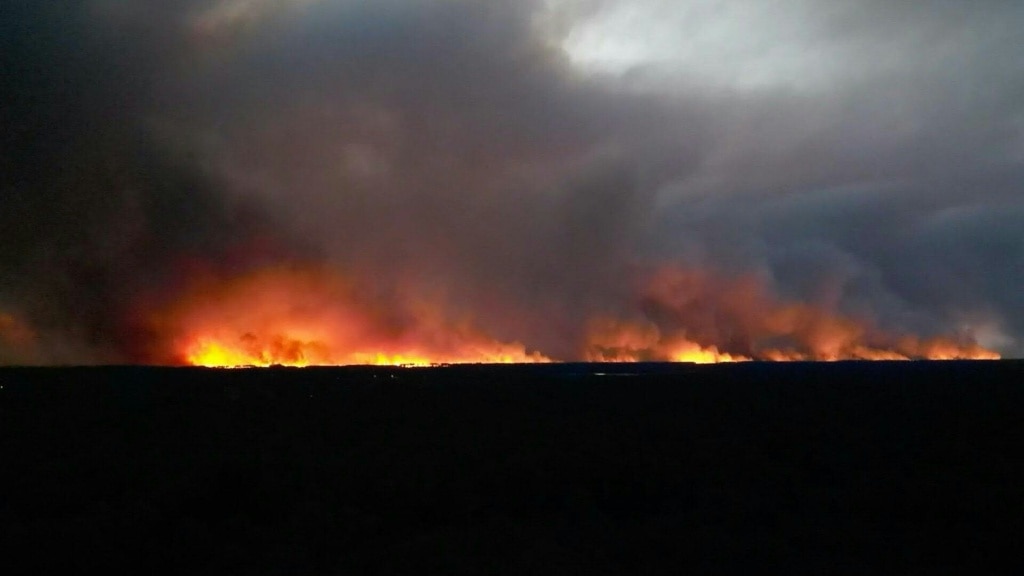
A devastating wave of wildfires fanned by record-breaking high temperatures is sweeping across Western and Southern Europe, triggering mass evacuations, emergency declarations, and urgent requests for cross-continental assistance as blazes consume thousands of hectares of land and claim multiple lives. As of Friday, smoke from out-of-control blazes burning just 60 miles from the Spanish capital had drifted into Madrid, while thousands of tourists and local residents were evacuated by boat from a popular French Atlantic vacation peninsula, marking one of the most severe wildfire crises the region has faced in years.
标签: Oceania
大洋洲
-

ASX 200 plunges amid Trump’s Iran threat and soaring interest rate fears
A sharp downturn swept across Australia’s benchmark share index on Friday, driven by two interconnected pressures: escalating geopolitical risk from a newly revealed U.S. military threat against Iran and growing market expectations that interest rates will remain higher for longer across the globe.
The S&P/ASX 200, Australia’s primary blue-chip index, closed down 66.70 points, or 0.75%, to settle at 8772.30, marking its worst single-day performance in July. The broader All Ordinaries index followed suit, dropping 76.60 points, or 0.85%, to end the session at 8941.50. The Australian dollar also weakened, slipping to 69.86 U.S. cents by market close.
Seven out of the ASX’s 11 industry sectors closed in negative territory, led by steep declines in information technology, materials, and consumer discretionary stocks. The technology sector bore the brunt of the selloff: cloud accounting firm Xero fell 4.45% to $61.58, logistics software developer WiseTech Global plunged 4.64% to $30.02, and communications technology firm Codan dropped 4.13% to $39.65.
Major mining firms also faced significant downward pressure. BHP Group declined 2.94% to $58.85, Rio Tinto fell 1.69% to $159.99, and Fortescue Metals Group closed down 1.01% at $18.57.
The trigger for much of the market jitters was comments from former U.S. President Donald Trump, who confirmed to U.S. news outlet Axios that he was considering a “massive attack” on Iran, larger than any previous U.S. military action against the country. “I am close to making a decision. We are all set for it,” Trump stated, amplifying existing geopolitical instability in the Middle East that already included 13 consecutive days of strikes targeting Iran and Iran-aligned Houthi rebels in Yemen.
Commonwealth Bank sustainable and energy economist John Oh noted that the threat spooked already jittery global and domestic markets. “Although the scale of the ‘massive attack’ considered by U.S. President Trump remains unclear, any expansion of attacks to include key civilian and energy infrastructure, and the risk of subsequent Iranian retaliation, would continue to worry markets,” he explained.
The heightened risk of regional conflict sent global crude oil prices soaring, with Brent crude jumping more than 6% to hold near $100 U.S. per barrel, its highest level since May. The oil price surge in turn stoked fears of renewed inflationary pressure, which raised expectations for further interest rate hikes from the U.S. Federal Reserve. This dynamic pushed gold prices down 2.5% to $4048 U.S. per ounce, dragging down Australian gold producers: Northern Star Resources fell 3.91% to $19.93, while Evolution Mining declined 2.42% to $11.29.
Domestic monetary policy expectations added further downward pressure to the equity market. Australia’s 10-year government bond yield climbed back above 5%, a level last seen during the 2011 Eurozone debt crisis, as money markets priced in a higher probability of future Reserve Bank of Australia rate hikes.
Global X strategy analyst Joseph Marassa noted that the shift in rate expectations had a notable impact on equity valuations. “It marked the ASX’s worst session of the month,” he said. “Markets will be focused on next week’s inflation print, following yesterday’s hotter-than-expected unemployment data. Market-implied odds of a rate hike next month have risen above 40 per cent, double last week’s level.”
Even positive corporate news failed to stem the downward trend for several listed firms. Qantas Airways shares fell 1.96% to $9.99 despite the airline confirming a key milestone for its Project Sunrise initiative, which will launch non-stop Sydney-to-London flights from October 2027. Cochlear shares slipped 0.45% to $111.61 even after the hearing implant manufacturer confirmed it would retain duty-free access to the U.S. market following the conclusion of a U.S. government investigation. ASX Limited itself closed down 1.23% at $54.33 after announcing that chief financial officer Andrew Tobin, who joined the market operator in 2022, will retire from his role.
-
Eight health workers probed over ‘inappropriate’ access to AFL star’s health records
A former Australian Football League star, Tony Modra, is at the center of a growing privacy scandal after a near-fatal car crash left him recovering in a South Australian hospital, with eight hospital staff now under scrutiny for allegedly snooping on his confidential medical records.
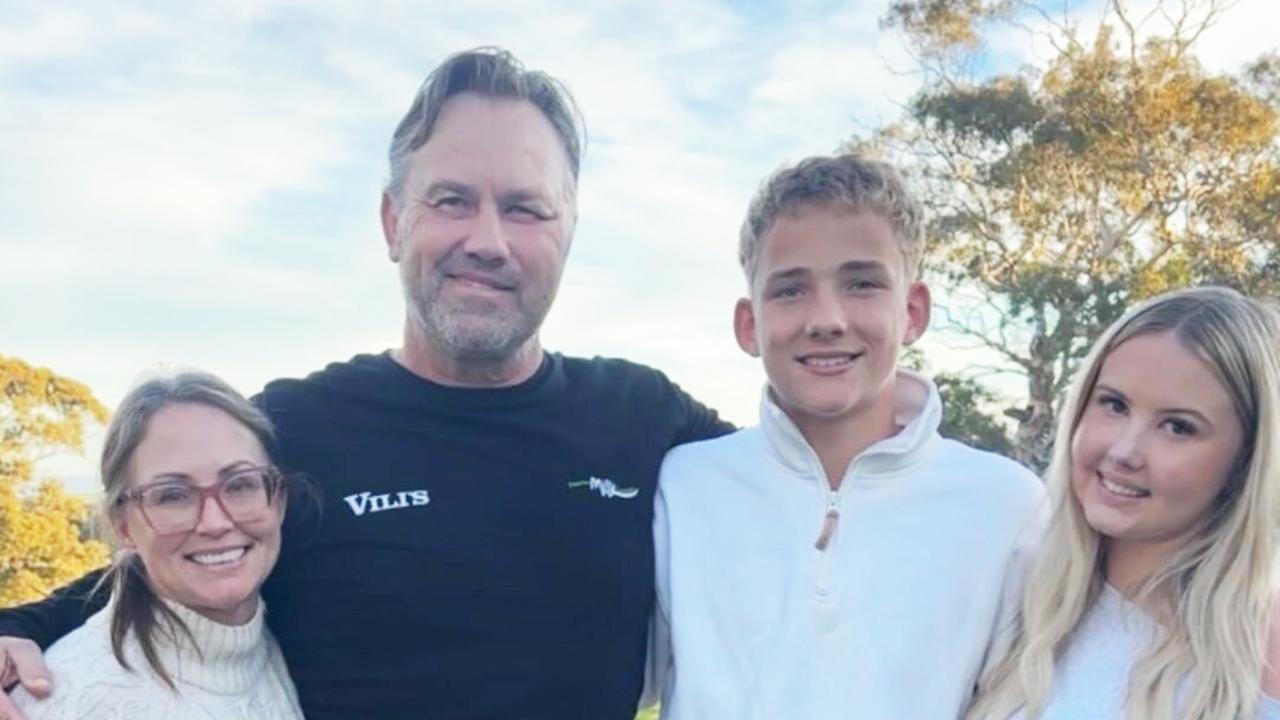
Modra’s life-threatening accident unfolded earlier this year near Victor Harbor, when a falling tree branch crashed straight through the windscreen of his moving vehicle. The impact left him with severe injuries that required extensive surgery and a multi-week stay at Flinders Medical Centre for intensive care and recovery. Earlier this week, the beloved former Adelaide Crows player shared a heartfelt public update, thanking the clinical team that supported his recovery and confirming he had returned home to reunite with his wife Erica and their two children, Luke and Hayley. Images shared on social media showed Modra reunited with his family just one month after his life-saving surgery, offering fans a glimpse of his ongoing recovery journey.
But the celebratory update has been overshadowed by the revelation of an official investigation into potential privacy breaches by hospital employees. SA Health, the government body overseeing public health services in the state, has confirmed that an internal probe is actively underway, and has issued a formal apology to Modra and his family for the unnecessary distress the incident has caused.
In an official statement, SA Health emphasized that protecting patient confidentiality and private clinical data is one of its highest priorities. “Protecting patients and their private clinical information is a matter we take extremely seriously,” the statement read. The organization noted that it maintains strict internal policies and routine auditing processes to ensure staff only access patient information when it is clinically necessary for their work. “Any staff member who has accessed information inappropriately may be subject to disciplinary processes, which may include termination of their employment,” the statement added.
According to SA Health’s update, the potential breach was uncovered during a routine compliance audit. Three members of staff are currently facing formal investigation for allegedly gaining unauthorized access to Modra’s patient records, while a further five employees are being assessed to confirm whether their access to the files was legitimate and work-related. While SA Health has not publicly confirmed Modra’s identity as the patient in question, multiple public reports and industry sources have confirmed he is the individual at the center of the probe. SA Health added that the investigation remains ongoing, and repeated its apology to the family for the privacy violation.
The scandal has sparked renewed conversation about patient privacy protections in South Australia’s public health system, with advocates highlighting that even high-profile patients are entitled to full confidentiality during their medical care.
-

South Korean tycoon ordered to pay $644m in divorce
One of South Korea’s most high-profile and costly divorce cases has concluded a major new chapter this week, with a revised ruling cutting the massive settlement that leading tech tycoon Chey Tae-won must pay to his ex-wife Roh Soh-yeong to $644 million.
Chey, 65, serves as chairman of SK Group, the South Korean conglomerate that owns SK hynix, a global industry-leading memory chip manufacturer that counts AI giant Nvidia among its key clients. SK Group is widely regarded as a core pillar of South Korea’s tech-driven national economy, making the long-running legal battle over the couple’s assets a closely watched case both in business and political circles.
The pair were married in 1988 at Seoul’s presidential Blue House, when Roh’s father Roh Tae-woo was serving as South Korea’s president. Though they share three children, the couple has lived separately for more than 15 years. Chey publicly admitted to fathering a child with another woman in 2015, and filed for divorce two years later. Formal court proceedings began in 2022 after mediation efforts failed to resolve the split.
In 2024, the Seoul High Court issued an initial ruling ordering Chey to pay Roh a record 1.38 trillion won, equal to roughly $940 million at the time. The unprecedented size of the payout led South Korean media to label the dispute the “divorce of the century.” Chey appealed the ruling to South Korea’s Supreme Court, which sent the case back to the lower court for re-evaluation. That reconsideration resulted in Friday’s adjusted ruling, cutting the settlement to 944 billion won ($644 million). The revised ruling does not mark the end of the legal process, however: either party still has the right to appeal the new decision back to the Supreme Court for a final ruling.
At the heart of the acrimonious dispute has been debate over the definition and valuation of the couple’s shared marital assets, primarily Chey’s multi-billion dollar controlling stake in SK Group. The 2024 lower court ruling included a 30 billion won slush fund established by Roh’s father to support SK Group’s early growth as part of Roh’s contribution to the couple’s shared assets, arguing that the fund helped grow Chey’s holdings. But last October, the Supreme Court struck down that reasoning, ruling the slush fund amounted to illegal bribes and could not be counted as a legitimate contribution to the marital estate.
In Friday’s new ruling, the Seoul High Court upheld Roh’s entitlement to one-third of the couple’s shared assets accumulated during the marriage. The ruling noted that Chey’s SK Group shareholdings grew substantially during the marriage through his executive work, while Roh contributed to that growth through managing the household, raising the couple’s children, and carrying out public-facing duties on behalf of the conglomerate. The court also explicitly accounted for the dramatic surge in SK Group’s share value that has occurred since the couple separated, driven in large part by the global AI boom that has sent demand for SK hynix’s memory chips soaring. SK Group’s stock price has more than tripled since December 2015, when Chey’s extramarital affair became public. Chey’s current stake in the conglomerate is valued at approximately $5.5 billion based on recent public regulatory filings.
Beyond the property settlement, the Supreme Court has already ordered Chey to pay a separate 2 billion won in alimony to Roh. Roh, 65, has built an independent career in the cultural sector, where she operates a prominent digital art museum.
-

Hundreds flee French peninsula by boat to escape wildfire
A rapidly spreading wildfire forced the complete evacuation of France’s Cap Ferret peninsula on Friday, with more than 400 residents and vacationers escaping the blaze via a fleet of civilian and official boats. The evacuation order came as the inferno, burning just kilometers from one of France’s most famous Bordeaux wine regions, expanded to cover more than 8,000 hectares — an area roughly one and a half times the size of Manhattan. The Cap Ferret wildfire is not an isolated disaster: it is one of multiple active blazes burning across the country amid the peak summer vacation season, which has drawn thousands of tourists to the southwestern Atlantic coast. In response to the spreading flames, authorities have already ordered thousands more visitors to evacuate coastal campsites and seasonal holiday homes, as hundreds of firefighters backed by water-bombing aircraft work around the clock to contain the fire lines. As the crisis escalates beyond the capacity of national response resources, French President Emmanuel Macron announced that Paris has activated the European Union’s civil protection mechanism to request additional firefighting support from neighboring member states. Macron warned that the wildfire situation across the country remains “very intense”, with little sign of relief in the coming days. Data from the European Forest Fire Information System (EFFIS) confirms that 2024 is already shaping up to be one of the worst years for wildfire activity on the continent: the total area of burned vegetation across EU countries is already the second largest recorded since systematic satellite tracking began. The unfolding disaster comes as southern Europe continues to face record-breaking summer heat waves and drought conditions, which have created tinder-dry conditions across forests and shrublands, increasing the risk of uncontrolled wildfire spread.
-

WAFCON favourites Nigeria eye World Cup slot and record prize money
The 2026 Women’s Africa Cup of Nations (WAFCON), the continent’s flagship biennial women’s football tournament, is set to kick off this Sunday in Morocco, with two major high-stakes rewards on offer for competing teams: direct qualification to the upcoming 2026 FIFA Women’s World Cup and a record-breaking $2 million first-place prize purse.
This year’s edition marks a historic expansion of the tournament, growing from 12 participating nations at the previous tournament to 16 teams, all vying for continental glory. As 10-time WAFCON champions and the defending title holders, Nigeria’s Super Falcons enter the competition as the clear pre-tournament favorites, carrying the momentum of a dramatic 2022 final victory that saw them come back from a two-goal half-time deficit to beat host nation Morocco 3-2 with a late winning goal from midfielder Jennifer Echegini.
Echegini, who plies her trade at Paris Saint-Germain, returns to the squad this year alongside the other two goal scorers from that iconic final: Canada-based forward Esther Okoronkwo and Chinese Super League attacker Folashade Ijamilusi, all hungry to add another continental title to their resumes. For the Super Falcons, the roadmap to success starts with securing one of four automatic World Cup qualification spots reserved for African semi-finalists, according to head coach Justine Madugu.
“Our first priority is reaching the semi-finals and clinching one of four World Cup places automatically reserved for Africa,” Madugu told reporters ahead of the tournament opener. “Our second goal is to defend the trophy and bring it back to Nigeria. We know it will not be easy because every other nation wants to depose us. We have in our possession something precious that everybody else wants. However, we will remain resolute and focused and try to achieve both objectives.”
Madugu has assembled a 25-player roster that blends veteran experience with emerging young talent, drawn from clubs across the globe ranging from Mexico and Israel to China. The squad includes just one home-based player, goalkeeper Fatima Oloko of Abia Angels, while the Super Falcons will be captained by Rasheedat Ajibade, Echegini’s PSG teammate. The team also boasts Chiamaka Nnadozie, the Brighton & Hove Albion shot-stopper widely recognized as the top women’s goalkeeper on the continent. One notable absence from the 2022 winning squad is defender Ashleigh Plumptre, the England-born Al-Ittihad player who has been ruled out of the tournament with an injury.
Drawn into Group C, Nigeria will face a challenging opening round that includes strong contender Zambia, disciplined Egypt, and first-time WAFCON participants Malawi. Zambia boasts two of the most dangerous attacking players in African women’s football: Racheal Kundananji, who made headlines in 2024 when she transferred from Madrid CFF to America’s Bay FC for a then-world record transfer fee, and consistent goal scorer Barbra Banda. While Malawi enter the tournament as underdogs, they field a formidable attacking pair in the Chawinga sisters: Tabitha of Lyon and Temwa of Kansas City Current.
Across the four groups, the tournament features a mix of continental powerhouse and rising contenders. In the 13 editions of WAFCON held since 1991, only two other nations have lifted the trophy besides Nigeria: Equatorial Guinea, which won twice, and South Africa, which claimed the 2022 title. Equatorial Guinea failed to qualify for this year’s tournament, while South Africa enters as the top seed in Group B, where they will face Tanzania, Ivory Coast and Burkina Faso.
Host nation Morocco, which finished as runner-up in both of the past two WAFCON tournaments it hosted, will kick off Group A play against Algeria, Senegal and Kenya. The July 30 matchup between Morocco and Algeria is already expected to be a tense affair, carried by the long-standing strained political relations between the North African neighbors, rooted in the disputed phosphate-rich Western Sahara territory and historical border disagreements.
Group D is rounded out by 2022 bronze medalists Ghana, three-time tournament runners-up Cameroon, and first-time qualifiers Cape Verde, who will look to replicate the incredible success of their men’s national team at the 2024 FIFA World Cup.
A total of 34 matches will be hosted across five stadiums, with three venues in the capital city of Rabat and two in Morocco’s commercial hub Casablanca. The tournament also includes two classification matches between quarter-final losers, which will decide which African team earns a spot in the inter-continental World Cup play-offs.
-
Christian Brothers makes new sexual abuse payout proposals after pause bid
In a dramatic policy reversal that has ended weeks of crippling uncertainty for hundreds of historical child sexual abuse survivors, trustees of the Christian Brothers have announced a landmark new compensation plan that shifts responsibility for all current and future payouts to the organization’s private school network, Edmund Rice Education Australia (EREA).
The reversal comes just weeks after the Christian Brothers triggered widespread outrage and anxiety when it requested a moratorium on all compensation payments to survivors, claiming the organization faced imminent financial insolvency that left it unable to meet outstanding abuse claims. That decision left survivors who had already won settlements or were waiting for judgements in limbo, with no guarantee they would receive the redress they had been awarded.
Under the new proposal submitted to the Supreme Court, EREA – which manages more than 40 Catholic schools across Australia, serving a student population of over 44,000 – will take on full legal and financial liability for all existing abuse claims, all future legal proceedings, and all claims submitted through the federal National Redress Scheme. In a formal statement released Friday, Christian Brothers trustees confirmed that the two organizations had signed a binding memorandum of understanding designed to deliver a final resolution for all creditors, including abuse survivors.
“This means that not only will current claimants with settlements or judgments be paid in full, but EREA will assume responsibility and liability for all current and future legal proceedings as well as for claims before the National Redress Scheme,” the statement read.
EREA board chair Stephen Brown emphasized that the organization views the decision as both a moral obligation and a commitment to the long-term stability of its educational mission. “By supporting a revised scheme of arrangement we are committed to supporting those who have suffered abuse,” Brown said. “This decision will also support the long-term sustainability of the educational ministry, including more than 44,000 students entrusted to EREA’s stewardship. EREA is committed to supporting those who have suffered abuse, so today we are seeking to provide reassurance that we will step in to address future funding shortfalls.”
The new arrangement has been broadly welcomed by Australia’s Albanese Labor Government, which harshly criticized the original pause on payments for the unnecessary distress it caused survivors. Social Services Minister Tanya Plibersek noted that the weeks of uncertainty between the Christian Brothers’ original announcement and the new plan have been an unneeded burden for people who already carried profound trauma from their abuse.
“The past few weeks of uncertainty have been difficult for victim survivors of abuse in institutions run by the Christian Brothers,” Plibersek said. “They should never have been put in the position of wondering whether their claims would be met. No level of compensation can undo the profound harm experienced by victim survivors of child sexual abuse. But we know that redress – including counselling, apologies and financial compensation – can play an important role in helping survivors feel heard, believed and supported.”
-
Socceroos star allegedly tests positive for cocaine after speeding
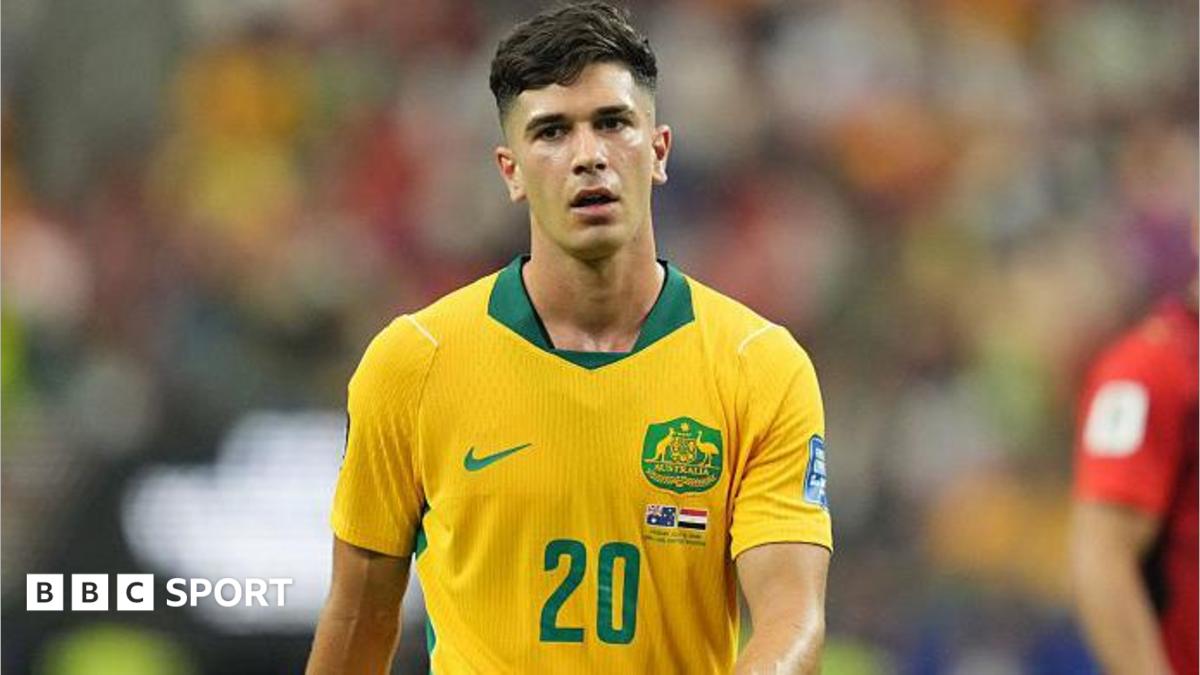
A rising star of Australia’s men’s national soccer team, the Socceroos, finds himself at the center of a drug and driving scandal following two high-speed traffic stops in central Sydney that ended with an alleged positive cocaine test. Twenty-two-year-old midfielder Cristian Volpato, who recently switched his international football allegiance from Italy to Australia ahead of the latest World Cup, was first pulled over by New South Wales Police on the Anzac Bridge just after 11 p.m. local time this past Thursday.
Law enforcement officials confirmed that Volpato was driving a BMW Coupe through a 60km/h zone at speeds between 86 and 94km/h when he was stopped. A standard roadside breath alcohol test came back negative for the 22-year-old, but officers let him go only to pull him over again less than two hours later in the same speed-restricted zone. This second stop found Volpato allegedly speeding at 109km/h, and a follow-up oral fluid test returned a positive result for the presence of cocaine.
In immediate sanctions issued following the second stop, New South Wales Police issued Volpato a formal speeding infringement notice and suspended his international driver’s license for a six-month period, barring him from operating any vehicle within the state for the duration of the ban. Authorities confirmed they have sent a second oral fluid sample for independent laboratory testing, and that the investigation into the incident remains open as they await the confirmatory test results.
Volpato’s career has made rapid progress in recent years: he came up through Italy’s youth international setup, only committing to represent Australia’s senior national team in May, just weeks before the Socceroos finalized their World Cup squad. He went on to feature in three of Australia’s four matches at the tournament, where the team advanced to the round of 32 before being eliminated by Egypt in a penalty shootout. At club level, Volpato has been a regular fixture for Italy’s top-flight Serie A side Sassuolo since joining the club in 2023. He notched 24 league appearances for the club during the 2024-2025 season, helping the team finish 11th in the league table.
As of the publication of this report, BBC Sport has reached out to both Football Australia, the governing body for soccer in the country, and Sassuolo’s club management to request comment on the allegations against Volpato. Neither organization has issued a public response at this time.
-

New twist in star-studded defamation suit between Rebel Wilson and Charlotte MacInnes
One of Australia’s most closely watched entertainment industry legal disputes is set to drag on after the losing party in a high-profile defamation case confirmed plans to challenge the recent ruling. The lawsuit pits A-list Hollywood actor Rebel Wilson, best known for her role in the *Pitch Perfect* franchise, against actor Charlotte MacInnes, who landed the lead role in Wilson’s directorial debut project *The Deb*. The dispute stems from an Instagram post Wilson shared that made claims about an incident between MacInnes and *The Deb* producer Amanda Ghost. In the post, Wilson alleged that MacInnes had complained about feeling uncomfortable during a shared bath with Ghost while both were wearing swimwear, only to backtrack on those concerns to advance her career prospects. MacInnes has repeatedly denied ever feeling uncomfortable or making any such complaint about the encounter, and subsequently launched defamation proceedings against Wilson in Australia’s Federal Court. After weeks of testimony and legal argument, Justice Raper delivered her ruling earlier this week, finding that Wilson had not defamed MacInnes in her social media comments. In her judgment, Justice Raper noted that descriptions of the incident as “unusual” or “bizarre” were more than fair, pointing out significant inconsistencies between the accounts provided by MacInnes and Ghost. Raper also highlighted that MacInnes had materially altered her version of events multiple times in the lead-up to the trial, concluding that both MacInnes and Ghost gave unreliable testimony. The judge ultimately ruled that Wilson had successfully proved her comments were substantially true, allowing Wilson’s full defense to the defamation claim. Immediately following the verdict, Wilson took to Instagram to share her reaction with followers, thanking her supporters, family, and the Australian judicial system for the outcome. She reflected on the stress of the legal process, writing that while the experience had been personally challenging, it had strengthened her commitment to standing up for what she believes in while continuing to create work that entertains audiences. Just days after the ruling was handed down, however, legal representatives for MacInnes confirmed they would not accept the outcome, confirming their client intends to file an appeal against Justice Raper’s decision. The announcement means the bitter public dispute between the two entertainment industry figures, which has gripped public attention across Australia and drawn interest from Hollywood circles, will remain unresolved for the foreseeable future as the appeal process moves forward.
-

Major thing 4.8 million Aussies must do after Origin Energy hack
One of Australia’s largest utility providers, Origin Energy, has confirmed a major cybersecurity incident that has put the personal information of millions of its customers at risk, prompting urgent warnings for heightened scam awareness across the country. The unfolding breach, which was first flagged to the public last Wednesday, took a serious turn on Thursday when company executives confirmed that unauthorized actors had successfully accessed internal systems and stolen sensitive customer data.
Initial media reports from *The Australian*, citing correspondence with the alleged perpetrator, claimed that roughly two million customer accounts had been compromised. To date, Origin Energy has not issued a confirmed number of affected accounts, out of its total 4.8 million residential and commercial customer base. According to the company’s official disclosure, the compromised data can include full names, residential addresses, dates of birth, contact telephone numbers, detailed account information, partial credit card numbers (only the final four digits), and partial bank account details (only the final three digits). Company officials have stressed that the incomplete financial information stolen cannot be used directly to make unauthorized purchases or access customer bank accounts, but that does not eliminate the long-term risk posed by the breach.
Cybersecurity experts warn that the stolen data creates a perfect breeding ground for sophisticated targeted scams. Tyler McGee, head of Asia-Pacific operations for global cybersecurity firm McAfee, who himself received a breach warning from Origin, noted that scammers routinely leverage high-profile data breaches to exploit consumer trust. “Until there is full clarity around the scope of the breach, it is impossible to know exactly how exposed impacted consumers are, but the core fact remains: any stolen personal information allows scammers to craft more convincing targeted scams, either for their own use or to sell on to other criminal actors,” McGee explained. Stolen personal details let scammers create messages that reference specific personal information, making fraudulent communications appear legitimate, as if they came from Origin or another trusted business the customer interacts with regularly. For criminal groups, McGee added, this is a numbers game: even if only a tiny fraction of targets fall for the scam, the operation turns a profit.
New details that emerged on Friday paint a clearer picture of the alleged perpetrator. *The Australian* reported that the hacker, who uses the online alias Edison Walhour, claims to be an Australian former Origin employee. The individual reportedly used a valid former employee login to access Origin’s customer management system, which is provided by third-party vendor Kraken. In a surprising development, the hacker has reportedly backed away from their initial threat to auction the full stolen dataset on public dark web marketplaces. It remains unclear what prompted this change of plans.
In response to the incident, McGee has outlined clear steps Origin customers can take to protect themselves from subsequent scams. First, he advised all potentially impacted customers to update their online account passwords immediately and enable two-factor authentication wherever possible to block unauthorized access. Second, customers should exercise extreme caution around any unsolicited emails, text messages, or phone calls that ask them to click links, share personal information, or make payments. “Consumers need to maintain a heightened state of awareness for the foreseeable future, and anyone looking for extra protection should consider investing in commercial scam protection tools,” McGee added. He also noted that once personal data is leaked by criminals, it remains in circulation permanently, creating ongoing risk for affected individuals.
McGee also pointed out that Australian companies are disproportionately targeted by hackers for two key structural reasons. Historically, Australian corporations have been more willing to pay large ransom demands to end breaches quickly, making them attractive targets. Additionally, Australian law enforcement has far limited capacity to pursue hackers based outside of the country, unlike jurisdictions such as the United States, which routinely works with international partners to extradite cybercriminals for prosecution.
Origin Energy chief executive Frank Calabria has issued a formal apology to customers affected by the incident. “I am sorry this has happened. Customers trust Origin with their personal information, and I apologize for the stress and impact this may cause,” Calabria said. The company is currently working alongside independent cybersecurity experts and law enforcement authorities to investigate the breach, secure its systems, and mitigate further risk to customers.
As the investigation continues, authorities and cybersecurity professionals are urging all 4.8 million Origin customers to remain alert to scam activity in the coming months, regardless of whether they have been formally notified that their data was compromised.