标签: Oceania

大洋洲

  • California chemical tank explosion threat ‘eliminated,’ official says

    California chemical tank explosion threat ‘eliminated,’ official says

    A days-long public safety crisis in Orange County, California, has reached a critical turning point, with fire officials confirming Monday that the imminent threat of a catastrophic explosion from a leaking chemical storage tank has been fully neutralized. Even with the major risk removed, tens of thousands of displaced local residents are still required to remain outside their designated evacuation zones as emergency teams continue to monitor lingering safety hazards, official announcements confirm.

    Interim Fire Chief TJ McGovern of the Orange County Fire Authority announced the update in a video posted to social platform X Monday morning, stating, “We are happy to report that the threat… has been eliminated.” Despite the positive development, McGovern emphasized that evacuation orders remain in full effect, urging residents to “abide by those evacuation zones.” In a separate post on X, the authority added that “there is still an ongoing threat to public safety” that requires continued precautions.

    The emergency was triggered late last week, when crews first detected a leak, and later a structural crack, in a 7,000-gallon storage tank holding methyl methacrylate — a volatile, flammable liquid chemical used in plastic manufacturing. Located in Garden Grove, roughly five miles from the world-famous Disneyland Resort and in a heavily populated region southeast of Los Angeles, the tank’s compromised condition sparked urgent fears that a buildup of heat and pressure could trigger an explosion, prompting authorities to order evacuations for roughly 50,000 local residents starting Friday.

    By Sunday evening, emergency responders confirmed there was no longer an active leak, and continuous atmospheric monitoring detected no unauthorized chemical release into the surrounding air. On Monday, Incident Commander Craig Covey reported that pressure inside the damaged tank had continued to drop, and internal temperature had fallen to 93 degrees Fahrenheit (34 degrees Celsius), down from a hazardous high of 100 degrees Fahrenheit (38 degrees Celsius). “The crack is there. We have verified that it’s there, and the tank has released its pressure,” Covey said. “That is incredibly positive news as we turn the corner on this incident.”

    Federal regulators stepped in rapidly to support the response, with a team of experts from the U.S. Environmental Protection Agency (EPA) dispatched to advise on response strategies. EPA Administrator Lee Zeldin told CNN Sunday that the “most catastrophic scenario” would have involved a chain reaction where one tank explosion triggered blasts at adjacent storage units, but the agency assessed from the start that the “most likely scenario” was a controlled low-volume release that would allow crews to contain and neutralize the risk — an outcome that aligns with the latest on-the-ground updates.

    The damaged tank is owned by GKN Aerospace, a global aerospace technology manufacturer headquartered in Birmingham, UK, that operates 32 production facilities across 12 countries. In a statement released Sunday, the company confirmed it was “working around the clock to mitigate the risk of a leak.” Nearby Disneyland Resort officials also released a statement early in the crisis noting that the popular tourist destination “remains open to guests,” and that resort leadership was keeping close track of developments.

    Public health experts warn that methyl methacrylate, the chemical stored in the tank, causes irritation to human skin, eyes, and mucous membranes. Acute or extended exposure can also trigger serious respiratory and neurological adverse reactions, making continued monitoring critical to protect both response crews and returning residents.

  • Brazil’s Lula starts radiotherapy after removal of skin lesion

    Brazil’s Lula starts radiotherapy after removal of skin lesion

    Eighty-year-old Brazilian incumbent President Luiz Inacio Lula da Silva has embarked on a course of preventive radiotherapy starting this Monday, following the surgical removal of a cancerous skin lesion from his scalp last month, according to an official statement released by Sao Paulo’s Sirio-Libanes Hospital. The treatment comes as the veteran leftist politician campaigns for a fourth presidential term in Brazil’s upcoming October general election, a race that has already put health and age-related questions at the center of public discourse.

    Last month, dermatologist Cristina Abdalla removed a visible basal cell carcinoma from Lula’s scalp. Abdalla previously noted that this type of skin growth is extremely common and primarily triggered by long-term sun exposure, easing initial public concern over the diagnosis. After the successful surgical excision of the lesion, medical teams made the collective decision to administer complementary preventive superficial radiotherapy to reduce the risk of recurrence, the hospital confirmed in its latest announcement.

    In the weeks since the lesion removal, Lula has been spotted wearing a head covering during all public appearances, a habit he previously adopted after a 2024 emergency surgery to address a brain hemorrhage sustained in a domestic accident. This is not the only minor health procedure Lula has undergone this year: he also underwent cataract surgery on his left eye back in January, adding to a string of publicized health events that have drawn scrutiny amid the election cycle.

    To pre-empt growing public anxiety over his fitness for office at 80, Lula and his campaign team have ramped up social media outreach over the past several months. The president has repeatedly shared content showcasing his daily exercise routines, framing an image of vitality to counter questions about whether his age will hinder his ability to serve another four-year term. On the campaign trail, Lula’s most likely leading challenger is Senator Flavio Bolsonaro, the son of former far-right Brazilian President Jair Bolsonaro, who has built a leading position in pre-election polling to secure the main opposition’s nomination.

  • Colombia vote tests leftist rule as violence surges

    Colombia vote tests leftist rule as violence surges

    Colombians will cast their ballots this Sunday in one of the most divisive presidential elections in the country’s recent history, a contest that has been overshadowed by a dramatic spike in organized violence and forces voters to choose between extending four years of historic leftist governance or turning the country sharply to the right.

    Outgoing President Gustavo Petro, Colombia’s first ever leftist head of state, is barred from seeking consecutive re-election, bringing a turbulent close to a term defined by rising insurgent violence, high-profile attacks including car bombings and drone strikes, and the assassination of a sitting presidential candidate. Still, Petro’s administration delivered tangible economic gains for working and low-income Colombians: the national unemployment rate has fallen steadily, driven in part by expanded public sector hiring, and the national minimum wage has been raised significantly.

    That legacy has put Petro’s hand-picked successor, 63-year-old leftist Senator Ivan Cepeda, in the position of poll front-runner heading into election day. The son of a prominent senator murdered by paramilitary groups, Cepeda has campaigned on a promise to expand Petro’s flagship social welfare programs and continue the administration’s signature “total peace” policy of open negotiations with active armed groups, even though the talks have produced few tangible demobilization results to date. For many of Cepeda’s supporters, the Petro administration’s policies have delivered life-changing support. “I give him my vote because my life changed under this government,” explained 23-year-old Bogota design student Natalia Rojas, who benefited from the government’s subsidized higher education program. To avoid a June 21 runoff, Cepeda must win an outright majority of the popular vote, a result most pollsters see as unlikely.

    Most forecasts currently predict Cepeda will advance to a second-round faceoff against 47-year-old right-wing candidate Abelardo de la Espriella, a wealthy lawyer nicknamed “the Tiger” who has never held elected office and run a deeply unorthodox campaign. Known for campaigning in a bulletproof vest, de la Espriella has built his platform on a hardline security agenda that echoes the crackdown implemented by popular Salvadoran President Nayib Bukele – a comparison the candidate has leaned into openly, from his pledge to build large Bukele-style mega-prisons to his similar facial hair style. If elected, de la Espriella has announced he will request direct military backing from the United States to launch a 90-day campaign of airstrikes and aerial crop fumigation targeting cocaine-trafficking armed groups. “What De la Espriella wants is to put the house in order,” said Wilmer Bolivar, a 47-year-old former Colombian soldier and supporter of the right-wing candidate. De la Espriella is locked in a tight battle for second place, however, against centrist opposition Senator Paloma Valencia, who is backed by influential former president and conservative power broker Alvaro Uribe.

    The election has laid bare deep ideological and class divides that have defined Petro’s polarizing tenure. While poorer Colombians have rallied around the government’s expanded social investment and pro-labor policies, the country remains one of the most economically unequal in the Western Hemisphere. Political scientist Alvaro Forero framed the contest as fundamentally rooted in this class divide, telling Agence France-Presse that “this election is marked by class struggle, and that is Petro’s main electoral ammunition.”

    Critics, meanwhile, argue Petro’s governance has been erratic, and that his total peace negotiation strategy allowed armed criminal and insurgent groups that survived the 2016 FARC peace accord to rebuild and expand their territory. Independent experts confirm many groups used the cover of peace talks to strengthen their smuggling and drug trafficking networks, contributing to the wave of violence that has swept the country. Colombia remains the world’s largest producer of cocaine, and the vast majority of current violence is tied to battles over drug trafficking routes between competing armed factions. Human Rights Watch’s Juanita Goebertus called 2025 “a very bad year” for security in the country, noting that kidnappings have more than doubled and internal displacement from violence has hit its highest level in nearly 20 years.

    Every major candidate has faced credible assassination threats throughout the campaign, a reminder of the country’s unstable security environment. The 2024 killing of right-wing candidate Miguel Uribe left many voters anxious about a return to the widespread political violence that marked Colombia’s late 20th century. Rising drug trafficking activity has also badly strained relations between the Petro administration and U.S. President Donald Trump, with the dispute escalating into public mutual insults that nearly upended decades of bilateral security cooperation.

    Regardless of Sunday’s outcome, the next president will inherit a raft of pressing national challenges. Beyond the intractable security crisis, Colombia is facing a ballooning fiscal deficit that has reached 7% of national GDP, driven by lagging tax collection that has not kept pace with Petro’s ambitious social spending programs that were launched to offset a weak post-pandemic economic recovery. As Forero put it, the core question of the election is clear: “What’s at stake is continuing Petro’s change agenda or rejecting it.”

  • Trump demands widespread sign-up to Abraham Accords as part of Iran peace deal

    Trump demands widespread sign-up to Abraham Accords as part of Iran peace deal

    U.S. President Donald Trump has introduced a critical new condition for any finalized peace deal to end the ongoing war with Iran: widespread participation in the Abraham Accords, the 2020 U.S.-brokered agreements normalizing diplomatic ties between Israel and a number of historically hostile regional nations. In a lengthy post shared to his Truth Social platform on Monday, Trump outlined that broad, simultaneous sign-on to the accords should be a mandatory requirement for any Iran peace agreement, following a Saturday conference call with leaders from multiple regional and Muslim-majority nations.

    Trump named the nations discussed on the call as Saudi Arabia, the United Arab Emirates (a 2020 signatory), Qatar, Pakistan, Turkiye, Egypt, Jordan, and Bahrain (another original 2020 signatory). He acknowledged that one or two nations could have valid reasons to opt out, but argued that broad participation would elevate any Iran deal to a far more historic milestone for regional stability. Calling for immediate action, Trump said Saudi Arabia and Qatar should lead the signing process, warning that nations that refuse to join would demonstrate bad faith and be excluded from the deal entirely.

    In a surprising extension of his demand, Trump even suggested that Iran itself could join the accords if it finalizes an agreement with his administration, writing that it would be an honor to welcome Iran into what he called an unparalleled global coalition. The Abraham Accords, first negotiated during Trump’s first presidential term, have long been billed by his administration as one of its most consequential foreign policy achievements, breaking decades of regional precedent by establishing formal relations between Israel and several Arab states. While diplomats have praised the accords as a foundational step toward broader Middle East peace, they have faced widespread public backlash across much of the region, largely because they do not address the long-running Israeli-Palestinian conflict. Saudi Arabia, the most prominent regional power yet to join the accords, signaled as early as November 2025 that it was open to membership only if a clear path toward a two-state solution for Israelis and Palestinians is guaranteed.

    Over the recent U.S. holiday weekend, Trump and his top diplomat Marco Rubio offered conflicting timelines for an Iran deal, at various points suggesting a final agreement was imminent. In his Monday post, however, Trump struck a more measured but optimistic tone, writing that negotiations with the Islamic Republic of Iran were proceeding nicely. While Trump has framed the deal as either being a robust, meaningful agreement or no agreement at all, Iranian officials struck a more cautious note on Monday, confirming that some progress had been made but adding that a final agreement was not yet close at hand. Following up on the ongoing diplomatic process, Iran’s top negotiator Mohammad Bagher Ghalibaf arrived in Qatar on Monday for further talks, according to Iranian state media.

  • ‘Hit you like a tonne of bricks’: NSW great backs Blayke Brailey to rip through Queensland’s ruck

    ‘Hit you like a tonne of bricks’: NSW great backs Blayke Brailey to rip through Queensland’s ruck

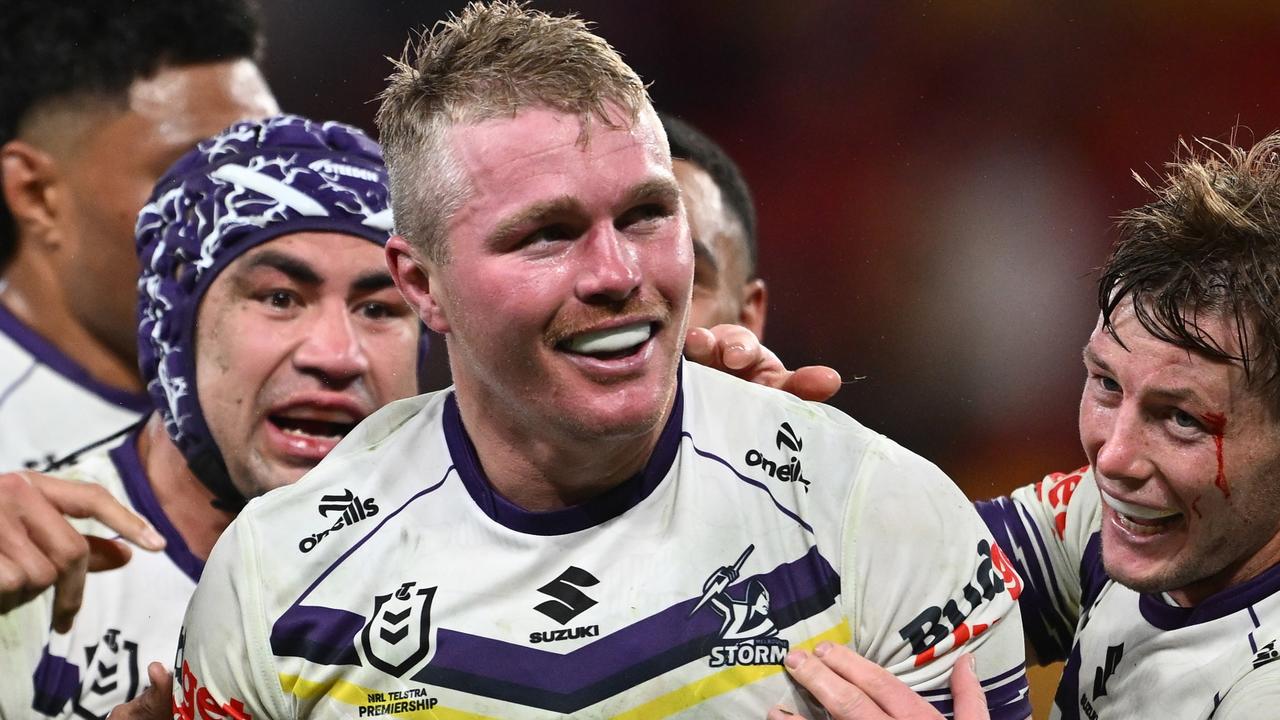
    A decade after former NSW Blues hooker and Cronulla Sharks legend Michael Ennis first heard rumblings of a pair of promising young brothers rising through the Cronulla development ranks, he believes one of those prospects is poised to deliver NSW a victory in the opening game of the 2024 State of Origin series from the interchange bench.

    Ennis, an eight-time Blues representative and part of the Sharks’ 2016 NRL premiership-winning squad, made his prediction as he teamed up with public health initiative DrinkWise at Accor Stadium on Monday morning, just 48 hours before kickoff of the highly anticipated Origin opener. The event launched a new campaign backed by the New South Wales government, NSW Police Force, the National Rugby League, and local support services, which encourages matchgoing fans and home viewers alike to drink responsibly and maintain respect for other spectators during the game.

    Serving as a DrinkWise ambassador for this year’s State of Origin series, Ennis emphasized the value of creating positive, lasting memories of the sport’s biggest annual interstate rivalry. “It was a privilege to experience State of Origin as a player, but now as a fan and a parent, I want to see the night remembered for great moments on the pitch, and the good times we share off it,” he said. “No matter if fans are watching from home, at local pubs and clubs, or right here at Accor Stadium, we just want to encourage anyone drinking to do so in moderation, enjoy the experience, and show respect to everyone around them. That way, everyone can leave with great memories and hopefully a NSW win.”

    Off the campaign trail, Ennis’s attention quickly turned to the on-field action, where he named Cronulla Sharks dummy-half Blayke Brailey – one of the two brothers he first heard about a decade ago during his final years at the Cronulla club – as the secret weapon that could swing the opener in the Blues’ favor. Brailey, who will make his State of Origin debut off the NSW bench on Wednesday, has worked his way into the representative side after several strong seasons leading Cronulla’s attack, and Ennis said he has watched the young hooker’s growth with pride.

    “I haven’t spoken to Blayke ahead of this debut, but I couldn’t be happier for him,” Ennis said. “Blayke and his brother Jayden were just coming through the youth system when I was finishing up my time at Cronulla, and to see both of them now playing elite NRL footy is fantastic. There was always chatter around the club about how talented both boys were, even back then – when Jayden made his first-grade debut, everyone was already talking about Blayke coming up right behind him.”

    From his early days in the top grade, Blayke Brailey was always tipped as a future Origin-calibre dummy-half, Ennis explained. Over the past few seasons, as he has grown into the starting nine role for the Sharks, he has transformed his game to become a key attacking focal point, rather than just a support player for his teammates. That evolution has helped Cronulla push deep into the NRL finals series in recent campaigns, and Ennis said Brailey has finally found the self-belief to match his proven on-field skill.

    Ennis noted that Brailey’s call-up to the Blues squad is fully deserved, after the hooker gained valuable experience on last year’s Kangaroos Ashes tour, where he got the chance to test himself against Queensland’s star hooker Harry Grant. While Ennis said he does not know exactly how Blues coach Laurie Daley will deploy Brailey from the bench, he is confident the rookie will make a major impact when he comes on to relieve starting hooker Reece Robson late in the first half, when fatigue starts to set in for the starting side.

    “That rotation between Reece and Blayke off the bench is going to be one of NSW’s biggest strengths through the whole series,” Ennis said. “Reece already has that established combination with Blues captain James Tedesco from their time together at the Roosters, but having Blayke’s attacking threat to bring on in the middle part of the game, when fatigue really hits, is going to be a massive asset. Origin fatigue hits you harder than any other football, especially in the first game of the series, and with wet conditions forecast for Sydney on Wednesday, that tiredness will set in even faster. Blayke’s speed and ability to change direction quickly out of the ruck could be exactly what the Blues need to take control of the game.”

    For Ennis, if the Blues can pull off the opening win, he plans to celebrate with a quiet couple of beers of his own – responsibly, of course – watching the young rookie he first heard about a decade ago take the next step in what looks set to be a stellar representative career.

  • Pope urges ‘disarming’ of artificial intelligence in major manifesto

    Pope urges ‘disarming’ of artificial intelligence in major manifesto

    In a landmark, long-awaited address on the accelerating growth of artificial intelligence, Pope Leo XIV, the first American pontiff to lead the global Catholic Church, released his first-ever encyclical Monday at the Vatican, using the authoritative Church teaching document to issue a urgent call for the full “disarming” of AI and warn of hidden systemic harms that threaten human dignity.

    Joined on stage by top AI ethics leaders, including a co-founder of major U.S. AI developer Anthropic, the pontiff used the text *Magnifica Humanitas* (translated Magnificent Humanity) to reject modern arguments for military use of AI, declaring that the long-held concept of “just war”—recently cited by the Trump administration to justify conflict—has become entirely outdated. Pope Leo, who has already publicly clashed with the White House over the Iran war and the use of religious doctrine to legitimize armed conflict, drew a clear line on lethal AI systems, stressing that it can never be morally acceptable to hand life-or-death lethal decisions over to algorithmic systems.

    The pope’s stance aligns with the public position of Anthropic, which has framed itself as an industry leader in ethical AI development. The firm is currently locked in a legal dispute with the U.S. military over its refusal to allow its technology to be repurposed for lethal autonomous weapons or mass surveillance programs. While Pope Leo did not name U.S. President Donald Trump directly in the text, he left no ambiguity about his position: “It is important to reaffirm that the ‘just war’ theory, which has all too often been used to justify any kind of war, is now outdated. No algorithm can make war morally acceptable.”

    Beyond military risks, the pontiff unpacked the broader social and economic inequities amplified by the AI boom. Citing United Nations projections that the total value of the global AI economy could reach $4.8 trillion by 2030—a 25-fold increase over a decade—he noted that almost all of this wealth is concentrated in the hands of a tiny elite. Defining what “disarming AI” actually means, he wrote: “Disarming AI means freeing it from the mentality of ‘armed’ competition. It does not mean rejecting technology, but preventing it from dominating humanity.” He condemned the global mad dash for more powerful algorithms and larger proprietary datasets, driven exclusively by the pursuit of geopolitical advantage and commercial monopoly, and argued that AI must be redesigned to be human-centered, universally accessible, and open to ongoing public debate.

    Making AI ethics a defining cornerstone of his early papacy, Pope Leo wove references to global cultural touchstones throughout the 70-page text, drawing comparisons to the thoughts of Greek philosopher Plato, thematic elements of Beethoven’s Ninth Symphony, and even narrative insights from a character in J.R.R. Tolkien’s *The Lord of the Rings*. The encyclical was signed on May 15, the 135th anniversary of Pope Leo XIII’s groundbreaking 1891 encyclical that established the Catholic Church’s modern social doctrine amid the upheaval of the first Industrial Revolution— a deliberate parallel drawn to frame AI as the defining ethical challenge of the current industrial age.

    In one of the text’s most striking passages, Pope Leo warned that the AI revolution is already creating insidious “new forms of slavery” that are hidden from public view. “Nothing in the world of AI is immaterial or magical,” he wrote. Every seamless, instant response that users interact with relies on the unseen, exploitative labor of millions of people around the world: from content moderators forced to consume violent and traumatic material on a daily basis, to child laborers mining the rare earth minerals that power AI data centers. These workers, he noted, are left “scarred, injured and worn down so that computational flow may continue uninterruptedly.”

    The pontiff added that greater technological efficiency and commercial innovation can never justify a deliberately hidden global chain of exploitation, and called for urgent action to cut AI’s large carbon footprint and protect the planet, which he described as humanity’s “common home.” The release of *Magnifica Humanitas* follows years of careful study and consultation by the Vatican on AI ethics; as early as 2020, the Holy See launched the Rome Appeal for an AI Ethic, which laid out early principles requiring new technologies to uphold fundamental human dignity. AI and ethics experts now widely predict the encyclical will carry global influence comparable to Pope Francis’s 2015 *Laudato Si*—the landmark climate manifesto that reshaped global political and public discourse around climate action.

  • One Nation increases lead on Coalition months after Sussan Ley dumped

    One Nation increases lead on Coalition months after Sussan Ley dumped

    Fresh political polling data from Roy Morgan has revealed that Pauline Hanson’s One Nation has expanded its gap in primary voter support over the Liberal-National Coalition, marking the widest divide between the two right-aligned political forces since the chaotic leadership spill that ousted Sussan Ley and elevated Angus Taylor to the party’s top role.

    Conducted between May 18 and 24 via text-based surveys with more than 1,600 registered Australian electors, the poll puts One Nation’s primary support at 25.5%, leaving the Coalition trailing at just 23% of intended primary votes. This milestone caps three straight weeks of One Nation outperforming even the federal Labor Party in primary vote tracking, a surge that followed the controversial announcement of negative gearing and capital gains tax adjustments in the 2026-27 federal budget.

    Beyond voter intention, the poll also records a steep three-point drop in national government confidence, which now sits at a worrisome low of 65. A clear majority of 60.5% of respondents believe Australia is heading in the wrong direction, with only 25.5% holding the view that the country is on the right track. Analysts attribute the plummeting public confidence to ongoing fallout from fuel shortages and a broader national energy crisis, developments that have been amplified by the fragile current ceasefire between the United States and Iran in the Middle East.

    In a public address addressing fuel market pressures on Monday, Prime Minister Anthony Albanese warned Australian households that the economic ripple effects of the Middle East conflict will continue to be felt domestically long after active hostilities end. “These are volatile and uncertain times, and I want to make it clear that when the conflict ends, that doesn’t mean that the economic tale concludes,” Albanese told reporters.

    The poll indicates that if a federal election were held today, the incumbent Labor government would hold onto power, but would see its current parliamentary majority cut significantly. Even with its own drop in primary vote support, Labor still leads the Coalition 53% to 47% on a two-party preferred basis.

    However, the data points to a major structural shift in Australian politics: poll analysts note that the next competitive federal election contest is increasingly shaping up to be a race between One Nation and Labor, rather than the traditional Labor-Coalition matchup. Modeling of head-to-head scenarios found that a One Nation contest against either major party would almost certainly result in a hung parliament, a outcome that would reshape legislative negotiation and governance in Canberra.

  • Iranians find ‘peace and safety’ in Mecca during hajj

    Iranians find ‘peace and safety’ in Mecca during hajj

    For thousands of Iranian pilgrims gathering in Mecca for this year’s annual hajj, the sacred Islamic journey has offered a rare, precious escape from the chaos of devastating conflict unfolding back home.

  • ‘You are not alone’: Prince Harry issues powerful fatherhood message while backing Movember mental health report

    ‘You are not alone’: Prince Harry issues powerful fatherhood message while backing Movember mental health report

    During a recent official visit to Australia, the Duke of Sussex has delivered a raw, personal address on the ups and downs of modern fatherhood, throwing his support behind a landmark new study that will soon spark parliamentary debate over systemic gaps in support for first-time fathers. Prince Harry, the youngest son of Britain’s King Charles III, helped launch the Movember Foundation’s new report titled *More than a Provider* — an in-depth study of new fatherhood experiences from the global men’s mental health charity. The report pulls back the curtain on widespread neglect of paternal mental health that has long flown under the public and policy radar.

    Opening up about his own journey into parenthood, Prince Harry shared a vulnerable, reassuring message for any new father grappling with the seismic life shift of welcoming a child: “You are not alone.” He warned against the dangerous cultural expectation that men should suppress their struggles, explaining that bottling up emotions does not make them disappear — instead, stress and uncertainty snowball over time, leaving fathers in a place where they cannot show up for their families, a position no one wants to reach. “To simply be seen, acknowledged and asked how you’re doing as a dad — that can be transformational,” he said. “Too many men go through this period without anyone checking in, even though it is such a big moment in their lives.”

    Reflecting on his own transition to fatherhood, the Duke noted that the emotional and practical shift of becoming a parent begins the moment a pregnancy is announced, not nine months later when the child arrives. He emphasized that self-doubt and turbulence during this transition are normal: “It is messy, it’s a rollercoaster, and there are moments where you question yourself. We shouldn’t judge ourselves for that.”

    The *More than a Provider* report draws on survey responses from 1,216 Australian first-time fathers to build its evidence base. While the vast majority of respondents — 84 percent — agreed that becoming a father gave their life deeper meaning, the study also laid bare critical shortcomings in the mental health and practical support available to new dads. The most staggering finding: three out of five new fathers reported that no one ever asked about their mental health, either during their partner’s pregnancy or in the first 12 months after their child’s birth. One in four respondents rated their overall physical and mental health as poor or fair in their first year of fatherhood, and 20 percent said they had experienced increased isolation and loneliness since welcoming their child.

    Zac Seidler, global research director at Movember, explained that investing in paternal support during the transition to fatherhood benefits entire families: “Dads want to be present, involved and healthy for their families. The opportunity now is to keep building practical support around them, including routine check-ins, confident health workers and community programs that help dads stay connected.” Seidler added that fatherhood is one of the rare moments when men actively engage with the health system and reflect on their own well-being — yet systemic gaps leave this window of opportunity untapped, as few providers or loved ones think to ask how fathers are actually coping.

    Moving forward, the report will be formally tabled in the Australian Parliament by a cross-party group of lawmakers, led by Dan Repacholi, Australia’s special envoy for men’s health. Repacholi echoed the report’s call for greater action, noting: “Becoming a dad is one of the proudest moments in a bloke’s life, but it can also be one of the hardest. This report shows that Aussie dads are stepping up for their kids and families in ways that are really positive. It also shows there is a real opportunity to make it easier for dads to talk about their health, get support early and stay connected during one of the biggest transitions of their lives.”

  • Australian sharemarket soars, oil prices sink after Trump’s Iran post.

    Australian sharemarket soars, oil prices sink after Trump’s Iran post.

    Financial markets around the Asia-Pacific region swung sharply on Monday after a social media post from former US President Donald Trump hinted at progress in ongoing negotiations for a new nuclear and energy deal with Iran, triggering a sharp drop in global crude prices and lifting Australia’s benchmark share index to its highest level in two weeks.

    Trump took to his Truth Social platform to share an unexpected update on the stalled talks, writing that a potential agreement was “largely negotiated”, with only final details remaining to be ironed out before an official announcement. The former president stressed that any deal his team reaches would be far stronger than the 2015 Obama-era agreement, which he criticized for granting Iran access to large cash reserves and an unimpeded path to develop nuclear weapons. “If I make a deal with Iran, it will be a good and proper one… Our deal is the exact opposite,” he wrote, while adding that negotiations are not yet fully finalized to temper overblown market expectations.

    Global markets quickly priced in the prospect of a breakthrough that could reopen the critical Strait of Hormuz — the chokepoint through which roughly 20% of the world’s daily oil supplies pass — easing geopolitical supply risks that have propped up crude prices in recent months. By the close of Australian trading, benchmark Brent crude had tumbled 5.6% to settle at $US97.77 a barrel, marking its first dip below the $100 threshold in weeks.

    The decline in energy prices flowed through directly to Australia’s benchmark S&P/ASX 200, which climbed 35 points, or 0.4%, to close at 8692 — a fresh two-week high. The broader All Ordinaries index followed suit, gaining 38.20 points, or 0.43%, to end the session at 8915.40. The Australian dollar also strengthened against the US dollar, rising to 71.65 US cents by market close.

    Six of the ASX’s 11 industry sectors closed in positive territory, led by mining and technology stocks. Major mining names led the rally: BHP added 0.62% to close at $60.12, Rio Tinto climbed 1.62% to $187.81, and Fortescue Metals Group jumped 1.67% to $21.86. In the technology sector, accounting software firm Xero gained 0.99% to $76.59, logistics tech provider WiseTech Global rose 0.75% to $37.37, and communications technology firm Codan added 1.15% to $40.42.

    Australia’s big four banks recorded mixed performance: Commonwealth Bank of Australia fell 0.65% to $164.60, Westpac gained 0.60% to $36.77, National Australia Bank climbed 1.14% to $38.28, and Australia and New Zealand Banking Group closed up 0.76% at $35.77.

    Energy stocks, as expected, retreated sharply on the back of falling crude prices. Top Australian energy producer Woodside Energy fell 4.24% to $30.74, Santos dropped 3.64% to $7.94, and fuel retailer Ampol gave up 4.20% to $33.95.

    Kyle Rodda, senior financial market analyst at global investment platform Capital.com, noted that while speculation of a looming US-Iran deal lifted market sentiment, traders remained cautious after months of inconsistent reports about negotiation progress. “There is healthy scepticism – along with plenty of cynicism – about the prospects of a deal. That’s especially true after months of misleading news and propaganda about a peace deal. Recent reportage suggests negotiators are closing in on an agreement,” Rodda explained.

    In individual company news, property fund manager Charter Hall led gainers with a 6.67% jump to $20.62 after the firm upgraded its 2026 operating earnings guidance and reported $6.5 billion in year-to-date equity inflows. Online beauty retailer Adore Beauty also climbed 6.25% to $0.34 after releasing unaudited interim results showing $193.4 million in revenue over the 47 weeks ending May 24.

    Mexican fast food chain Guzman y Gomez, which recently announced it would exit the US market after six years of sustained losses, saw volatile trading on Monday: the stock surged as high as $21.77 in early morning trading before paring gains to close up just 0.25% at $19.86.