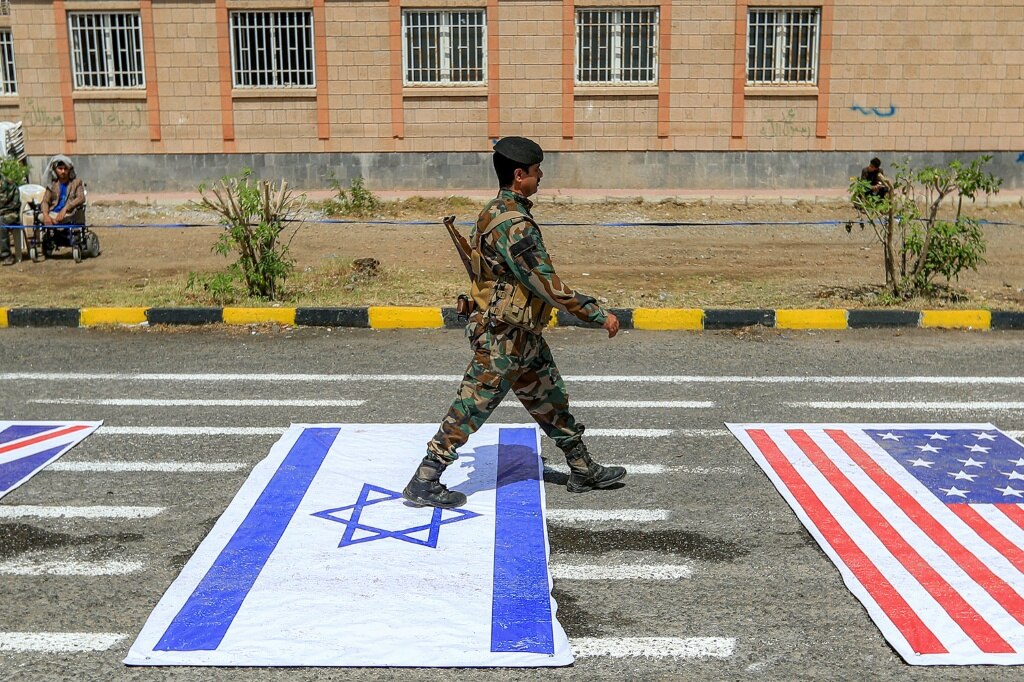
A sharp escalation of tensions across the Middle East has sent shockwaves through global energy markets and raised urgent warnings of catastrophic regional conflict, after Yemen’s Iran-aligned Houthi movement launched targeted strikes on Saudi oil tankers in the Red Sea this week. The flare-up comes as fighting already resumes over the strategically critical Strait of Hormuz, pitting the United States and Iran against one another just weeks after a short-lived ceasefire collapsed.
Within hours of the Houthi attacks, which sent international benchmark Brent crude spiking 7% to breach the $100 per barrel threshold for the first time since May, US President Donald Trump issued a stark warning that Iran would face full accountability for the actions of its allied militia. In a post on social media Thursday evening, Trump announced a “major military punishment” would be delivered imminently to both Iran and the Houthis, and confirmed the US would tap hundreds of billions of dollars in frozen Iranian assets held under American control to compensate for any damage to commercial vessels and cargo in the region.
United Nations Secretary-General António Guterres delivered a grim assessment of the escalating crisis to an emergency meeting of the UN Security Council, warning that the situation is rapidly spinning out of control and teetering on the brink of an unthinkable full-scale regional war. “One crisis feeds another. One escalation triggers the next,” Guterres warned, echoing growing global alarm over the disruption to key international shipping lanes that carry a large share of the world’s energy supplies.
Economic policymakers have already sounded the alarm over the potential fallout from the energy disruption. European Central Bank President Christine Lagarde warned Thursday that the ongoing energy shock could intensify further, driving already elevated inflation higher across the eurozone and fueling market expectations of an interest rate hike as early as September. German Defence Minister Boris Pistorius added that the outlook for de-escalation remains grim, noting “nothing — absolutely nothing — suggests that a ceasefire, let alone peace, could be reached” for the region at this stage. He also warned that major oil-importing economies face dire consequences if shipping disruptions continue through the Red Sea and Strait of Hormuz.
Iran has pushed back against US threats, with army spokesperson Mohammad Akraminia confirming that Iranian retaliatory strikes will continue for as long as US attacks on Iranian infrastructure and coastal areas persist. This week alone, the Islamic Revolutionary Guard Corps (IRGC) has joined the Houthi offensive, claiming strikes targeting US assets across Jordan and Kuwait, halting three commercial tankers transiting the Strait of Hormuz, and vowing to maintain pressure on Western and allied interests in the region. Both Jordan and Kuwait have confirmed intercepting incoming drone and missile strikes, with no reported casualties from the attacks so far.
On the ground, US Central Command confirmed it has conducted 12 consecutive nights of airstrikes targeting Iranian assets across the region. Iranian state media reported Thursday that US strikes have killed two people near the Iraq-Iran border at Shalamcheh, and that two US missiles hit targets near Bushehr, home to Iran’s only civilian nuclear facility — a site that has been repeatedly targeted by US strikes in recent months. Additional reports from Iranian state outlet Tasnim News confirmed a separate missile strike on Qeshm Island in the Strait of Hormuz.
Confirming the Red Sea attacks, Houthi officials said they targeted two Saudi tankers, the Encelia and the Layla, after declaring a full blockade of all Saudi ports in response to the resumption of regional conflict. British maritime security agency UKMTO confirmed that a tanker’s master reported a hit from an unknown projectile approximately 70 nautical miles southwest of Al Shuqaiq, sparking a fire onboard the vessel. Saudi Arabia has officially confirmed the strike on the Encelia, but has not yet commented on the reported attack on the Layla.
The new Red Sea front represents a significant worsening of the crisis, as it endangers Saudi Arabia’s ability to redirect oil exports around any prolonged closure of the Strait of Hormuz, through which roughly one-fifth of the world’s daily oil supply transits. US Secretary of State Marco Rubio, speaking on the sidelines of a Southeast Asian summit in Manila, framed the Houthi intervention as a manipulated escalation, claiming the militia had been “suckered” into joining the conflict by Iran. “The Houthis largely were smart and stayed out of all this throughout the conflict, but they now apparently have gotten themselves suckered into this, going after Saudi Arabia and their ships,” Rubio told reporters.
Diplomatic efforts to de-escalate remain underway, with Oman — a longstanding mediator between the Houthis and Saudi Arabia — confirming it is working to resume peace talks between the two parties and expressed “great concern” over the unfolding crisis in the Red Sea. Domestically, the renewed conflict has grown increasingly unpopular in the US, where midterm elections are looming in November. The US House of Representatives recently passed a symbolic bipartisan resolution — backed by opposition Democrats and a handful of Trump’s fellow Republicans — calling on the president to halt military action against Iran.