标签: Oceania

大洋洲

  • Miserly Arsenal face PSG firepower in Champions League style clash

    Miserly Arsenal face PSG firepower in Champions League style clash

    The most anticipated fixture on the European football calendar is finally here: Saturday’s Champions League final will pit two sides with polar-opposite playing philosophies against each other in Budapest, as Mikel Arteta’s pragmatically solid Arsenal lock horns with free-scoring defending champions Paris Saint-Germain.

    For Arsenal, the journey to this showpiece ends a 20-year wait to return to the showpiece European final, an achievement that came alongside ending their 22-year drought to claim the Premier League title this season. While Arteta’s unglamorous, results-first approach has drawn criticism from neutrals and even frustrated some of the club’s own fans at points, the strategy has delivered the silverware that eluded the North London club for decades, after three consecutive second-place Premier League finishes left them empty-handed in recent seasons.

    The Gunners’ identity is built on defensive discipline, tactical structure and aggressive high pressing, designed to cut off opponents’ access to dangerous areas and limit high-quality chances inside the box. No side in England’s top flight conceded fewer goals this term, and in their 13-match run to the final, Arsenal have let in just six goals while remaining unbeaten – a stat that stands in stark contrast to PSG, who have conceded 22 goals across their Champions League campaign this season.

    At the back, a dominant physical centre-back pairing of Gabriel and William Saliba provides a solid foundation, backed up by Spanish goalkeeper David Raya, who matched the competition record of nine clean sheets this run and will be just one shutout away from lifting the trophy if he keeps PSG out on Saturday. Declan Rice anchors the midfield, while the Gunners have also turned dead-ball situations into a lethal, unrivalled weapon under the guidance of set-piece coach Nicolas Jover, poached from Manchester City in 2021.

    This season alone, 27 of Arsenal’s 71 Premier League goals – 38 percent of their total – came from set pieces, earning the side the joking nickname “Set Piece FC”. Jover’s success has drawn strong reactions: Swiss publication Blick even questioned whether his focus on dead-ball mastery was “ruining football”, while former Liverpool defender Jamie Carraghora admitted he has never seen anything like Arsenal’s set-piece proficiency, saying “Every time they get a corner, my head is in my hands.”

    Arteta has remained unphased by criticism of his side’s functional style, noting that “winning ugly” is far preferable to falling short of titles. “I don’t know how you celebrate one goal different to another – maybe for YouTube one is nicer than another,” he said. When the Gunners lifted the Premier League trophy earlier this season, thousands of fans packed the area outside the Emirates Stadium to celebrate, with players partying into the early hours, silencing any remaining internal criticism of the approach.

    Where Arsenal seek to minimise risk and control the game through structure, PSG thrive on organised chaos and attack-minded risk-taking, boasting one of the most dynamic forward lines on the continent. Coach Luis Enrique has built a side that dismantles opponents on the transition with blistering pace, leading PSG to hit 44 goals in the Champions League this campaign – just one short of the all-time tournament record.

    Even after trimming the club’s roster of oversized superstars, PSG still fields a trio of electric attackers in Ousmane Dembele, Khvicha Kvaratskhelia and Desire Doue, whose movement and unpredictability keep defences off balance. The French champions have put on a series of breathtaking attacking displays in this season’s knockout rounds: they scored eight goals on aggregate against Chelsea, six against Bayern Munich (including a memorable 5-4 first-leg win) and four against Liverpool, showcasing their willingness to throw players forward and outgun opponents.

    Luis Enrique has proven his ability to adapt mid-tie too, shifting tactics in the second leg against Bayern to secure a 1-1 draw that booked PSG’s place in the final, proving the side can win in multiple ways. “We showed that we are a real team, unpredictable,” he said after putting five past Chelsea in the round of 16. For Doue, while the side can win without flashy play, their brand of free-flowing attacking football has been the formula that carried them to a second consecutive final, after they defeated Inter Milan in last season’s showpiece.

    The final in Budapest will be a classic battle of immovable object versus unstoppable force, and the outcome will not just crown a new European champion, but also decide which playing style reigns supreme over the continent this season.

  • ‘I think twice’: Minorities fear World Cup immigration enforcement

    ‘I think twice’: Minorities fear World Cup immigration enforcement

    As the 2026 FIFA World Cup co-hosted by the United States, Canada and Mexico draws near, a historic moment for global football has become a source of deep anxiety for immigrant and minority communities across the US, who fear heightened immigration enforcement will put them at risk of detention or deportation even as they gather to cheer on their nations.

    For Haitian immigrant Emile, a 40-something truck driver based in Ohio who asked to keep his last name private, the excitement of Haiti’s first World Cup appearance in more than 50 years is tempered by constant fear. This year’s tournament marks Haiti’s return to the global football stage for the first time since 1974, a milestone Emile describes as a once-in-a-lifetime opportunity. “Singing my country’s national anthem in a stadium in front of the whole world is a historic moment that no one would want to miss,” he told Agence France-Presse. “But at the same time, I think twice. I don’t want to be arrested by ICE.”

    Emile, who currently benefits from temporary protected status (TPS) that shields him from deportation to crisis-stricken Haiti, has followed his lawyer’s advice to avoid air travel entirely over fears he will be apprehended by agents from US Immigration and Customs Enforcement (ICE) at airport security checkpoints. He is far from alone in this anxiety.

    Across the country, immigrant communities have grown increasingly wary of ICE’s aggressive enforcement tactics. For years, communities have watched heavily armed, masked ICE agents conduct high-profile, often violent raids in major US cities. Public outrage reached a boiling point after ICE agents shot and killed two American demonstrators during an operation in Minneapolis.

    Monica Sarmiento, a representative of the Virginia Coalition for Immigrant Rights, told AFP the pervasive enforcement has created a constant climate of fear. “Now, people are making sure that they are aware to what they are doing and they don’t feel safe,” she said. “They are afraid. We have seen very aggressive tactics (from ICE) that have gone after not only undocumented communities but also people with protective status.”

    Sarmiento noted that a large majority of immigrants targeted by ICE enforcement do not pose a public safety threat: 70% of those arrested, detained and deported in recent operations have no criminal record, and many have lived in the US for decades, contributing to local economies through tax payments. “Many of them have been here for decades, paying taxes for decades,” she added. “We are living in a fearful and hostile environment across the country, and not only for the World Cup but every single day.”

    Of the 104 total World Cup matches, 78 will be played across US cities between the tournament’s opening on June 11 and final on July 19. That means millions of fans—including hundreds of thousands of immigrant and minority supporters—will travel across the country to attend matches, bringing them into increased contact with law enforcement and immigration officials.

    The US Hispanic community, which makes up 20% of the national population and has large concentrations in World Cup host states including California, Texas and Florida and major host cities Miami, Los Angeles, Dallas and New York, has been particularly vocal about concerns over increased ICE activity around stadiums and fan zones. The roughly 850,000-strong Haitian American community, concentrated largely in Miami and New York, also faces elevated risk: the Trump administration has moved to end the TPS program that protects thousands of Haitian immigrants like Emile from deportation to Haiti, which is grappling with devastating gang violence, political collapse and extreme poverty.

    Fears have been amplified by recent high-profile cases of immigration enforcement targeting sports spectators. Last year, Human Rights Watch documented the case of an asylum seeker who was arrested by ICE and deported after attending the Club World Cup final in New Jersey with his children. Rights groups now warn that foreign tourists traveling to the US for the 2026 World Cup could also be targeted by immigration agents near stadiums and popular fan gathering zones.

    In April, more than 120 US civil rights organizations—including the prominent American Civil Liberties Union (ACLU)—jointly issued an official travel advisory, warning all attendees, players, journalists and international visitors of the “risk of serious rights violations” during their time in the US. The advisory outlines a range of potential harms, from denied entry to racial profiling, arbitrary arrest, detention, deportation, and even cruel or deadly treatment while in ICE custody.

    In response to press inquiries from AFP, the Department of Homeland Security (DHS), which oversees ICE, downplayed the concerns. ICE has a long history of participating in security detail for major US events, including the annual Super Bowl. “International visitors who legally come to the United States for the World Cup have nothing to worry about,” a DHS spokesperson said. “What makes someone a target for immigration enforcement is whether or not they are illegally in the US.”

    FIFA, football’s global governing body, also responded to AFP’s request for comment, stating that it “is committed to respecting all internationally recognized human rights and strives to promote the protection of these rights.” Despite official reassurances, however, many immigrant fans across the US remain unconvinced, choosing to skip the historic tournament rather than risk their ability to stay in the country they call home.

  • Cleaning the chakras of Ecuador’s cats and dogs

    Cleaning the chakras of Ecuador’s cats and dogs

    In the bustling San Francisco market of Quito, Ecuador’s highland capital, a centuries-old Andean spiritual tradition is adapting to meet a modern, 21st-century need. Traditional local healers known as curanderas have carved out a unique new niche, offering energy cleansing rituals called limpias to the furry companions of anxious, doting pet owners.

    What began as a practice to clear physical, emotional, and spiritual blockages for human clients now extends to dogs, cats, rabbits, and even farm animals across the country. For devotees of the ritual, the treatment works to unblock blocked energy centers, or chakras, in animals, just as it does for people. Healers use a blend of ancestral tools: fragrant wild-harvested medicinal herbs, purifying smoke, raw farm eggs, and sacred Amazonian seeds to draw out negative energy and fend off harmful spiritual influences.

    Fifth-generation healer Nancy Correa comes from a long line of female curanderas, and she says her pet cleansing services have grown steadily in popularity in recent years. When 1-year-old golden retriever Lucas arrived at her stall after a frightening run-in with a neighborhood cat left him withdrawn and anxious, Correa pulled together a bundle of wild amaranth, rue, nettle, and eucalyptus to rub over his fur. She selects these specific herbs, she explains, because they grow wild in mountain ravines, absorbing the pure combined energy of water, air, and Andean sunshine.

    Lucas’s owner Ximena Tixi, a 49-year-old Quito architect, says she has already seen dramatic improvements after just two cleansing sessions. “He’s more active now, and he no longer carries that fear he had after the encounter,” she told Agence France-Presse. By the time Lucas showed up for his third session, he trotted willingly into Correa’s stall, his tail wagging with no sign of his earlier anxiety.

    A short walk away at the same market, fellow healer Amparo Lugmana recently led a cleansing ritual for her own 4-year-old mixed-breed dog Copito, who had been listless and “feeling down” for weeks. Lugmana rubbed rose petals, a raw egg, and healing herbs over Copito’s thick white curly fur, before finishing the ritual by tying a necklace of Amazonian huayroro seeds around his neck — a traditional charm meant to ward off negative energy and evil spirits.

    Lugmana is no stranger to treating animal clients: she has worked on cats, rabbits, and even ships post-treatment cleansing kits to rural areas for owners of cows and chickens that have stopped producing milk or eggs. The cost of a pet limpia ranges from just $5 to $10, depending on the size of the animal, making the ancient ritual accessible to many local pet owners.

    For Quito’s pet parents, the practice offers a low-cost, culturally rooted alternative to modern behavioral interventions for anxious or withdrawn pets, filling a gap between standard veterinary care and holistic wellness that resonates with Ecuador’s deep Andean cultural heritage.

  • Rubio to revive ‘Quad’ alliance in India, but staying power unclear

    Rubio to revive ‘Quad’ alliance in India, but staying power unclear

    A pivotal gathering of the Quadrilateral Security Dialogue, widely known as the Quad, is set to convene in New Delhi on Tuesday, where US Secretary of State Marco Rubio will push to revitalize the four-nation security bloc grouping the United States, India, Australia, and Japan. The meeting comes at a moment of deep uncertainty: growing tensions within the alliance over the recent US-Israeli attack on Iran and lingering questions about the long-term reliability of US commitment to the partnership, which Beijing has long viewed with deep suspicion.

    The summit gathering comes just 10 days after US President Donald Trump completed a warm state visit to Beijing, where he praised the idea of a US-China “G2” partnership. That framing has sparked unease among Quad members, many of whom view China’s rising regional influence as a core strategic threat, and fear a direct US-China grand bargain could leave their interests sidelined.

    For Rubio, who is making his first visit to India as Secretary of State, reviving the Quad is a personal priority. Within hours of his inauguration last year, he held a symbolic first meeting with Quad foreign ministers in Washington, and the group convened again in the US capital in July 2025. But a planned full leaders’ summit last year never materialized, after Trump refused to commit to traveling to New Delhi for the event — a sharp break from his predecessor Joe Biden, who had repeatedly insisted Quad leaders’ summits were a permanent fixture of US Indo-Pacific strategy.

    Rubio’s core goal in New Delhi is to lay the necessary groundwork to finally bring Trump to a Quad leaders’ gathering. In an interview with India Today, he emphasized that the alliance needs tangible progress to deliver results, not just symbolic meetings. “We want to make sure we do the work necessary and position it so, when they do meet, they’ll have very specific deliverables and things that actually they can announce,” Rubio said.

    One key area of consensus the bloc is looking to build out is cooperation on securing critical mineral supplies. The Trump administration has grown increasingly alarmed by China’s dominant market position in the rare earths and critical minerals that underpin the global high-tech and renewable energy sectors, and collaboration on supply chain resilience marks a rare area where the administration has embraced traditional alliance-building diplomacy. The bloc is also set to expand cooperation on maritime security, an issue of particular urgency for Japan, which has repeatedly pushed back against China’s assertive territorial claims in the Indo-Pacific’s contested waterways.

    But the alliance remains fractured by deep divisions over the recent US-Israeli military campaign against Iran, launched in late February after Tehran took control of the Strait of Hormuz in response to escalating pressure. The attack sent global oil prices soaring, hitting energy import-dependent Japan and India particularly hard. Beyond economic fallout, the Trump administration’s decision to launch the strike without consulting allied governments has left deep resentment: no US ally other than Israel has fully backed the operation, prompting Trump to publicly question the reliability of US partners.

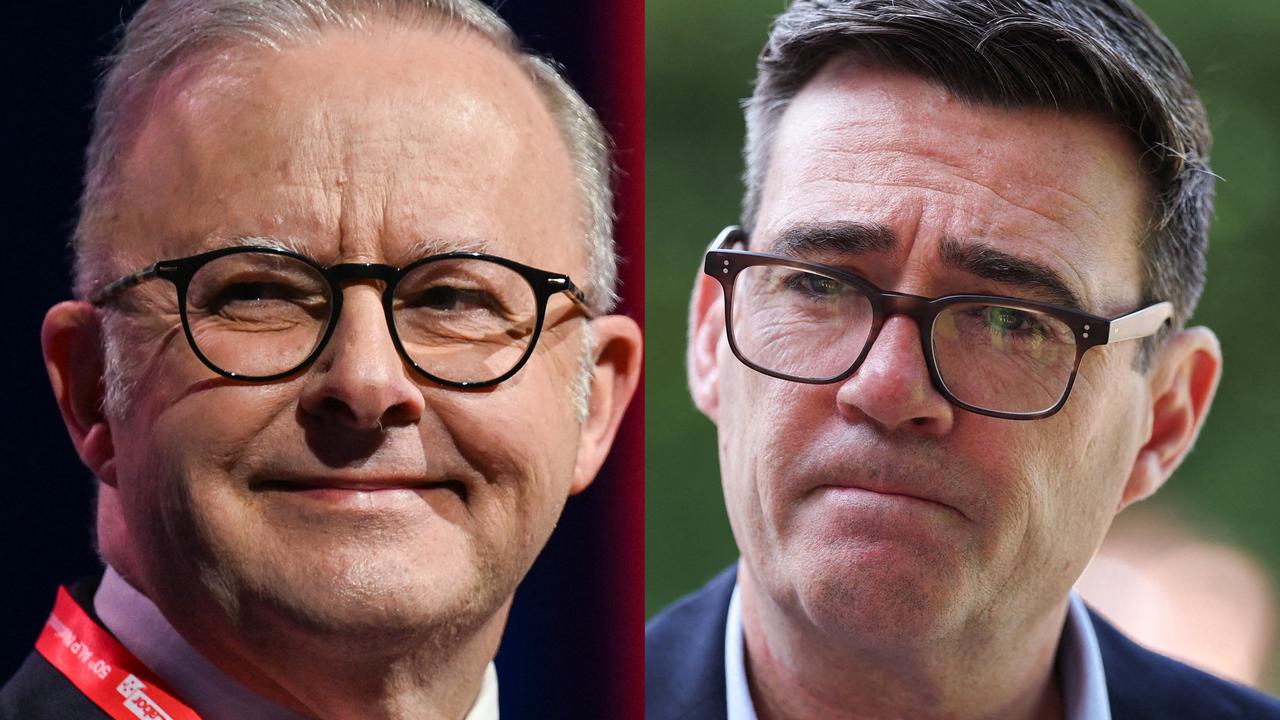
    Australian Prime Minister Anthony Albanese has taken the most sympathetic stance among Quad leaders, noting shared global concerns over Iran’s disputed nuclear program, but he has refused to contribute military or logistical support to the war effort. That partial backing was not enough for Trump, who has publicly stated he is “not happy with Australia.” For Japan and India, both of which have long maintained constructive diplomatic and economic ties with Iran, the situation is even more fraught. While the two countries grudgingly complied with US sanctions banning all imports of Iranian oil, they have rejected calls to fully back the military campaign.

    Ahead of Tuesday’s full Quad meeting, Japanese Foreign Minister Toshimitsu Motegi met with his Indian counterpart Subrahmanyam Jaishankar on Monday, where he framed the gathering as a critical response to a shifting global order. “The world is faced with the most significant structural change in the post-World War II era, driven by a shift in the balance of power and the intensification of conflict and confrontation,” Motegi said, adding that it was vital for the bloc to address the “increasingly severe” global security environment.

    Jaishankar, for his part, sought to downplay widespread concerns that the Trump administration’s outreach to Beijing has eroded US commitment to the Quad. He noted that Trump was a strong backer of the alliance during his first presidential term, pushing back against narratives that US interest in the bloc is waning.

    First conceived by former Japanese Prime Minister Shinzo Abe, the Quad was founded on the idea that four like-minded Indo-Pacific democracies could align to counter growing Chinese influence. Under President Joe Biden, the alliance expanded its mandate far beyond security cooperation, adding work on disaster response, global public health, and supply chain resilience as core priorities. Now, as Rubio works to put the partnership back on track after months of stalled progress, the question remains whether the bloc can overcome internal divisions over Iran and persistent uncertainty about US commitment to deliver on its ambitious goals.

  • ‘I wish I did that’: Cameron Munster offers a simple bit of advice to Sam Walker that could spell trouble for the Blues

    ‘I wish I did that’: Cameron Munster offers a simple bit of advice to Sam Walker that could spell trouble for the Blues

    Nine years after delivering one of the most iconic debut performances in State of Origin history, Queensland Maroons captain Cameron Munster is passing on a lesson of self-belief to young rookie halfback Sam Walker, who is gearing up to make his first Origin appearance on Wednesday night. With simple but powerful words, Munster has urged the 20-something Sydney Roosters playmaker to “back yourself” as he steps onto what is forecast to be a rain-soaked field in front of 80,000 raucous New South Wales Blues supporters at Accor Stadium. Walker, widely regarded as a naturally unflappable competitor, will lean heavily on this advice from his experienced halves partner as he prepares for the biggest test of his young rugby league career to date.

    Walker earns his unexpected Origin call-up after incumbent playmaker and 2023 Wally Lewis Medal winner Tom Dearden was forced to withdraw with an ankle injury sustained during a recent North Queensland Cowboys club match. While the young halfback has previously trained and worked with Queensland rugby league immortal Johnathan Thurston, Munster and the entire Maroons squad are clear: they do not want Walker to try to emulate the legend’s playing style or live up to the shadow of iconic former number 7s like Thurston and Cooper Cronk. Instead, they want him to lean into the unique strengths that earned him this opportunity in the first place: his sharp short kicking game and unorthodox, unpredictable playmaking that has caught the eye of selectors and fans alike this NRL season.

    “There’s a reason why he’s been given the opportunity to wear that famous No.7 jersey,” Munster told reporters ahead of the clash. “We’re not expecting him to go out there to be Johnathan Thurston or Cooper Cronk or those type of guys that have been wearing the jersey before him. Go out there and be Sam Walker. Back yourself.” Munster added that the team has given Walker full creative freedom to play his natural game, even if some of his gambles do not pay off. “If it doesn’t come off, it doesn’t come off – that’s rugby league. I’d rather him out there giving it his all and trying his little tricks that he’s got in his bag than just sitting back and at the end of the game going ‘oh, I wish I did this, I wish I did that’,” he said. “We’ve given him full reins and full keys to the car, and hopefully you’ll see Sammy Walker blossom.”

    While Walker has never competed on the Origin’s national stage before, he has already proven his ability to perform under intense pressure at the club level. The young halfback has claimed Man of the Match honours three times in the Roosters’ iconic Anzac Day clashes against the South Sydney Rabbitohs, consistently showing fearlessness when all eyes are on him. He grew up watching generations of Maroons young guns make successful Origin debuts, and Munster’s own 2015 debut stands as the perfect template: in that series-deciding match, Munster ran 136 metres and set up two match-defining tries, cementing his place in Queensland Origin folklore from his very first game.

    Munster says he is confident Walker is ready to write his own Origin story, even if it does not follow a perfect narrative. “I guess you’ve got to sometimes write your own fairy tale. You’re not always going to be given the fairy tale,” Munster said. “It’s for him to go out there and get his game on and play well. There’ll be some times in that game where things might not go his way, and knowing Sammy, he’s that type of person with how calm he is that he’ll get on with his next job and do something spectacular.” The Maroons captain added that the team has no unrealistic expectations for the rookie: “We’re not expecting him to go out there and be man of the match. If he gets his job done, and everyone else in his team gets their job done, then we’re looking really excited and looking really forward to the way we can play.” Beyond Walker’s debut, Munster also expressed confidence in the depth of Queensland’s emerging halves talent, noting that the future of the Maroons program is in “good hands” with the likes of Dearden, Walker, Ezra Mam and Jake Clifford all coming through the development pipeline.

  • Swiatek, Rybakina cruise through Roland Garros openers

    Swiatek, Rybakina cruise through Roland Garros openers

    Opening day of the 2025 French Open at Roland Garros delivered a mix of dominant wins from title favorites and heartfelt farewells from tennis legends, as unforgiving 32-degree heat tested even the fittest competitors across the Parisian clay courts.

    Four-time champion Iga Swiatek, the tournament’s third seed, kicked off her campaign for a fifth Roland Garros crown in commanding form, easing past 19-year-old Australian qualifier Emerson Jones in just 60 minutes with a 6-1, 6-2 victory. The match marked Swiatek’s first Grand Slam appearance since pairing up with Francisco Roig, former long-time coach of 14-time French Open champion Rafael Nadal, a partnership that already appears to be paying dividends. The Pole, who claimed three consecutive French Open titles from 2022 to 2024 before falling to Aryna Sabalenka in last year’s semi-finals, will next face Czech prospect Sara Bejlek for a spot in the round of 32. Fresh off a semi-final run at the Italian Open earlier this month that signaled a return to peak form, Swiatek expressed confidence in her opening performance after the match.

    “I’m really happy with the way I played. It was a solid match from the beginning to the end. I technically knew how to play,” the 2020, 2022, 2023 and 2024 champion said.

    Second seed Elena Rybakina, who already lifted the Australian Open trophy earlier this 2025 season, matched Swiatek’s straightforward win, dismissing Slovenian Veronika Erjavec 6-2, 6-2 on the iconic Court Philippe Chatrier. The Kazakhstani star echoed Swiatek’s relief at wrapping up the match quickly in the sweltering conditions, noting that the extreme heat made short, efficient runs through the draw a top priority. “It’s tough conditions but I’m happy things worked, and I’m looking forward to the next match,” Rybakina said, ahead of her second-round clash against Ukraine’s Yuliia Starodubtseva.

    Other women’s singles winners on opening day included Ukraine’s Elina Svitolina, who survived a dramatic three-set scare against Hungary’s Anna Bondar to keep her unbroken 13-year first-round win streak at Roland Garros intact. After dropping the opening set and trailing 3-1 in the deciding set, Svitolina rallied to secure a 3-6, 6-1, 7-6(10-3) win, just weeks after claiming her long-awaited fifth WTA 1000 title in Rome. Former tournament runner-up Jasmine Paolini also advanced with a 7-5, 6-3 win over Ukraine’s Dayana Yastremska, while sixth seed Amanda Anisimova, last year’s runner-up at both Wimbledon and the US Open, beat French wildcard Tiantsoa Rakotomanga Rajaonah 6-3, 6-1. In one of the day’s biggest upsets, 2024 Paris Olympic gold medalist Zheng Qinwen of China suffered a shock first-round exit, falling 6-4, 6-0 to Poland’s Maja Chwalinska — marking Zheng’s first ever opening-round defeat at the French Open.

    The most emotional moments of the day belonged to the departing legends of the sport, who said goodbye to Roland Garros ahead of their planned retirements at the end of the 2025 season. 2015 champion Stan Wawrinka, 41, brought an end to his Paris run with a four-set 6-3, 3-6, 6-3, 6-4 loss to Dutch lucky loser Jesper de Jong, bowing out in front of a packed, cheering crowd on Court Simonne Mathieu. Wawrinka, who notched one of the most iconic upsets in Grand Slam history when he defeated Novak Djokovic to claim his only French Open title 10 years ago, enjoyed a fairytale run to the third round at January’s Australian Open in his final campaign, but could not replicate that form in the Paris heat.

    After the match, tournament organizers honored Wawrinka’s legendary career with a glass case holding a fragment of Roland Garros clay, followed by two video tributes screened across the venue’s big screens. The second tribute included personal messages from the sport’s all-time greats: Roger Federer, Rafael Nadal and Novak Djokovic. “Thanks to all your support, I wanted to go on as long as possible, to 41 years of age, to continue living moments like this,” Wawrinka told the crowd.

    French home favorite Gael Monfils, 39, also played his final opening round at Roland Garros on Monday night, producing a rousing comeback from two sets down before fatigue got the better of him in the deciding set. The former tournament semi-finalist fell 6-2, 6-3, 3-6, 2-6, 6-0 to fellow French wildcard Hugo Gaston, closing out his Roland Garros career in front of his home crowd.

    In men’s opening round action, two-time Roland Garros runner-up Casper Ruud narrowly avoided a major upset against Russian qualifier Roman Safiullin, surviving a five-set thriller that was severely impacted by the day’s high temperatures. Both players called for medical time-outs in the fourth set, and took more than 16 minutes to return to court for the deciding set, with rallies slowing to a walk as fatigue set in. Ruud ultimately found enough energy to secure a 6-2, 7-6(7-5), 5-7, 0-6, 6-2 win, as Safiullin continued to wilt in the evening heat. Teenage Spanish rising star Rafael Jodar, who has rapidly climbed the ATP rankings this season after clay-court title runs and deep runs at the Barcelona, Madrid and Rome Open events, notched a straight-set win on debut, dismantling American Aleksandar Kovacevic 6-1, 6-0, 6-4. Fifth seed Ben Shelton, who has reached at least the quarter-finals at the other three Grand Slams already in his young career, kicked off his Paris campaign with a straight-set win over Daniel Merida.

  • Israel steps up Lebanon strikes as Netanyahu escalates offensive

    Israel steps up Lebanon strikes as Netanyahu escalates offensive

    On Monday, the Israeli military ramped up its air and ground strikes across Lebanon, acting on Prime Minister Benjamin Netanyahu’s direct order to escalate operations with the stated goal of crushing Iran-backed Hezbollah. This escalation comes even as international diplomacy moves forward to end broader regional conflict, including a potential deal that would de-escalate the Lebanon front where clashes have persisted since early March.

    Though a formal ceasefire was implemented on April 17, cross-border fire between Israeli forces and Hezbollah has remained a near-daily occurrence. In a pre-recorded video statement published to his Telegram channel, Netanyahu confirmed his administration’s push for expanded military action. “I have ordered an even greater acceleration of our operations,” he said. “It is true that they are attacking us with drones, including fibre-optic drones, but we have teams working on countermeasures and we will solve this issue… We will intensify our blows, increase our firepower, and we will crush them.”

    Witnesses with Agence France-Presse reported streams of civilian residents fleeing the southern suburbs of Beirut, a longstanding Hezbollah stronghold, shortly after Netanyahu’s announcement. Lebanon’s official National News Agency (NNA) confirmed that the Israeli Air Force carried out multiple successive strikes in the eastern Bekaa Valley by Monday evening. Earlier in the day, dozens of airstrikes targeted a string of towns and villages across southern Lebanon, killing three people in separate strikes on two passenger vehicles and a motorcycle. Additional strikes later hit communities near the ancient coastal city of Tyre, following evacuation orders issued by Israel for 10 southern Lebanese villages.

    Israeli military officials justified the escalation by pointing to repeated ceasefire violations by Hezbollah. “In light of Hezbollah’s violation of the ceasefire agreement, the Israel Defense Forces are compelled to operate against it with force,” Avichay Adraee, the IDF’s Arabic-language spokesperson, wrote in a social media post that listed the targeted villages. Hezbollah has continued to launch drone strikes targeting Israeli positions along the border and inside Israeli-occupied Lebanese territory, including multiple attacks on Monday. Late Monday, the group issued a statement confirming it had targeted three military barracks and one outpost in northern Israel, framing the strike as retaliation for Israeli violations of the truce.

    Data from Lebanese public authorities shows that Israeli strikes have killed more than 3,100 people in Lebanon since hostilities resumed in early March. On the Israeli side, the military announced Monday that one additional soldier had been killed in combat in southern Lebanon the previous day, bringing the total death toll for Israeli service members to 23 since clashes with Hezbollah began. One civilian defense contractor has also been killed in the fighting.

    The push for escalation has been amplified by two of Netanyahu’s far-right coalition partners, who are calling for a dramatic expansion of the offensive deep into Lebanese territory. Finance Minister Bezalel Smotrich, a resident of an illegal settlement in the occupied West Bank, wrote on Telegram that “there is an urgent need to put an end to the threat posed by Hezbollah’s explosive drones.” He added, “For every explosive drone strike, 10 buildings must fall in Beirut.” National Security Minister Itamar Ben Gvir echoed the call, demanding a “return to intensive warfare” and an Israeli takeover of the Zahrani River, a waterway located far north of the Litani River, which the IDF has currently named as the southern boundary of its Hezbollah-clearing operation. Israeli forces currently control a roughly 10-kilometer deep strip of territory inside southern Lebanon.

    Meanwhile, diplomatic efforts to broker a long-term settlement remain underway. Lebanese President Joseph Aoun reaffirmed his stance Monday that Lebanon will proceed with talks with Israel, and added that his demand for a full Israeli withdrawal from all southern Lebanese territory is “non-negotiable.” Lebanon and Israel, which have never maintained formal diplomatic relations, are set to hold a new round of negotiations in Washington on June 2 and 3, preceded by a meeting of top military officials from both sides at the Pentagon on May 29. On Sunday evening, Hezbollah’s deputy leader Naim Qassem reiterated the movement’s firm opposition to direct negotiations between Lebanon and Israel, and repeated its refusal to disarm, sticking to longstanding positions that have complicated diplomatic progress. The unfolding escalation has also raised new uncertainty for ongoing talks between the U.S. and Iran, which are currently working to finalize a broader agreement to end all hostilities across the Middle East, including on the Lebanese frontier.

  • Messi diagnosed with left hamstring fatigue, return plan uncertain

    Messi diagnosed with left hamstring fatigue, return plan uncertain

    Just weeks before the 2026 men’s World Cup kicks off across North America, Argentine football icon Lionel Messi is at the center of an injury scare after Inter Miami confirmed a diagnosis of left hamstring muscle fatigue. The Major League Soccer side announced the results of follow-up medical evaluations on Monday, three days after the 38-year-old was forced to exit Sunday’s 6-2 victory over the Philadelphia Union in the 73rd minute of play.

    During the match, Messi visibly grabbed the back of his left hamstring to signal discomfort before requesting a substitution. Though observers noted he walked normally as he exited the pitch for the locker room, the club’s post-match medical workup pointed to fatigue-induced muscle overload from accumulated activity.

    In an official statement, Inter Miami explained, ‘After undergoing further medical tests this Monday, the initial diagnosis indicates an overload associated with muscle fatigue in his left hamstring. The timeline for his return to physical activity will depend on his clinical and functional progress.’ The club provided no fixed schedule for Messi’s comeback, leaving both fans and national team staff in anticipation of updates.

    The injury comes at a critical moment for the eight-time Ballon d’Or winner, who is widely expected to feature in the upcoming World Cup — a tournament co-hosted by the United States, Canada and Mexico that gets underway on June 11. Argentina, the defending 2022 World Cup champions, will play their first group stage match against Algeria in Kansas City just five days after the tournament opener.

    Messi has not yet formally confirmed his participation in the 2026 tournament, but all public indicators point to him suiting up for a record-tying sixth World Cup appearance. The Argentine Football Association is set to name its official World Cup squad next week, and the national team will already travel to the U.S. for pre-tournament friendlies against Honduras on June 6 and Iceland on June 9, before the group stage kicks off.

    Since joining Inter Miami in 2023, the club’s coaching and medical staff have carefully managed Messi’s playing workload to prevent overexertion, regularly resting him during stretches of congested fixture schedules. MLS has already entered a scheduled break to accommodate the World Cup, giving Messi time to recover without missing club matches, but the uncertainty around his rehabilitation timeline still raises concerns for Argentina ahead of their title defense.

  • ‘ACL confirmed’: Roger Tuivasa-Sheck’s NRL career is over after devastating knee injury confirmed

    ‘ACL confirmed’: Roger Tuivasa-Sheck’s NRL career is over after devastating knee injury confirmed

    One of the National Rugby League’s most decorated and beloved modern-era stars has brought his NRL tenure to an abrupt and heartbreaking end, after medical scans confirmed a severe season-ending anterior cruciate ligament (ACL) knee injury just 11 minutes into what would become his final domestic appearance.

    Thirty-two-year-old Roger Tuivasa-Sheck, a former Dally M Medal winner and one of the most electrifying players of his generation, broke the news to fans via his personal Instagram page, confirming the injury that cut short his NRL career far earlier than anticipated. The veteran fullback and winger was already set to depart the New Zealand Warriors at the close of the 2024 season, having signed a two-year contract with England’s Wakefield Trinity in the Super League, but he had hoped to cap his 13-year NRL run by helping the Warriors push for a maiden premiership title.

    Tuivasa-Sheck’s career in the NRL has been one for the history books, marked by standout achievements, viral highlights and a lasting influence on a new generation of young rugby league players. Over his 242-game domestic career, his signature blinding footwork produced countless memorable moments, where he left opposition defenders grasping at air; these highlights have been compiled dozens of times over on YouTube, cementing his reputation as one of the most exciting attacking players the competition has ever seen.

    His professional journey began at the Sydney Roosters, where he spent his first four seasons in the league, claiming a premiership title in just his second year as a starting winger. In 2016, he made a high-profile move to the Warriors, one of the biggest and most anticipated signings in the club’s history. It was with the Warriors that he reached the pinnacle of individual achievement in the NRL: he took home the 2018 Dally M Medal, the league’s highest individual honor, celebrating the win with a traditional Haka performed by his fellow New Zealand teammates in attendance. He followed that career high by claiming the International Rugby League Golden Boot a year later, recognizing him as the best player in the world.

    After a brief stint switching codes to play 15-a-side rugby union, Tuivasa-Sheck made a popular return to the NRL and the Warriors in 2024, quickly becoming a key leader in the side’s unexpected upward resurgence under head coach Andrew Webster. While age had softened his explosive pace slightly in recent years, his competitive passion and on-field leadership never faded, making him an integral part of the club’s 2024 premiership push.

    That dream of a fairytale final domestic run came to a crushing end in his 242nd NRL appearance, when he sustained the devastating knee injury within the first 11 minutes of play. In a characteristically gracious social media post after confirming the injury, Tuivasa-Sheck acknowledged the difficult news, writing: “That’s my footy for the year. ACL confirmed. Tough to accept but the season goes on. We got something special going. Big love for all the messages.”

    Within hours of the announcement, dozens of current and former NRL stars flooded his comment section with tributes and well wishes, including high-profile players Stephen Crichton and Shaun Johnson, honoring his legacy as one of the greatest modern players to compete in the competition.

  • Leftist icon, millionaire lawyer, conservative senator: Who will be Colombia’s next leader?

    Leftist icon, millionaire lawyer, conservative senator: Who will be Colombia’s next leader?

    As Colombians prepare to head to the polls this Sunday to elect their next head of state, three candidates from wildly different political backgrounds have emerged as the clear frontrunners, each offering a sharply contrasting vision for the country’s future. At the top of pre-election polling is Ivan Cepeda, a veteran leftist senator, human rights advocate and close ally of outgoing President Gustavo Petro, Colombia’s first ever left-wing head of state. Trailing closely behind him are right-wing political newcomer Abelardo “The Tiger” de la Espriella and conservative opposition senator Paloma Valencia, a protégé of hardline former president Alvaro Uribe.

    Cepeda’s political journey has been defined by tragedy and resilience, shaped by decades of conflict in Colombia. He first stepped into the national spotlight in 1994, when at just 32 years old, he stood beside the bullet-riddled corpse of his father, a communist senator assassinated by far-right paramilitaries during a wave of political violence that killed more than 5,700 leftist leaders across the country. Speaking to reporters on that day, he demanded accountability, saying “Let this crime not go unpunished” — a moment broadcast live to millions of Colombians.

    Now 63, Cepeda spent years in exile across Czechoslovakia, Bulgaria, Cuba and France before returning to his home country to advocate for victims of the decades-long internal armed conflict. He played a pivotal role in crafting the 2016 historic peace accord that brought about the full disarmament of the FARC, Colombia’s once-largest rebel guerrilla group, and later was the architect of Petro’s controversial “total peace” initiative, an effort to end all remaining insurgent and criminal violence that ultimately failed to meet its core goals.

    A defining moment in his political rivalry with the right came when Cepeda led the investigation into Uribe’s alleged paramilitary ties, a case that led to Uribe becoming the first former Colombian president to be convicted of a criminal offense in 2024. Though the conviction was later overturned by a judge, the confrontation cemented Cepeda’s status as the left’s most prominent icon and Uribe’s greatest political foe. Known for rejecting neckties — which he calls a symbol of oligarchy — and often wearing a traditional Caribbean collared shirt, Cepeda has brushed off decades of attacks from opponents, noting during this campaign: “I have survived genocide, stigmatization and relentless persecution. And here I am, still standing.” His critics still attack him over his past, however, repeating accusations of hidden ties to the FARC and blaming him for the failures of Petro’s total peace plan.

    In second place in the polls is 47-year-old de la Espriella, a millionaire lawyer and businessman who has branded himself “The Tiger” and is making his first run for public office after years living a lavish lifestyle abroad. A self-identified right-wing outsider, de la Espriella left Colombia to live in Florence, Italy, where he enjoyed opera, traveled via private jet and built his businesses in rum and wine. He returned to run for president, he says, to stop the left from “destroying” Colombia, and counts among his political idols former U.S. President Donald Trump, Argentina’s libertarian leader Javier Milei and El Salvador’s hardline president Nayib Bukele.

    Over his decades-long legal career, de la Espriella has defended a wide range of high-profile Colombian figures, from top soccer stars to notorious drug traffickers. Now campaigning, he often wears a tailored suit and has recently taken to wearing a bulletproof vest to public events, a nod to his tough-on-crime platform. As the candidate of the hardline law-and-order movement, de la Espriella has proposed sweeping measures to tackle Colombia’s status as the world’s largest cocaine producer: he wants to create a military alliance with the United States and Israel to crack down on drug cartels, build a network of large mega-prisons, and expand legal access to firearms for civilians. “Any criminal who does not surrender will be taken down as the law allows,” he told AFP in a February interview.

    The candidate has drawn widespread controversy for his inflammatory rhetoric: he once called for the Colombian left to be “gutted” before later softening his language, has made remarks widely condemned as homophobic and sexist, and often uses aggressive, vulgar language in campaign events. His hot temper and unapologetic style have become defining parts of his political brand, attracting a base of angry, anti-establishment right-wing voters.

    Third in pre-election surveys is 50-year-old Paloma Valencia, a conservative senator from one of Colombia’s most politically powerful elite families. She is the granddaughter of Guillermo León Valencia, who served as Colombia’s president from 1962 to 1966, a conservative leader who took a hard line against early guerrilla groups and aligned Colombia closely with U.S. anti-communist policy in Latin America. If elected, she would become Colombia’s first female president.

    Valencia has long positioned herself as one of the most vocal critics of the Colombian left and guerrilla groups, and considers former president Uribe her political “father” and mentor, campaigning side-by-side with him across the country. Like Uribe, she opposed the 2016 FARC peace accord and supports the hardline militarized security strategy that defined his presidency. In a March campaign speech, she laid out her core policy contrast to Petro’s agenda: “We are going to put an end to ‘total peace’ in order to impose total security.”

    On social issues, Valencia holds staunch conservative positions on LGBTQ rights, and she supports expanding fracking — a controversial method of oil and gas extraction widely criticized for its severe environmental harms. As the most established right-wing candidate in the race, she draws support from traditional conservative voters who align with Uribe’s long-standing political movement.

    With just days to go before voting begins, polls show a tight three-way race that remains too close to call, leaving Colombians poised to choose between continuing the country’s left-wing shift or turning back to a hardline conservative security agenda.